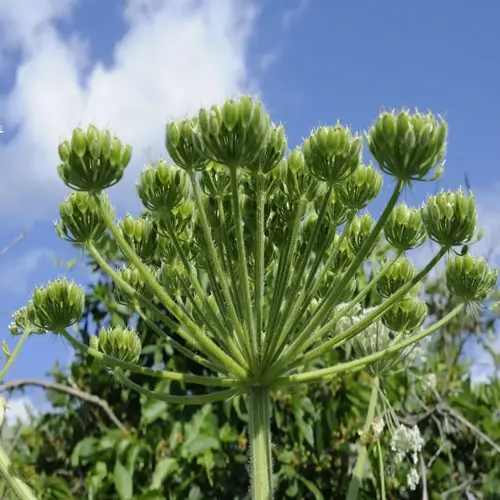

The root is the most poisonous part, and nothing else on the plant comes close. Water hemlock root toxicity comes down to dose, since the thick rootstalk holds far more toxin than the leaves or stems you see above ground. A CDC case report puts the fatal amount for an adult at about 1 inch (2 to 3 cm) of root. Every other part of the plant can hurt you too. The root is the part that carries the killing dose.
The knife came out of that crown slick and yellow. I had already read the leaf veins. I pulled a plant out of the ditch bank in gloves, split the rootstock lengthwise, and found small pockets running through the middle instead of solid white flesh. Each pocket held a bead of brown liquid that pooled along the cut. That was my second spring on the place, and the stand at the wet end of the ditch was new to me. I set the knife down in the grass and left it there.
Those pockets back up what the leaf veins already told you. A chambered rootstock is a supporting mark, not a test to run on something you cannot already name. Cut across the crown and you get a row of small hollow spaces stacked inside. The liquid you find in them is brown or straw-colored, and the liquid runs out the moment you break or cut a stem.
That liquid carries the poison. The cicutoxin in roots is more concentrated than in any other part, so you need very little to do real harm. A piece of root the size of a walnut can kill a cow-sized animal. The lower stems rank close behind the crown, which means pulling a plant bare-handed puts your fingers on the two worst parts at once.
The cut or broken root is the single most dangerous thing on this plant, and the poisonous liquid comes out under the smallest nick from your shovel blade or your boot heel.
Timing changes what the top growth can do to you. In early growth the toxin sits in the leaves and stems as well as the tubers, so a young spring plant is hazardous from top to bottom. Those same leaves and stems lose most of their toxicity as the season goes on. Green seed heads are the exception. Green heads stay poisonous, and cattle have died after eating them.
None of that makes the top growth safe in your hands. The poison parts on record cover bark, flowers, fruits, leaves, roots, seeds and stems, and the severity rating is high. Ranking the root first tells you which part carries the biggest dose. Ranking tells you nothing about which parts you can get casual with, so treat the whole plant as toxic and the crown as the worst of the lot.
Gloves go on before you dig, every time, and long sleeves help when you work a thick stand. Make sure you get the whole crown out of the ground instead of snapping the top off at soil level, and go back for the pieces that break loose in the mud. Bag what you pull rather than leaving the plants on the bank where livestock or a curious dog can reach them. Wash your shovel and your gloves before either one touches anything else.
One more habit is worth keeping. Do not slice into a root to check a plant you are unsure about, because that one move puts the poison on your skin and on your tools. Dig the plant out whole, look at the hollow chambers without opening them if you can, and let the crown settle the question for you. A plant you cannot name from its leaves and its stem base is a plant you leave alone.
Read the full article: Water Hemlock: How to Identify and Stay Safe