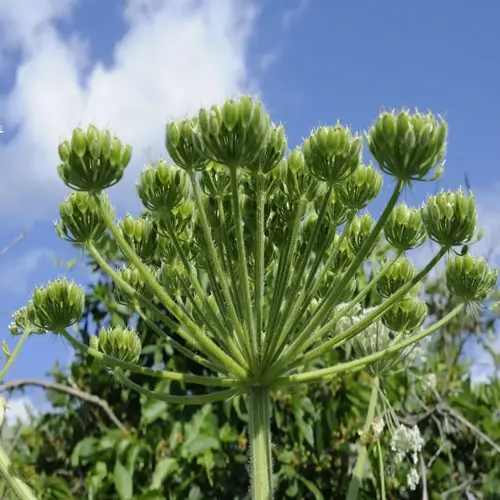
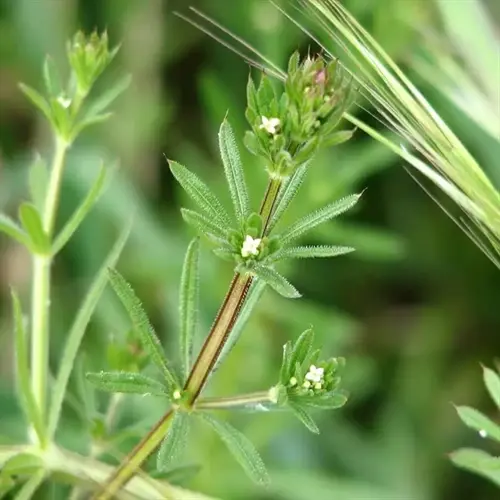
Leaf shape and stem color settle it fast. Poison hemlock has fernlike, finely cut leaves and a stem marked with clear purple blotching. Water hemlock has lance-shaped leaflets with toothed edges, and its stem shows little or no blotching at all. That is the heart of water hemlock vs poison hemlock, and both plants can kill you, so neither one belongs in your hands.
Cold water pushed up around my boots at the edge of a stock pond, and the stand in front of me was still wet from the night before. I pulled the laminated leaf-vein card off the truck visor and checked it against a leaf. The leaflets were narrow and lance-shaped with sawtooth edges, and the veins ran into the notches between the teeth instead of the tips. Back along the fence line the plants had lacy, carrot-top leaves that looked nothing like it.
Both plants sit in the carrot family, and that is why you see them mixed up so often. They belong to different genera, and they carry different poisons. Water hemlock holds cicutoxin. It has a strong carrot-like smell, it acts on the central nervous system, and it works as a violent convulsant. The second plant is Conium maculatum, and its poison is a different one. The two are not interchangeable in a warning or a treatment plan. Socrates died from poison hemlock, not from water hemlock.
Height helps you once the plants are grown out. Poison hemlock can reach 9 feet (2.7 m) and stand well over your head, and the Missouri Department of Conservation ties that size to its fernlike, finely dissected leaves. Water hemlock stays shorter on most sites. Stem markings do more work up close. You can spot the purple blotching on poison hemlock from a few steps away, and water hemlock shows only purple stripes or mottling low on the stem.
Check the leaflets when the stem leaves you unsure. Water hemlock leaflets run 0.5 to 4 inches (1 to 10 cm) long, slim and pointed, with teeth along the edge and side veins that end in the notches rather than the points. Poison hemlock leaves break into fine, lacy segments closer to a carrot top or a fern frond. Once you have seen both in the field, the leaf outline points you one way, and the stem confirms it.
Dose is where water hemlock earns its name. About 1 inch (2 to 3 cm) of the root can kill an adult, and no antidote exists. Roots come up out of the mud whenever you pull a plant by hand, which puts the worst part of it right in the open. That risk sits on top of the poison hemlock danger, so guessing between the two is a bad bet for anybody.
Good hemlock identification comes down to checks you can run without laying a finger on anything. Read the stem for blotching, then read the leaf outline for lace against sawteeth. Look at the ground under your boots too, since water hemlock keeps to wet sites and poison hemlock does not need them. If you are still unsure after all that, you have your answer, and it is walk away.
Do not touch or taste any plant in the carrot family you cannot name with certainty. Both hemlocks are deadly, and there is no antidote for cicutoxin.
Read the full article: Water Hemlock: How to Identify and Stay Safe