
Introduction
A weeping cherry tree in full bloom looks like a pink waterfall frozen in midair. Japan gave 3,000 cherry trees to Washington D.C. back in 1912. That gift started a love affair with these trees that still grows each spring. The tradition of hanami, or flower viewing, shows how much people value the brief but stunning bloom.
I planted my first Prunus subhirtella over 15 years ago in a yard with heavy clay soil. That flowering cherry tree taught me something most guides skip. It handles clay, loam, and sand just fine. NC State Extension confirms it thrives in USDA Zones 5a through 8b as well. Standard varieties reach 15 to 40 feet tall, so you get serious presence in your yard.
Your weeping cherry tree does more than just look good in spring. Tallamy's 2007 research shows that ornamental cherry tree species feed lots of native butterflies and moths. Those caterpillars then feed baby birds during nesting season. One warning though: weeping cherries are toxic to cats, dogs, and horses. Plan your planting spot with pets in mind.
This guide helps you pick the right variety for your yard. You'll find a season by season care calendar to keep your tree healthy for its full lifespan. You'll also learn how to spot pests and diseases before they hurt your flowering cherry tree.
8 Best Weeping Cherry Varieties
There are about 400 ornamental Prunus species across the US and Europe. Most of them won't work for a home garden. I narrowed the list down to 8 weeping cherry cultivars that offer the best mix of beauty, size, and toughness for real yards.
I've grown several types of weeping cherry trees in my own yard. The smallest was a Hiromi dwarf weeping cherry tree at 6 feet and the largest was a Higan at 40 feet. Your yard size should drive your pick. A pink weeping cherry tree like the Kiku-Shidare-Zakura packs 125 petals per bloom for a bold look. The Snow Fountain weeping cherry fits tight spots with ease.
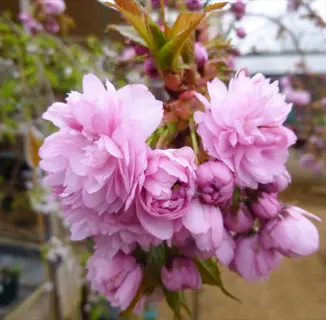
Kiku-Shidare-Zakura
- Bloom Type: Double flowers with up to 125 petals per bloom in deep pink clusters that create one of the most dramatic spring displays of any ornamental tree available today.
- Mature Size: Reaches 15 to 25 feet (4.5 to 7.6 meters) tall with a graceful, arching canopy that spreads 15 to 20 feet (4.5 to 6 meters) wide at maturity.
- Best For: Gardeners who want the showiest bloom display possible, as the heavy petal count makes this variety stand out from single-flower types in any landscape setting.
- Growing Zones: Performs well in USDA Zones 5 through 8, tolerating both cold winters and warm summers with proper watering and soil drainage in place.
- Bloom Season: Flowers appear in early to mid spring on bare branches before leaves emerge, creating a stunning contrast against the still-dormant garden landscape.
- Care Notes: Requires annual dormant-season pruning to maintain shape and remove any rootstock suckers that appear below the graft union on the trunk.

Shidare-Yoshino
- Bloom Type: Single white to pale pink flowers appear in dense clusters along every cascading branch, creating a soft, cloud-like effect that looks stunning in spring gardens.
- Mature Size: Grows 20 to 30 feet (6 to 9 meters) tall and 25 feet (7.6 meters) wide, making it one of the larger weeping cherry options for spacious yards.
- Best For: Homeowners with medium to large yards who want an elegant specimen tree that provides light filtered shade during summer months after the blooms have faded.
- Growing Zones: Thrives in USDA Zones 5 through 8 and tolerates heat and humidity better than many other weeping cherry cultivars on the market today.
- Bloom Season: Blooms in early spring, often among the first trees to flower in the landscape, giving gardeners an early signal that the growing season is underway.
- Care Notes: Prune right after flowering to shape the canopy without removing next year's buds, and watch for aphid infestations on new spring growth tips.
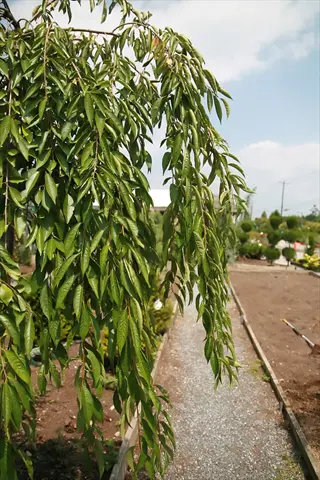
Snow Fountain (White)
- Bloom Type: Pure white single flowers cover every branch in spring, creating a snow-like appearance that gives this compact variety its fitting and descriptive common name.
- Mature Size: Stays between 8 and 15 feet (2.4 to 4.5 meters) tall with a 6 to 8 foot (1.8 to 2.4 meter) spread, making it ideal for smaller garden spaces.
- Best For: Small yards, patios, and tight planting areas where a full-sized weeping cherry would overwhelm the available space but you still want that cascading branch effect.
- Growing Zones: Hardy in USDA Zones 5 through 8 and handles cold winters well, making it a reliable choice for gardeners in northern climates with harsh frost seasons.
- Bloom Season: Flowers open in mid spring and last about one week, with petals falling in a picturesque shower that adds to the tree's ornamental appeal.
- Care Notes: Compact size means less pruning is needed compared to larger varieties, but still remove any shoots growing upward from below the graft point each year.

Pendula Plena Rosea
- Bloom Type: Double pink flowers with 15 to 20 petals per bloom hang in heavy clusters along sweeping branches, producing a richer color display than single-flower weeping cherries.
- Mature Size: Grows 15 to 25 feet (4.5 to 7.6 meters) tall with a wide, umbrella-shaped canopy that spreads 15 to 20 feet (4.5 to 6 meters) across at maturity.
- Best For: Gardeners who prefer pink blooms over white and want the fuller appearance that double flowers provide without the extreme petal count of Kiku-Shidare-Zakura.
- Growing Zones: Performs well in USDA Zones 5 through 8 and handles the temperature swings common in transitional climate zones without significant stress damage.
- Bloom Season: Blooms in mid spring, a bit later than single-flower types, which means pairing it with an early bloomer extends your total cherry blossom viewing window.
- Care Notes: Double flowers are heavier and can weigh down branches, so supportive pruning during dormancy helps maintain an attractive canopy shape over the long term.
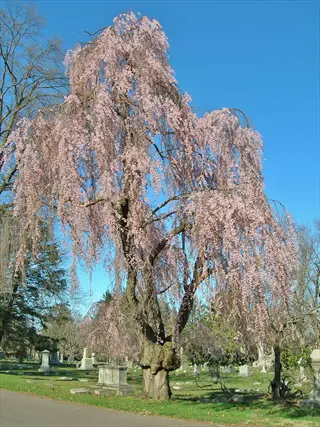
Weeping Extraordinaire
- Bloom Type: Double pink flowers with ruffled petals bloom in waves along gentle arching branches, giving this patented variety a dense and lush spring appearance.
- Mature Size: Reaches 15 to 20 feet (4.5 to 6 meters) in height and 15 to 18 feet (4.5 to 5.5 meters) in spread, fitting well in medium-sized residential landscapes.
- Best For: Homeowners looking for a mid-sized ornamental tree with above-average disease resistance and a reliable, heavy bloom that impresses visitors every spring season.
- Growing Zones: Hardy in USDA Zones 5 through 8 with good tolerance for both summer heat and winter cold when planted in a well-drained location with full sun.
- Bloom Season: Flowers appear in early to mid spring before the foliage emerges, and the double blooms tend to last a bit longer than single-petal varieties.
- Care Notes: Patented variety often sold as a grafted tree; monitor the graft union with care and remove any rootstock suckers that appear below the graft point.
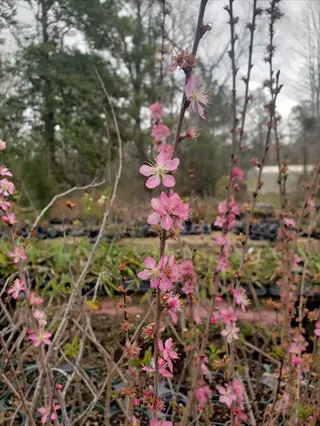
Hiromi Dwarf Weeping Cherry
- Bloom Type: Delicate single pink flowers appear along thin, pendulous branches in early spring, giving this miniature variety a refined and graceful look despite its small stature.
- Mature Size: One of the smallest weeping cherries available, reaching only 6 to 7 feet (1.8 to 2.1 meters) tall, making it perfect for container growing and tiny gardens.
- Best For: Urban gardeners, apartment dwellers with balconies, and anyone who wants a genuine weeping cherry tree in a pot or a very limited planting area.
- Growing Zones: Grows in USDA Zones 5 through 8 and adapts well to container culture where root space is limited, provided drainage holes prevent water from pooling.
- Bloom Season: Blooms in early spring alongside other cherry varieties, providing the same seasonal beauty at a fraction of the size of standard weeping cherry trees.
- Care Notes: Container-grown specimens need repotting every two to three years and more frequent watering than ground-planted trees, during hot summer months in particular.
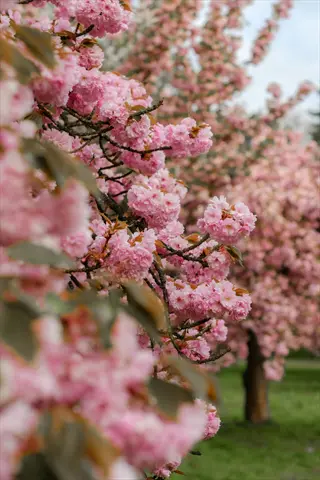
Pink Snow Showers
- Bloom Type: Single soft pink flowers bloom in thick clusters along cascading branches, and breeders created this variety for improved disease resistance compared to older weeping cherry types.
- Mature Size: Reaches 20 to 25 feet (6 to 7.6 meters) tall with a mature spread of about 20 feet (6 meters), providing substantial presence in medium to large landscapes.
- Best For: Gardeners in humid climates who struggle with fungal diseases on ornamental trees, as this cultivar resists common cherry problems better than most alternatives.
- Growing Zones: Performs well in USDA Zones 5 through 8 and shows better tolerance for wet spring weather that would trigger leaf spot and canker in other varieties.
- Bloom Season: Flowers appear in mid spring and create a shower of pink petals as they fall, which is both the source of its name and part of its ornamental charm.
- Care Notes: While more disease resistant, still benefits from proper spacing, good air circulation, and mulching practices to keep the root zone healthy and well drained.

Weeping Higan Cherry
- Bloom Type: Light pink to white single flowers bloom in umbels of 2 to 5 per cluster on bare branches, offering a delicate and traditional Japanese cherry blossom appearance.
- Mature Size: The largest of the common weeping cherries, reaching 20 to 40 feet (6 to 12 meters) tall with a wide canopy, making it a true statement piece in open landscapes.
- Best For: Large properties, parks, and estate gardens where the tree has room to develop its full cascading form without being crowded by structures or other plantings.
- Growing Zones: NC State Extension describes this as the most cold, heat, and stress tolerant ornamental cherry, thriving in USDA Zones 5a through 8b without special protection.
- Bloom Season: Among the earliest spring bloomers, flowering before most other cherry varieties and often blooming when overnight temperatures still dip below freezing in early spring.
- Care Notes: Grafted onto Prunus avium rootstock at 4 to 5 feet (1.2 to 1.5 meters) height; requires vigilant removal of rootstock suckers and watersprouts growing upward.
Planting Your Weeping Cherry
Learning how to plant weeping cherry tree stock the right way is a one time investment that shapes the next 20 years of its life. Get it right on day one and you avoid most of the stress that leads to borers and disease down the road. UMD Extension warns that anything stressing a cherry tree opens the door to serious problems.
Pick a spot with full sun that gets at least 6 hours of direct light each day. Your weeping cherry tree growing zone should fall between USDA Zones 5a and 8b for best results. NC State Extension confirms these trees handle clay, loam, and sand with a pH range from below 6.0 up to 8.0. The key is drainage, not soil type.
Dig your planting hole twice as wide as the root ball but no deeper. Set the tree so the top of the root ball sits level with the ground surface. If you have heavy clay soil, mix in 3 to 4 inches of compost to break up the density and improve water flow. Sandy soil dries out too fast, so blend in peat or aged compost to help hold moisture near the roots.
I learned the hard way that planting too deep kills more cherry trees than bad soil ever will. The root flare must stay visible above the soil line. Water your tree deep right after planting and keep the soil moist for the first 2 years. Spread mulch in a ring 2 to 3 inches deep but keep it at least 6 inches away from the trunk to prevent rot.
Your tree needs room to grow into its full shape. Standard varieties spread 15 to 25 feet wide, so plant at least 20 feet from buildings and other trees. A well-drained soil spot with open sky above gives your weeping cherry the best start for a long, healthy life.
I planted my second weeping cherry too close to a fence and had to move it 2 years later. Give your tree the space it needs from the start and you'll save yourself a lot of trouble down the road.
Seasonal Care Calendar
Most weeping cherry tree care guides just tell you to prune in winter and water in summer. That's not enough detail to keep your tree healthy for 20 plus years. I built this season by season calendar from my own notes and research from UMD and Penn State Extension sources.
Timing matters more than most people think. Penn State Extension found that freeze damage and drought stress make your tree more prone to Leucostoma canker. The right task at the right time prevents that stress. Your weeping cherry is drought tolerant once it gets going, but it still needs your help in the first few years and during dry spells.
Spring Tasks (March to May)
- Inspect the Graft Union: Check the graft point on the trunk for cracks, swelling, or rootstock suckers growing upward and remove any suckers at their base with sterilized bypass pruners.
- Apply Balanced Fertilizer: Feed the tree in early spring before new growth begins using a balanced slow release fertilizer spread from the trunk to just beyond the drip line of the canopy.
- Monitor for Pests: Watch for aphids on new leaf growth and tent caterpillars forming silk nests in branch crotches, as early spring populations are easiest to control before they multiply.
- Enjoy the Blooms: Flowers appear on bare branches in early spring and last about one week, so plan your garden viewing during this brief but spectacular window of peak color.
Summer Tasks (June to August)
- Water During Drought: Provide 1 to 2 inches of water per week during dry spells, watering deep at the base rather than frequent light sprinkles across the surface.
- Check for Borers: Inspect the trunk base for sawdust like frass and small holes that indicate peachtree borer activity, since one borer can kill a small tree according to UMD Extension research.
- Maintain Mulch Ring: Keep the mulch layer 2 to 3 inches deep and at least 6 inches away from the trunk to retain soil moisture without creating conditions that invite rot.
- Scout for Japanese Beetles: Hand pick Japanese beetles from leaves in early morning when they are sluggish, and avoid beetle traps which attract more beetles to your yard than they catch.
Fall Tasks (September to November)
- Stop Fertilizing: Do not fertilize after midsummer because late feeding pushes tender new growth that cannot harden off before frost, raising the risk of freeze damage and canker infection.
- Clean Up Fallen Leaves: Rake and remove fallen leaves from beneath the tree to get rid of spots where fungal spores spend the winter that cause leaf spot and brown rot.
- Reduce Watering: Taper off extra watering as temperatures cool and rainfall picks up, but do not let the root zone go bone dry before the ground freezes for winter.
- Plan Dormant Pruning: Look at the canopy shape while leaves are still on the tree to spot branches you want to remove during winter pruning, and order any tools you may need.
Winter Tasks (December to February)
- Prune During Dormancy: Late winter before buds swell is the ideal time for pruning during dormancy because you can see the branch structure and the tree heals cuts faster during spring growth.
- Remove Diseased Wood: Cut out any branches showing signs of black knot, cankers, or dieback at least 4 inches below the visible damage, and sterilize tools between each cut.
- Protect Young Trees from Frost: Wrap the trunks of new trees with tree wrap to prevent sunscald and frost cracking that creates entry points for borers and fungal problems.
- Check Soil Drainage: After a heavy rain or snowmelt, check that water is not pooling around the trunk because standing water during dormancy invites root rot infections.
I keep a printed copy of this calendar in my garden shed. Watering weeping cherry tree stock at the right time matters a lot. Fertilizing weeping cherry trees on schedule makes all the difference. Proper mulching saves your tree from stress that leads to disease.
Pruning Grafted and Natural Forms
Knowing how to prune weeping cherry tree stock is the single most important skill for keeping these trees at their best. I've been pruning my own trees for over 12 years now. Most weeping cherries are a partnership between two different trees. NC State Extension confirms that nurseries graft the weeping top onto Prunus avium rootstock at about 4 to 5 feet up the trunk. That graft union is where the rootstock scion connection lives.
The rootstock wants to grow straight up and take over. It sends out suckers below the graft union that look nothing like your weeping branches. If you ignore these suckers for 2 to 3 years, the rootstock overtakes the grafted top and you lose the weeping form for good. I missed a single sucker on one of my trees and it grew 3 feet in one summer before I caught it.
For grafted trees, grab your bypass pruning shears and cut every sucker at its base right where it meets the trunk. Do this check once a month during the growing season. Also remove any water sprouts that shoot straight up through the weeping canopy. These upright shoots ruin the cascading shape and steal energy from the branches you want to keep.
Weeping cherry tree pruning on natural forms is simpler. You just need to shape the canopy and remove dead or crossing branches. For both types, prune during late winter while the tree sleeps. Never remove more than one third of the canopy in a single year. Taking off too much puts stress on the tree, and UMD Extension warns that stressed cherry trees become magnets for borers and disease.
Sterilize your pruning tools with rubbing alcohol between each cut to keep from spreading disease from one branch to another. This extra step takes 10 seconds per cut but prevents black knot and canker from jumping around your tree. Clean cuts on healthy wood heal fast once spring growth kicks in.
Pests and Disease Management
Your weeping cherry tree pests and weeping cherry tree diseases don't have to be a mystery. UMD Extension teaches a smart diagnostic trick. Examine the 6 to 8 inch area above and below the soil line on your trunk. Gummy sap there means borers. Cankers with brown tissue under the bark point to verticillium wilt or root rot.
I've dealt with Japanese beetles, black knot, and cherry leaf spot on my own trees. The key is catching problems early before they spread. Penn State's Dr. Moorman found that healthy trees wall off canker infections during active growth. When growth slows in fall, the fungus advances again. That's why the seasonal care calendar matters so much for disease prevention.
The table below helps you match what you see on your tree to the right problem. One serious warning: Necrotic Ring Spot Virus has no cure at all. If your tree gets it, you must destroy the tree to stop it from spreading through pollen and grafting material. Powdery mildew looks scary but won't kill your tree on its own.
UMD Extension says to tolerate some bug damage and let natural predators work first. Save chemical treatments as a last resort. In my experience, borers are the one exception. A single peachtree borer can kill a small tree before you even spot the damage. I check my trunk bases each month during summer and you should do the same.
Landscape Design Ideas
Your weeping cherry tree landscape plan can make or break the whole look of your yard. NC State Extension lists several design uses for these trees, from specimen planting to borders and small group plantings. Most people just stick their tree in the middle of the lawn and call it done. You can do much better than that with a little planning.
I've tried 3 different weeping cherry garden design setups in my own yard over the years. The best results come when you match the tree to a theme. A specimen planting in an open lawn gives you a bold focal point that draws every eye in spring. Place a bench nearby so you can sit and watch the petals fall during bloom week.
For an Asian garden style, underplant your weeping cherry with hostas, ferns, and Japanese forest grass. This combo creates layers of texture beneath the cascading branches. Add a stone lantern or small water feature near the base. NC State Extension lists Asian Garden and Water Garden as ideal themes for these trees.
A cottage garden border works great with companion plants weeping cherry trees love. Plant low growing perennials like creeping phlox, coral bells, and spring bulbs around the drip line. These companion plants bloom at different times so you get color from early spring through fall. Keep your plants at least 3 feet from the trunk to avoid moisture problems.
Think about where to plant weeping cherry trees with wildlife in mind too. Tallamy's research shows that Prunus species support native butterflies and moths. Their caterpillars feed baby birds during nesting season. A tree near a bird bath or feeder turns that corner into a mini habitat. You'll see more birds visit your yard through every season.
NC State Extension recommends 24 to 60 feet of spacing between trees in group plantings. This gives each tree room to fill out its natural shape without crowding. Dwarf varieties like the Hiromi need far less room. They fit tight spots along walkways or near patios where you want beauty without bulk.
5 Common Myths
Weeping cherry trees live for 50 years or more like other fruit-bearing cherry varieties in home landscapes.
University of Maryland Extension research shows ornamental cherry trees typically live only 20 to 25 years in a home landscape, far shorter than many people expect.
You should pile mulch high around the base of a weeping cherry trunk to keep roots moist and protected from cold.
Mulch must be kept at least 6 inches (15 centimeters) away from the trunk and no deeper than 2 to 3 inches (5 to 7.5 centimeters) to prevent rot and pest problems.
Weeping cherry trees need rich, loamy soil and will struggle in clay or sandy ground conditions.
NC State Extension confirms weeping cherries tolerate clay, loam, and sand soils equally well, making them adaptable to most yard conditions.
Chemical pesticides should be applied at the first sign of any insect damage on weeping cherry tree leaves.
University of Maryland Extension recommends tolerating some insect damage and relying on natural predators first, using pesticides only as an absolute last resort.
Weeping cherry trees only grow in warm southern climates and cannot survive freezing winter temperatures.
Weeping cherry trees are hardy in USDA Zones 5a through 8b, meaning they survive winter temperatures as low as negative 20 degrees Fahrenheit (negative 29 degrees Celsius).
Conclusion
Your weeping cherry tree care comes down to 3 big choices. Pick the right variety for your space, plant it in full sun with good drainage, and follow the seasonal care calendar to prevent stress. Get those 3 things right and your ornamental cherry tree will reward you with stunning spring blooms for years to come.
UMD Extension data shows these trees live 20 to 25 years in a home landscape. That means every care choice you make from day one shapes how long your tree stays healthy and beautiful. Start with the diagnostic approach from the pest section so you can catch problems early. Don't forget that weeping cherry trees are toxic to pets, so keep your dogs and cats in mind when you pick a planting spot.
In my experience, the best part is watching your weeping cherry tree grow from a bare stick to a full canopy of pink blooms. People stop on the sidewalk each spring just to look at it. That flowering cherry tree taught me that consistent care beats big efforts once a year. A quick monthly check does more good than a weekend of catch up work in fall.
Your weeping cherry tree is one of the most admired ornamental trees in North America. Give it the care it deserves and it will be the highlight of your garden for 2 decades. The work pays off every spring when those branches erupt in color.
External Sources
Frequently Asked Questions
What are the disadvantages of a weeping cherry tree?
Weeping cherry trees have a short lifespan of 20 to 25 years, are prone to borers and fungal diseases, produce messy fallen petals, and require careful pruning around the graft union.
How big will a weeping cherry tree get?
Standard weeping cherry trees reach 15 to 40 feet (4.5 to 12 meters) tall and 15 to 25 feet (4.5 to 7.6 meters) wide, while dwarf cultivars stay under 10 feet (3 meters).
Is a weeping cherry a cherry blossom?
Yes, weeping cherry trees are a type of cherry blossom. They belong to the Prunus genus and produce the same iconic spring blooms as upright cherry blossom varieties.
How to care for a weeping cherry tree?
Care for a weeping cherry tree by providing full sun, well-drained soil, regular watering during the first two years, annual pruning during dormancy, and mulching 6 inches away from the trunk.
What is the lifespan of a weeping cherry?
The typical lifespan of a weeping cherry tree is 20 to 25 years in a home landscape, though some well-maintained trees may live 30 years or longer.
What not to plant next to a cherry tree?
Avoid planting walnut trees, large shade trees, and aggressive ground covers near cherry trees because they compete for nutrients, block sunlight, or release growth-inhibiting chemicals.
Where is the best place to plant a weeping cherry tree?
The best place is a spot with full sun exposure of at least 6 hours daily, well-drained soil, and enough room for the tree to reach its mature spread of 15 to 25 feet.
Do weeping cherry trees lose their leaves in the winter?
Yes, weeping cherry trees are deciduous and lose all their leaves in late fall. They remain bare through winter and produce flowers on bare branches in early spring.
Does a weeping cherry tree have deep roots?
No, weeping cherry trees have relatively shallow, spreading root systems. Their roots typically stay within the top 24 inches (61 centimeters) of soil.
What is the prettiest weeping cherry tree?
Many gardeners consider the Kiku-Shidare-Zakura the prettiest weeping cherry because its double flowers can have up to 125 petals per bloom in deep pink clusters.