
Introduction
The limelight hydrangea got a 5 star rating from a major botanic garden trial. That study at the Chicago Botanic Garden ran 20 years and tested 45 panicle hydrangea types. Only 8 plants earned that top mark. This shrub isn't just popular because of hype.
I've grown hydrangea paniculata limelight in 3 yards over 12 years. It never failed me once. Purdue calls it "very hardy, hard to kill." It handles heat, humidity, and city pollution with no fuss at all.
Think of the limelight hydrangea as the golden retriever of the shrub world. It's friendly to every yard and forgiving when you mess up. Most online guides give you 600 to 900 words of basic tips and stop there. This guide goes deeper with real trial data and proven care methods.
You'll learn how to plant, prune, and care for this panicle hydrangea in every season. First time grower or veteran plant killer, it doesn't matter. This guide covers everything for healthy blooms from summer through fall.
Limelight Hydrangea Care Guide
Limelight hydrangea care is about as simple as it gets for a flowering shrub. NC State rated it 5.0 out of 5.0 for ease of growing in the first year. This plant thrives in USDA Zones 3a through 9a and handles heat, salt, and urban air with no complaints.
The biggest care mistake I see people make is watering limelight hydrangeas too often. Once your plant is set in well-drained soil, it becomes quite drought tolerant after the first season. Water deep once per week in the hottest months and you'll be fine. A slow-release fertilizer in spring gives it all the food it needs for the year.
Your zone affects a few small tweaks I've learned over the years. If you garden in Zone 3 or 4, pile on extra mulch before winter hits. If you're in Zone 8 or 9, give your plant some afternoon shade to prevent leaf scorch. This low maintenance shrub adapts to most spots but those two tips make a real difference.
Spring Planting and Feeding
- When to plant: Set new plants in the ground after the last frost date in your area, spacing them 6 to 8 feet (1.8 to 2.4 meters) apart to allow full mature spread.
- Soil preparation: Amend heavy clay soil with compost and organic matter to improve drainage, aiming for moist but well-drained conditions with a slightly acidic to neutral pH.
- Fertilizer timing: Apply a balanced slow-release fertilizer such as 10-10-10 in early spring before new growth emerges to fuel strong stems and large flower panicles.
Summer Watering and Monitoring
- Watering frequency: Water deeply once per week during the hottest and driest months, providing about 1 inch (2.5 centimeters) of water per session at the base of the plant.
- Mulch application: Spread 2 to 3 inches (5 to 7.5 centimeters) of bark mulch or shredded hardwood around the root zone to retain soil moisture and regulate temperature.
- Pest watch: Check leaves weekly for aphids and spider mites, which are the most common pests according to NC State Extension, though infestations are rarely serious.
Fall Color Enjoyment
- Bloom transition: Enjoy the natural color shift from lime green to creamy white to pink and finally burgundy as nighttime temperatures drop below 70°F (21°C).
- Stop fertilizing: Cease all fertilizer applications by late summer to allow the plant to harden off naturally before winter dormancy begins.
- Leave dried blooms: Keep faded flower heads on the plant through fall and early winter for visual interest and to protect developing buds from harsh weather.
Winter Protection and Prep
- Cold hardiness: Limelight is fully cold-hardy down to Zone 3a, with the Chicago Botanic Garden recording zero winter losses across 20 years of trials in Zone 5b.
- Mulch for zones 3 and 4: In the coldest growing zones, add an extra 2 to 4 inches (5 to 10 centimeters) of mulch around the root zone before the ground freezes.
- Winter pruning window: Plan to prune in late winter or very early spring before new growth appears, which sets up the plant for the strongest possible growing season.
Pruning Limelight Hydrangeas
Limelight hydrangea pruning is one of the best parts about growing this shrub. Since it blooms on new wood, you can cut it back each year without worrying about losing flowers. The Chicago Botanic Garden trial showed that first year stems start out weak. They get sturdy with annual late winter pruning over time.
I do all my pruning and shaping in late February or early March before new buds break. Clemson Extension says you should remove 30 to 40% of the plant for the best mix of strong stems and big blooms. Find a bud that faces away from the center of the plant and make your cut about a quarter inch above it.
Hard pruning works too if your plant has gotten out of control. I once cut a 7 foot Limelight back to about 3 feet in late winter and it bounced back with huge flower heads that same summer. The stems were a bit weak that first year back but they firmed up by the next season.
Don't be afraid of the pruning shears with this plant. In my experience, even a full chop to the ground won't kill it. You might skip a bloom season but the plant grows right back from the roots. The table below shows how each level of late winter pruning affects your results.
Limelight Bloom Color Stages
The limelight hydrangea color change is one of the best shows in any garden. Your blooms go through 5 distinct stages from early summer all the way into late fall. Each stage brings a new look that keeps your yard fresh for months on end.
In my own garden I watch the bloom color progression shift from bright chartreuse blooms to deep burgundy each year. The late season mix stays showy until the end of October. Your flower panicle size can reach 9 to 12 inches long based on CBG and Purdue trial data.
One thing that trips up new growers is the pink stage. If you live in the Southeast where nights stay hot, your lime green hydrangea may skip the pink tones and go straight to beige. Cooler nights below 70°F (21°C) trigger that pink and burgundy color shift. The table below maps out what to expect at each stage.
Limelight Varieties Compared
The limelight vs little lime debate comes up all the time at garden centers. I've grown both in the same yard and they look like siblings with very different builds. Your choice comes down to how much space you have and what look you want in your garden.
The CBG trial rated both the original and Little Lime high. But the dwarf limelight hydrangea showed some leaf spotting that the full size version avoided. The limelight prime hydrangea and limelight hydrangea tree form round out your options. Each compact panicle hydrangea fits a different garden setup as shown below.
Original Limelight
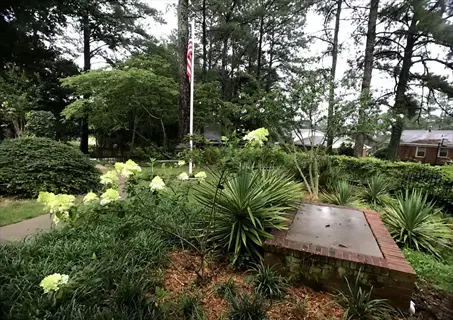
- Mature size: Grows 6 to 8 feet (1.8 to 2.4 meters) tall and wide, reaching up to 70 inches (178 centimeters) tall by 100 inches (254 centimeters) wide with annual pruning in the CBG trial.
- Trial rating: Earned a 5-star Excellent rating in the Chicago Botanic Garden's 20-year comparative trial of 45 panicle hydrangea cultivars.
- Bloom character: Produces rotund mop-head panicles measuring 9 inches (23 centimeters) long by 7 inches (18 centimeters) wide, overstuffed with sterile florets.
- Disease resistance: No leaf spotting was observed on Limelight during the entire 20-year Chicago Botanic Garden evaluation period.
- Best for: Large landscapes, hedges, specimen plantings, and gardeners who want maximum visual impact from a single shrub.
- Growth habit: Medium growth rate with stems that become sturdy after the first year of annual late-winter pruning.
Little Lime (Dwarf)
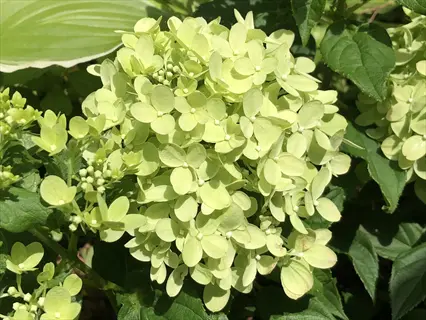
- Mature size: Reaches only 3 to 5 feet (0.9 to 1.5 meters) tall and wide, making it ideal for smaller gardens, borders, and container planting.
- Trial rating: Also earned a top rating in the CBG trial but showed some leaf spotting that the original Limelight did not exhibit.
- Bloom character: Produces the same lime-green to pink color progression as the original but on proportionally smaller panicles suited to its compact frame.
- Disease notes: CBG trial documented leaf spotting on Little Lime, though this did not significantly affect overall plant performance or health.
- Best for: Small yards, foundation plantings, mixed borders, container gardens, and spaces where the full-size Limelight would be overwhelming.
- Growth habit: Compact and rounded growth pattern that requires less pruning to maintain shape than the original cultivar.
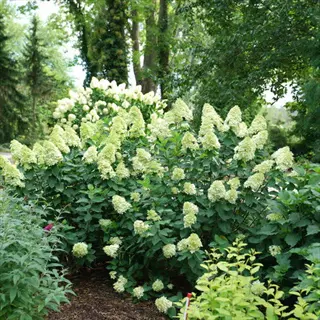
Limelight Prime
- Mature size: Grows 4 to 6 feet (1.2 to 1.8 meters) tall and wide, fitting between the original Limelight and Little Lime in overall stature.
- Bloom improvement: Features an extended bloom season compared to the original, with flowers starting slightly earlier and holding color longer into fall.
- Color intensity: Produces deeper pink and red tones in fall compared to the original Limelight, making it the showiest variety for autumn color.
- Stem strength: Bred for improved stem rigidity, reducing the floppy first-year stem issue that the original Limelight sometimes shows.
- Best for: Mid-size landscapes, gardeners who want a more compact option with stronger fall color than the original.
- Availability: Newer cultivar that may cost slightly more than the original Limelight at garden centers but is increasingly available nationwide.
Limelight Tree Form
- Training method: The original Limelight pruned and staked to grow as a single-trunk standard tree rather than a multi-stemmed shrub.
- Mature height: Tree forms typically reach 6 to 8 feet (1.8 to 2.4 meters) tall with a rounded canopy of blooms atop a clear trunk.
- Landscape value: Creates a formal focal point in garden beds, flanking entry walkways, or lining driveways where a shrub form would look too casual.
- Maintenance needs: Requires ongoing sucker removal at the base and careful pruning to maintain the single-leader tree shape throughout each growing season.
- Best for: Formal gardens, entryway plantings, paired specimens, and gardeners who want vertical interest without the spreading width of a shrub.
- Cost note: Tree form Limelight plants typically cost 2 to 3 times more than shrub-form plants at nurseries due to the extra training required.
Landscape Uses and Companions
Good limelight hydrangea landscape ideas start with your space. I've used it as a limelight hydrangea hedge along my back fence. It also works great as a foundation planting near the porch or a privacy hedge on a property line. NC State lists it as a fit for borders, cottage gardens, and butterfly gardens too.
Your limelight hydrangea companion plants shape how your garden looks all year. Limelight handles urban air and salt, so it works in city and coastal spots. You can try container gardening hydrangea options like Little Lime to bring that same look to patios and balconies too.
Ornamental Grasses
- Why they work: Tall grasses like Karl Foerster feather reed grass provide vertical contrast against the rounded form of Limelight and share similar sun and soil preferences.
- Design effect: The fine texture of grass blades contrasts beautifully with the large bold panicles, creating layered visual interest from summer through winter.
- Spacing tip: Plant grasses 3 to 4 feet (0.9 to 1.2 meters) from Limelight's base to avoid root competition while still creating a cohesive planting.
Boxwood and Evergreens
- Why they work: Low boxwood hedges or evergreen shrubs provide year-round structure that frames Limelight during dormancy when its branches are bare.
- Design effect: The dark green foliage of boxwood creates a rich backdrop that makes Limelight's lime-green and white blooms appear even more vivid and luminous.
- Spacing tip: Maintain at least 4 feet (1.2 meters) between boxwood and Limelight to prevent crowding and ensure adequate air circulation around both plants.
Coneflowers and Black-Eyed Susans
- Why they work: These sun-loving perennials bloom at the same time as Limelight and attract pollinators that benefit the entire garden ecosystem.
- Design effect: The warm gold and purple tones of coneflowers and black-eyed Susans create striking color contrast against Limelight's cool green and white panicles.
- Spacing tip: Plant perennials in drifts 2 to 3 feet (0.6 to 0.9 meters) in front of Limelight to create a layered cottage garden look with taller shrubs behind.
Hostas for Shaded Edges
- Why they work: Hostas thrive in the partial shade cast by mature Limelight shrubs, making them ideal ground-level companions for the shadier side of the planting.
- Design effect: The broad textured leaves of hostas fill the bare ground beneath Limelight while adding a lush tropical feel to the understory layer of the garden.
- Spacing tip: Plant hostas on the north or east side of Limelight where they receive filtered light, keeping them 2 feet (0.6 meters) from the main trunk.
Cut Flowers and Drying Tips
Limelight hydrangea cut flowers are some of the best stems you can grow in your own yard. NC State trials showed a limelight hydrangea vase life of 7 to 10 days with fresh cuts. The trial also called this plant a "big hit with wedding florist hydrangea" buyers across the country.
I cut my limelight hydrangea cut flowers early in the morning before the sun gets hot. You want to snip stems at about 18 to 28 inches long and put them in cool water right away. Strip the leaves below the water line and change the water every 2 days for the best results.
Drying limelight hydrangeas is just as easy. Wait until the blooms start to feel papery in late summer or early fall. Cut the stems and hang them upside down in a dark dry spot for about 2 weeks. You can use the dried blooms in a dried hydrangea wreath or in vases that last all winter long.
The NC State trial showed stem yield nearly doubled from 13 stems per plant in Year 1 to over 26 in Year 2. That means a single mature plant gives you enough blooms to fill your vases and still have extras to share with friends.
5 Common Myths
You can change the flower color of Limelight hydrangeas by adjusting soil pH with aluminum sulfate or garden lime.
Soil pH only affects bloom color in bigleaf (macrophylla) hydrangeas. Panicle types like Limelight change color naturally based on temperature and season, not soil chemistry.
Limelight hydrangeas cannot survive cold winters and should only be grown in warm southern climates.
Limelight is hardy in USDA Zones 3a through 9a. The Chicago Botanic Garden trial recorded zero winter losses across 45 panicle cultivars in Zone 5b over 20 years.
You should never prune Limelight hydrangeas hard or you will lose next year's blooms entirely.
Limelight blooms on new wood grown in the current season, so even hard pruning in late winter will not prevent flowering. Moderate pruning of 30 to 40 percent produces the sturdiest stems.
Limelight hydrangeas need constant watering and cannot tolerate any drought conditions at all.
Once established, Limelight is moderately drought tolerant and typically needs watering only once per week during the hottest and driest months of summer.
Limelight hydrangeas only grow well in full shade and will burn in direct sunlight.
Limelight actually performs best with at least 6 hours of direct sun. Full shade reduces blooming significantly. Morning sun with light afternoon shade is ideal in hot regions.
Conclusion
The limelight hydrangea earned its spot as one of the top 20 best selling flowering shrub options for good reason. It handles Zones 3a through 9a, blooms on new wood, shrugs off drought, and asks very little from you in return. Few plants offer that kind of range.
I keep coming back to this panicle hydrangea because it rewards you no matter your skill level. In my experience, it's the best hydrangea for beginners by far. Prune in late winter, water once a week in summer, and feed it in spring. That's all you need for a stunning show every year.
Your next step is simple. Check your garden's sunlight and hardiness zone. If you have a big yard, go with the original. Small space? Try Little Lime. Want the best fall color? Pick Limelight Prime. Each one is tough and forgiving no matter what you choose.
The Chicago Botanic Garden tested this limelight hydrangea for 20 full years and gave it 5 stars. If it can impress researchers for 2 decades, it can make your yard look amazing for just as long.
External Sources
Frequently Asked Questions
Do Limelight hydrangeas like sun or shade?
Limelight hydrangeas perform best in full sun to partial shade, ideally receiving at least 6 hours of direct morning sunlight with some afternoon shade in hot climates.
How big will a limelight hydrangea get?
Limelight hydrangeas typically reach 6 to 8 feet (1.8 to 2.4 meters) tall and wide at maturity, though some specimens grow up to 10 feet (3 meters) in ideal conditions.
Are tea bags good for hydrangeas?
Used tea bags can add mild acidity and organic matter to soil, but they have minimal effect on panicle hydrangeas like Limelight since soil pH does not change their bloom color.
Do limelight hydrangeas need to be cut back?
Yes, pruning Limelight hydrangeas in late winter or early spring by removing 30 to 40 percent of growth encourages stronger stems and bigger flower panicles.
What are the disadvantages of limelight?
Limelight hydrangeas can grow too large for small gardens, may have lax stems in the first year, and their flowers are toxic to cats, dogs, and horses.
What not to plant next to hydrangeas?
Avoid planting aggressive root competitors, heavy feeders, or plants that require very dry or alkaline soil conditions next to hydrangeas.
What are common limelight problems?
Common problems include wilting from underwatering, leaf spot, powdery mildew, aphid infestations, and lax first-year stems that may flop under heavy blooms.
Why say goodbye to hydrangeas?
Some gardeners abandon hydrangeas due to repeated bloom failure, pest issues, or incorrect variety selection for their climate zone.
What month does limelight hydrangea bloom?
Limelight hydrangeas typically begin blooming in June in southern regions and July in northern areas, continuing through October.
Does sugar help hydrangeas?
Adding sugar to vase water may extend the freshness of cut hydrangea blooms slightly, but it does not benefit hydrangeas growing in the garden.