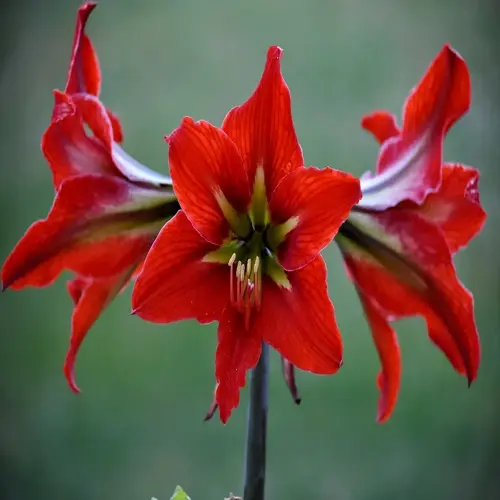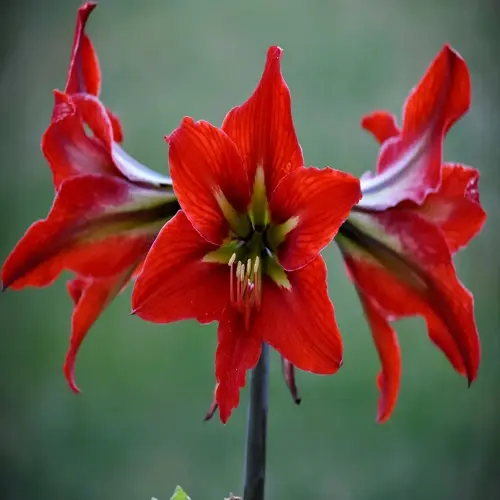

You take care of an amaryllis plant by giving it four things: light, water, food, and rest. Get these basics right and your amaryllis will bloom bigger and stronger every season. Each one matters at a different time of year.
Amaryllis plant care feels complicated at first, but the routine clicks into place after your first full cycle. I was nervous about all the steps my first year, checking the soil every day and worrying about whether my bulb was getting enough light. By year two, the whole process felt as natural as watering any other houseplant. You just shift what you do based on the season.
Each growth stage calls for different treatment. When you first plant the bulb, set it in a pot that's 1 to 2 inches wider than the bulb with one-third of the bulb sitting above the soil line. Give it one thorough watering and then hold off until you see green growth poking up. During this startup phase, place the pot in a warm spot around 70°F to 75°F (21°C to 24°C) with bright indirect light.
Once the flower stalk starts rising, keep the pot in bright indirect light and rotate it a quarter turn every 2 to 3 days so the stalk grows straight. Water when the top inch (2.5 cm) of soil feels dry. The blooming phase lasts about 2 to 4 weeks depending on how many stalks your bulb produces. Cooler room temperatures around 60°F to 65°F (16°C to 18°C) help each flower last longer.
After your flowers fade, amaryllis watering and light become the top priorities. Cut the spent stalk to 2 inches (5 cm) above the bulb but leave every leaf alone. Move your plant to the brightest window you have or set it outside in full sun once frost passes. Water when the soil surface dries out. Feed with a half-strength liquid fertilizer every 2 to 4 weeks through summer.
The dormancy phase trips up more growers than any other step. In late August or early September, stop watering and let the leaves yellow and wither on their own. Trim the dead foliage, then stash the pot in a cool dark place at 40°F to 55°F (4°C to 13°C) for 8 to 12 weeks. No water, no light, no attention. The bulb needs this rest to form next year's flower buds.
Planting Stage
- Overwatering: Giving too much water before roots form causes the bulb to rot from the bottom up. Water once at planting, then wait for green growth.
- Wrong pot size: A pot that's too large holds excess moisture around the bulb and slows blooming. Keep it snug with just 1 to 2 inches of space on each side.
- Burying too deep: The top third of the bulb must sit above the soil line so it stays dry and avoids rot problems.
Post-Bloom Stage
- Too little light: Moving the plant to a dim corner after blooming starves the bulb of the energy it needs for next year's flowers. Give it full sun instead.
- Cutting leaves early: Removing green leaves robs the bulb of its food source. Only trim leaves after they turn yellow and die back on their own.
- Skipping fertilizer: The leaf-growing months are when the bulb rebuilds its energy reserves. Feed it every 2 to 4 weeks with balanced liquid fertilizer.
Dormancy Stage
- Skipping dormancy: Without a cool rest period, the bulb keeps producing leaves but never forms new flower buds inside. This is the most common reason amaryllis won't rebloom.
- Too short a rest: The bulb needs a full 8 to 12 weeks of cool, dry conditions. Cutting dormancy short leads to weak or missing blooms.
- Watering during rest: Any water during dormancy can trigger premature leaf growth and interrupt the bud formation process inside the bulb.
After dormancy ends, bring the pot into a warm bright room and water it once. A new green shoot should appear within a few weeks, and the whole beautiful cycle starts again. Stick to these basics and your amaryllis will thrive year after year.
Read the full article: Amaryllis Plant: Complete Growing Guide