
Introduction
A forsythia bush in full bloom tells you that winter is done. Those bright golden bells cover every bare branch weeks before most plants wake up. This yellow flowering shrub works like a natural alarm clock for your garden. When it blooms, the last hard frost has passed and you can start planting.
I grew my first forsythia over 15 years ago and saw right away how tough this spring blooming shrub can be. The genus was named after William Forsyth, who ran the Royal Gardens at Kensington Palace in the 1700s. His legacy lives on in a shrub that grows in zones 3b through 8 and handles soil pH from 5.0 to 8.0 with no fuss at all.
Most guides skip the single biggest reason forsythia owners feel let down. Your plant can survive the winter just fine but still produce zero flowers next spring. That happens because flower buds freeze and die at a warmer temp than the stems do. Knowing this gap between plant hardiness and bud hardiness saves you years of confusion.
This guide walks you through the best varieties for your zone and the planting basics that matter most. You will learn pruning methods that protect your blooms and fixes for common problems. The goal is simple: maximum flowers every spring from your forsythia.
8 Best Forsythia Varieties
Not all forsythia varieties perform the same in every yard. I have tested over a dozen forsythia cultivars in my own garden and seen huge gaps between the best and worst picks. The right choice depends on your zone, your space, and what you want the shrub to do in your landscape.
I grouped these 8 picks into categories so you can find what fits your yard. You will find cold hardy forsythia for northern zones and compact forsythia for tight spots. I also added dwarf forsythia picks for container growers. Some of these cultivars have wild origin stories. Gold Tide came from gamma ray treatment of a Spring Glory seed in France. Beatrix Farrand is a triploid with 3 sets of chromosomes that give it blooms almost double the normal size.
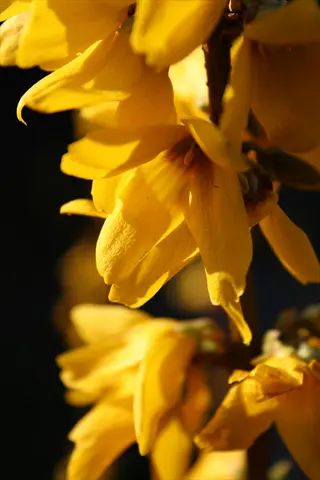
Meadowlark Forsythia
- Cold Hardiness: Flower buds survive temperatures down to minus 35 degrees Fahrenheit (minus 37.2 degrees Celsius), making this the most cold-hardy cultivar available for northern gardeners.
- Size: Grows 8 to 10 feet (2.4 to 3 meters) tall and 8 to 10 feet (2.4 to 3 meters) wide with an upright arching form ideal for screening.
- Origin: Released in 1986 by North Dakota State University, South Dakota State University, and the Arnold Arboretum after extensive cold testing.
- Best Zones: Performs reliably in zones 3b through 8, blooming fully even after harsh northern winters where other varieties fail.
- Landscape Use: Works well as a large informal hedge, windbreak, or background planting in cold climate gardens.
- Bloom Quality: Produces bright yellow flowers on bare branches in early spring with consistent annual blooming in cold regions.
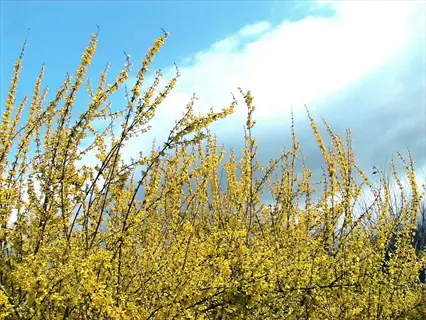
Show Off Forsythia
- Size: Reaches 5 to 6 feet (1.5 to 1.8 meters) tall and wide, offering a manageable size without constant pruning for most home landscapes.
- Bloom Density: Flowers line every inch of the branches for much heavier bloom coverage compared to older varieties with sparser flowering.
- Habit: Upright and compact growth habit that maintains a neat shape on its own without heavy pruning or shearing throughout the season.
- Best Zones: Hardy in zones 5 through 8 with reliable flower bud survival in moderate winter climates across most of the country.
- Landscape Use: Excellent for foundation plantings, mixed borders, and smaller hedges where full-size forsythia would overwhelm the space.
- Maintenance: Requires minimal pruning beyond removing old canes after flowering, making it a good choice for low-effort garden designs.
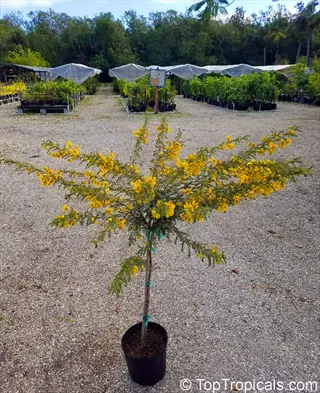
Show Off Sugar Baby Forsythia
- Size: Compact growth to only 24 to 30 inches (61 to 76 centimeters) tall and wide, perfect for small gardens and tight planting spaces.
- Container Suitability: One of the best forsythia choices for container gardening on patios, decks, and balconies due to its small stature.
- Bloom Coverage: Despite its small size, it produces dense clusters of bright yellow flowers that cover the entire plant in early spring.
- Best Zones: Hardy in zones 5 through 8 and performs well in both garden beds and large pots with adequate drainage holes.
- Landscape Use: Ideal for edging pathways, small foundation plantings, rock gardens, and front-of-border positions in mixed shrub beds.
- Growth Rate: Moderate growth rate means it stays compact without aggressive pruning, which cuts your maintenance time in half.
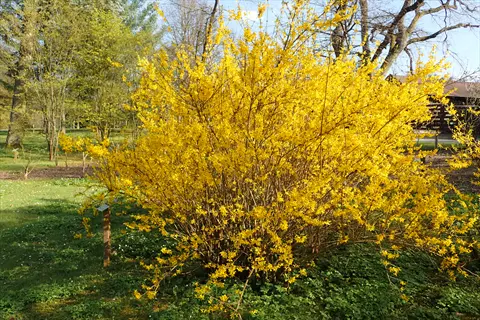
Lynwood Gold Forsythia
- Bloom Quality: Produces some of the largest and most vivid golden yellow flowers of any forsythia variety, creating a striking spring display.
- Size: Grows 6 to 10 feet (1.8 to 3 meters) tall and 6 to 10 feet (1.8 to 3 meters) wide with strong upright arching branches.
- History: One of the most popular forsythia cultivars for decades, valued for its consistent bloom quality and vigorous growth.
- Best Zones: Performs best in zones 5 through 8 where winters are moderate enough to protect flower buds from cold damage.
- Landscape Use: Popular for large hedges, property borders, and specimen plantings where its full size can be appreciated without crowding.
- Consideration: Flower buds are less cold-hardy than Meadowlark or Northern Gold, so northern gardeners should choose hardier alternatives.
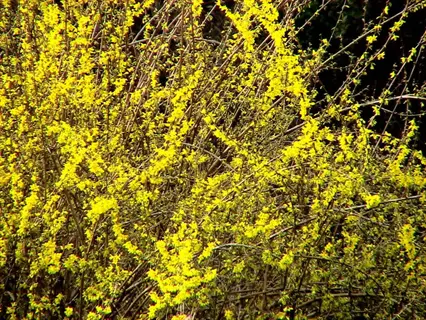
Northern Gold Forsythia
- Cold Hardiness: Flower buds survive temperatures to minus 30 degrees Fahrenheit (minus 34.4 degrees Celsius), making it very reliable for northern gardeners.
- Size: Reaches 6 to 8 feet (1.8 to 2.4 meters) tall and 5 to 7 feet (1.5 to 2.1 meters) wide with a compact upright form.
- Bloom Color: Produces rich golden yellow flowers that are a bit deeper in color than some other cold-hardy selections.
- Best Zones: Thrives in zones 3b through 7, offering excellent performance in the upper Midwest and northern plains regions.
- Landscape Use: Works well as a medium-sized hedge, foundation planting, or mixed border shrub in cold climate landscapes.
- Reliability: Blooms from top to bottom of the plant instead of just at the snow line like non-hardy varieties do.
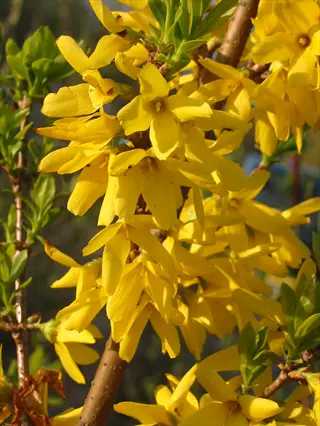
Gold Tide Forsythia
- Growth Habit: A low spreading groundcover type that grows only 18 to 24 inches (46 to 61 centimeters) tall and spreads 4 to 5 feet (1.2 to 1.5 meters) wide.
- Origin: Created from gamma-ray irradiation of Spring Glory seed in France, giving it a unique dwarf spreading habit unlike typical upright forsythia.
- Erosion Control: Its spreading habit and dense root system make it effective for stabilizing slopes, banks, and areas prone to soil erosion.
- Best Zones: Hardy in zones 5 through 8 and well suited for groundcover applications in moderate climates.
- Landscape Use: Useful for cascading over walls, covering slopes, filling large beds, and providing groundcover in sunny areas.
- Bloom Display: Produces yellow flowers along spreading branches close to the ground in early spring before the foliage appears.
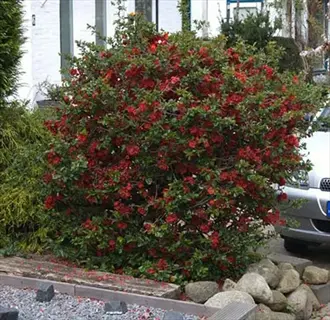
Show Off Starlet Forsythia
- Size: Compact variety growing 2 to 3 feet (0.6 to 0.9 meters) tall and wide, which fits into small gardens and tight landscape spaces.
- Cold Hardiness: University of Minnesota recommends this as one of six cold-hardy cultivars for northern climates with reliable bud survival.
- Bloom Coverage: Heavy flowering on a small frame creates a dense ball of yellow color in early spring that stands out in any garden setting.
- Best Zones: Hardy in zones 4 through 8, bridging the gap between very cold hardy and standard varieties with good all-around performance.
- Landscape Use: Perfect for small hedges, edging, mass plantings, and containers where a compact rounded shape is desired.
- Maintenance: Tidy growth habit requires very little pruning to maintain its shape, saving time compared to larger forsythia types.
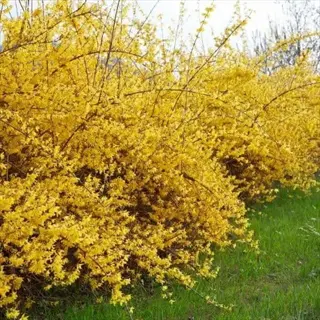
Beatrix Farrand Forsythia
- Flower Size: Produces the largest flowers of any forsythia cultivar at up to 2 inches (5.1 centimeters) across, almost double the size of standard varieties.
- Genetics: A triploid variety with three sets of chromosomes instead of two, which contributes to its extra large flower size and vigor.
- Size: Grows 8 to 10 feet (2.4 to 3 meters) tall and 8 to 10 feet (2.4 to 3 meters) wide with strong upright arching branches.
- Best Zones: Performs best in zones 5 through 8 where moderate winters protect the large flower buds from cold damage.
- Landscape Use: Makes a dramatic specimen plant or focal point due to its oversized blooms that draw attention in early spring gardens.
- Historical Note: Named after landscape architect Beatrix Farrand, one of the founding members of the American Society of Landscape Architects.
In my experience, your best pick comes down to your zone and how much room you have. Northern gardeners should stick with Meadowlark or Northern Gold to avoid blank stems after cold winters. Small yard owners will love dwarf forsythia types like Show Off Sugar Baby or Show Off Starlet for the same bright spring show in less space.
Planting and Soil Needs
Knowing how to plant forsythia the right way gives your shrub a strong start that pays off for years. I have planted forsythia in red clay, sandy loam, and even compacted urban lots. Each spot needed different prep work. The shrub pulled through every time because forsythia soil requirements are more flexible than most plants.
Pick a spot that meets the forsythia sun requirements of at least 6 hours of direct light each day. Less sun means fewer blooms. Forsythia handles soil pH from 5.0 to 8.0 so you don't need to stress about acid or alkaline ground. The one thing it won't tolerate is soggy roots, so make sure you have well-drained soil before you dig.
Your planting time depends on where you live. Gardeners in zones 3 to 5 should plant in spring after the soil thaws so roots can grow strong before winter hits. If you live in zones 6 to 8, fall planting works best because the mild winter lets roots settle in without heat stress.
Clay soil needs the most prep. Mix in 3 to 4 inches of compost to break up the dense ground and improve drainage. Sandy soil drains too fast, so add compost there too but for the opposite reason. It helps hold water and nutrients near the roots. For forsythia spacing in a hedge row, plant 3 to 4 feet apart to get a dense screen within 2 to 3 seasons.
I tested forsythia in a shaded corner of my yard one year just to see what would happen. The plant lived but gave me maybe 10 flowers total the next spring. After I moved it to full sun the blooms covered every branch. That alone tells you how much sunlight matters for this shrub.
Pruning Your Forsythia
Learning how to prune forsythia the right way is the single most important skill for keeping your shrub full of blooms. I watched my neighbor shear his forsythia into a box shape every August for 3 years straight. He never got a single flower because forsythia blooms on old wood. Cutting forsythia back that late removes all the buds set for next spring.
The key rule is simple. Prune right after the flowers fade and never cut past mid July. When to prune forsythia matters more than how you prune it. You have 3 proven methods to choose from based on what your shrub needs. Those are annual cleanup, thinning for shape, and rejuvenation pruning for overgrown plants.
Annual Maintenance Pruning
- Timing: Prune within two weeks after the last flowers drop in spring, from late April through early June based on your growing zone.
- Method: Remove about one-third of the oldest and thickest canes at ground level each year to push fresh growth and keep blooming consistent.
- Tools Needed: Use sharp bypass pruners for canes under 1 inch (2.5 centimeters) thick and loppers for larger canes to make clean cuts.
Thinning for Shape
- Timing: Best done right after flowering when you can still see which branches bloomed well and which ones made few or no flowers.
- Method: Remove crossing branches, weak interior growth, and any canes that touch the ground to open up the center for air flow.
- Advantage: Keeps the natural arching habit that makes forsythia look great, unlike shearing which creates a dense outer shell with bare interior.
Rejuvenation Pruning
- When Needed: Use this approach when forsythia becomes woody, overgrown, or blooms just at the tips after years of neglect or bad shearing.
- Method: Cut all canes to 3 to 4 inches (7.6 to 10.2 centimeters) from the ground in early spring before growth begins, then allow full regrowth.
- Recovery Time: The shrub will regrow fast and begin blooming again within two years, with full flowering back by the third spring.
What to Avoid
- Late Pruning: Cutting forsythia after mid July removes the flower buds that would bloom the next spring, leaving you with green foliage and nothing else.
- Electric Hedge Trimming: Using electric shears to force a box shape removes the natural arching branches and puts blooms just on the outer surface.
- Fall or Winter Pruning: Any pruning during dormant months cuts away next spring's flowers since forsythia sets its buds on the prior year's wood.
I do rejuvenation pruning on one of my forsythia shrubs every 4 to 6 years to keep it fresh. The plant looks bare for one season but comes back stronger and fuller than before. It is the best reset you can give an old forsythia that has turned into a tangled mess.
Companion Plants and Design
Smart forsythia landscaping ideas go beyond just planting one shrub in the yard. The honest truth is that forsythia looks amazing for about 2 to 3 weeks in spring and then turns into a plain green mound for the rest of the year. That is why forsythia companion plants matter so much. When I first planted mine, I learned fast that you need shrubs and perennials that pick up the color show right where forsythia leaves off.
One bonus that most guides miss is that forsythia resists black walnut toxin. If you have walnut trees on your lot, forsythia is one of the few shrubs that will grow near them without problems. You can also use forsythia as a forsythia hedge or forsythia privacy screen by planting them in a row. For slopes and banks, forsythia erosion control works well because the roots spread wide and hold soil in place.
Early Spring Partners
- Witch Hazel: Blooms just before forsythia in late winter with spidery red or yellow flowers, creating a smooth shift into the golden spring show.
- Crocus and Daffodils: Plant spring bulbs beneath forsythia branches to add purple, white, and yellow groundcover color during the forsythia bloom window.
- Hellebore: Evergreen perennials that bloom in late winter through early spring, giving you low flowers at the base while forsythia blooms above.
Late Spring to Summer Partners
- Lilac: Blooms 2 to 3 weeks after forsythia in purple and white, extending the spring flower season with fragrant blossoms and similar care needs.
- Spirea: Compact flowering shrub with white or pink blooms from late spring through summer, adding color after forsythia's flowers have faded.
- Weigela: Produces tubular pink or red flowers in late spring that attract hummingbirds and fill the color gap as forsythia goes green.
Summer Through Fall Partners
- Bluebeard: Late summer blooming shrub with blue flowers that gives you color when forsythia offers nothing but green foliage.
- Coral Bells: Perennial with colorful foliage in burgundy, lime, or copper tones that keeps the area around forsythia looking good all season.
- Red Twig Dogwood: Gives you bright fall and winter color with red stems that stand out after forsythia drops its leaves in late autumn.
Landscape Design Uses
- Privacy Hedge: Plant forsythia 3 to 4 feet (0.9 to 1.2 meters) apart in a row for a fast growing informal screen that fills in within 2 to 3 years.
- Erosion Control: The spreading root system and arching branches that root at tips make forsythia effective for holding soil on slopes and hillsides.
- Foundation Planting: Use compact varieties like Show Off or Show Off Starlet near buildings, keeping standard varieties at least 6 feet (1.8 meters) from walls.
Troubleshooting Problems
When I first started growing forsythia, I had a bush that looked green and healthy but gave me zero flowers every spring. That is the most common complaint I hear from other gardeners too. Forsythia not blooming is almost always caused by one of two things: pruning at the wrong time or cold damage to the flower buds.
Flower buds on standard varieties start dying at minus 5 degrees Fahrenheit. Your plant survives the cold just fine, but the buds freeze and you get no blooms. If you see flowers only near the base where snow covered the branches, cold damage is the cause. The fix is to switch to a cold hardy cultivar like Meadowlark.
Forsythia also deals with 3 fungal diseases that Clemson Extension has studied in detail. Phomopsis gall shows up as round bumps along the stems and is more common on forsythia than any other shrub. Forsythia root rot from the Phytophthora fungus hits plants stuck in wet ground. And Botryosphaeria canker attacks stressed plants during drought. On top of forsythia pests diseases, some people worry about animal browsing. But forsythia is forsythia deer resistant so critters won't bother it.
Most forsythia problems have simple fixes once you know the cause. I have rescued 4 neglected forsythia bushes over the years. All they needed was a sharp pair of loppers and better sun exposure. If your plant looks sick or bare, check the table above before you give up on it.
Propagation and Forcing
Learning how to propagate forsythia saves you good money since a single bush can give you dozens of new plants for free. I have grown over 30 new forsythia shrubs from cuttings taken off one mother plant in my yard. The process works well because forsythia roots fast and forgives mistakes that would kill fussier plants.
You can't grow forsythia from seed at home because the flowers are self sterile. Each bloom needs pollen from a different plant type to set seed. So forsythia cuttings, forsythia layering, and sucker division are your go to options. You can also try forcing forsythia branches in a vase of water. This trick gives you forsythia blooms indoors during the dead of winter before anything blooms outside.
Softwood Cuttings in Summer
- Timing: Take cuttings in late June or early July when new growth is still flexible but firm enough to snap rather than bend when you fold it.
- Method: Cut 6 inch (15.2 centimeter) sections of new growth, strip leaves from the lower 3 inches (7.6 centimeters), dip in rooting hormone, and insert into moist perlite or coarse sand.
- Success Rate: Expect roots to form within 6 to 8 weeks when kept in bright indirect light with consistent moisture and humidity.
Layering in Spring
- Timing: In spring after flowering, select a low hanging flexible branch that can reach the ground without snapping or straining.
- Method: Bend the branch down, wound the bark where it touches the soil, pin it in place with a landscape staple, and cover the contact point with 3 inches (7.6 centimeters) of soil.
- Advantage: The easiest method because the branch stays on the parent plant and gets water and nutrients while growing its own root system.
Dividing Rooted Suckers
- Timing: Dig rooted suckers in early spring before growth begins or in fall after leaves drop when the plant enters dormancy.
- Method: Follow a sucker back to where it connects to the parent root system, cut that root, and dig the sucker with its own root ball intact.
- Best For: Gardeners who want an instant small plant since rooted suckers have roots and can bloom the next spring.
Forcing Branches Indoors
- Timing: Cut branches 12 to 18 inches (30.5 to 45.7 centimeters) long in late winter, at least 6 weeks after the first hard frost so buds have enough cold time to break dormancy.
- Method: Make a 45 degree angle cut at the base, crush the bottom inch (2.5 centimeters) of stem with a hammer, and place in lukewarm water in a bright room away from direct heat.
- Timeline: Flowers should open within 1 to 3 weeks indoors based on room temperature, with warmer rooms giving faster but shorter lasting blooms.
I tested all 3 methods and found that forsythia layering gives you the strongest new plant with the least work. Cuttings take more effort but let you make dozens of plants at once if you need them for a hedge row or to share with friends and neighbors.
5 Common Myths
Forsythia can be pruned at any time of year without affecting its blooms the following spring season.
Forsythia blooms on old wood, so pruning after mid-July removes the flower buds that would have opened the next spring. Always prune right after blooming.
All forsythia varieties are equally cold hardy and will bloom reliably in any zone from 3 through 8.
Plant hardiness and flower bud hardiness are different. Non-hardy cultivar buds die at minus 5 degrees Fahrenheit (minus 20.6 degrees Celsius), while Meadowlark survives minus 35 degrees Fahrenheit (minus 37.2 degrees Celsius).
Forsythia needs rich, acidic soil and regular fertilizer applications to produce abundant yellow blooms.
Forsythia thrives in a wide pH range of 5.0 to 8.0 and tolerates poor soil. It rarely needs fertilizer and grows well in average garden conditions.
A forsythia bush that has become overgrown and woody is too old to recover and should be removed entirely.
Overgrown forsythia responds well to rejuvenation pruning. Cutting it down to 3 to 4 inches (7.6 to 10.2 centimeters) from the ground allows it to regrow and bloom within two years.
Forsythia is toxic to pets and children so it should not be planted in family gardens or near play areas.
Forsythia is non-toxic to dogs, cats, and horses according to university extension research. The flowers are even edible for humans.
Conclusion
A great forsythia bush starts with 3 smart choices. Pick the right variety for your zone. Do your forsythia pruning right after the blooms fade. And give it a sunny spot with good drainage. In my experience, these 3 steps are all you need for a spring blooming shrub that delivers bright golden flowers every year.
Northern growers in zones 3 to 5 need cold hardy forsythia above all else. The University of Minnesota backs 6 proven picks for cold zones. Those are Fiesta, Gold Cluster, Meadowlark, Show Off Starlet, Northern Gold, and Northern Sun. Each one blooms from top to bottom even after tough winters.
The biggest lesson from this guide is the gap between plant hardiness and flower bud hardiness. Your forsythia care plan must account for this gap. If you skip it, you end up with a green bush and no blooms. I have seen too many gardeners blame their skills when the wrong cultivar was the real problem all along.
Plan your forsythia as part of a bigger picture. Pair it with shrubs that bloom after the golden show fades so your yard stays colorful from spring through fall. Forsythia holds its green leaves longer than most flowering shrubs, which gives you extra screening well into autumn. Start with one bush and you will find yourself adding more before long.
External Sources
Frequently Asked Questions
Where is the best place to plant forsythia?
Plant forsythia in a spot that gets at least 6 hours of full sun daily with well-drained soil. It tolerates a wide pH range from 5.0 to 8.0.
How big do forsythia bushes get?
Forsythia bushes range from 1 to 20 feet (0.3 to 6 meters) tall and 2 to 12 feet (0.6 to 3.7 meters) wide depending on the cultivar.
What does forsythia look like in summer?
In summer, forsythia is a dense green shrub with medium-textured oval leaves. It has little ornamental value once the spring blooms fade.
Is forsythia low maintenance?
Yes, forsythia is very low maintenance. It tolerates drought, poor soil, pollution, deer, and urban conditions with minimal care needed.
What is the wives tale about forsythia?
A common old wives tale says that when forsythia blooms, it is safe to start planting spring crops because the last hard frost has passed.
Does forsythia bloom every year?
Healthy forsythia blooms every year on old wood. If blooms are missing, late pruning or winter cold damage to flower buds is usually the cause.
Can forsythia be cut back hard?
Yes, forsythia can be cut back hard to 3 to 4 inches from the ground. It will regrow and start blooming again within two years.
Can forsythia grow in pots?
Compact and dwarf forsythia varieties grow well in large pots with drainage holes. Choose varieties like Show Off Sugar Baby for containers.
What kills forsythia?
Forsythia can be killed by prolonged waterlogged soil causing root rot, severe herbicide exposure, or repeated hard freezes in exposed locations.
Is forsythia an invasive plant?
Forsythia is not classified as invasive in most regions, but it can spread through root suckers and layering branches if left unpruned.