
Introduction
Most bigleaf hydrangea shrubs give you one burst of flowers and then call it quits for the year. The endless summer hydrangea changed all of that back in 2004. Bailey Nurseries and Dr. Michael Dirr teamed up to create the first reblooming hydrangea collection.
I've grown standard hydrangeas and Endless Summer varieties side by side in my own garden for over 8 years now. The difference is hard to miss. Standard hydrangeas give you one show per season, while Endless Summer is like a performer who does encores from late spring all the way through fall. That extra 10 to 12 weeks of blooms turns a good garden into one that neighbors stop to admire.
What makes this collection special is its ability to produce flowers on both old wood and new wood. That means even if a harsh winter kills off last year's stems, fresh growth still pushes out blooms during the current season. You get a safety net that traditional bigleaf hydrangea plants simply don't offer.
The Endless Summer lineup now includes 6 varieties that fit every garden size. You can pick compact 18 inch plants for containers or tall 6 foot shrubs for large borders. This guide covers everything from choosing the right variety to managing soil pH for the bloom colors you want.
6 Endless Summer Varieties
The Endless Summer collection gives you 6 hydrangea varieties to choose from. Each one fills a different role in your garden. Sizes range from compact 18 inch plants to full 6 foot shrubs. Every variety handles cold down to USDA Zone 4 at about -30°F (-34°C).
I've tested 4 of these varieties in my own garden beds over the years. Some performed better than others based on my soil type, sun exposure, and local climate. The variety breakdowns below include a "best for" pick so you can match the right plant to your specific growing spot.
The Original Endless Summer
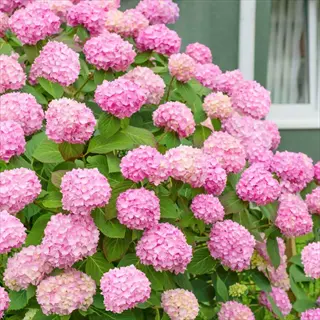
- Height and Spread: Grows 3-4 feet (0.9-1.2 meters) tall and wide, forming a rounded mound shape that works well as a foundation planting or border accent.
- Bloom Type: Produces classic mophead blooms measuring 8-10 inches (20-25 centimeters) across, appearing on both old and new wood from late spring through fall.
- Color Range: Flowers shift between rich blue in acidic soil with pH below 5.5 and vibrant pink in alkaline soil with pH above 6.0, with purple tones in between.
- Cold Hardiness: Hardy to USDA Zone 4 and tolerant of temperatures down to -30°F (-34°C), making it reliable in northern climates with proper winter protection.
- Best For: Gardeners who want a tried-and-true performer with the longest track record since its introduction as the first reblooming hydrangea in 2004.
- Care Note: Thrives with morning sun and afternoon shade, needing 1 inch (2.5 centimeters) of water per week and balanced fertilizer three times per growing season.
BloomStruck Endless Summer
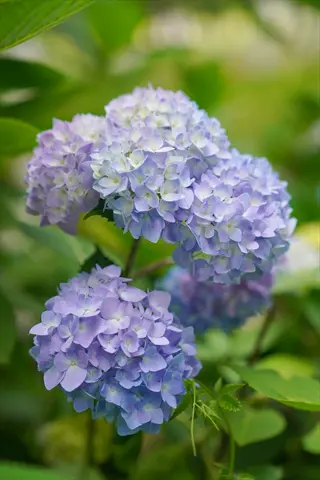
- Height and Spread: Reaches 3-4 feet (0.9-1.2 meters) tall and wide with thick, deep red-purple stems that add visual interest even when not in bloom.
- Bloom Type: Bears large mophead flowers on exceptionally sturdy stems that resist flopping, keeping blooms upright even after heavy rain or wind.
- Color Range: Displays the most vivid color response in the collection, shifting between deep violet-blue and rose-pink depending on soil pH levels.
- Cold Hardiness: Rated for USDA Zone 4 with enhanced stem strength that helps it withstand winter conditions better than some other varieties in the series.
- Best For: Gardeners in regions with variable weather who need a variety that holds up well under rain, wind, and temperature swings throughout the season.
- Care Note: Benefits from the same 10-10-10 fertilizer schedule as other varieties but shows an extra strong response to consistent moisture levels in the soil.
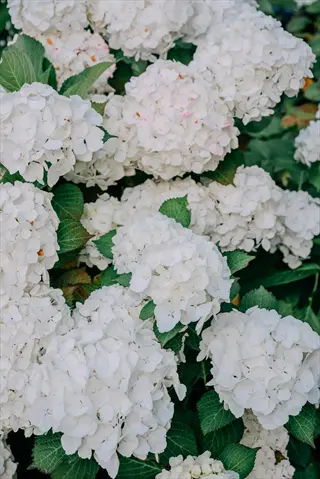
Blushing Bride Endless Summer
- Height and Spread: The largest variety in the collection at 4-6 feet (1.2-1.8 meters) tall and wide, making it a strong choice for hedging or privacy screening.
- Bloom Type: Opens with semi-double white flowers that blush over time to light pink or pale blue as they age, creating a two-tone effect on the same plant.
- Color Range: Starts pure white regardless of soil pH, then transitions to soft pink or blue tones at the petal edges as blooms mature over several weeks.
- Cold Hardiness: Hardy to USDA Zone 4, though its larger size means more old wood is exposed to winter damage in the coldest growing zones.
- Best For: Gardeners with larger spaces who want a dramatic statement shrub or those looking for white hydrangea blooms that add elegance to shade gardens.
- Care Note: Requires wider spacing of 5-6 feet (1.5-1.8 meters) between plants due to its larger mature size compared to other varieties in the collection.
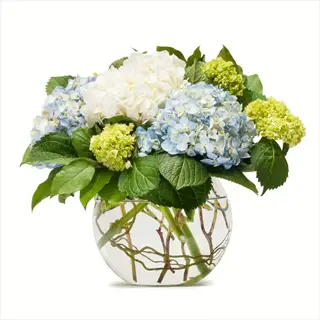
Pop Star Endless Summer
- Height and Spread: One of the most compact varieties at just 18-36 inches (46-91 centimeters) tall and wide, perfect for small gardens, borders, and container planting.
- Bloom Type: Features star-shaped individual florets that create a unique lacecap-like appearance different from the rounded mophead shape of other varieties.
- Color Range: Shifts between periwinkle blue and soft pink depending on soil pH, with each star-shaped floret showing color from center to petal tip.
- Cold Hardiness: Hardy to USDA Zone 4 with a compact growth habit that makes winter protection easier since less plant material needs covering.
- Best For: Gardeners with limited space, patio containers, or those who want a hydrangea variety that stays naturally small without heavy pruning.
- Care Note: Excellent container candidate -- use a pot at least 18 inches (46 centimeters) wide with drainage holes and a well-draining potting mix.
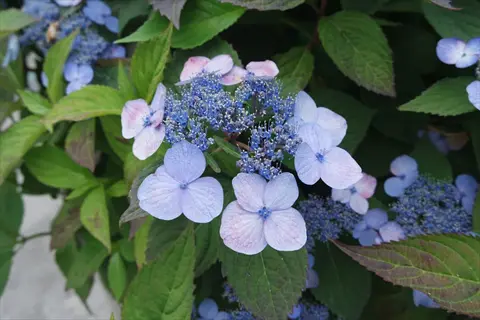
Twist-n-Shout Endless Summer
- Height and Spread: Grows 3-5 feet (0.9-1.5 meters) tall and 3-4 feet (0.9-1.2 meters) wide with deep red-burgundy stems that provide striking contrast against green foliage.
- Bloom Type: The only true lacecap variety in the Endless Summer collection, with a ring of large outer florets surrounding a center of tiny fertile flowers.
- Color Range: Outer florets change between blue and pink based on soil pH while the inner fertile flowers often display a contrasting shade for a bicolor effect.
- Cold Hardiness: Hardy to USDA Zone 4, and its lacecap bloom structure tends to dry better than mophead types, extending visual interest into late fall.
- Best For: Gardeners who want a more natural, cottage-garden look and those who value pollinator access since the open center florets attract bees and butterflies.
- Care Note: The lacecap flower form allows pollinators to reach nectar better than mophead types, making this variety especially valuable in wildlife-friendly gardens.
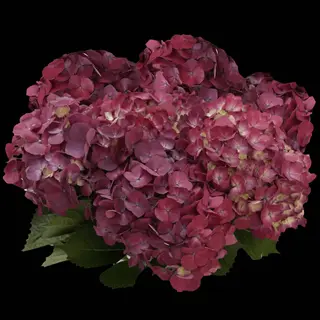
Summer Crush Endless Summer
- Height and Spread: The most compact mophead variety at 18-36 inches (46-91 centimeters) tall and wide, bred specifically for small spaces and container gardening.
- Bloom Type: Produces abundant raspberry-red to neon purple mophead blooms that are proportionally large for the plant's compact size, creating a bold display.
- Color Range: Shows some of the most intense colors in the series, ranging from deep raspberry pink in alkaline soil to rich violet-purple in acidic conditions.
- Cold Hardiness: Hardy to USDA Zone 4 with excellent reblooming performance, often producing flowers even in zones where other bigleaf hydrangeas struggle to rebloom.
- Best For: Gardeners who love bold, saturated bloom colors and need a compact variety for patios, small borders, or mixed container arrangements.
- Care Note: Despite its small size, it still needs 1 inch (2.5 centimeters) of water weekly and benefits from 3-5 inches (7.5-12.5 centimeters) of organic mulch.
The Original started this whole collection and remains the safest pick for most home gardens. If you want stronger stems for rainy areas, go with the BloomStruck hydrangea instead. The Blushing Bride hydrangea gives you the most size for a privacy screen. For a natural cottage garden look, the Twist-n-Shout hydrangea brings its lacecap charm. If you need small plants for patios and pots, Summer Crush hydrangea or Pop Star hydrangea won't outgrow their space.
Planting and Site Selection
Finding the right spot for planting hydrangeas is the single biggest factor in how well they perform. You need a Goldilocks zone for sun exposure, and that sweet spot changes based on where you live. In zones 4 and 5, your plants can handle up to 6 hours of morning sun with afternoon shade. Down in zones 8 and 9, cut that back to just 2 to 3 hours of direct sun or you'll see burned leaves and wilted blooms.
I learned this lesson the hard way in my zone 7 garden. My first Endless Summer sat in full afternoon sun and looked miserable by July. Once I moved it to a spot with morning sun afternoon shade, the whole plant bounced back within a single growing season. Getting the hydrangea sun requirements right as a partial shade hydrangea made all the difference.
When you're ready to plant, dig your hole 2 to 3 times as wide as the root ball but no deeper than the root ball itself. Mix about 50 pounds of composted organic matter into every 10 square feet of soil. Work it into the top 8 to 12 inches. This gives roots loose, rich soil to spread through fast.
Space your plants 3 to 6 feet apart based on the variety you chose. Compact types like Summer Crush need just 3 feet, while Blushing Bride needs a full 5 to 6 feet to fill out. Set up drip irrigation if you can because it delivers water right to the roots and keeps the leaves dry. Wet leaves invite fungal problems that are tough to fix once they take hold.
Think about where to plant hydrangeas from a design angle too. They look great as foundation plantings along the north or east side of your house. That spot gives them natural protection from harsh afternoon sun. You also get to enjoy the blooms from your windows all season long.
Watering and Fertilizing
Watering hydrangeas the right way is like filling a slow cooker. Deep and steady wins over quick little splashes that never reach the roots. Give your plants at least 1 inch of water per week and bump that up to twice per week during hot, dry stretches. Drip irrigation hydrangea setups work best because they send moisture right to the root zone without wetting the leaves.
I keep a rain gauge near my hydrangeas to track how much water nature provides each week. On weeks with less than an inch of rain, I run my soaker hose for about 30 minutes to make up the gap. You should add 3 to 5 inches of organic mulch around each plant to lock in that moisture and keep your roots cool during summer heat.
Use a balanced 10-10-10 fertilizer as your go to hydrangea fertilizer. Feed 3 times per year in March, May, and July at 2 cups per 100 square feet. Too much nitrogen is one of the most common mistakes I see in my garden community. It pushes lots of green leaves but shuts down flower production. If your plant grows lush but won't bloom, you're most likely over feeding it.
One critical rule for you: don't fertilize your new transplants for 4 to 8 weeks after planting them in the ground. Young roots need time to settle in before they can handle the extra nutrients. If you tend to forget feeding dates, a slow-release fertilizer works great as your backup plan. Just apply it once in spring and let it do its job through the season.
Bloom Color Control
Hydrangea color change is one of the coolest tricks in gardening. Think of your soil pH hydrangea setup as a gatekeeper. Acidic soil below pH 5.5 opens the gate and lets aluminum reach your flowers. That turns them into a blue hydrangea. Alkaline soil above pH 6.0 locks that aluminum away and gives you a pink hydrangea instead.
The science behind this is pretty cool. A team at Nagoya University found that blue pigment forms when 3 things bond together inside flower petals. Those 3 things are anthocyanin, aluminum, and a copigment in a 1:1:1 ratio. Your plant needs more than 40 micrograms of aluminum per gram of fresh petal tissue to turn blue. Below that mark, flowers stay pink or land somewhere in the purple range.
To push your blooms toward blue, broadcast 1/4 cup of wettable sulfur per 10 square feet of soil. You can also mix 1 tablespoon of aluminum sulfate into a gallon of water. Drench the soil with this mix during March, April, and May. For pink blooms, spread 1 cup of dolomitic lime per 10 square feet to raise your pH. Just know that shifting from blue to pink takes patience. The change can take up to a full year.
I test my soil pH every 2 to 3 years with a simple kit from the garden center. This helps me track where things stand before I add any amendments. Resist the urge to dump a bunch of aluminum sulfate all at once because too much burns roots fast. Slow, steady adjustments give you the best color results without hurting your plant.
Pruning and Maintenance
Pruning Endless Summer hydrangea plants is one task that scares most gardeners more than it should. When I first started, I was terrified of cutting the wrong stem. The good news is that these plants bloom on both old wood new wood growth, so even a bad haircut won't kill your bloom season. Smart pruning gives you more flowers over a longer period.
I follow a simple 3 step process every spring. First, I remove all dead and damaged wood once new buds start to swell. Second, I thin out any branches that cross over each other to improve air flow. Third, I cut back each stem about 1/4 inch above a live bud using a clean pair of bypass pruners. The whole job takes about 20 minutes per plant.
The most important rule about when to prune hydrangeas is the August 1 deadline. After that date, your plant starts forming flower buds for next spring. Every stem you cut after August removes buds that would have given you blooms the following year. This is where many gardeners go wrong and then wonder why their plants won't flower.
Deadheading hydrangeas during the blooming season pushes out more flowers on new wood. Snip spent blooms back to the first set of full, healthy leaves. Don't remove the whole stem. The lower buds on that same branch may push out another round of flowers before fall arrives.
One bonus fact: those hollow dead stems you cut in spring actually serve as nesting sites for native bees. If you have space in a back corner of your yard, leave a pile of cut stems rather than tossing them. You'll support local pollinators while keeping your garden beds looking clean. For winter, wrap a 4 foot tall hardware cloth ring around each plant to stop rabbits from chewing the bark off your stems.
Seasonal Care Calendar
Timing makes or breaks your hydrangea seasonal care results. I built this season by season action plan based on what works in my own garden. It also draws on research from top university extension programs. Bookmark this calendar and check it at the start of every season.
Winter care for overwintering hydrangeas trips up most northern growers. If you live in zones 4 and 5, you need frost protection hydrangea steps like burlap wrapping and 12 inches of mounded mulch. In zones 7 through 9 you can skip most of that. Just focus on basic mulching for winter moisture instead.
Spring Tasks (March-May)
- Fertilize: Apply the first round of balanced 10-10-10 fertilizer in March at 2 cups per 100 square feet (0.9 kilograms per 9.3 square meters) to fuel new growth.
- Prune: Remove dead, damaged, and winter-killed stems in early spring once new buds begin to swell, cutting 1/4 inch above the nearest live bud.
- Mulch: Refresh organic mulch to maintain a 3-5 inch (7.5-12.5 centimeter) layer around the base, keeping mulch 2 inches away from the main stem.
- Amend Soil: Apply color-changing amendments in March through May if you want to shift bloom color, allowing time for soil pH changes before flowering.
Summer Tasks (June-August)
- Water: Provide at least 1 inch (2.5 centimeters) of water per week, increasing to twice weekly during hot and dry periods above 85°F (29°C).
- Fertilize: Apply the second dose of 10-10-10 in May and the third in July, stopping all fertilizer after July to prevent soft growth before winter.
- Deadhead: Remove spent blooms by cutting back to the first set of full, healthy leaves to encourage continued flowering on new wood throughout summer.
- Monitor: Watch for signs of Cercospora leaf spot, powdery mildew, and aphid activity, treating promptly with targeted solutions if detected early.
Fall Tasks (September-November)
- Stop Pruning: Do not prune after August 1 because the plant is actively setting flower buds for next season during August and September.
- Reduce Watering: Gradually decrease watering frequency as temperatures cool but do not let the root zone dry out completely before dormancy begins.
- Prepare for Winter: In zones 4-6, plan hydrangea winter protection before the first hard frost by gathering mulch materials and burlap for wrapping if needed.
- Leave Foliage: Allow leaves to drop naturally and leave dried flower heads in place, as they provide some insulation for the terminal buds underneath.
Winter Tasks (December-February)
- Protect Buds: In zones 4-5, mound 12 inches (30 centimeters) of mulch around the base and wrap with burlap to shield old wood buds from freezing winds.
- Guard Against Wildlife: Install a 4-foot-tall (1.2 meter) hardware cloth ring around the plant to prevent rabbit damage to stems during winter months.
- Avoid Pruning: Do not cut back stems during winter because they hold the old wood buds that will produce the first flush of spring blooms.
- Plan Ahead: Order soil test kits and amendments during winter so you are ready to adjust soil pH and begin fertilizing as soon as spring arrives.
5 Common Myths
Endless Summer hydrangeas bloom all year round without any dormancy period or seasonal rest.
They bloom from late spring through fall but require winter dormancy to reset their growth cycle and produce healthy buds.
You can change hydrangea bloom color overnight by adding a single dose of aluminum sulfate to the soil.
Color change requires consistent soil pH adjustment over several months, and shifting from blue to pink may take up to one full year.
Endless Summer hydrangeas thrive in full direct sunlight all day long in every growing zone.
They need morning sun with afternoon shade, and in hot zones 8-9, only 2-3 hours of direct sun prevents leaf scorch and wilting.
Pruning Endless Summer hydrangeas hard in fall or winter will produce more flowers the following season.
Hard fall pruning removes old wood buds that produce the first flush of spring blooms, reducing total flower output significantly.
All Endless Summer hydrangea varieties grow to the same height and spread in every landscape setting.
Sizes vary widely across the six varieties, from compact Summer Crush at 18-36 inches to Blushing Bride reaching 4-6 feet tall and wide.
Conclusion
Your Endless Summer plants can give you 10 to 12 extra weeks of flowers compared to standard types. Good endless summer hydrangea care makes that long bloom season real in your own yard. This reblooming hydrangea pays you back for every bit of effort you put in.
In my years of growing these plants, the 3 biggest mistakes I see come down to timing and restraint. First, pruning after August 1 strips away next year's flower buds. Second, dumping too much fertilizer pushes leaf growth at the expense of blooms. Third, planting in full afternoon sun burns the leaves and stresses the whole plant. Avoid those 3 traps and you're ahead of most growers.
This hydrangea growing guide covered all 6 varieties and their best uses. You also picked up planting basics, feeding schedules, and color control tips. Keep that seasonal calendar handy and follow it through each season. Your plants will reward you with flowers from late spring through the first frost.
Since we're heading into spring right now, your first action step is to get out and check your plants for winter damage on old wood stems. Remove anything dead, refresh your mulch layer, and apply that first round of 10-10-10 fertilizer. A strong start in March sets the tone for blooms that keep going all the way to fall.
External Sources
Frequently Asked Questions
Do endless summer hydrangeas like sun or shade?
They prefer 4-6 hours of morning sun with afternoon shade, reducing to 2-3 hours in zones 8-9.
How big does an endless summer hydrangea get?
Most varieties reach 3-5 feet tall and wide, though compact types like Summer Crush stay 18-36 inches.
Do you cut down endless summer hydrangeas in the fall?
No, cutting them down in fall removes old wood buds that produce spring flowers.
What are common problems with endless summer hydrangeas?
Common issues include failure to bloom, leaf spot diseases, aphids, and winter bud damage.
What not to plant next to hydrangeas?
Avoid plants with aggressive root systems, full-sun lovers, and heavy feeders that compete for moisture.
Do Endless Summer hydrangeas spread?
They grow outward slowly to 3-5 feet wide but are not invasive or aggressive spreaders.
What do you do with Endless Summer hydrangeas in the winter?
Apply 12 inches of mulch after the first frost and consider burlap wrapping in zones 4-5.
How long does it take for Endless Summer hydrangeas to mature?
They reach mature size in approximately 3-5 years with proper care and growing conditions.
Can you keep Endless Summer hydrangeas small?
Yes, through selective pruning and choosing compact varieties like Summer Crush or Pop Star.
Should I cut down my hydrangea for winter?
No, leave the stems intact to protect flower buds and provide natural insulation during cold months.