
Introduction
Few things match the thrill of spotting the first crocus flower pushing through late winter snow. These bold little blooms show up when your early spring garden needs color the most. They often appear before the last frost has even passed.
In my experience, spring blooming crocus is one of the easiest flowers to grow. I started about 8 years ago after a friend gifted me a bag of 50 crocus corms. That first spring, those tiny flowers popping up through melting snow hooked me for good. The genus has about 90 species native to the Mediterranean and Eastern Europe. They grow well in USDA zones 3a through 8b with very little fuss.
Crocus corms are like tiny batteries buried underground. They store energy all winter to power the first explosion of spring color in your yard. That stored energy also feeds hungry bees waking up from hibernation. More gardeners now want to help bees and pollinators. Crocus stands out as one of the first nectar sources for emerging bees each spring.
This complete guide combines growing advice, history, ecology, and saffron science all in one place. You'll learn which varieties to pick, how to plant them right, and why crocus matters far beyond your garden beds. No other resource gives you the full picture like this one does.
8 Best Crocus Flower Varieties
I tested dozens of crocus varieties in my own garden over the years. About 30 species are sold for home gardens right now. Flowers range from 0.5 to 1.5 inches across, and the leaves all share a pale silver white central stripe that helps you spot them in the grass.
These 8 picks cover both spring and fall blooming crocus types so you get color in two seasons from one flower genus. I matched each variety to its best use in your garden. You might want Crocus vernus for big bold blooms or snow crocus for rock gardens. Saffron crocus gives you spice, and Crocus tommasinianus beats the squirrels.
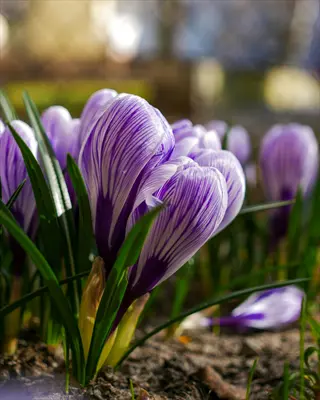
Dutch Crocus (Crocus vernus)
- Bloom Season: Dutch crocus blooms in early to mid spring, producing large flowers up to 1.5 inches (3.8 centimeters) in diameter that open wide in morning sunlight.
- Colors Available: This popular variety comes in purple, white, yellow, and striped combinations including the well-known Pickwick cultivar with lilac and white streaks.
- Growth Habit: Plants reach 4 to 6 inches (10.2 to 15.2 centimeters) tall and spread readily through corm offsets, forming larger clumps each year.
- Best Use: Ideal for mass planting in garden borders, beneath deciduous trees, and along pathways where their large blooms create a bold spring display.
- Hardiness: Hardy in USDA zones 3 through 8, this variety handles cold winters well and requires a natural chilling period to bloom reliably each spring.
- Care Tip: Plant corms 3 to 4 inches (7.6 to 10.2 centimeters) deep in groups of 10 or more for the most striking visual effect in garden beds.
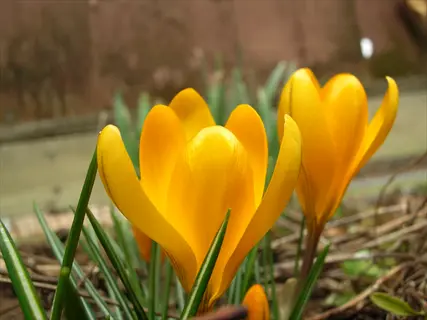
Snow Crocus (Crocus chrysanthus)
- Bloom Season: Snow crocus is among the earliest bloomers, often flowering in late winter while patches of snow still remain on the ground nearby.
- Colors Available: Flowers appear in golden yellow, cream, white, and light blue, with many cultivars showing contrasting throat markings in deep orange or bronze.
- Growth Habit: These compact plants reach only 2 to 3 inches (5.1 to 7.6 centimeters) tall, making them perfect for intimate garden areas and close viewing.
- Best Use: Excellent for rock gardens, alpine troughs, and the front edges of mixed borders where their small but cheerful blooms catch the eye at ground level.
- Hardiness: Thrives in USDA zones 3 through 8 and tolerates poor, rocky soils better than larger Dutch crocus varieties, making it very adaptable.
- Care Tip: Naturalizes freely in lawns and meadows when planted in well-drained soil, multiplying steadily without need for frequent division or maintenance.
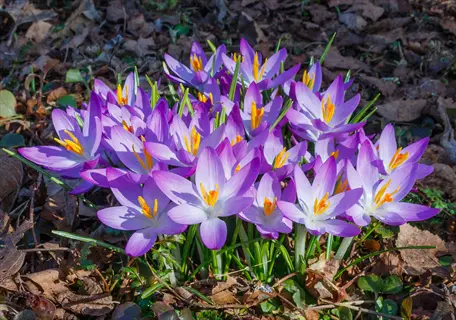
Tommasinianus Crocus (Ruby Giant)
- Bloom Season: Blooms in late winter to early spring, often appearing just days after the snow crocus with slender, elegant flowers that open in full sun.
- Colors Available: Ruby Giant produces rich reddish-purple flowers with a silvery exterior that creates a striking two-toned appearance as the petals unfurl.
- Growth Habit: Reaches 3 to 4 inches (7.6 to 10.2 centimeters) in height and self-seeds aggressively, creating natural-looking drifts in woodland settings within a few seasons.
- Best Use: Outstanding for naturalizing under trees and in wild garden areas because it spreads so readily through both corm offsets and self-sowing seed.
- Pest Resistance: Uniquely among common crocus varieties, Crocus tommasinianus is naturally resistant to squirrel damage, making it ideal for gardens with wildlife pressure.
- Care Tip: Plant in partial shade beneath deciduous trees where it receives winter sun before leaf canopy fills in, and allow it to spread undisturbed.
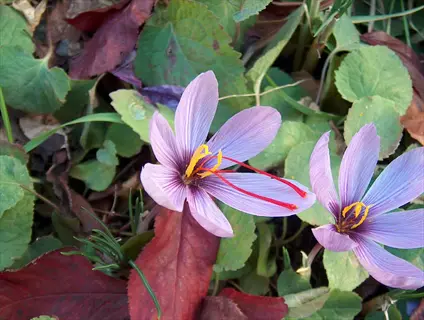
Saffron Crocus (Crocus sativus)
- Bloom Season: Unlike spring-blooming varieties, saffron crocus flowers in autumn from September through November, producing lilac-purple blooms with vivid red stigmas.
- Saffron Harvest: Each flower contains three red stigmas that are carefully hand-picked and dried to produce saffron, the most valuable spice in the world by weight.
- Growth Habit: Plants grow 4 to 6 inches (10.2 to 15.2 centimeters) tall, and because Crocus sativus is a sterile triploid, it reproduces only through corm division.
- Best Use: Grow in dedicated raised beds for saffron production, as about 10 to 12 plants yield enough saffron for occasional home cooking throughout the year.
- Climate Needs: Requires hot, dry summers for dormancy and performs best in USDA zones 6 through 8, needing excellent drainage to prevent corm rot during rest periods.
- Care Tip: Plant corms 4 inches (10.2 centimeters) deep in late summer, and harvest stigmas on the morning the flowers open for the highest quality saffron.
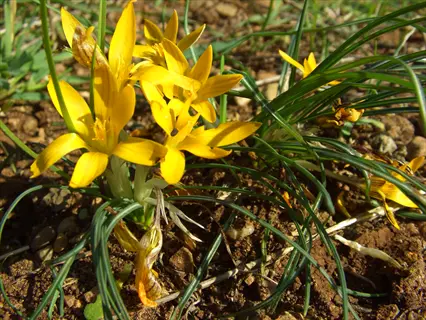
Cloth of Gold (Crocus angustifolius)
- Bloom Season: Blooms in very early spring, often alongside snow crocus, producing bright golden-yellow flowers with distinctive dark bronze striping on the outer petals.
- Colors Available: The striking combination of rich gold interiors and bronze-feathered exteriors gives this variety its historic name and makes it easy to identify in any garden.
- Growth Habit: Compact plants reach about 3 inches (7.6 centimeters) tall with narrow, grass-like foliage that blends naturally into lawns and meadow plantings.
- Best Use: Perfect for naturalizing in short grass areas and rock gardens, where the low growth and vivid coloring stand out against neutral backgrounds.
- Historical Note: One of the oldest cultivated crocus varieties, Cloth of Gold has been grown in European gardens since at least the sixteenth century.
- Care Tip: Prefers slightly drier conditions than Dutch crocus and benefits from a gravel mulch around the planting area to improve drainage in heavier soils.
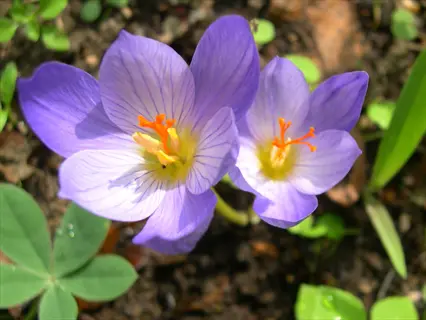
Autumn Crocus (Crocus speciosus)
- Bloom Season: Flowers appear from October through November, providing welcome garden color after most other plants have finished blooming for the season.
- Colors Available: Produces delicate lilac-blue flowers with darker veining and prominent bright orange stigmas that add a splash of warm contrast to the cool petals.
- Growth Habit: Reaches 4 to 5 inches (10.2 to 12.7 centimeters) in height, and unlike saffron crocus, this species naturalizes freely through both corm offsets and seed.
- Best Use: Ideal for planting beneath deciduous shrubs and along woodland edges where fall sunlight reaches the ground after leaves have dropped from surrounding plants.
- Season Extension: Pair with spring-blooming crocus varieties to create the bookend effect, giving your garden crocus color in both early spring and late autumn months.
- Care Tip: Plant corms in late summer about 3 inches (7.6 centimeters) deep in well-drained soil, and avoid disturbing the area during the summer dormancy period.
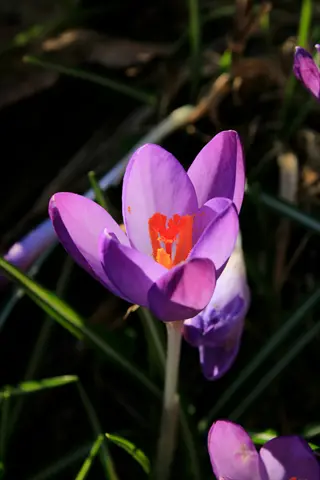
Flower Record (Large Flowering)
- Bloom Season: Blooms in early to mid spring with some of the largest flowers in the crocus genus, making a bold statement in garden beds and containers alike.
- Colors Available: Produces rich violet-purple blooms that are uniform in color and larger than most other crocus cultivars, reaching the maximum 1.5 inch (3.8 centimeter) diameter.
- Growth Habit: Grows 4 to 6 inches (10.2 to 15.2 centimeters) tall with sturdy stems that hold up well to spring rain and wind better than smaller species types.
- Best Use: Outstanding for formal garden borders, mass plantings in public spaces, and container displays where the oversized blooms create maximum visual impact at close range.
- Vigor: One of the most reliable and vigorous Dutch crocus cultivars, Flower Record multiplies quickly and produces consistent blooms year after year without extra attention.
- Care Tip: For container planting, use a well-draining potting mix and space corms 2 inches (5.1 centimeters) apart to create a dense, impressive spring display.
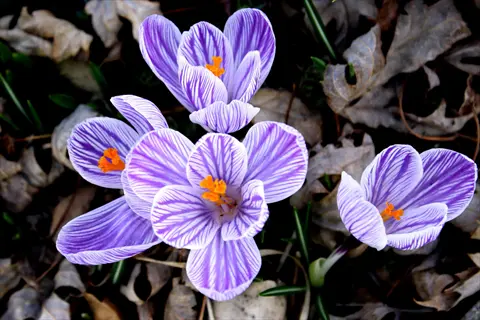
Pickwick (Striped Dutch Crocus)
- Bloom Season: Flowers in early to mid spring at the same time as other Dutch crocus cultivars, providing several weeks of continuous color as blooms open and close daily.
- Colors Available: Famous for its distinctive striped pattern of lilac and white on each petal, with a deep purple base and bright orange stigmas visible when flowers open.
- Growth Habit: Reaches 4 to 5 inches (10.2 to 12.7 centimeters) tall and multiplies steadily through corm offsets, forming attractive clumps within two to three growing seasons.
- Best Use: Particularly effective when mixed with solid-colored crocus varieties for contrast, or planted in large sweeps across lawn areas for a naturalized meadow appearance.
- Award Winner: Pickwick is one of the most widely planted and recognized crocus cultivars in the world, valued by gardeners and landscape designers for its dependable performance.
- Care Tip: Plant in groups of 25 or more in lawn areas for the best natural effect, and delay mowing until foliage has fully yellowed about six weeks after blooming.
I grow 5 of these 8 crocus varieties in my own garden right now. The fall blooming crocus types add a second wave of color that most people don't even know about. Mix a few spring and fall bloomers for flowers across 2 seasons from one easy plant family.
Planting Crocus Corms
Planting crocus corms is simple once you know a few key details. First, crocus corms are not bulbs. A corm is a solid piece of storage tissue, while a bulb has layers like an onion. This matters because corms need well-drained soil even more than bulbs do since they rot faster when wet.
When to plant crocus depends on your local frost date. Plan your fall planting 6 to 8 weeks before the first hard frost in your area. Check your soil temp with a basic probe. You want it below 60°F before you put corms in the ground. Most gardeners plant from September through November.
Here is how to plant crocus the right way. Dig a hole 3 to 4 inches deep and set each corm with the pointed end facing up. The point is where the shoot grows from, so flipping it upside down forces the plant to waste energy turning around. Space corms 2 to 3 inches apart and plant in groups of 10 or more for the best look. You can pack in 35 to 70 corms per square foot if you want a dense carpet of color.
I always test my drainage before planting crocus in a new spot. Water the area well and come back 5 to 6 hours later. If puddles remain, you need to mix in coarse sand or organic matter before putting your corms in. Good drainage at the right planting depth is what keeps crocus corms alive through winter and into spring.
Crocus Care and Maintenance
Good crocus care starts in fall and runs through spring with just a few simple tasks each season. I've found that crocus is one of the lowest effort flowers you can grow. They're deer resistant, drought tolerant, and even handle the toxic soil around black walnut trees. Watering crocus is rare since rain does most of the work for you.
Your main crocus pests are squirrels eating crocus corms right out of the ground. Voles and chipmunks cause trouble too. Plant crocus next to daffodils. The toxic daffodil roots repel digging animals from the shared bed. For post-bloom care, leave the green leaves alone for at least 6 weeks after flowers fade. That foliage feeds energy back into the corm for next year. If you're naturalizing crocus in your lawn, just delay mowing until the leaves turn yellow on their own.
Plan on dividing crocus corms every 3 to 5 years when clumps get crowded and blooms start to shrink. Dig them up after the leaves die back, pull the small offsets apart, and replant them right away at the same depth. Skip the bone meal at planting time because it draws in the same animals you want to keep out. Use a slow release granular feed instead.
Fall Planting and Preparation
- Soil Preparation: Amend heavy clay soils with coarse sand and compost to improve drainage before planting, because crocus corms rot quickly in waterlogged conditions during winter dormancy.
- Fertilizing: Apply a light dose of slow-release granular fertilizer at planting time, and avoid bone meal which attracts squirrels and other digging animals to the fresh planting area.
- Protection: Install chicken wire or hardware cloth over newly planted areas to prevent squirrels, voles, and chipmunks from digging up freshly planted corms before they root.
Winter Dormancy Period
- Mulching: Apply a 2 to 3 inch (5.1 to 7.6 centimeter) layer of organic mulch after the ground freezes to insulate corms from temperature swings during harsh winter months.
- Moisture Check: Crocus corms need a cold dormancy period but must not sit in saturated soil, so ensure drainage paths remain clear of debris and ice throughout winter.
- Container Care: If growing crocus in containers, move pots to an unheated garage or sheltered area in USDA zones 3 through 7 to prevent the container from freezing solid.
Spring Bloom and After Care
- Foliage Retention: Allow crocus leaves to remain for at least six weeks after flowers fade, because the foliage photosynthesizes and stores essential energy in the corm for next season.
- Mowing Delay: If crocus are naturalized in lawn areas, delay mowing until the foliage has fully yellowed and collapsed naturally, which typically happens by late spring in most regions.
- Division Timing: Dig and divide overcrowded clumps every three to five years after foliage dies back, separating cormels from the parent corm and replanting immediately at proper spacing.
Pest and Disease Management
- Animal Pests: Squirrels, voles, and chipmunks are the most common crocus pests; plant Crocus tommasinianus which is naturally squirrel-resistant, or interplant with toxic daffodil corms.
- Corm Diseases: Watch for corm rot caused by poor drainage, bulb nematodes that cause stunted growth, and corm scab which creates raised brown lesions on the corm surface.
- Virus Prevention: Mosaic virus causes streaked or mottled leaves and has no cure; remove and destroy infected plants immediately to prevent spread to healthy neighboring crocus.
Saffron and the Crocus Connection
Saffron crocus is the reason this little flower became one of the most traded plants in human history. The spice comes from the dried saffron stigmas of Crocus sativus. Each bloom holds just 3 tiny red threads. You need about 35,000 hand picked flowers to get a single pound of saffron. That's about the area of a football field of blooms, all picked by hand.
Growing saffron at home is easier than most people think. Plant 10 to 12 Crocus sativus corms and you'll have enough saffron for light cooking use through the year. The saffron harvest happens in fall when the flowers open. Pick the red stigmas on the first morning for the best flavor and color. This plant is a sterile triploid, so it can't make seeds. Every saffron crocus on Earth is a genetic clone spread through corm division.
Three compounds give saffron its value. Crocin makes up over 10% of the dry weight and gives the spice its deep gold color. Picrocrocin adds the bitter taste, and safranal creates that warm aroma. Saffron is also the richest known natural source of riboflavin at about 100 micrograms per gram. That makes it the most expensive spice in the world by weight.
People have used saffron as medicine for about 4,000 years to treat roughly 90 different health issues. Modern studies back up some of those old claims. One study found saffron petal extract worked as well as a common prescription drug for mild mood support. Heart health studies showed it helped reduce harmful changes in blood fats. I find it amazing that a flower from my garden has this kind of research behind it.
Crocus Symbolism and History
Crocus symbolism runs far deeper than most gardeners realize. Crocus mythology starts with a Greek tale about a young man named Crocus who fell in love with a nymph called Smilax. When their love ended in heartbreak, the gods turned him into the flower. That myth gave crocus its lasting ties to youthful love and new starts.
You might be surprised to learn that crocus history goes back about 4,000 years to some of the oldest cultures on Earth. The earliest record dates to around 2300 BC during the reign of Sargon of Akkad. Minoan frescoes at the Palace of Knossos on Crete show women picking crocus stigmas in what looks like a sacred harvest. Those wall paintings date to 1700 to 1600 BC and remain some of the finest ancient art in Europe.
The crocus flower meaning changed as it spread across the world. Romans scattered petals at feasts and dyed robes with saffron gold. Persian culture built a whole trade empire around the spice. The word crocus itself comes from Middle English for saffron plant, and the Latin root crocatus means saffron yellow. Even the name ties this flower to its most famous product.
Victorian floriography gave crocus fresh meaning in the language of flowers. Purple crocus stood for dignity and royalty. Yellow crocus meant warmth and cheer. White crocus spoke of purity and truth. In my experience, knowing these meanings makes you appreciate your garden on a deeper level. I keep a small patch of purple crocus near my front door because of that old link to good fortune.
Ancient Mesopotamia and Minoan Crete
- Earliest Record: The first known reference to crocus dates to approximately 2300 BC during the reign of Sargon of Akkad, establishing it as one of the oldest cultivated flowering plants.
- Minoan Frescoes: Wall paintings at the Palace of Knossos on Crete, dated 1700 to 1600 BC, depict women gathering crocus stigmas in what appears to be a ritual harvest ceremony.
- Sacred Status: In Minoan culture, the crocus harvest was likely a religious or ceremonial event, suggesting the flower held spiritual significance beyond its practical uses as a dye and spice.
Greek Mythology and Roman Use
- The Legend of Crocus: In Greek mythology, a young man named Crocus was transformed into the flower by the gods after his tragic love story with the nymph Smilax ended in heartbreak.
- Roman Luxury: Romans scattered crocus petals at banquets and theaters, used saffron to dye clothing imperial yellow, and valued the spice as both a perfume and a medicinal remedy.
- Herbal Medicine: Greek physicians including Hippocrates and Galen referenced saffron in their medical texts for treating ailments ranging from digestive complaints to melancholy and insomnia.
Persian Heritage and Spice Trade
- Persian Cultivation: Persia (modern Iran) became the global center of saffron cultivation, a tradition continuing today with Iran producing roughly 90% of the world's saffron supply.
- Trade Routes: Saffron traveled along the Silk Road and became one of the most traded commodities in the ancient world, valued weight for weight more than gold in many markets.
- Cultural Symbol: In Persian culture, crocus and saffron represent warmth, spring renewal, and the triumph of light over darkness, featuring prominently in Nowruz celebrations.
Victorian Floriography and Modern Meaning
- Language of Flowers: During the Victorian era, crocus symbolized youthful gladness, cheerfulness, and the joy of new beginnings, making it a popular gift in spring bouquets and arrangements.
- Color Meanings: Purple crocus represented dignity and royalty, yellow crocus symbolized cheerfulness and warmth, and white crocus stood for purity and truth in the Victorian flower language.
- Modern Symbolism: Today crocus remains a symbol of hope and renewal, with many cities and organizations planting purple crocus to mark awareness campaigns and community celebrations.
Crocus and Pollinator Support
Most garden guides skip over the crocus pollinator role, but this is one of the most important things about this flower. When you plant crocus, you create an early spring pollen source that bees need right when they wake up from winter rest. No other common garden flower blooms this early in the season.
Research shows that honeybees are the main visitors to crocus blooms in spring. But the real story is about the bumble bee queen. She comes out of hibernation hungry and weak. Crocus nectar gives her the energy to fly and search for a nest site. The pollen gives her the protein and fats her body needs to start making eggs. Without early flowers like crocus, many queens fail to start new colonies at all.
That colony failure has a chain effect on your whole garden. Fewer spring queens mean fewer worker bees in summer. Fewer workers mean less pollination for your tomatoes, squash, and fruit trees later on. I noticed a big jump in my summer harvests after I planted 200 crocus corms in drifts across my front yard. The bees showed up in March and never left.
You can build a great pollinator-friendly garden with crocus as the starting point. Plant bees and crocus together by setting out large drifts of 50 or more corms so bees can find them with ease. Mix purple, yellow, and white crocus since bees respond best to color variety. Your spring crocus patch feeds the same bees that will pollinate your summer crops.
Why Crocus Is a Critical Early Pollinator Resource
- Early Bloom Timing: Crocus blooms before most other flowers, which makes it a lifeline for bees in early spring when no other nectar sources are open yet.
- Nectar Value: The nectar gives bees quick energy after months of rest, fueling their first flights to find nesting sites and food for their young.
- Pollen Nutrition: Pollen provides the protein and lipids that bumble bee queens need to grow their eggs and start building a new colony each spring.
Which Pollinators Benefit Most from Crocus
- Honeybees: Apis mellifera visits crocus flowers the most in early spring according to peer reviewed research from Acta Oecologica on pollinator activity.
- Bumble Bee Queens: Queens come out of hibernation and need crocus food even more than honeybees do to survive and start their colonies.
- Other Visitors: You'll also see some beetles and early flying moths visiting your crocus blooms on warm days, boosting pollen transfer across your garden.
How to Maximize Pollinator Value in Your Garden
- Plant in Large Drifts: Set out groups of 50 or more corms so pollinators can spot them from a distance during their first spring flights.
- Mix Bloom Times: Choose a mix of species that bloom at different times from late winter through mid spring to extend the feeding window for bees.
- Add Companion Bloomers: Plant snowdrops and winter aconite alongside crocus to create a longer season of early food for your local bee population.
5 Common Myths
Crocus flowers grow from bulbs just like tulips and daffodils, so they need the same planting conditions.
Crocus actually grow from corms, not true bulbs. Corms are solid storage structures, while bulbs have layered scales like an onion.
All crocus flowers bloom only in spring, making them useless for fall garden color and seasonal interest.
Several crocus species bloom in autumn, including the saffron crocus (Crocus sativus) and Crocus speciosus, providing color from September through November.
You should cut back crocus leaves right after the flowers fade to keep your garden looking tidy and neat.
Crocus foliage must remain for at least six weeks after blooming. The leaves photosynthesize and store energy in the corm for next year.
Saffron can be harvested from any crocus variety as long as you collect the colorful orange and red stigmas.
Only Crocus sativus produces true saffron. Other crocus species have stigmas but they lack the bioactive compounds crocin, picrocrocin, and safranal.
Crocus flowers have no real value for wildlife and serve only a decorative purpose in the garden landscape.
Crocus flowers are a critical early-spring food source for honeybees and bumble bee queens, providing nectar for energy and pollen for ovary development.
Conclusion
The crocus flower gives you far more than just a splash of spring color. This tiny plant carries 4,000 years of human history behind it. It feeds hungry bees when they need it most and even produces the world's most prized spice. Few flowers pack that much value into such a small package.
Growing crocus is one of the easiest gardening wins you can get. With about 90 species to choose from, crocus varieties fit every need. They work for spring garden borders and fall saffron production alike. They're hardy in zones 3 through 8, handle deer pressure, and thrive in well-drained soil with almost no extra work. Crocus corms go in the ground in fall and reward you every single spring after that.
I tell every new gardener to start with 25 to 50 crocus corms planted in a single drift. That's enough to make a real visual impact and draw in your first spring pollinators. Mix a few fall bloomers in too and you'll create that season bookends effect. Your pollinator garden starts with crocus and grows from there.
Pick up a bag of corms this fall, find a sunny spot with good drainage, and put them in the ground. In my experience, that one small act will change how you see your garden when those first blooms push through the cold ground next spring.
External Sources
Frequently Asked Questions
What is special about the crocus flower?
Crocus flowers are among the earliest spring bloomers, growing from corms in the iris family, and include Crocus sativus which produces saffron, the most expensive spice in the world.
Is crocus the same as saffron?
Not all crocus plants produce saffron. Only Crocus sativus, also called the saffron crocus, yields the dried stigmas used as the saffron spice.
What month do crocus flowers in the UK?
In the United Kingdom, crocus flowers typically bloom from February through March, with some early species appearing as soon as January.
What is another name for the crocus flower?
Crocus flowers are also known as Dutch crocus, snow crocus, or species crocus depending on the variety, and the name crocus itself is Middle English for saffron plant.
Why is crocus so expensive?
Saffron crocus is expensive because roughly 35,000 flowers are needed to produce just one pound of saffron, and each flower must be hand-harvested.
Are crocus flowers poisonous to humans?
True crocus species from the genus Crocus are not considered toxic to humans, but autumn crocus (Colchicum autumnale) is highly poisonous and is often confused with true crocus.
What country produces the most saffron in the world?
Iran produces roughly 90 percent of the global saffron supply, with other producers including India, Spain, and Afghanistan.
Are crocus edible?
The stigmas of Crocus sativus are edible and prized as saffron, but other crocus species are not typically consumed and should not be eaten without proper identification.
What is the old wives tale about crocus?
A common folk belief holds that when crocus flowers open wide, fair weather is coming, and when they stay closed, rain is on the way, reflecting their real sensitivity to light and temperature.
Can you grow crocus indoors?
Yes, crocus corms can be forced indoors by chilling them at 35 to 45 degrees Fahrenheit (1.7 to 7.2 degrees Celsius) for 12 to 14 weeks before bringing them into warmth to bloom.