
Introduction
That first flash of yellow pushing through cold spring soil makes every gardener smile. Daffodil bulbs deliver that moment year after year with almost no effort on your part. Planting them in fall is like making a deposit in a savings account that pays out every spring for decades.
I've grown daffodils in 3 different USDA zones over the past 15 years. The same bulbs keep blooming season after season. Over 32,000 narcissus cultivars exist on record today, but stores sell only about 10% of those. That still gives you thousands of choices for color, height, and bloom time.
New growers often mix up the names. Narcissus is the genus name for every daffodil. Daffodil is the common name for the whole group. Jonquil refers to just one small division. So every jonquil is a daffodil, but not every daffodil is a jonquil. Once you know that, shopping for spring-flowering bulbs gets much simpler.
This guide covers variety picks, planting depth, feeding schedules, and pest control. You'll also learn how to force blooms indoors during winter. Whether you plant 10 bulbs or 100, you'll know what each one needs for the best spring blooms possible.
10 Popular Daffodil Varieties
The RHS sorts all daffodil varieties into 13 divisions based on flower shape. Dr. Throckmorton of Iowa built the color coding system growers still use today. You don't need to know every division. Just pick from a few different ones and your blooms will last 4 to 6 weeks instead of just 2.
I've tested dozens of cultivars in my own beds over the years. Dutch Master offers bold golden trumpet daffodils while Thalia delivers pure white clusters for shade. Cheerfulness brings sweet fragrance near patios, and Tete a Tete fits miniature daffodils into the smallest pots. The list below pairs each pick with its best garden use so you can match double daffodils, fragrant daffodils, and more to your exact needs.
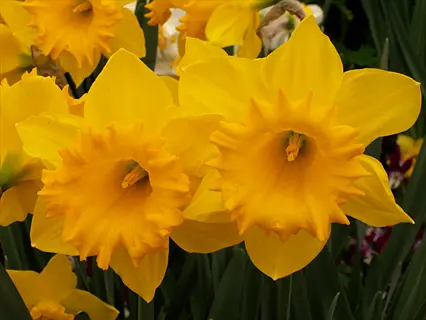
Dutch Master Trumpet
- Division: Division 1 Trumpet, producing one large flower per stem with a trumpet as long as or longer than the petals, reaching 16 to 18 inches (40 to 45 centimeters) tall.
- Bloom Color: Uniform golden-yellow petals and trumpet that hold their color well even in warm spells, making them a classic choice for traditional spring gardens.
- Best Use: Ideal for mass planting in borders and along driveways where their bold color creates a striking display visible from a distance in early spring.
- Hardiness: Thrives in USDA Zones 3 through 8, tolerating harsh winters without any need for lifting or special cold protection during dormancy.
- Bloom Time: Early to mid-spring bloomer that pairs well with later varieties like Cheerfulness to extend the overall flowering season by several weeks.
- Care Tip: Plant bulbs 6 to 8 inches (15 to 20 centimeters) deep in well-drained soil and apply a low-nitrogen fertilizer at emergence for the strongest stems.
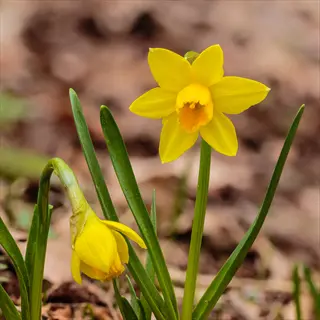
Tete-a-Tete Miniature
- Division: Division 12 Miscellaneous, a compact hybrid standing only 6 to 8 inches (15 to 20 centimeters) tall with two to three small flowers per stem.
- Bloom Color: Bright butter-yellow petals surrounding a deeper orange-yellow cup that adds warmth to early spring container displays and rock gardens.
- Best Use: Perfect for containers, window boxes, and front-of-border planting where its small stature draws attention without overwhelming neighboring plants.
- Hardiness: Hardy in USDA Zones 3 through 9, making it one of the most adaptable miniature daffodils available for gardeners in a wide range of climates.
- Bloom Time: One of the earliest daffodils to bloom, often appearing in late winter to very early spring, giving gardeners a welcome burst of color.
- Care Tip: Space bulbs 3 to 4 inches (7.5 to 10 centimeters) apart and 4 to 5 inches (10 to 12.5 centimeters) deep for a dense, natural-looking drift.
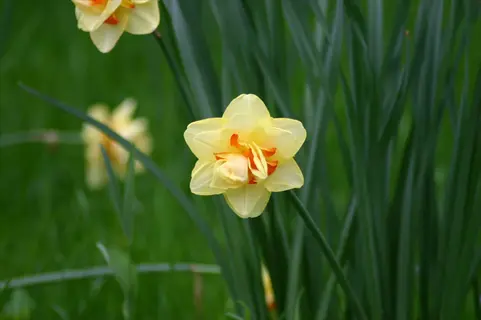
Tahiti Double
- Division: Division 4 Double, featuring multiple layers of ruffled petals that create a peony-like appearance on sturdy 14 to 16 inch (35 to 40 centimeter) stems.
- Bloom Color: Rich golden-yellow outer petals interspersed with segments of deep orange-red, creating a warm bicolor effect that stands out in any garden bed.
- Best Use: Excellent as a cut flower because the dense double blooms last well in a vase and add dramatic texture to indoor spring arrangements.
- Hardiness: Performs reliably in USDA Zones 3 through 8 and returns strong year after year without requiring frequent division or special winter care.
- Bloom Time: Mid-spring bloomer that overlaps well with tulips, creating layered color combinations when planted together in mixed bulb beds.
- Care Tip: Stake or shelter from strong wind in exposed gardens because the heavy double blooms can cause stems to lean after rain.
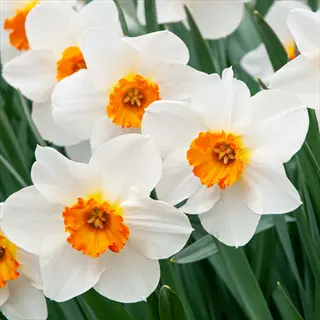
Barrett Browning Small Cup
- Division: Division 3 Small Cup, displaying a flat orange-red cup against crisp white petals on stems reaching 14 to 16 inches (35 to 40 centimeters) tall.
- Bloom Color: Bright white petals with a vivid orange-red cup that creates a high-contrast look, making individual blooms easy to spot across a garden bed.
- Best Use: Well suited for naturalizing in meadows and under deciduous trees where its reliable perennial habit produces dense colonies over several years.
- Hardiness: Grows well in USDA Zones 3 through 8, tolerating cold winters and returning strong even in regions with late spring freezes.
- Bloom Time: Early to mid-spring bloomer that bridges the gap between the earliest miniatures and the later-blooming doubles and fragrant varieties.
- Care Tip: Avoid removing foliage for at least eight weeks after bloom, as the leaves need sunlight to recharge the bulb for the following year.
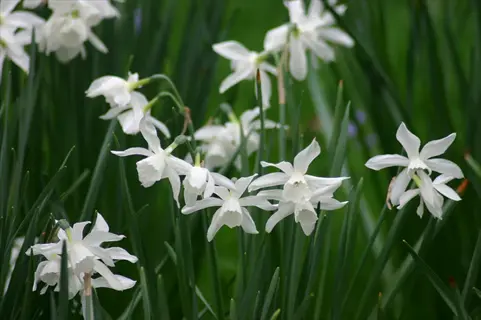
Thalia Triandrus
- Division: Division 5 Triandrus, producing two to three graceful nodding white flowers per stem on slender 12 to 16 inch (30 to 40 centimeter) stalks.
- Bloom Color: Pure snow-white petals and cup give this variety an elegant look that works well in moon gardens where pale flowers glow at dusk.
- Best Use: Outstanding for shady woodland gardens and moon gardens because the white blooms reflect low light, and the variety tolerates partial shade well.
- Hardiness: Hardy in USDA Zones 3 through 8 and known for strong perennial performance, often multiplying into generous clumps within three to four years.
- Bloom Time: Mid to late spring bloomer that extends the daffodil season after most yellow trumpet types have already finished flowering.
- Care Tip: Plant in groups of at least ten bulbs for the best visual effect, spacing them about 5 inches (12.5 centimeters) apart for a natural drift.
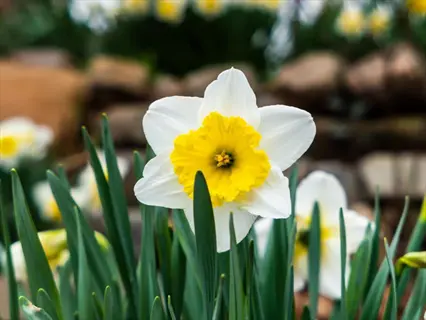
Jetfire Cyclamineus
- Division: Division 6 Cyclamineus, recognized by its swept-back petals and forward-pointing trumpet on compact 10 to 12 inch (25 to 30 centimeter) stems.
- Bloom Color: Bright yellow reflexed petals paired with a vivid orange trumpet, creating a lively two-tone look that attracts early pollinators to the garden.
- Best Use: A top choice for naturalizing on slopes and in rock gardens where its low profile and strong constitution help it establish quickly.
- Hardiness: Reliable in USDA Zones 3 through 8 and known for vigorous multiplication, often doubling its clump size within two to three growing seasons.
- Bloom Time: Very early spring bloomer, often flowering alongside crocuses, making it one of the first bursts of color after a long winter.
- Care Tip: Tolerates heavier soils better than many daffodil types, but adding coarse sand or compost at planting still improves drainage and long-term health.
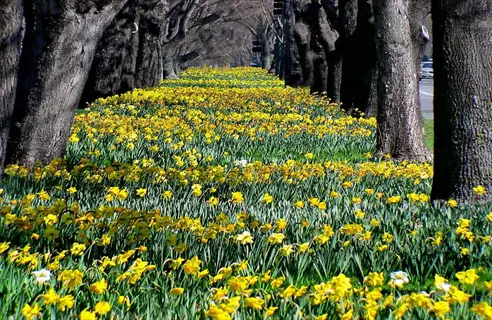
Cheerfulness Double
- Division: Division 4 Double, bearing clusters of small creamy-white double flowers with a subtle yellow center on 14 to 16 inch (35 to 40 centimeter) stems.
- Bloom Color: Soft ivory-white petals layered with pale lemon accents, giving the blooms a delicate, old-fashioned charm that complements pastel spring gardens.
- Best Use: Prized for its sweet fragrance, making it ideal for planting near patios, walkways, and seating areas where the scent can be enjoyed up close.
- Hardiness: Performs well in USDA Zones 3 through 8 and produces multiple blooms per stem, giving gardeners more flowers per bulb than single-flowered types.
- Bloom Time: Late spring bloomer that extends the daffodil display well after the early trumpets have faded, keeping beds colorful for additional weeks.
- Care Tip: Each stem carries three to four blooms, so spacing bulbs 5 to 6 inches (12.5 to 15 centimeters) apart gives the flower clusters room to open fully.
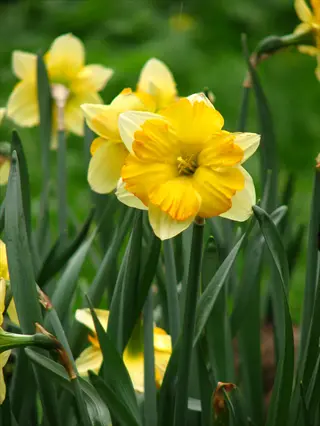
Petit Four Split Corona
- Division: Division 11 Split Corona, featuring a flattened cup that splits open against the petals like a second layer of ruffled color on 14 to 16 inch (35 to 40 centimeter) stems.
- Bloom Color: White outer petals with a salmon-pink split corona that fades to apricot as the flower matures, offering changing color over its bloom period.
- Best Use: An eye-catching specimen for focal planting in borders or near entryways where its unusual flower form draws attention and sparks conversation.
- Hardiness: Suited to USDA Zones 3 through 8 and reliable as a perennial, though split corona types benefit from richer soil and regular feeding.
- Bloom Time: Mid-spring bloomer that overlaps with large-cup and triandrus types, adding a unique silhouette to mixed daffodil plantings during peak season.
- Care Tip: Provide richer soil with added compost because split corona varieties use more energy to produce their complex flower structure each year.
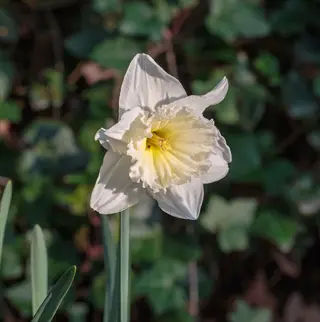
Ice Follies Large Cup
- Division: Division 2 Large Cup, producing broad white petals around a wide ruffled cup on strong 16 to 18 inch (40 to 45 centimeter) stems that resist wind well.
- Bloom Color: Opens with a lemon-yellow cup that gradually fades to creamy white as the bloom ages, creating a subtle two-stage color effect over about two weeks.
- Best Use: One of the best daffodils for naturalizing in lawns and meadows because it multiplies fast and tolerates grass competition once established.
- Hardiness: Very hardy in USDA Zones 3 through 8 and regarded as one of the most dependable perennial daffodils for long-term garden performance.
- Bloom Time: Early to mid-spring bloomer that produces flowers in great numbers even in its first year, giving you a rewarding experience right away.
- Care Tip: Space 6 to 8 inches (15 to 20 centimeters) apart for border planting, or scatter randomly at 4 to 6 inch (10 to 15 centimeter) spacing for a naturalized meadow look.
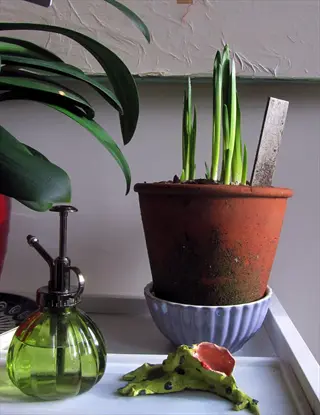
Paperwhite Narcissus
- Division: Division 8 Tazetta, producing clusters of small, very fragrant white flowers on 12 to 16 inch (30 to 40 centimeter) stems without requiring a cold period.
- Bloom Color: Pure white petals and cup with a strong sweet fragrance that fills an entire room when grown indoors, making this the top choice for winter forcing.
- Best Use: The go-to variety for indoor forcing in pebbles and water because paperwhites skip the cold treatment that other daffodil types need before blooming.
- Hardiness: Hardy only in USDA Zones 8 through 10 outdoors, but grown as an indoor bulb in all climates where it blooms three to six weeks after planting.
- Bloom Time: Blooms in winter indoors, often appearing within three to six weeks of planting in pebbles, making them a popular holiday gift and table decoration.
- Care Tip: Support the tall stems with a decorative stake or grow in a narrow vase because paperwhites tend to lean toward light and can topple in loose pebble arrangements.
Your best bet is to mix early, mid, and late bloomers so you get color from late winter through late spring. Start with 3 or 4 varieties from this list and you'll see which ones do best in your garden soil and climate.
How to Plant Daffodil Bulbs
Planting daffodils at the right time matters more than most guides let on. Soil temperature is the real trigger, not the calendar date. When the ground drops below 60°F (15.5°C) at 4 inches deep, your bulbs will start rooting without pushing up leaves too soon. If you plant fall-planted bulbs in warm September soil, you risk foliage popping up before winter hits.
Start your soil preparation by working the bed 10 to 12 inches deep. Mix in 2 to 3 pounds of a complete fertilizer at a 1:4:4 ratio per 100 square feet. Set each bulb at a daffodil planting depth of 6 to 8 inches with the pointy end up. If you aren't sure which end is up, just plant the bulb sideways. It will find its own way to the surface.
The table below shows you when to plant based on your USDA zone. Use a soil thermometer at 4 inches deep to check your timing. Zones 9 and 10 need pre-chilled bulbs because the ground never gets cold enough on its own.
I've made the mistake of planting too early in Zone 7 and watched green shoots appear in November. Those leaves got burned by frost and the bulbs produced weaker blooms the next spring. Wait for cool soil and your patience will pay off with stronger flowers.
Watering and Fertilizing
Getting your daffodil fertilizer right takes a simple three stage approach. At planting in fall, work a low nitrogen fertilizer like 5-10-10 into the soil around the bulbs. Never dump fertilizer straight into the planting hole. That strong dose kills new roots and causes bulb rot. I lost a whole row of bulbs this way before I learned better.
When you see green tips poking up in spring, top dress with more 5-10-10 for feeding daffodils in spring. Once buds start to open, switch to a 0-10-10 or potassium blend to help the bulb store energy for next year. This three stage schedule feeds your plants at every point when they need it most.
Many gardeners ask about bonemeal for bulbs versus synthetic blends. Bonemeal works great as an organic option at planting time. Apply 3 to 4 pounds per 100 square feet or about 1 tablespoon per planting hole. It breaks down slow and feeds roots through winter. Synthetic blends give you more control over the exact ratio at each growth stage.
Watering daffodils is easier than most people think. Give the bed a good soak right after planting to settle the soil. Through winter, rainfall does most of the work. In spring, water once a week if rain stays away for more than 10 days. Stop watering once the foliage turns yellow because wet soil during dormancy causes rot.
Post-Bloom Care and Division
Good daffodil care after blooming starts with one rule. Leave the foliage alone for at least 8 weeks after the last flower fades. Those green leaves are working hard to pull sunlight and turn it into food that recharges the bulb for next spring. Never use scissors or a knife to remove them. Cutting spreads virus diseases from plant to plant.
Foliage management matters because the leaves are your bulb's power source. A clump that once gave you 12 blooms may drop to 3 or 4 when the bulbs crowd each other for light and nutrients. That drop in flowers tells you it's time for dividing daffodil bulbs. Wait until the yellowing foliage turns brown and pulls free with a gentle tug before you start.
I've had clumps sit happy for 8 years before they needed any work at all. Start transplanting daffodils when a clump skips a full bloom season. Dig it up and reset it in fresh soil with better sun. Most clumps do fine for 5 to 10 years before they need that kind of care.
Wait for Foliage to Yellow
- Timing: Allow at least eight weeks after the last flower fades before touching the foliage, giving leaves time to channel energy back into the bulb through photosynthesis.
- Visual Cue: Leaves will shift from green to yellow and eventually brown, becoming limp enough to pull away from the bulb with a gentle tug by late June or early July.
- Common Mistake: Do not braid, tie, or mow foliage early because reducing leaf surface area starves the bulb and can cause it to go blind the following spring.
Lift the Clump Carefully
- Tool Choice: Use a garden fork rather than a spade to lift the entire clump, inserting it at least 6 inches (15 centimeters) away from the outer edge to avoid slicing through bulbs.
- Depth: Push the fork 8 to 10 inches (20 to 25 centimeters) deep before levering the soil upward so you get underneath all the roots and daughter bulbs.
- Handling: Shake off loose soil gently and avoid pulling on the stems, which can tear the basal plate where roots attach to the bulb.
Separate Offset Bulbs
- Method: Twist daughter bulbs away from the mother bulb with a firm but gentle rocking motion, and discard any bulbs that feel soft, mushy, or show signs of rot.
- Size Check: Keep only offsets that are at least one inch (2.5 centimeters) in diameter, as smaller bulblets may take two or more additional years before they produce flowers.
- Inspection: Look for dark patches or foul odor indicating basal rot, and remove any affected bulbs to prevent the disease from spreading to healthy ones.
Dry and Store or Replant
- Drying: Lay separated bulbs in a single layer on a screen or newspaper in a shaded, well-ventilated spot for at least one week until the outer skin feels papery.
- Storage Option: If you are not replanting right away, store dried bulbs in mesh bags or old pantyhose at the coolest available spot with good air circulation, ideally around 45 degrees Fahrenheit (7.2 degrees Celsius).
- Replanting: Place bulbs back in the ground at the same depth they were growing, spacing them 6 to 8 inches (15 to 20 centimeters) apart to allow several years of growth before the next division.
Pests, Diseases, and Fixes
Most guides skip daffodil pests and daffodil diseases. That's a big mistake. You can lose a whole bed to bulb rot or narcissus bulb fly if you don't catch the signs early. I've dealt with blind bulbs in my own garden and know how frustrating daffodils not blooming can be.
The good news is that daffodils are tough plants. They contain lycorine and calcium oxalate crystals that make them toxic to deer, rabbits, and most rodents. That natural defense means you won't deal with the animal damage that plagues tulip growers. Your main threats come from insects, fungi, and planting mistakes instead.
The UF IFAS Extension lists 5 major pest types and 8 disease types that can hit daffodils. Below are the ones you're most likely to run into at home, along with the fix for each one.
Narcissus Bulb Fly
- Symptoms: Plants produce weak, grassy foliage with few or no flowers, and when you dig up the bulb you find a single large maggot inside that has hollowed out the interior.
- Prevention: Cover planting areas with fine mesh or horticultural fleece during late spring when adult flies are active and looking for spots to lay eggs near bulb bases.
- Treatment: Remove and destroy any infected bulbs rather than composting them, as the larvae can survive in compost piles and reinfect future plantings nearby.
Basal Rot (Fusarium)
- Symptoms: Bulbs feel soft and spongy at the base, often producing a chocolate-brown discoloration visible when you cut through the basal plate, accompanied by a sour smell.
- Prevention: Improve drainage at the planting site with coarse sand or raised beds, and never apply fresh animal manure which encourages the fungus responsible for this disease.
- Treatment: Discard all affected bulbs immediately and avoid replanting in the same spot for at least three years because the Fusarium fungus persists in contaminated soil.
Blind Bulbs (No Flowers)
- Symptoms: Healthy green foliage emerges each spring but produces no flower buds, a condition university extension sources call going blind that frustrates many gardeners.
- Common Causes: Removing foliage too early after previous blooms, planting in too much shade, overcrowded clumps competing for nutrients, or newly planted bulbs adjusting to their new site.
- Solution: Allow foliage to remain for eight full weeks after bloom, move bulbs to a sunnier location if shade has increased, and divide congested clumps every five to ten years.
Leaf Scorch and Smolder
- Symptoms: Brown or reddish-brown streaks appear along leaf tips and margins in early spring, sometimes accompanied by a gray fuzzy mold on damaged tissue during cool wet weather.
- Prevention: Plant bulbs with adequate spacing of at least 6 inches (15 centimeters) to promote air circulation, and avoid overhead watering that keeps foliage wet for extended periods.
- Treatment: Remove and discard infected leaves promptly to reduce the spread of fungal spores, and apply a copper-based fungicide in early spring if the problem recurs annually.
Contact Dermatitis (Lily Rash)
- Symptoms: Itchy red rash on hands and arms after handling daffodil bulbs, stems, or flowers, caused by calcium oxalate crystals and the alkaloid lycorine present in all parts of the plant.
- Prevention: Wear gloves when planting, dividing, or arranging daffodils, and wash hands thoroughly with soap and water immediately after any bare-skin contact with bulb sap.
- Severity: NC State Extension rates daffodil toxicity as medium, with bulbs being the most poisonous part, so keep them away from children and pets during planting sessions.
Most of these problems come down to drainage and timing. Fix those 2 things and you'll avoid the bulk of daffodil trouble. If overcrowding is your issue, a simple division fixes it within one season.
Containers and Indoor Forcing
Container planting daffodils gives you blooms on your patio or balcony where beds don't exist. Forcing daffodils indoors lets you enjoy spring flowers in winter. I've been doing this for years. I pot my bulbs in October and store them in a cold garage. By January I move them to a cool room and you can have blooms by Valentine's Day.
You'll need about 5 bulbs per 6 inch pot for a full display. Pack them close together with the tips just below the rim. For paperwhites indoors, skip the cold treatment and just set them in pebbles and water. They'll bloom in 3 to 6 weeks at room temperature. Winter container care for other types means keeping pots moist but not soggy during cold storage.
Here's the best part about your daffodils in pots. Most forced bulbs go in the trash, but not these. You can plant forced daffodils right back in your garden. Put them outdoors after the leaves die back. They'll often bloom again for you within a year or two.
Pot Bulbs in Early Fall
- Container: Choose a pot at least 6 inches (15 centimeters) wide with drainage holes and fill it with well-draining potting mix, leaving room for the bulb tips to sit just below the rim.
- Density: Place about five standard-size bulbs per 6-inch (15-centimeter) pot with their pointed tips facing up and shoulders nearly touching for a full display.
- Exception: Paperwhite narcissus can skip the cold treatment entirely and be planted in pebbles and water for blooms in just three to six weeks at room temperature.
Cold Treatment for 10 to 12 Weeks
- Temperature: Store potted bulbs at 35 to 45 degrees Fahrenheit (1.7 to 7.2 degrees Celsius) in an unheated garage, basement, or refrigerator for 10 to 12 weeks to simulate winter.
- Moisture: Water lightly every two to three weeks during cold storage so the potting mix stays barely moist but never soggy, which would encourage mold and rot.
- Timing: If you pot bulbs in mid-October, the cold phase ends around early to mid-January, putting you on track for mid-February blooms.
Transition to Warmth Gradually
- Phase One: Move pots to a cool bright room at 50 to 55 degrees Fahrenheit (10 to 12.8 degrees Celsius) for about two weeks, allowing shoots to green up and strengthen.
- Phase Two: Shift pots to a room at about 60 degrees Fahrenheit (15.5 degrees Celsius) with bright indirect light for another two weeks until flower buds develop and open.
- Avoid Heat: Temperatures above 65 degrees Fahrenheit (18.3 degrees Celsius) cause stems to stretch and flop, shortening both bloom quality and overall display life.
Enjoy Blooms and Replant
- Display Life: Indoor forced daffodils bloom for one to two weeks, and keeping them in a cool room extends the display compared to a warm living space.
- After Bloom: Continue watering and place the pot in a sunny window so the foliage can photosynthesize and recharge the bulb for at least six to eight weeks after flowers fade.
- Outdoor Transplant: Unlike most forced bulbs, daffodils can be transplanted into the garden after foliage dies back and will often recover to bloom again within one to two years.
5 Common Myths
You should braid or tie daffodil leaves together after blooming to keep the garden tidy.
Braiding or tying reduces the leaf surface area exposed to sunlight, weakening the bulb and reducing next year's blooms. Leave foliage untouched for at least eight weeks.
Bonemeal placed directly in the planting hole is the best way to feed new daffodil bulbs.
Concentrated fertilizer at the base of the hole can burn emerging roots and promote bulb rot. Mix fertilizer into the surrounding soil instead.
You must deadhead every daffodil flower immediately after it fades to preserve bulb energy.
Research from Iowa State University shows that seed pod formation in daffodils has very little impact on bulb vigor, so deadheading is optional.
Daffodils only grow well in full sun and will never bloom in partially shaded spots.
Daffodils bloom before most trees fully leaf out, so areas under deciduous trees receive enough spring sunlight. Flowers actually last longer with light afternoon shade.
Adding fresh animal manure around daffodil bulbs is a natural way to boost their growth.
Fresh animal manure encourages basal rot in daffodil bulbs. Use well-composted organic matter or a low-nitrogen synthetic fertilizer instead.
Conclusion
Daffodil bulbs are one of the best long term investments you can make in your garden. Plant them when your soil drops below 60°F (15.5°C), let the foliage stay for 8 weeks after bloom, and divide clumps every 5 to 10 years. Those 3 steps cover most of what you need to keep these perennial flowers blooming strong for decades.
This guide gave you tools that most resources leave out. You can now spot narcissus bulb fly damage and force blooms indoors for winter. You also know the right planting window for your USDA zone. That kind of detail helps you get real results with spring-flowering bulbs.
A plant expert at the University of Missouri put it best. Daffodils give more pleasure with less effort than almost any other garden plant. I've found that to be true in every bed I've planted. Once the bulbs go in, they handle themselves with very little help from you.
Whether you plant 10 bulbs this fall or 100, every one is a promise of spring that keeps itself year after year. Get them in the ground at the right time and they'll reward you with bright color long after most other flowers need to be replaced.
External Sources
Frequently Asked Questions
What is the best month to plant daffodil bulbs?
September through November is the ideal window, depending on your USDA zone, because bulbs need cool soil below 60 degrees Fahrenheit (15.5 degrees Celsius) to root properly.
Do daffodil bulbs need to be dug up every year?
No, daffodil bulbs are perennial and can stay in the ground year after year, only needing to be lifted and divided every five to ten years when blooming declines.
What flower symbolizes narcissism?
The daffodil, also known as narcissus, symbolizes narcissism because it takes its botanical name from the Greek myth of Narcissus who fell in love with his own reflection.
How many years will daffodil bulbs bloom?
Healthy daffodil bulbs can bloom reliably for twenty years or more when planted in well-drained soil and given proper post-bloom foliage care.
What not to plant next to daffodils?
Avoid planting daffodils near other cut flowers you plan to arrange together, since daffodil stems release a slimy sap that shortens the vase life of companion blooms.
Do daffodil bulbs multiply on their own?
Yes, daffodil bulbs naturally produce smaller offset bulbs around the mother bulb each year, gradually forming dense clumps over time.
Can you leave daffodil bulbs in the ground over winter?
Yes, daffodil bulbs are hardy through USDA Zones 3 to 8 and actually require a cold winter period to trigger spring flowering.
Do daffodils need water every day?
No, daffodils do not need daily watering and prefer soil that dries slightly between waterings, as constant moisture promotes bulb rot.
What is the nickname for a daffodil?
Daffodils are sometimes called Lent lilies because they often bloom during the Lenten season, and the entire genus carries the botanical name Narcissus.
Why are my daffodils not blooming?
The most common causes are overcrowded clumps that need division, foliage removed too early before the bulb recharged, or insufficient winter chilling hours in warm climates.