
Introduction
An edible flower is a bloom you eat, in a salad, on a cake, or steeped in a cup of tea. Whether it is safe to eat is not settled by the species alone. It is settled by how the plant was grown and how it was handled after picking. The same pansy is fine from your own bed and a bad idea from a florist cooler, because blooms sold for looks may carry sprays that were never labeled for food. Edible flowers are worth eating. The sourcing question just comes first.
Are all flowers edible? No. Colorado State University Extension publishes a table of 27 poisonous plants, with foxglove and oleander on it, and says the table is not complete. Common names travel across plants that do not belong on the same plate, so the first of two questions is what the thing is by its scientific name.
Most people have heard of flowers you can eat, and almost nobody feels informed about them. A 2020 survey of 290 consumers in Portugal and Costa Rica found 87% had heard of edible flowers while 96% said there is not enough information on them. Only 48% had ever eaten one. Among those who had, restaurants were the most common place of the first taste at 46%, against 30% at home.
That gap is wide, and the pages ranking at the top of your search do not close it. None of them cite a single toxicology or nutrition study. This guide leans on three land-grant extension services and four peer-reviewed studies. Edible flower safety here rests on numbers that someone measured, not on advice copied from other blogs. Two questions decide every bloom you put on a plate. What is it by scientific name, and how was it grown and handled.
10 Edible Flowers Worth Growing
Ten flowers here, not 60. Each one earns its space twice over, once for the bloom in the bed and once for what it does on a plate. These are the best edible flowers to grow if you want a garden that feeds you as well as it looks. The flavor notes below come from extension publications rather than my own palate, since taste is subjective and yours may not match mine.
Golden Gem was the only marigold I kept picking. Petals went into rice and across a lemon tart, all from four plants at the end of the raised bed along the south fence. UAF Extension calls the signet types the best tasting of the marigolds, bland to slightly spicy or citrus flavored. Golden Gem and Lemon Gem are both signets.
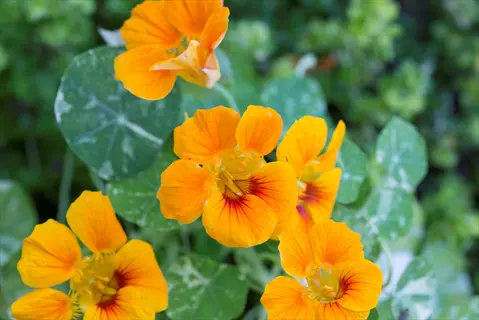
Nasturtium (Tropaeolum majus)
- Flavor: Sweet and spicy with a peppery bite that Nebraska Extension compares directly to watercress.
- Edible parts: Both the whole flower and the leaves are edible, which few garden flowers can claim.
- Nutrition note: UAF Extension reports nasturtium leaves carry roughly 10 times the vitamin C of lettuce.
- Best use: Whole blooms scattered over green salads, with the chopped leaves folded into sandwiches.
- Growing: A strong container candidate that will not tolerate dry conditions, so keep the pot watered.
- Caution: Grow from your own seed rather than buying plants raised as ornamentals with pesticide treatment.
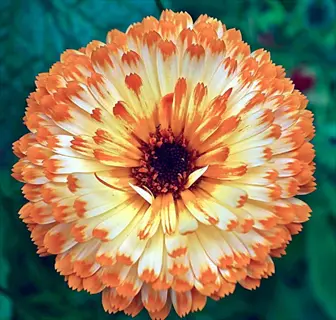
Calendula (Calendula officinalis)
- Flavor: Tangy and peppery petals that Nebraska Extension describes as saffron-like.
- Nickname: UAF Extension notes calendula was once called poor man's saffron, a petal stand-in for the real spice.
- Edible parts: Use the ray petals only and pull them free of the green base before adding them to food.
- Best use: Stirred into rice, soups, and butters for color, or scattered over salads and soft cheeses.
- Growing: An easy annual that self-sows freely and keeps flowering when you deadhead it through summer.
- Caution: True saffron comes from crocus stamens, so treat calendula as a color substitute, not a flavor match.
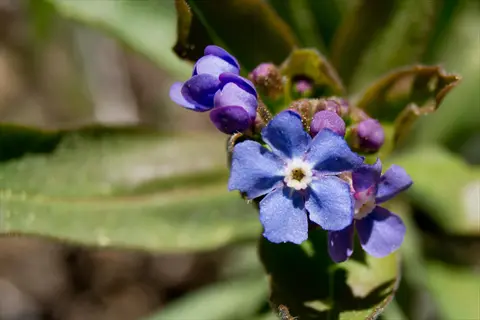
Borage (Borago officinalis)
- Flavor: Clean cucumber taste, which is why the blue star-shaped flowers turn up floating in summer drinks.
- Best use: Frozen into ice cubes, floated in lemonade, or scattered over cold soups and cucumber salads.
- Growing: A vigorous self-sowing annual that returns on its own once it has flowered in a bed for a season.
- Caution: A 2025 Foods review found borage carried the highest pyrrolizidine alkaloid load of the fresh flowers analyzed.
- Amounts: The 2025 Foods review says even moderate consumption could surpass the EFSA tolerable daily intake, and gives no safe serving amount.
- Handling: Pull the flower free of the hairy calyx, since the fuzzy parts are unpleasant in the mouth.
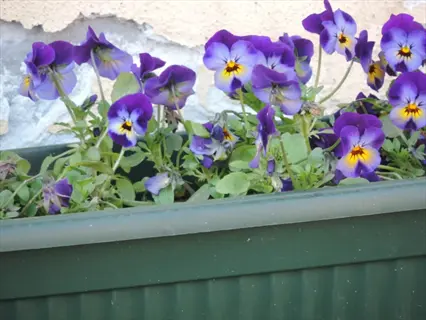
Pansy and Viola (Viola species)
- Flavor: Mild and faintly green, with Johnny jump-ups carrying the wintergreen note Nebraska Extension describes.
- Edible parts: Use the whole flower. Violas, pansies, and Johnny jump-ups need no sepal removal.
- Best use: Crystallized for cakes, pressed into shortbread, or laid whole across frostings and salads.
- Preserving: UAF Extension crystallizes them with a pasteurized egg white wash and superfine sugar before drying.
- Growing: Happy in a window box or container and best in the cooler ends of the season.
- Caution: Buy seed or plants raised for eating, since nurseries raise bedding pansies as ornamental stock.
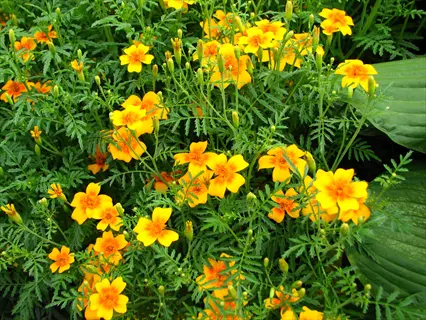
Signet Marigold (Tagetes tenuifolia)
- Flavor: UAF Extension calls signet marigolds the best-tasting marigolds, bland to slightly spicy or citrus flavored.
- Cultivars: Golden Gem and Lemon Gem are the named signet types extension guidance points at for the table.
- Scent: Nebraska Extension describes a lemon-verbena scent, which carries into drinks and light desserts.
- Best use: Petals only, pulled from the base and scattered over rice, fish, salads, and citrus desserts.
- Growing: Compact plants that do well in pots and keep blooming through heat with regular deadheading.
- Caution: The larger African and French marigolds are not what the extension guidance points at, so pick a signet type rather than any marigold.
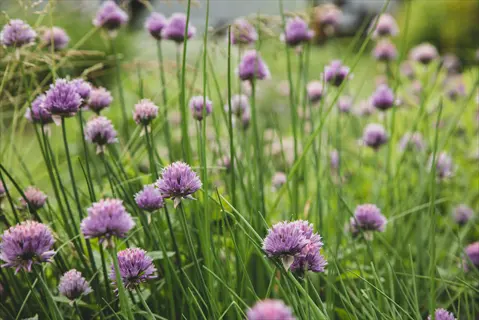
Chive Blossom (Allium schoenoprasum)
- Flavor: Mild onion, the flavor Nebraska Extension records for chive blossoms.
- Best use: Broken into florets over eggs, potatoes, and soft cheese, or steeped in vinegar for a pink infusion.
- Preserving: Chive blossoms infuse vinegar with color, and CSU Extension says to keep home-flavored vinegars in the fridge.
- Growing: A hardy perennial clump that flowers in late spring and gives you leaves for the rest of the year.
- Handling: Pull the individual florets apart, since a whole head eaten at once is overwhelming.
- Caution: Harvest before the blooms brown, because older heads turn papery and taste dusty rather than sweet.
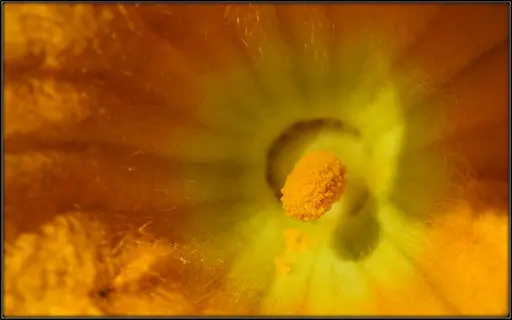
Squash Blossom (Cucurbita species)
- Flavor: Mild and vegetal, closer to young zucchini than to anything floral or perfumed.
- Best use: Stuffed and fried, a preparation Nebraska Extension lists among traditional flower dishes.
- Which to pick: Take the male flowers on thin stems and leave the female ones that carry a small fruit behind.
- Handling: Remove the stamen or pistil inside, then check the throat of each flower for sheltering insects.
- Timing: Pick in the morning while each bloom is still open, because they close and wilt by the afternoon.
- Growing: A summer squash plant carries plenty of male flowers, so taking a few of them does not cost you squash.
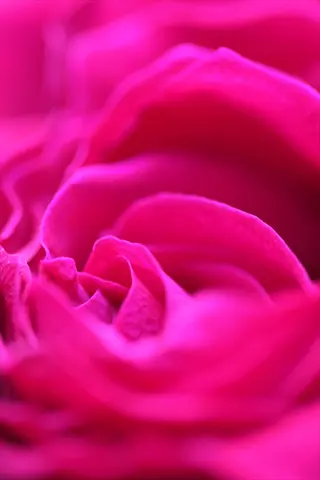
Rose (Rosa species)
- Flavor: Perfumed and sweet, varying by cultivar, so taste one petal before you commit a dish to it.
- Handling: CSU and UAF Extension both say to break off the bitter white heel at the base of each petal.
- Best use: Petals in sugars, syrups, jellies, and shortbread, or candied whole for cake decoration.
- Popularity: Rose tied with chamomile as the most-consumed edible flower in the Guine et al. (2020) survey at 62%.
- Rose hips: UAF Extension says hips are best picked just after the first frost of the season.
- Caution: Ornamental roses may carry products not labeled for edible plants, so eat only from a bush grown for eating.
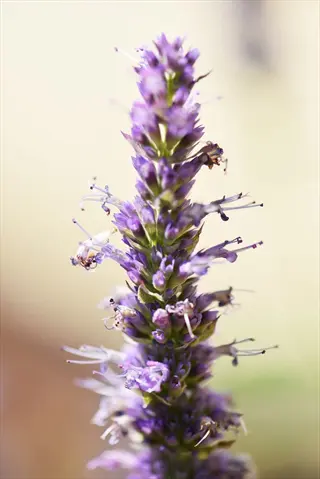
Anise Hyssop (Agastache foeniculum)
- Flavor: Strong licorice, the flavor CSU Extension records for anise hyssop.
- Edible parts: Nebraska Extension notes both the flowers and the foliage of anise hyssop are edible.
- Best use: Steeped for tea, infused into syrup and cream, or torn over fruit salads in small amounts.
- Amounts: A few florets go a long way, so add them near the end and taste before adding more.
- Growing: A perennial that draws bees all summer and keeps flowering after you cut stems for the kitchen.
- Caution: CSU Extension calls the licorice note strong, so taste one floret before you commit a dessert to it.
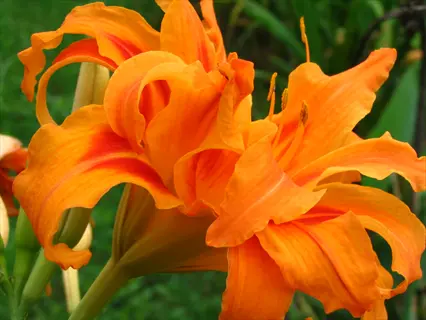
Daylily (Hemerocallis species)
- Flavor: CSU Extension says cooked daylily tastes like a combination of asparagus and zucchini.
- Best use: Buds and petals stir-fried or added to soups, where the texture holds up better than raw.
- Amounts: CSU Extension warns daylily may act as a diuretic or laxative, so eat it in moderation.
- Identification: Hemerocallis is not a true lily, so settle the botanical name before you eat any lily-shaped flower.
- Timing: Each bloom lasts a single day, so harvest in the morning while the flower is fully open.
- Growing: A tough perennial that spreads into clumps and flowers with almost no attention from you.
Rose is the one here that most people have already eaten. In a survey of 290 people, rose tied with chamomile as the top flower eaten, at 62% each. Petals in a syrup or baked into shortbread will not startle anyone at your table. If you have room for two plants and no more, make them nasturtium and calendula. Both flower for months, and both carry real flavor instead of just color. A pansy in a window box covers the cake decorating.
Two entries need reading twice. Borage tastes clean and cucumber-fresh. A 2025 review still found it carried the highest alkaloid load of the fresh flowers tested, and gave no safe serving amount. Squash blossoms are the easy one. Take the male flowers on their thin stems and leave the ones with a small fruit swelling behind. You get dinner and lose no squash.
What Edible Flowers Taste Like
What do edible flowers taste like? Most are mild, and a few are not. Nasturtium leads the peppery flowers with a bite close to watercress, and borage tastes of cucumber. Anise hyssop comes on like strong licorice, which throws people who expected something soft and floral. Edible flower flavors follow the species and not the petal color.
Taste one flower before you cut a bowlful. Garden plants get bred for size and color, so the flavor is whatever survived that breeding, and two plants sold under the same common name can taste nothing alike. Snapdragon is the usual letdown. Not everyone likes it, and UAF Extension notes the darker blooms run stronger, so put it on your own tongue before it goes anywhere near a plate you are serving.
"Edible" does not mean delicious. Flowers for the garden are chosen primarily for their looks, not their taste.
"This one is just lettuce," my neighbor said, chewing a pansy I had picked off the window box by the kitchen door. She worked through four more from the same box and got the same faint green nothing. The Johnny jump-ups in the pot below were another plant altogether, and I watched the wintergreen hit her on the first bite.
Of the survey respondents who had eaten flowers, 77% used them to decorate and 75% put them in salads. Both of those uses land a raw petal on your tongue. If you want the best-tasting edible flowers for real cooking, start with signet marigold and chive blossom. They hold their flavor in butter and hot rice, while a pansy fades out fast.
Look-Alikes and Real Cautions
Is that a daylily or a true lily? Daylily vs true lily is the pairing that catches most cooks, and the split sits at the genus. Hemerocallis grows from a fan of strappy leaves at ground level and pushes up bare flower stems. Lilium carries leaves right up the stalk. Only the first one turns up in edible flower guidance, so check the stem before you check the petals.
Most toxic look-alikes work that same way. Two plants share a common name, or share a shape, and one belongs in the poisonous plant table. CSU Extension runs 27 entries in that table, from monkshood and foxglove to oleander, lily of the valley and death camas, then says outright that the list is not complete. That is the whole case for scientific name identification. A list rules out only what someone thought to add, and you rule out everything else the moment you can name the plant in your hand.
Daylily and true lily
- The confusion: Hemerocallis carries the name lily and looks the part, but Lilium sits in a separate genus that extension edible-flower guidance does not cover.
- The test: Daylilies grow from fans of strappy basal leaves with leafless flower stems, while true lilies carry leaves right up the stem.
- The caution: CSU Extension flags daylily as a possible diuretic or laxative and advises eating it in moderation, even when identification is certain.
Yarrow, listed both ways
- The conflict: Yarrow (Achillea millefolium) appears in the CSU Extension poisonous plant table while popular flower lists present it as edible.
- The position: Follow the extension source, which is the conservative and citable one, and leave yarrow out of the kitchen.
- Where sources disagree: When a land-grant extension service and a flower blog contradict each other, the extension guidance is the one to plan around.
Begonia types
- The confusion: Begonia covers a huge range of garden plants, and a label reading begonia tells you nothing about whether you can eat the thing.
- The rule: CSU Extension states that only Begonia x tuberhybrida hybrids are edible, which is a hybrid-group distinction, not a genus-level one.
- The practical step: Keep the plant label or seed packet, because the hybrid name is the only thing that settles it later.
Fruit blossoms and their seeds
- The confusion: Apple and crabapple petals candy well, which makes the rest of the plant feel just as harmless.
- The caution: CSU Extension states that apple and crabapple seeds and plum pits are poisonous even though the petals belong in the kitchen.
- The practical step: Take petals only, and keep seeds, pits, and stems out of anything you are preserving or infusing.
Chamomile and ragweed allergies
- The confusion: Chamomile reads as the gentlest flower in the cupboard, and it was the joint most-consumed edible flower in the 2020 consumer survey.
- The caution: CSU Extension says ragweed-allergic people may react to chamomile (Anthemis nobilis) and should drink no more than one cup of tea per day.
- The wider rule: UAF Extension advises anyone with asthma, hay fever, or other allergies to eat flowers sparingly the first time, as with any new food.
Familiar plants with their own rules
- The confusion: Rosemary and dandelion feel automatically safe, one because it lives in the kitchen already and the other because it grows in every lawn.
- The cautions: CSU Extension says rosemary flowers should not be cooked, and that dandelion should be eaten cooked only rather than raw.
- The practical step: Check each plant separately rather than treating a whole herb bed or a whole lawn as one edible category.
Edible flower safety comes down to the same move every time. Name the plant, then look up that name instead of the family or the aisle you found it in. Begonia is a genus with one edible group inside. Rosemary already lives in your kitchen, and the flowers still come with a rule of their own. Familiar is not a safety rating, and the gap between the name a flower carries and what you actually hold is what drives misidentification.
Just because flowers are served with food does not mean they are edible.
The Real Risks, With Numbers
Is it safe to eat flowers? Yes, once you know the species and how the plant was grown. The plant has to be grown as food from the start, by you or by a grower who says so. The bouquet on your counter fails that test, and so does the pansy six-pack you bought for the porch. Colorado State University Extension puts the first rule this way. "Do not eat flowers from florists, garden centers, or nurseries since these flowers are not grown for consumption and may have been treated with chemicals that are not safe to eat."
Sourcing is where edible flower safety begins, and it is not where the story ends. A 2025 review in Foods measured pyrrolizidine alkaloids in borage flowers. The range ran from 77 to 88,602 mcg/kg dry weight. The review says that greatly exceeds the EU limit for borage leaves, which is 750 mcg/kg fresh weight. Read those two numbers the way the review frames them, because one is a dry weight and one is a fresh weight, so no ratio between them means anything. Pesticide-free flowers are not exempt, because the plant makes these alkaloids itself.
The rulebook leaves a gap too. EU Regulation 2023/915 caps dried chamomile for tea at 400 mcg/kg and other dried tea herbs at 200 mcg/kg. But what that rule lists is infusions, teas, supplements and specific grains, and edible flowers are not on it. Those are EU numbers, and they say nothing about United States rules.
The 2025 Foods review identifies children, people who are pregnant, and anyone with reduced liver function as more vulnerable to these alkaloids. None of the research turns those limits into a safe number of flowers, so no serving amount can be given here.
What the Nutrition Data Shows
Edible flower nutrition gets quoted as if someone had measured the whole garden. Navarro-Gonzalez et al. measured three flowers in 2015, and the numbers you see everywhere trace back to that one paper. Water came in at 89.32% in nasturtium, 83.39% in marigold and 81.74% in paracress, with fat at 0.33%, 0.32% and 0.41%. Energy ran from 21.44 to 28.84 kcal per 100 g. Those three behave like a leafy garnish on the plate, not like a vegetable serving.
Fiber is the one place the three pull ahead of their water content. The same study put total dietary fiber at 4.51% in nasturtium, 9.20% in marigold and 10.11% in paracress, and identified 39 phenolic compounds across the set. Marigold carried the most by a wide margin. Phenolics are the reason antioxidants in flowers show up in almost every article on the subject, so the table below is worth a slow read.
These results suggest that edible flowers could be a natural source of polyphenols for functional foods, but their real contribution to the overall in vivo antioxidant activity is still under discussion.
Every figure in that table covers three species and nothing else, and the authors are blunt about what a lab test can prove. Breda et al. hit the same wall in 2025. Their samples showed antioxidant activity 56 to 1416 times higher than the phenolics they could name. That tells you the chemistry is unfinished. It does not tell you what a petal does inside a person.
Edible flower health benefits are sold well ahead of that evidence. Keep that gap in mind at the market. Search vitamin C flowers and nasturtium comes up first. The number behind it, about 10 times the vitamin C of lettuce, was measured in the leaves and not the petals you scatter on a salad. Eat the flowers for the peppery bite and the color. At 81% to 89% water, the three measured here will not move your daily numbers either way.
From Picking to Preserving
How to harvest edible flowers is mostly a question of timing. Cut the blossoms while your garden is still cool, in the early morning or the late evening, and wait until the dew has evaporated so you are not bagging wet petals. A flower picked cool keeps longer and carries the highest sugar content. Take only what is fully open and at peak. Anything wilted or browning stays on the plant.
Storing edible flowers is a short game. Short-stemmed blooms go into a plastic bag with damp paper towels in the refrigerator, and you want that harvest on a plate within 3 to 4 hours. Long-stemmed flowers do better standing in a container of water. Wash under cool running water right before you plate or cook, not before the bag goes in the fridge, and look into the throat of each flower for insects that rode in from your garden.
Cut blossoms in the early morning or late evening once the dew has evaporated, when sugar content and keeping quality are highest.
Take only fully open flowers at their peak, leaving anything wilted, browning, or past its prime on the plant.
Remove pistils and stamens, take off sepals from everything except violas, Johnny jump-ups, and pansies, and break off the bitter white heel on roses, dianthus, English daisies, and marigolds.
Wash under cool running water immediately before use, checking the throat of each flower for insects, then shake off the water.
Store short-stemmed flowers in a plastic bag with damp paper towels and use them within 3 to 4 hours; long-stemmed flowers go into a container of water.
Turn the extra into candied flowers, dried petals, syrups, jellies, or infused vinegars, keeping home-flavored vinegars and oils refrigerated.
The violas came out of the bag folded shut, edges gone papery, about an hour before people showed up. I set the lot floating on ice water for a few minutes and got firm petals back. My tray sat in the refrigerator until the salads went out.
Flowers that go limp before you use them can be floated on ice water for a few minutes to firm up again, which saves a harvest that wilted on the walk back to the kitchen.
Candied flowers are where the food safety turns specific. CSU Extension calls for a pasteurized dehydrated egg white wash instead of raw egg, so what you hand a guest carries no raw egg at all. Coat, sugar, then dry slow. Pansies and violas need 10 to 36 hours in a dehydrator or in a 150°F (65°C) oven with the door propped open. Those times are written for pansies and violas, so treat drying edible flowers of any other kind as its own experiment. Store the finished petals airtight in a cool dark cupboard. A vinegar or an oil you flavor at home lives in the refrigerator and will not hold for long. Crystallized flowers keep anywhere from 2 days to several months depending on variety, so candy what you plan to use soon.
Common Myths
A flower served on a restaurant plate must be safe to eat, because kitchens would never garnish food with something inedible.
Nebraska Extension states plainly that flowers served with food are not automatically edible. Some garnishes are chosen for looks alone.
Every flower sold as edible tastes pleasant, so any bloom from the edible list will improve a salad or a cake.
University of Alaska Fairbanks Extension notes that edible does not mean delicious, since garden flowers are bred for looks rather than flavor.
Flowers from a florist or garden center are fine to eat once you give them a good rinse under the tap.
Colorado State Extension says those flowers are not grown for consumption and may carry chemicals that are not safe to eat, rinsed or not.
Any flower with a familiar food name, such as daylily, is safe to eat in whatever quantity you like.
Colorado State Extension flags daylily as a possible diuretic or laxative and advises moderation, and true lilies are a different genus entirely.
Chamomile is the gentlest flower tea, so anyone can drink as much of it as they want.
Colorado State Extension advises ragweed-allergic people to limit chamomile tea to one cup a day, and a 2025 alert flagged chamomile over alkaloid limits.
Conclusion
Sow one pot this week. Just 15% of the 290 people in the Guine survey found edible flowers easy to buy, so growing edible flowers at home is the shorter path for most cooks. Pansies, violas, signet marigolds, nasturtiums and most herbs all do well in a pot. One pot gives you a peppery flower and a lemon-scented one by midsummer. File the seed packet somewhere you will find it again. That packet carries the botanical name, and the name is what settles any later question about what goes on the plate.
Harvest in the cool part of the day, in the early morning or the late evening, once the dew has dried off the petals. Short-stemmed flowers go into a bag with a damp paper towel and need to be used within 3 to 4 hours, so cut them the same afternoon you plan to serve them. Long stems can stand in water instead. And taste one petal before you pick a bowlful. Edible does not promise good.
One rule has no exceptions. If you cannot name the plant by its scientific name, it does not go on the plate. The same holds for anything from a florist, a garden center, a nursery or a roadside. Those blooms are grown to look good. They may carry sprays that were never meant for food. That single line is most of edible flower safety, and it costs you nothing to follow.
The name of the plant, and the way it was grown and handled, are the two things that have to be settled. Everything past that in an edible flower garden is preference, once you respect the cautions that individual plants carry. Plant the pot, keep the tag, pick cool, and eat the petals you can name.
Glossary
- Crystallized flowers
- Flowers painted with a pasteurized egg white wash, coated in superfine sugar, and dried until firm enough to sit on a cake.
- Food-grade flowers
- Flowers grown and handled specifically for eating, rather than raised and treated as ornamental nursery stock.
- Petal heel
- The pale base where a petal joins the flower, bitter on roses and dianthus and broken off before the petal is used.
- Phenolic compounds
- Plant chemicals such as flavonols that laboratory antioxidant tests measure in flower petals.
- Pistils and stamens
- The reproductive parts at the center of a flower, usually removed before eating because their pollen dulls the flavor of the petals.
- Pyrrolizidine alkaloids
- Natural plant compounds found in some flowers, notably borage, that food-safety reviews track because repeated exposure adds up.
- Sepals
- The small green leaf-like parts sitting under the petals, removed from most edible flowers except violas, Johnny jump-ups, and pansies.
- Signet marigold
- A small-flowered marigold, Tagetes tenuifolia, that extension guidance rates as the best-tasting marigold for the kitchen.
External Sources
Frequently Asked Questions
Are edible flowers healthy for you?
In the three species measured in a 2015 study, they are mostly water and very low in calories, at 21 to 29 kcal per 100 g.
Which flowers are not edible?
Colorado State Extension names 27 poisonous plants, including these:
- Monkshood (Aconitum)
- Lily of the valley (Convallaria majalis)
- Foxglove (Digitalis purpurea)
- Oleander (Nerium oleander)
- Daffodil (Narcissus)
- Castor bean (Ricinus communis)
- Calla lily (Zantedeschia aethiopica)
- Death camas (Zigadenus)
How can you tell if a flower is safe to eat?
Three checks decide it:
- Identify the plant by scientific name, never by common name alone
- Confirm it was grown for eating, without pesticides
- Introduce it in a small amount, one species at a time
Can you eat rose petals?
Yes, from a rose you grew or sourced for eating. Break off the sour white heel at the petal base before use.
How long do dried edible flowers last?
It depends on the method and the flower. Crystallized flowers range from 2 days to several months when stored airtight in a cool, dark place.
Where can you buy edible flowers?
From growers and sellers who raised them as food, never from florists, garden centers, or nurseries.
What flowers can you put on a cake?
Large-petaled flowers grown for eating work best:
- Pansies and violas, which crystallize well
- Rose petals with the white heel removed
- Calendula petals for color
- Signet marigold petals for a citrus note
Do you have to remove the pistils and stamens?
For most flowers, yes. Nebraska Extension advises removing pistils and stamens because pollen distracts from the flavor.
How do you wash edible flowers?
Rinse gently under cool running water immediately before use, check for insects, and shake or pat dry.
Can you grow edible flowers in containers?
Yes. Pansies, violas, signet marigolds, most herbs, and nasturtiums are good container candidates, though nasturtiums will not tolerate dry conditions.