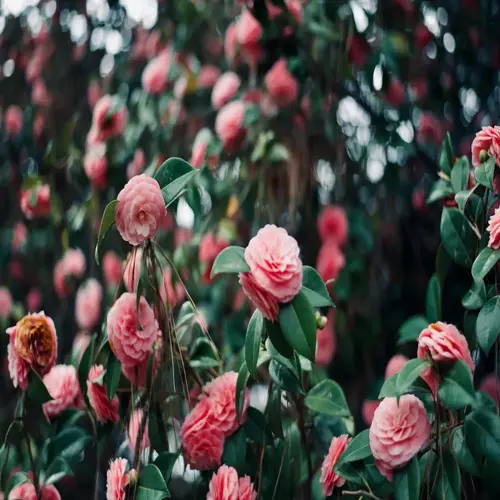

Are camellias high maintenance? Not at all once you get them planted in the right spot. They have a reputation for being fussy, but the truth is they need less work than most popular garden shrubs. Give them acidic soil, partial shade, and good drainage at planting time. After that first year, your camellia pretty much takes care of itself.
The full list of camellia care requirements fits on an index card. Feed once in early spring with an acid-loving plant food. Refresh your mulch layer once a year. Check the leaf bottoms for tea scale a few times per season. Prune once right after the last flowers drop. That's it. Compare that to roses, which need spraying every two weeks, monthly feeding, and constant deadheading to keep blooming.
In my experience, camellias are the easiest flowering shrubs I grow. I used to spend hours each week on my rose garden. The pruning, the spraying, the feeding schedule drove me nuts. When I first planted camellias, I kept waiting for the work to pile up. It never did. After that first summer of watering, my camellias settled in and needed almost nothing. My hydrangeas take three times the effort for the same amount of flowers.
UF/IFAS Extension backs up what I've seen in my own yard. They note that mature camellias can survive on rainfall alone in most climates. You don't need to drag a hose out to them every week like you do with so many other plants. The biggest ongoing task is that single annual pruning after blooms fade. Even that is optional if you don't mind a more natural shape on your plant.
The first year after planting is the only time camellias ask for real attention. Water your new plant once a week during dry spells for that first growing season. Soak it deep so the water reaches the bottom of the root ball. This helps the roots spread out into the native soil around them. Once those roots get going, your camellia can find its own water in most areas.
Pest problems are rare with camellias and most issues fix with one treatment. Tea scale is the main bug to watch for. Flip a few leaves over once a month and look for white bumps on the bottom. If you spot them, spray with horticultural oil and the problem clears up fast. I've had camellias for over ten years and only treated for pests twice in all that time.
For the lowest work option, choose low maintenance camellias from the sasanqua group. These grow faster than japonicas, handle more sun, and resist drought better once their roots are set. They also fight off root rot from Phytophthora fungus that can bother japonicas in wet soil. Sasanqua varieties like 'Yuletide' and 'Shi Shi Gashira' are tough plants that bloom heavy with very little help from you.
Your seasonal camellia to-do list should take about 30 minutes total per plant per year. That's one spring feeding, one mulch top-up, one quick prune, and a few pest checks. No other flowering shrub gives you that kind of return on so little effort. Plant your camellia right the first time and you'll enjoy years of gorgeous blooms without the fuss.
If you've been holding back on camellias because you think they're too much work, give one a try. Pick up a sasanqua from your local nursery, find a shady spot with acidic soil, and plant it this fall. You'll be surprised how little you need to do after that first year. Your camellia won't demand your weekends the way roses and hydrangeas do. It just grows, blooms, and looks great with almost zero fuss from you.
Read the full article: Camellia Plant Care and Growing Guide