Houseplant · Araceae
ZZ Plant
Zamioculcas zamiifolia
Glossy, gloriously hard to kill, and content in a corner everyone forgets, the ZZ plant asks for next to nothing and keeps giving for years.
Bright indirect
Every 14–30 days
59–84°F · 15–29°C
USDA 9–11
Overview
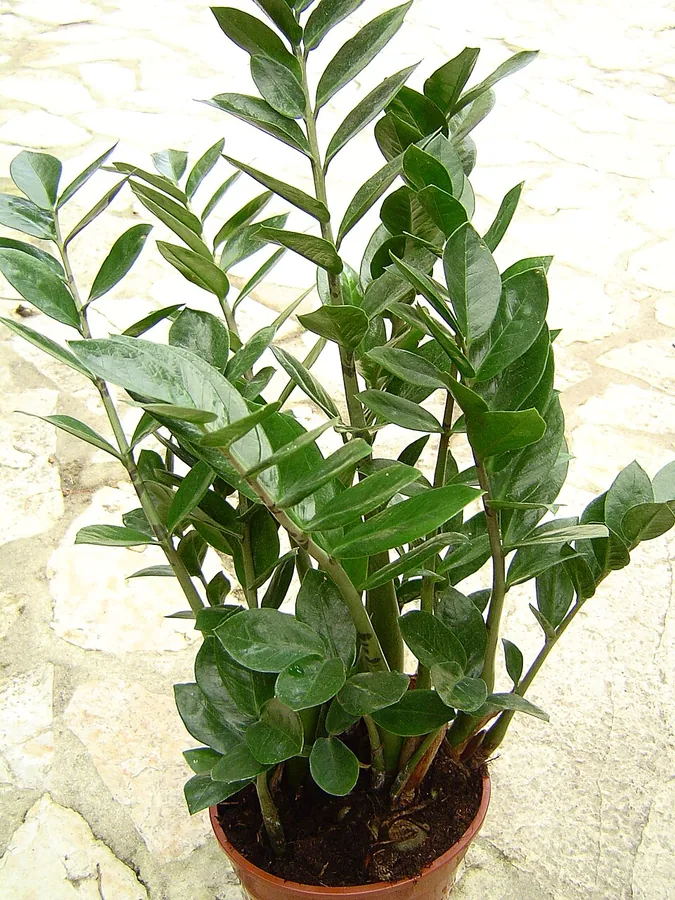
If you are new to plants and a little nervous, the ZZ is a wonderful place to start, because it is famously tough to lose. It comes from eastern Africa and tucks water away in chunky underground rhizomes, which is exactly why it forgives the watering you forget and a quiet spot far from the nearest window. Its waxy, deep-green leaflets line up in tidy rows along arching stems and gleam as though someone gave them a buff.
What makes this such a relaxed companion is how undemanding it is. It takes its time and grows slowly and steadily, holds a lovely shape with hardly any input from you, and seldom overstays its welcome at around 2 to 4 feet (61 to 122 cm) tall. Step away for weeks and it stays just as good-looking, which is why you spot it cheering up offices and dim hallways everywhere.
The one thing to keep in mind is that the whole plant carries calcium oxalate crystals, so it is best kept up high and away from pets or little ones who love to taste things. Place it somewhere out of curious reach, and in return it will give you years of calm, glossy, low-effort growth that you can feel proud of.
Care
The short version: offer it gentle bright indirect light, wait until the soil has dried out fully before watering, settle it in a fast-draining mix, and keep it cozy and away from direct sun.
Light
Your ZZ is happiest in bright indirect light, yet it puts up with low and medium light more graciously than almost any other houseplant, so don't fret about the perfect spot. Just keep it clear of direct sun, which can scorch the leaves. The only cost of a dim corner is slower growth and a slightly leggier look, nothing harmful.
Water
Wait until the mix has dried out completely before you water, which usually lands at once every 2 to 4 weeks, so there is no need to hover. The rhizomes keep a reserve of their own, which means a forgotten watering troubles it far less than a soggy pot ever would. Overwatering is the one real danger, so when in doubt, simply wait.
Soil
Give it a well-drained potting mix, peat- or bark-based, with a little extra perlite or sand stirred through. You are aiming for a blend that lets water rush away and never sits heavy, because lingering moisture is the thing that rots the rhizomes.
Temperature
Keep it in the easy, comfortable range of 59°F to 84°F (15°C to 29°C), the same warmth you would happily live in yourself. It really has no stomach for cold, and a chill below 60°F (15°C) can yellow the leaves or make them fall.
Humidity
Everyday household air suits it just fine, so you have no humidity number to worry about. It settles happily into the dry air of most homes with no misting or fuss at all.
Feeding
Feed gently through the spring and summer growing season with a balanced, diluted fertilizer, only once or twice a year. Since it grows so slowly, it asks for very little, and going overboard does more harm than good, so a light hand is best.
Pruning
Pruning could hardly be easier. Just snip off any yellowing or damaged leaflets as you notice them, and the plant keeps looking neat and cared for.
Repotting
Plan to repot every 2 to 3 years, or a little sooner if it begins to outgrow its pot. You will know the moment has come when the thick rhizomes press against the sides, roots peek from the drainage holes, or growth eases off. Just shift it up a single pot size into fresh, fast-draining mix.
Size & spacing
Indoors your ZZ settles in at roughly 2 to 4 feet (61 to 122 cm) tall and spreads to about the same width. Leave it a little room so the arching stems can fan out comfortably without bumping into neighboring plants.
Troubleshooting
Your ZZ rarely grumbles, so when it does, the fix is usually a small, manageable one, and nothing to lose sleep over. Almost every hiccup comes down to watering or light, and the plant kindly shows it in the leaves and stems. Find the picture that matches yours below, and you can gently put things right before they go any further.
Yellow leaves above squishy, tender rhizomes
Take heart: this is root and rhizome rot, and nearly every time it traces back to a kind owner watering a bit too generously, not too little. Because those plump underground rhizomes already keep their own supply tucked away, wet soil leaves them gasping until they turn soft and sour-smelling. You can still save it, so hold off on water, ease the plant from its pot, trim off any soft pieces, and settle it back into a dry, quick-draining mix.
Fix:
- Stop watering
- Unpot and cut away rotted rhizomes
- Repot in dry well-draining mix
Leaflets shriveling and dropping off
If the mix has stayed parched for ages, your ZZ simply lets a few leaflets go to protect itself, and that is not a failure on your part. You will notice the petioles wrinkling as the foliage looks a little sparse. Give it one good, deep drink, then return to your easy rhythm of waiting until the soil dries before the next one.
Fix:
- Water thoroughly
- Resume regular watering once soil dries
Small brown bumps stuck to the stems
Don't worry if you find waxy brown bumps clinging along the stems and petioles; that is armored scale, the only pest that tends to pester a ZZ, and it is very manageable. A telltale sticky film often tags along with them. Gently wipe the bumps away, follow up with horticultural oil or insecticidal soap, and give any newcomer plant a quick look-over before it sits beside your others.
Fix:
- Wipe off scale
- Treat with horticultural oil or insecticidal soap
Leaves turning yellow or flopping once things get chilly
Your ZZ much prefers cozy warmth, so a chilly stretch under 60°F (15°C) can leave its leaves yellowed or drooping. The remedy is quick and reassuring: carry it somewhere snug straight away. Through winter, keep it clear of cold, drafty windows, and welcome any plant that summered outside back indoors before the evenings start to bite.
Fix:
- Move to a warmer spot above 60°F (15°C)
Pale, scorched marks on the side facing the window
Those pale or brown marks on the side toward your window are just leaf scorch, an easy fix once you spot it. Strong, direct rays are simply more than this gentle plant enjoys. Nudge it a step away from the glass into soft, bright indirect light, and the fresh leaves that follow will come in healthy and unblemished.
Fix:
- Move to bright indirect light
Lanky, reaching stems with hardly any fresh leaves
Your ZZ will soldier on in a shadowy corner, but the trade is reaching, stretched petioles and very few fresh shoots. The reason is gentle and easy to mend: it is simply hungry for more light. Find it a brighter home, still tucked safely out of harsh sun, and it will happily perk back up.
Fix:
- Move to brighter indirect light
Toxicity
It is best not to leave this plant where a pet can reach it. Every part holds tiny, sharp calcium oxalate crystals that sting the mouth and throat and bring on drooling and vomiting if an animal chews them. The sap may also leave your own skin or eyes irritated, and no part is safe to eat, so give it a high, out-of-reach home and rinse your hands once you have finished tending it.
Toxic to
Cats · Dogs · Horses · Rabbits · Livestock · Birds · People
Cats Toxic
Should a curious cat take a nibble, it meets a sting of sharp crystals, so you may see drooling, pawing at the mouth, and some vomiting. Happily, that quick sting usually convinces most cats to leave it well alone after a taste.
Dogs Toxic
A chewing dog tends to start drooling heavily, with a sore mouth and a queasy tummy soon after. If a bigger mouthful goes down, you might notice some gagging or a turned-up nose at dinner for a little while.
Horses Toxic
Those very same crystals leave a horse's mouth and belly tender, so it may drool and lose interest in food. To be on the safe side, set the plant well away from any stalls and paddocks.
Rabbits Toxic
Please keep this one away from rabbits entirely. The oxalate crystals can sting a bunny's mouth and stomach, leaving it drooling and uninterested in eating.
Livestock Toxic
Goats, sheep, and cattle feel the crystals as a sore mouth, drooling, and an unsettled stomach, so it is kindest to fence the plant off from anywhere they graze.
Birds Toxic
A bird that pecks at it gets the same stinging crystals across its mouth and throat. The safest plan is to keep pet birds clear of the leaves altogether.
People Caution
This is not a plant for the dinner plate, and its sap can leave skin or eyes a little red and stingy. A quick hand-wash after you tend it does the trick, and it helps to keep small, curious children from mouthing the leaves.
Wash hands after handling; crystals can irritate skin
Helpline numbers

United States
ASPCA Animal Poison Control: (888) 426-4435 (fee applies)
Poison Control: (800) 222-1222



Canada
Poison Centres: 1-844-764-7669
Varieties
Past the everyday glossy green form, growers have brought out a few lovely ZZ cultivars that are well worth getting to know.
'Raven' (Dowon)
Fresh leaves arrive a soft lime-green and gradually deepen into a glossy, almost black-purple as they mature.
'Zenzi'
A neat little dwarf reaching only about 10 to 12 inches, carrying short stems and dark leaves bunched close together.
'Dark Zamicro'
A second small dwarf form, holding under 2 feet, whose leaflets come a touch smaller than those of the everyday plant.
Variegated
Its leaves wear gentle streaks of cream and white in place of an even green.
'Chameleon'
Fresh shoots emerge a cheerful golden-yellow and ease into deep green as they grow up.
'Lucky'
It bears broader green leaves whose leaflets finish in soft, gently rounded tips.
How to propagate
There are two pleasant ways to turn one ZZ into more, one quick and beginner-friendly and one that gently rewards a patient wait.
DivisionEasy
Spring, at repotting · Weeks to months
The friendliest way to grow your collection is by splitting an established plant, and it is hard to get wrong. Come spring, while it is already out of its pot for repotting, gently tease the rhizome clumps apart so each section keeps a few roots and a shoot or two of its own. Pot those pieces up, and over the following weeks to months they quietly take hold.
Leaf cuttingsDemanding
Anytime; very slow · Several months to form a rhizome
You can also coax roots from single leaflets, though this route asks for a calm dose of patience. Settle a healthy leaflet into moist mix at any time of year and let it be, since it may need several months simply to grow a tiny rhizome and longer yet before a fresh shoot peeks through.
Myths
A ZZ plant thrives in no light at all.
It does cope with a shadowy corner more gracefully than nearly any houseplant, which is where this kind story began. Even so, it still leans on light to grow, and a truly dark spot will quietly stall it. Bright indirect light is where it truly flourishes.
A single watering each season keeps a ZZ plant perfectly happy.
It is wonderfully forgiving about thirst thanks to those water-storing rhizomes, yet a single drink each season really does stretch it too thin. Offer water once the mix has dried right through, about once or twice a month. Leave it dry far longer than that and it may begin shedding a few leaflets.
Keeping a ZZ plant will noticeably freshen the air indoors.
This lovely notion goes back to old sealed-chamber tests that never matched a lived-in room. A careful peer-reviewed review found that potted plants do not measurably clean indoor air, and simply opening a window does far more than any houseplant ever could.
Simply handling a ZZ plant can poison someone or bring on cancer.
You can relax on this one: the calcium oxalate in its leaves and sap is an irritant rather than a deadly poison, and it has nothing to do with cancer. A bit of handling can leave skin or eyes feeling stingy, so rinse your hands afterward, and although eating it is a bad idea, the result is irritation, not real danger.
The ZZ plant is safe around pets.
Sadly it is not. The ASPCA lists it as toxic to cats and dogs, owing to the insoluble calcium oxalate crystals it holds, which sting the mouth and trigger drooling and vomiting if an animal chews on it.
Sources
- ASPCA Animal Poison Control
- NC State Extension Gardener Plant Toolbox
- Missouri Botanical Garden Plant Finder
- Missouri Botanical Garden Plant Finder
- Clemson Cooperative Extension HGIC
- UF/IFAS Extension Santa Rosa County
- UF/IFAS Extension (ENH1375/EP639)
- Journal of Exposure Science & Environmental Epidemiology (Cummings & Waring 2020)