Ornamental · Dryopteridaceae
Wood Fern
Dryopteris marginalis
A forgiving native fern that asks only for shade and steady moisture, then rewards a beginner for years.
Partial shade
Every 5–7 days
USDA 3–8
12–24 in · 30–60 cm
Overview
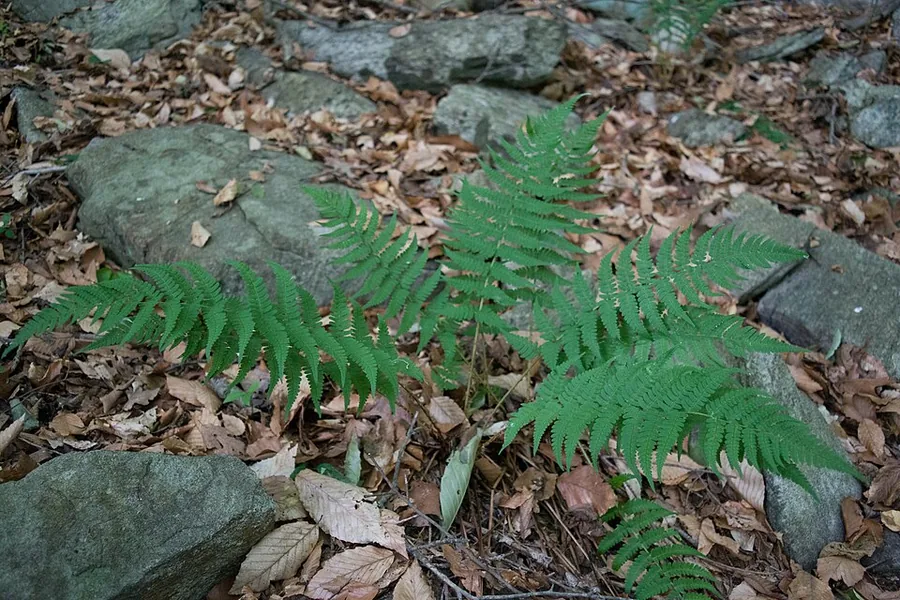
If you have never grown a fern before, the marginal wood fern is a gentle place to begin. It hails from the eastern woods, content in the broken shade beneath trees where plenty of other plants would sulk. Its leathery, blue-green fronds keep their form all season long and stay semi-evergreen into winter wherever the cold stays gentle, so there is something to enjoy well past summer.
The name marginal comes from the tidy rows of spore cases that sit right along the margins on the undersides of the fronds. Do not worry about it spreading; the clump is slow and stays where you put it, widening to only about 1 to 2 feet (30 to 60 cm), so it will never crowd its neighbors. That makes it an easy, dependable pick for a shady bed, the edge of a woodland planting, or the cool north side of the house.
The good news is how little it asks of you. Offer it shade, soil with plenty of organic matter, and ground that never dries to dust, and it will mostly look after itself. It brushes off cold all the way down to zone 3 and keeps going for years with barely any attention, so there is little room to go wrong.
Care
The short version: give it partial to full shade, keep the soil evenly moist and rich in organic matter, and clear away last year's fronds once a year before the new fiddleheads appear. None of this is hard, and the fern forgives the odd slip.
Light
Give this fern partial to full shade, close to the soft light it would find beneath a leafy canopy. A little morning or filtered sun is fine as long as the soil stays damp, though the hot midday sun will scorch the fronds, so lean toward the shadier spot if you are unsure.
Water
Aim to keep the soil evenly moist but never waterlogged, which usually means a drink every 5 to 7 days, more often in heat. A clump that has settled in can shrug off a brief dry patch, so do not panic over one missed watering, but a long drought will leave the fronds crisp and brown along the edges.
Soil
Set it into humus-rich, well-drained loam full of organic matter, the soft, springy sort of ground you meet on a forest floor. It is easygoing about pH and copes happily with anything from 5.0 to 7.0.
Temperature
This fern is genuinely hardy, comfortable across roughly -22°F to 86°F (-30°C to 30°C). Deep cold does not trouble it in the least, though the fronds start to struggle when the air turns hot and dry.
Humidity
It is happiest with average to moderate humidity, around 40% to 60%. Outdoors that mostly sorts itself out, and honestly steady soil moisture and a sheltered corner count for far more than the reading in the air.
Feeding
Ferns are light feeders, so there is no need to fuss over feeding. One spring topdressing of compost, or a single dose of balanced slow-release fertilizer at the start of the season, gives it everything it wants.
Pruning
Happily, there is barely anything to do. Come late winter to early spring, trim off the ragged, dead, or winter-burned fronds just before the fresh fiddleheads uncurl, and the rest of the year you can simply let it be.
Repotting
Wood ferns are in it for the long haul and seldom want disturbing. Only divide the clump every 3 to 5 years, and even then just when the crown grows crowded, the middle starts to die out, or the fronds lose their old strength.
Size & spacing
A grown clump stands about 1 to 2 feet (30 to 60 cm) high and spreads to much the same width. Leave each plant that little bit of room so the fronds can arch out freely and air can drift between them.
When to plant
A fern gives you no flowers or harvest to schedule around, which makes the timing pleasantly simple. Set it out in spring once the frost has passed, or in early fall while the ground still holds enough warmth for the roots to settle in. The same two windows are perfect for splitting an established clump.
Northern hemisphere
Southern hemisphere
Typical months for a temperate climate: start earlier in warm zones, later where spring frosts linger.
- Plant: Spring after frost danger passes, or early fall
Hardiness
USDA hardiness zones: 3–8
Temperature: down to -40°C
Troubleshooting
Planted in a spot it likes, a wood fern will rarely worry you. Nearly every hiccup comes down to too much sun or soil left too dry, and the fronds show it early enough to act. Find your symptom below, make a small change, and you will usually head the problem off before it touches the rest of the clump.
Brown, crispy tips creeping along the fronds
What you are seeing is frond scorch, and it nearly always follows too much sun on top of dry soil. Left where the midday sun can reach it, a fern browns at its edges first. The good news is that it is an easy fix: shift the plant into deeper shade come spring or fall, water enough to keep the ground evenly damp, and spread a mulch of leaf litter to hold that moisture down at the roots.
Fix:
- Increase watering to keep soil evenly moist
- Provide additional shade or relocate to a shadier site in spring or fall
- Mulch with leaf litter or compost to retain moisture
Fronds flopping and dying back through a dry stretch
Once the soil goes dry well beneath the surface, the fronds sag and may not perk up by morning. This is plain drought stress, and it bites hardest in a young fern's first year before the roots have reached out. Give it a deep, steady soak and then mulch over the top to keep that water where the plant can reach it.
Fix:
- Water deeply and consistently
- Apply organic mulch to conserve moisture
Dark or rusty flecks scattered over the fronds
First, take a calm second look, because those spots may simply be the fern's own sori, the tidy rows of round spore cases that line the frond edges and are meant to be there. Real trouble, a fungal leaf spot or rust, turns up instead as ragged, uneven blotches and settles in where the air is still and damp. If it truly is disease, snip off the marked fronds, thin things out so air can move through, and water down at the base instead of over the leaves.
Fix:
- Remove and discard affected fronds
- Improve air circulation and avoid overhead watering
Toxicity
You can relax about this one. Being a true fern, the marginal wood fern is not listed as toxic to pets, livestock, or people, so a brushed frond or a curious nibble will not hurt anyone. Just keep to the sensible habit of stopping pets and children from chewing the underground rhizomes of any garden plant.
Safe for
People · Cats · Dogs · Horses · Rabbits · Livestock · Birds
Cats None
Your cat is safe here; it can brush by or even nibble a frond without coming to harm, since true ferns like this one hold nothing toxic for them.
Dogs None
Dogs are fine around it too. A curious bite of a frond will not poison a dog, though wolfing down a big mouthful of any plant may bring on a passing upset stomach.
Horses None
There is nothing in this fern to put a horse at risk. Horses would not naturally seek out the fronds, and a little grazing on them does no real harm.
Rabbits None
Rabbits can share a space with this fern quite safely, so the odd nibbled frond is nothing to lose sleep over.
Livestock None
Cattle, goats, and sheep run no risk of poisoning from this fern, as it lacks the toxins that make some pasture weeds a worry.
Birds None
Both pet and backyard birds are perfectly safe near the foliage.
People None
Growing and handling this fern is safe for grown-ups and children alike. Some ferns have edible young fiddleheads, but there is no need to bring this one to the table.
Foliage poses little risk, but avoid letting pets or children chew the rhizomes; the marginal wood fern itself is not listed as toxic.
Helpline numbers

United States
ASPCA Animal Poison Control: (888) 426-4435 (fee applies)

United Kingdom
Animal PoisonLine: 01202 509000 (fee applies)

Australia
Animal Poisons Helpline: 1300 869 738
Varieties
Most gardeners grow the marginal wood fern itself, though a handful of its Dryopteris cousins show up in shade beds as well. Here is how to tell the common ones apart.
Dryopteris erythrosora (autumn fern)
An Asian relative loved for young fronds that open a warm coppery bronze and mellow to green as they age.
Dryopteris filix-mas (male fern)
A species from Europe and North America whose rhizome once served as a worming remedy and can cause irritation if taken in any quantity.
Dryopteris affinis 'Cristata The King'
A golden-scaled male fern selection that finishes each frond with a crested, tasseled tip.
How to propagate
Making more wood ferns could hardly be simpler, and the surest path is just to divide a clump you already own.
DivisionEasy
Early spring or fall · 1 to 2 growing seasons
Dividing is the friendly, low-risk way to raise more wood ferns. During early spring or fall, dig up a mature crown and pull it into pieces, checking that every piece keeps some roots and a growing point, then get them back in the ground straight away. Expect the young clumps to need 1 to 2 growing seasons to feel at home. Growing ferns from spores is possible too, but it is slow and fiddly and calls for sterile, humid conditions, so most beginners are happier dividing.
Myths
Ferns must grow from seeds, just like flowering plants.
A fern never blooms and never makes a seed. Instead it spreads by spores held in the sori under its fronds, and that is exactly why you make more of it by dividing the clump rather than sowing anything.
Wood ferns want deep, total shade and any sun will finish them off.
They do prefer partial to full shade, but think of it as a liking rather than a strict rule. As long as the soil stays reliably moist, a little morning or filtered sun does them no harm at all.