Shrub · Hamamelidaceae
Witch Hazel
Hamamelis virginiana
Give it moist, acidic soil and a little room, and witch hazel will thank you with ribbon-like flowers long after the rest of the garden has settled in for winter.
Full sun
Every 5–10 days
USDA 3–8
15–20 ft · 4.6–6.1 m
Overview
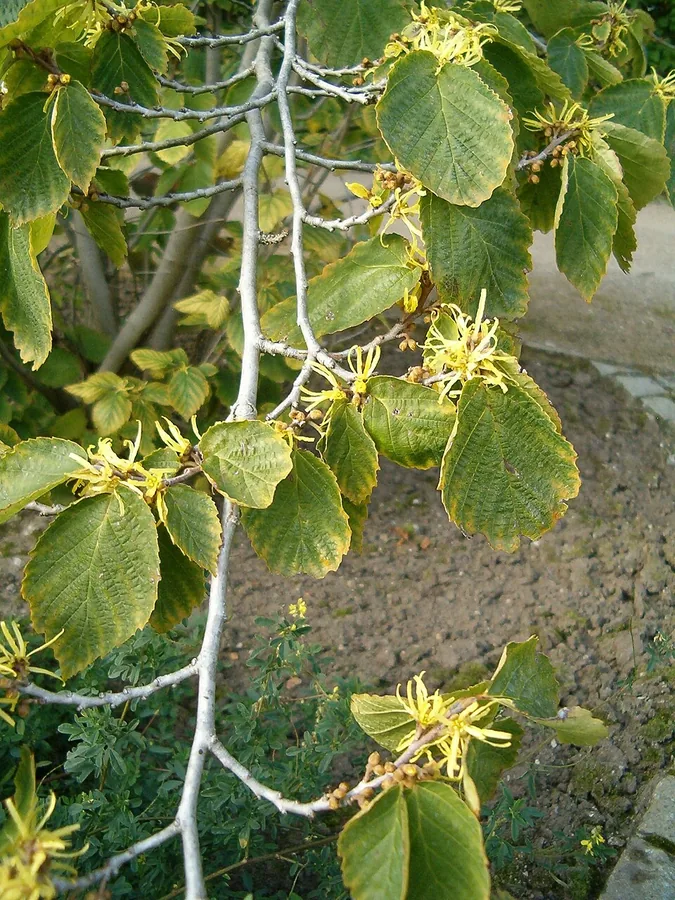
Here is a shrub that blooms when everything else has given up for the year. Witch hazel comes from the woodlands of eastern North America, and it opens its spidery yellow flowers from mid-October into December, often once the leaves have already let go. The blooms give off a clean, sweet scent that carries on cold air, and the shrub stands up to fierce winters right down to -35°F (-37°C), so it is tougher than it looks.
In time it becomes a large, multi-stemmed shrub or small tree, reaching 15 to 20 feet (4.5 to 6 m) in both height and spread with an open, vase-shaped shape. The autumn leaves warm to a soft yellow before they drop, and those same leaves and the bark are what gets distilled into the astringent witch hazel toner sitting in many a medicine cabinet, made for use on the skin.
Best of all, this is an easy, forgiving plant once it has found its feet, so a first-timer can grow it with confidence. It only asks for acidic, steadily moist ground and a spot with reasonable light, and it takes cold, clay soil, and browsing deer in stride. The single thing it won't put up with is drought, so keep a caring eye on a young plant through any dry spell.
Care
The short version: full sun to part shade in moist, acidic, rich soil that never dries out. Water it through dry spells, above all while it is young, feed it just once in early spring, and leave it plenty of room to grow into its full spread.
Light
Witch hazel is happiest in full sun, where it flowers most freely and the fall color glows brightest. It will accept partial shade without fuss, though too little light thins out the bloom and can invite mildew onto the leaves.
Water
Keep the soil steadily moist, because this is a plant with no patience for drought. Water it every 5 to 10 days through dry spells, and keep a gentle watch over a young shrub across its first summers until the roots reach deep enough to look after themselves.
Soil
Plant it in moist, acidic, rich ground that still drains freely. A pH of 5.0 to 6.0 pleases it most, and unlike a lot of shrubs it happily tolerates heavy clay, so that damp, stiff corner of the garden may be just the spot.
Temperature
Few shrubs are this hardy, which is reassuring. Witch hazel weathers everything from -35°F to 100°F (-37°C to 38°C), and that toughness is exactly what lets it bloom in late fall while its neighbors close down for the year.
Humidity
Everyday outdoor humidity suits it fine, so there is no number to fret over. Moving air matters far more than moisture in the air, since it is still, crowded conditions that let powdery mildew settle onto the leaves.
Feeding
One feeding is all it wants. Give it a balanced or acidic slow-release fertilizer in early spring, then step back and let the plant carry on through the season on its own.
Pruning
You can mostly leave the shears on their hook. Prune only to tidy the shape, and do it in early spring, remembering that flowers form on old growth, so cutting too hard would cost you next fall's blooms.
Repotting
Witch hazel is a landscape shrub that rarely needs repotting at all. If you are raising a young one in a pot, move it up when roots begin circling or slipping out the drainage holes, or the top growth stalls even with good water and feeding.
Size & spacing
Do give this shrub real elbow room. It grows 15 to 20 feet (4.5 to 6 m) tall and just as wide, so set it well away from buildings and other plants and let that open, vase-shaped frame fill out in its own time.
When to plant
Witch hazel keeps its own calendar, flowering in late fall while the rest of the garden rests. Plant it in spring or fall so the roots can settle in before the heat of summer or the depths of winter arrive, and then watch for the fragrant flowers from mid-October onward, often clinging to bare branches after the leaves have fallen.
Northern hemisphere
Southern hemisphere
Typical months for a temperate climate: start earlier in warm zones, later where spring frosts linger.
- Sow: Sow seed after warm then cold stratification; germination usually within a year.
- Plant: Spring or fall
- Harvest: Fragrant yellow flowers mid-October to December, often as or after leaves drop
Hardiness
USDA hardiness zones: 3–8
Temperature: down to -40°C
Troubleshooting
The lovely news is that witch hazel stays remarkably trouble-free, and almost anything that does appear is cosmetic rather than serious. Most of it shows up on the leaves in late summer. Find what matches below, then decide, calmly, whether it is even worth acting on.
A soft white dust spreading over the leaves
What you are seeing is powdery mildew, a fungus that likes still air and shade. Don't worry, it is more of a nuisance than a threat. Open the plant up by thinning a few crowded stems so the breeze can pass through, gently remove the leaves that look worst, and try to keep water off the foliage. A healthy shrub takes this in stride and bounces back just fine.
Fix:
- Improve air circulation by thinning crowded stems
- Remove and dispose of heavily infected leaves
- Avoid overhead watering
Curious cone-shaped or spiny bumps on the leaves
Those little swellings come from witchhazel gall aphids, tiny insects that feed on the leaves and prompt the plant to wall them off inside a gall. They look unusual, yet they cause no real harm, so the kindest thing you can do is simply let them be. If the look troubles you, pluck off the worst leaves and drop them in the bin, no rush.
Fix:
- Tolerate damage, which is largely cosmetic
- Remove and destroy heavily galled leaves if desired
Ragged holes nibbled through the foliage
Most of the chewed leaves you find come down to caterpillars and Japanese beetles stopping by for a meal. When only a few are about, picking them off by hand keeps things under control, and it is oddly satisfying work. Take heart: a settled witch hazel hardly notices this kind of nibbling, so a little damage is nothing to lose sleep over.
Fix:
- Handpick beetles and caterpillars when populations are small
- Tolerate minor feeding, which rarely harms established plants
Toxicity
Wonderful news if animals share your home: witch hazel is safe around pets, livestock, and people. The ASPCA does not list it as toxic, and the worst a curious nibble tends to bring is a brief, mild stomach upset. Its bark and leaves are even distilled into that familiar astringent skin toner, which is made for the skin rather than the stomach.
Safe for
People · Cats · Dogs · Horses · Rabbits · Livestock · Birds
Cats None
You can relax with cats nearby. At the very most, a curious nibble might leave a little drool or a passing upset tummy, and that soon settles.
Dogs None
Dogs are welcome around this shrub. Should one chew a leaf, the worst you are likely to see is some mild, short-lived stomach upset.
Horses Safe
Horses can wander and graze close by with no worry, since nothing in the plant is known to harm them.
Rabbits Safe
Rabbits are perfectly fine near witch hazel. A taste of the leaves does no lasting harm, perhaps just a softer stool for a day.
Livestock Safe
Cattle, goats, and sheep can browse the leaves without concern, as the plant holds nothing that would trouble them.
Birds Safe
Birds are safe here too, whether they nibble at the seeds or simply settle among the branches.
People Safe
People need not worry either. The bark and leaves become that gentle astringent skin toner, which is meant for the skin and not for eating.
No special handling required; ingestion of any plant material may cause mild, transient gastrointestinal upset.
Varieties
Most witch hazel sold for the garden is the plain species, and it is lovely, but a handful of selections are worth hunting down for their size or their flower color. These are the ones you are most likely to meet.
Harvest Moon
This vase-shaped selection climbs to 15 to 20 feet tall and hangs itself with clear, lemon-yellow flowers you will love.
Little Suzie
If space is tight, this gentle little form settles at just 4 to 6 feet and carries soft yellow flowers on a neat, well-behaved frame.
Mohonk Red
For something a touch different, this one opens reddish-toned flowers instead of the yellow witch hazel usually shows.
How to propagate
Witch hazel is slow and a little stubborn to propagate, which is part of why nursery plants cost what they do. None of the methods are quick, so choose the one that suits your patience and enjoy the wait.
SeedDemanding
Sow after warm then cold stratification · Up to or more than a year due to double dormancy
Starting witch hazel from seed asks for real patience, so be kind to yourself if it feels slow. The seed sleeps under a double dormancy and needs roughly 60 to 90 days of warmth near 60°F (16°C), then another 90 to 120 days of cold near 40°F (4°C), before it stirs. Even after all that, germination usually takes up to a year, so give it time and trust the process.
LayeringModerate
Growing season · One or more seasons
Layering is the gentlest route and a lovely one for a first try. During the growing season, bend a low branch down and pin it into the soil with trench or simple layering. Over a season or more it quietly grows roots of its own, and only then do you cut it free from the parent.
GraftingDemanding
Late summer · One or more seasons
Named cultivars are nearly always T-grafted onto Hamamelis virginiana rootstock in late summer, and the join needs a season or more to knit together. Nurseries lean on this because softwood cuttings are famously reluctant to root, so there is no shame in leaving grafting to them.
Myths
Witch hazel got its name from witchcraft or magic.
Rest easy, the name has nothing to do with spells. It grew from the Old English word 'wych', meaning pliant or bendable, a nod to those supple forked branches. People once cut those very branches into divining rods to search for underground water, and it is that gentle 'witching' for water, not sorcery, where the old story truly begins.