Houseplant · Marantaceae
Stromanthe Triostar
Stromanthe thalia 'Triostar'
Give it soft water, warm humid air, and gentle light, and this pink-striped charmer will reward your patience.
Bright indirect
USDA 10–12
2–5 ft · 0.6–1.5 m
Overview
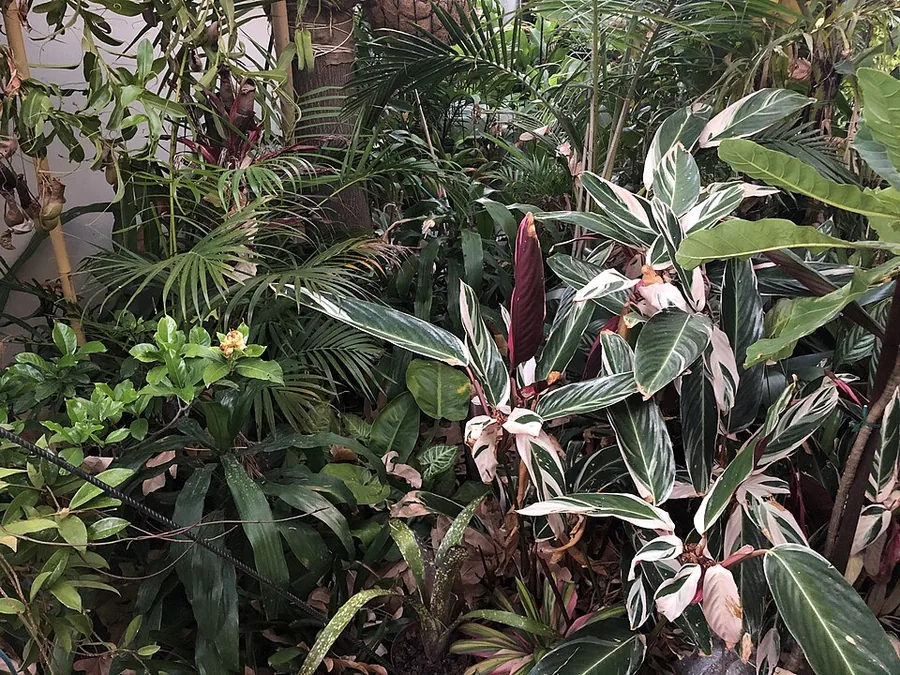
Stromanthe Triostar is a joy to look at, with leaves brushed in green, cream, white, and pink and a warm burgundy tone underneath. It belongs to the prayer plant family, so each evening the leaves lift toward the ceiling and settle back down by morning, a gentle bit of movement that makes it feel almost like a companion. The color is the reason to grow it, and with a little steady care it stays beautiful.
This one asks for more attention than a starter plant, but do not let that scare you off. It grew up on the warm, humid floor of Brazilian forests, so it simply wants that same warmth and moisture at home. It will tell you when something is off, whether that is brown edges from hard tap water, sulking in dry air, or scorching in direct sun. Read those little signals early and you can put things right, since most mistakes here are easy to recover from.
Growing well, it builds a soft clumping mound of upright stems that you can gently split every year or two. Keep the water, light, and humidity comfortable and each new leaf opens in the same cheerful tricolor that made you fall for it. You are more capable of keeping this plant happy than you might think.
Care
The short version: give it bright indirect light and never harsh direct sun, water with soft filtered water, and keep the soil evenly moist. Aim for humidity above 60%, keep it cozy and warm, and feed lightly while it is growing.
Light
Set it somewhere with bright indirect light, like a spot near an east or north window. Direct sun will bleach and scorch the pale pink and cream, and deep shade fades the color, so soft dappled light or a sheer curtain is the sweet spot it loves.
Water
Keep the soil evenly moist but never soggy, giving it more while it is actively growing and easing back in winter. The trick is the water itself, since fluoride, chlorine, and salts in tap water burn the leaf edges, so filtered, distilled, or rainwater keeps it looking its best.
Soil
Pot it in a fertile, organic-rich mix that stays moist yet drains well, because it dislikes both a bone-dry root ball and a soggy one. It is relaxed about pH and settles in happily anywhere from 6.0 to 8.0.
Temperature
Keep it warm and steady, never colder than about 59°F (15°C). This is a tropical plant that has no patience for cold drafts, so tuck it away from chilly windows and doorways through winter and it will stay content.
Humidity
This is the part most people miss, and it is worth getting right. The plant wants humidity of 60% or more, and dry indoor air is the usual cause of those browning edges. A humidifier, a pebble tray, or simply grouping a few plants together all help keep the air moist and the leaves smooth.
Feeding
Feed gently through the spring and summer growing season, about every 2 to 3 weeks. A low-nitrogen liquid fertilizer is all it needs, and you can stop feeding in the colder months when growth naturally slows down.
Pruning
There is hardly any pruning to worry about. Just snip off tired or damaged leaves at the base whenever you spot them, and the clump stays tidy and fresh.
Repotting
Move it up every 1 to 2 years in spring, once roots start circling the pot, water rushes straight through, or the clump looks crowded. This is the perfect moment to divide it too, since the plant is already out of its pot and easy to handle.
Size & spacing
Indoors it grows into an upright clump around 2 to 5 feet (60 to 150 cm) tall and 2 to 3 feet (60 to 90 cm) wide. Give it a little breathing room on the shelf so air can move around the leaves and nothing gets squashed against a wall.
Troubleshooting
Almost every hiccup with this plant shows up first on the leaves, and it usually traces back to water, air, or light. Take a calm look at the edges, the variegation, and the soil, and you can catch things while they are still minor. Find your symptom below, then treat the cause and the plant will bounce back.
A wilting plant with soft stem bases and sour soil
Wet, airless soil brings on root and stem rot, and a sour smell from the pot is the clearest tell. Slip the plant out and trim away every soft, brown root and stem before repotting into fresh, free-draining mix. From then on, water only enough to keep the soil evenly moist and make sure the pot can drain, and it has a real chance to recover.
Fix:
- Unpot and remove all soft, rotten roots and stems
- Repot into fresh, well-draining mix
- Water only to keep evenly moist, never soggy, and ensure drainage
Fine webbing and a speckled, dusty look to the leaves
Hot, dry air is an open invitation to spider mites, which cluster on the leaf undersides and joints and leave a stippled, dusty film behind. Rinse the foliage and wipe the undersides, then raise the humidity to make the plant less welcoming to them. Treat with insecticidal soap or horticultural oil, repeating as the label suggests, and the plant will come back around.
Fix:
- Rinse foliage and wipe undersides
- Raise humidity, which discourages mites
- Treat with insecticidal soap or horticultural oil and repeat per label
White cottony fluff tucked into the leaf joints
Those cottony white blobs are mealybugs, and they often leave a sticky trail behind them. Touch each one with a cotton swab dipped in isopropyl alcohol, then follow up with insecticidal soap or horticultural oil. Keep the plant on its own and treat it again after a while, because a few stragglers can quietly start the colony over.
Fix:
- Dab insects with isopropyl-alcohol-moistened swab
- Treat with insecticidal soap or horticultural oil
- Isolate the plant and repeat treatments
Brown, crispy edges creeping in along the leaves
This little beauty is picky about its water, and that is usually what is behind the browning. Fluoride, chlorine, and salts from ordinary tap water gather in the leaf and scorch the edges and tips while the middle stays green. Switch to filtered, distilled, or rainwater, lift the humidity past 60%, and keep the soil from drying out, since dry air and thirsty roots only make it worse. It is a cosmetic thing, so try not to worry.
Fix:
- Switch to filtered, distilled, or rainwater
- Raise humidity to 60%+ with a humidifier or pebble tray
- Keep soil consistently moist, never bone-dry
- Trim badly browned edges for appearance only
Pale, scorched spots on the cream and pink areas
The bright cream and pink parts of each leaf hold very little chlorophyll, so direct sun burns them first. Watch for pale, crispy patches on the leaves that sit in the midday glare. Gently move the plant into bright indirect light or an east or north window, soften any strong sun with a sheer curtain, and the fresh growth will come in clean.
Fix:
- Move to bright indirect light or an east/north-facing aspect
- Filter harsh direct sun with a sheer curtain
Toxicity
Here is some comforting news for a home with pets: this is a non-toxic prayer plant, with no poison found in its leaves or stems. NC State Extension lists the species as pet friendly, so a curious nibble from a cat, dog, or rabbit is nothing to lose sleep over. It is not meant to be eaten, and a big mouthful of leaf fibre might cause a brief tummy upset, but there is nothing truly harmful here.
Safe for
People · Cats · Dogs · Horses · Rabbits · Livestock · Birds
Cats None
Cats are safe around it. NC State tags this prayer plant as pet friendly and nothing toxic has been found in the leaves, so an inquisitive nibble is no cause for concern.
Dogs None
Dogs are perfectly fine with it nearby. No poison is known in the foliage, though a dog that wolfs down any houseplant might get a short-lived upset stomach from the fibre alone.
Horses Safe
Nothing toxic is on record for horses. It lives indoors rather than out in a paddock, but a stray leaf will do no harm if one is found.
Rabbits Safe
Rabbits can share a room with it safely. The leaves carry no toxin, so a sneaky bite will not hurt a bunny.
Livestock Safe
There is nothing in this plant that harms grazing animals, and as a houseplant it seldom crosses their path anyway.
Birds Safe
Pet birds are safe beside the foliage. No harmful compound has been documented in its leaves or stems.
People Safe
Safe to keep in any room where the family gathers. It is not grown for eating, but it holds no toxin, so children are in no danger near it.
As with any houseplant, discourage pets from chewing foliage; ingestion of plant fibre can still cause mild, transient GI upset
Varieties
Triostar is the star everyone knows, but it is not the only painted-leaf Stromanthe you might meet. Here are the two worth telling apart.
'Triostar' (syn. 'Tricolor')
Its green leaves are splashed with white, cream, and pink, and each one glows a solid pink to burgundy on the underside.
'Magic Star'
Magic Star swaps the pink for creamy white speckles scattered over green leaves, set against rich maroon undersides.
How to propagate
There is really just one reliable way to make more of this plant, and the lovely part is that it lines up with repotting a crowded clump. When the pot feels full, you get two happy jobs done at once.
DivisionModerate
Spring, before new growth starts · Several weeks to a few months
The kind way to make more of this plant is to divide the rhizome clump in spring, right before fresh growth appears. Pot up each division and keep it warm, humid, and evenly moist while it settles in. Be patient with it, since a division can take several weeks to a few months to root down and grow on its own.
Myths
Stromanthe Triostar is really just a kind of Calathea.
Shops often sell and label it as 'Calathea Triostar', yet it sits in its own genus, Stromanthe. The name botanists accept is Stromanthe thalia, with Stromanthe sanguinea as a synonym, which is why the RHS files it under Stromanthe sanguinea 'Triostar'.