Houseplant · Asteraceae
String of Bananas
Curio radicans
Keep it in gentle bright light with a gritty mix and dry spells between drinks, and string of bananas rewards you by spilling down over the pot.
Bright indirect
50–77°F · 10–25°C
USDA 10–11
12–35 in · 30–90 cm
Overview
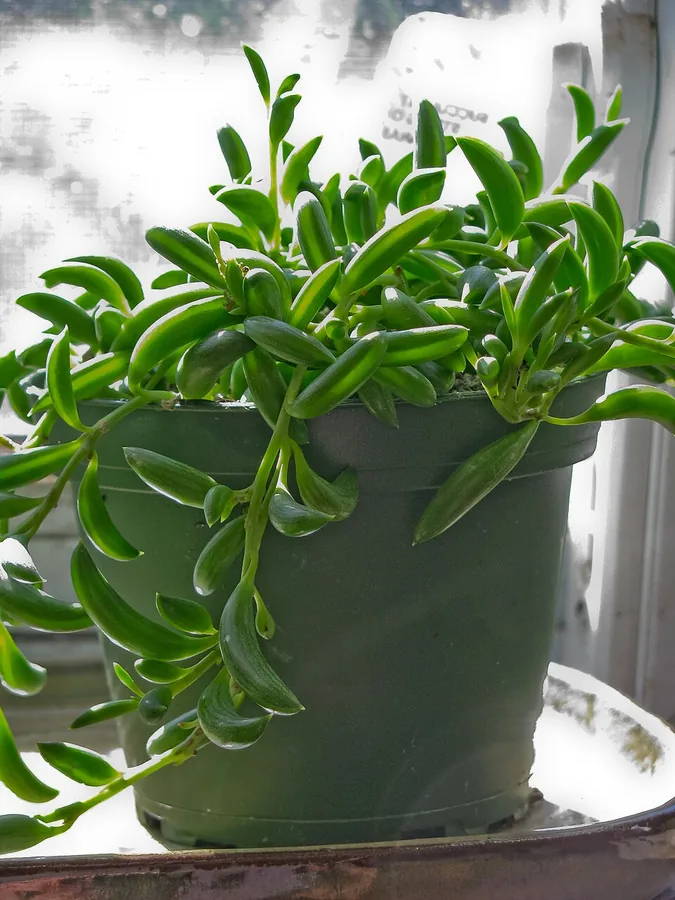
String of bananas is a trailing succulent, and if you have ever worried about keeping succulents alive, this is a lovely one to begin with. Its plump, banana-shaped leaves dangle from the pot in long green strands, and the plant hails from southern Africa as a member of the daisy family. Indoors it grows fast and stays wonderfully forgiving, so small slip-ups rarely set it back.
Every curved leaf keeps its own little supply of water, and the pale stripe running along the side works as a window that lets light slip inside. That tucked-away reserve means a skipped watering is nothing to panic about, and it also explains why the only thing that truly troubles this plant is soggy soil. Think of it as a desert dweller, give it a dry spell now and then, and it will feel right at home.
Hang it near a bright window or perch it on a high shelf, and the stems will stretch a few feet down over time. That same graceful trailing keeps the leaves lifted out of easy reach, which is a real comfort, because every part is toxic to pets and people if any of it is eaten.
Care
The short version: bright indirect light, a gritty cactus mix that lets water rush through, and a drink only after the top half of the soil feels dry. Ease off in winter, and be sure the pot never sits in a saucer of water.
Light
Settle it in bright, indirect light, roughly a few steps back from a sunny window where the glow stays soft. A little direct morning sun is fine, and it copes with light shade too, but strong afternoon rays will scorch the leaves brown, so give it a break from those.
Water
Wait until the top half of the soil has dried before you water, then give it a good soak and let the extra run out. Since this succulent handles drought well but rots in constant moisture, back right off in winter and add just a splash if the leaves start to look a bit thin.
Soil
Plant it in a gritty, fast-draining cactus or succulent mix so water slips straight through instead of pooling. It is relaxed about acidity and happy anywhere from pH 6.0 to 8.0, though a dense, moisture-holding mix around the roots is the one thing it truly dislikes.
Temperature
Ordinary indoor warmth keeps it content, ideally 50°F to 77°F (10°C to 25°C). Just keep it clear of freezing temperatures and chilly drafts, since it cannot handle frost at all.
Humidity
This is a low-humidity plant that feels perfectly settled in dry household air. No misting or fretting over percentages is needed, and in fact damp, stuffy conditions tend to do more harm than good.
Feeding
A light feeding from spring through summer during active growth, roughly once a month, is all it asks for. Reach for a diluted balanced or cactus fertilizer, and let it rest through winter when its growth naturally slows.
Pruning
Snip back any leggy or bare stems to coax fuller growth, and pinch the tips now and then to keep a tidy shape. Hold on to those trimmings, because each little piece will happily root into a whole new plant.
Repotting
There is no rush to repot, only every 2 to 3 years or once it looks genuinely crowded, since it flowers and grows best when kept a touch snug. Watch for roots peeking out of the drainage holes and soil that dries almost the moment you water, both signs it is ready for a bigger home.
Size & spacing
The trailing stems grow to 12 to 35 inches (30 to 90 cm) long and cascade about that far over the edge of the pot. Give it space to hang freely from a shelf or basket so the strands can drape without tangling together.
Troubleshooting
Almost every hiccup with this plant comes down to watering, whether it went thirsty or stayed too wet, and the leaves will tell you which one right away. Once you get used to reading them, most troubles are easy to spot and easy to undo. Find your symptom below and coax the plant back before a small wrinkle has a chance to turn serious.
Soft, blackening stems that flop over at the base
Mushy stems that darken and collapse point to root rot, the single trouble most likely to take the plant down, and it grows out of water lingering around the roots. Stop watering at once, let the mix dry out fully, then slip it from the pot and trim away everything brown and squishy. Rescue a few firm stem cuttings and start them fresh in gritty mix, and you can save the plant even if the original crown is lost.
Fix:
- Stop watering and let the mix dry out
- Unpot and cut away rotted roots and stems
- Take healthy stem cuttings and restart in fresh gritty mix
- Repot into fast-draining cactus medium in a pot with drainage
Soft, wrinkled beads that have gone flat and thirsty
When the little beads turn soft and crinkled, the plant is simply thirsty. Each leaf holds water like a tiny tank, so once the soil goes completely dry they shrink and pucker. Give it a deep drink until water runs from the base, and the leaves usually plump right back up within a day or two, so there is no need to worry.
Fix:
- Water thoroughly until it drains from the bottom
- Resume watering whenever the top half of the soil is dry
- Ensure the pot has drainage and the mix is not hydrophobic
Leaves flushing brown or red where the sun hits hardest
Brown or reddish patches on the sun-facing side are simply sunburn from light that is too fierce. The beads nearest the glass catch it first under hot or harsh afternoon sun. Shift the plant into bright indirect light, screen it from the strongest midday rays, and then let it toughen up to brighter spots slowly over time.
Fix:
- Move to bright indirect light
- Shade from intense afternoon summer sun
- Acclimate gradually before increasing light
Toxicity
This is the one area to take seriously: keep string of bananas away from animals and up high where children cannot reach it. Every part holds pyrrolizidine alkaloids along with a milky sap that stings skin, which makes it unsafe for cats and dogs and a worry for other animals and people if any is swallowed. Hanging it well out of the way and rinsing your hands after a trim keeps everyone comfortable.
Toxic to
Cats · Dogs · Horses · Rabbits · Livestock · Birds · People
Cats Toxic
A cat that gnaws the stems will usually start drooling, bring its food back up, and lose interest in eating. Loose stools and a low, sleepy mood tend to follow, and a really big mouthful can put a strain on the liver.
Dogs Toxic
Dogs go through much the same ordeal. After nibbling on the trailing stems, look for vomiting, runny stools, drooling, and a dog that seems worn out and off its usual self.
Horses Toxic
The very same pyrrolizidine alkaloids run all through this group of plants, so a horse that grazes on it can get an upset stomach, and browsing it again and again brings a genuine risk of liver harm as the months go by.
Rabbits Caution
There is no rabbit-specific research to lean on, but the toxin reaches across mammals, so it is safest to treat the plant as completely off limits. A rabbit that takes a nibble could wind up with a sore tummy and little energy.
Livestock Toxic
Cattle and other grazing animals are named among those at risk. The alkaloids gather with steady browsing and can leave lasting scars on the liver, on top of the queasiness and dullness even one mouthful can bring.
Birds Caution
Birds have not been looked at directly for this plant, so the kind thing is to keep them clear of it. Between the irritant sap and the alkaloids, there is little reason to expect a curious bird to handle a bite well.
People Caution
None of this plant belongs on a plate. Eating any of it can leave a person queasy with a churning stomach, and the milky sap may leave skin red or irritated, so rinse your hands after every pruning session.
Wear gloves or wash hands after handling, as the irritant sap can cause contact dermatitis.
Helpline numbers

United States
ASPCA Animal Poison Control: (888) 426-4435 (fee applies)
Poison Control: (800) 222-1222



Canada
Poison Centres: 1-844-764-7669
Varieties
The named forms are few, but there is one selection you will bump into often enough that it helps to recognize it.
Curio radicans 'Fish Hooks'
This is a selection prized for its tightly curved, hook-shaped leaves, and those little hooks are exactly what earned it the nickname string of fishhooks.
How to propagate
One of the nicest things about this plant is how readily it makes more of itself, and the very stems you snip to keep it neat are the ones that grow into brand new plants.
Stem cuttingsEasy
Spring through summer during active growth · About 2 to 4 weeks to root
This is the quick, beginner-proof route that almost everyone reaches for. While the plant is growing in spring or summer, snip a few stems, let the cut ends dry and callus over for a day, then rest or tuck them onto gritty, fast-draining mix. Keep it barely moist and the pieces settle in and root in around 2 to 4 weeks.
SeedModerate
Spring · Several weeks to months
Growing it from seed is possible, though it moves slowly and rarely earns its keep next to cuttings. Sow in spring onto a fast-draining mix, keep it cozy and warm, and be patient for several weeks to months before the seedlings are sturdy enough to pot up.
Myths
The proper botanical name for it is Senecio radicans.
Kew's Plants of the World Online has moved on and now recognizes Curio radicans as the accepted name, filing Senecio radicans away as an older synonym. Shops will almost always still label it as a Senecio, so do not let that throw you, but Curio radicans is the current, correct name.