Ornamental · Commelinaceae
Spiderwort
Tradescantia virginiana
Forgiving in sun or shade, spiderwort greets each morning with fresh three-petaled blooms.
Full sun
USDA 4–9
2–3 ft · 0.5–0.9 m
Overview
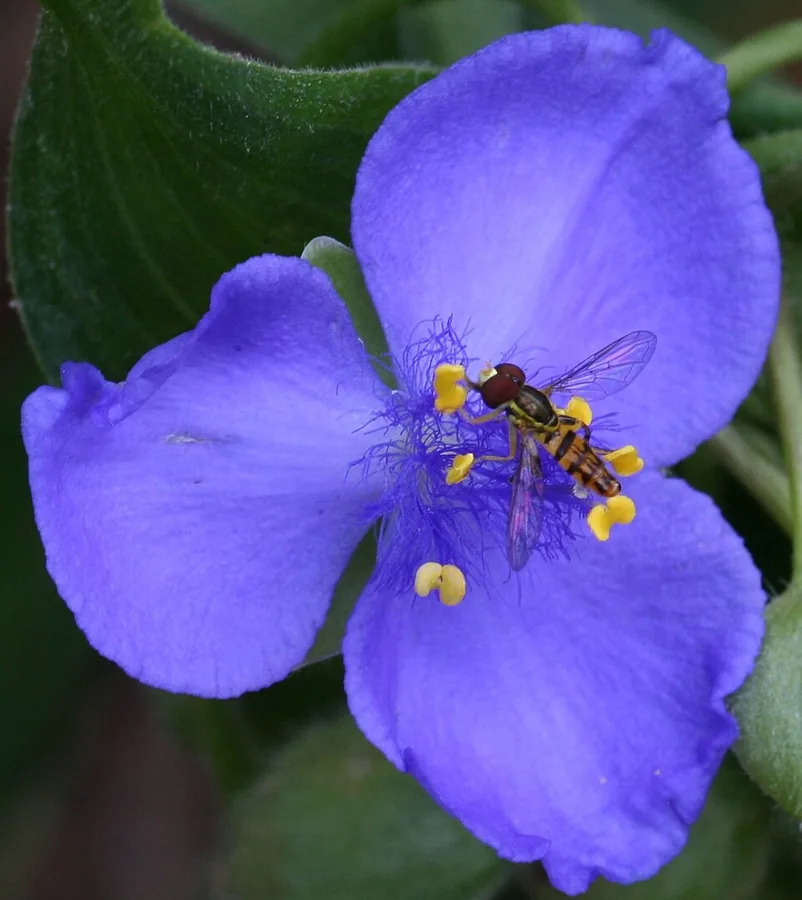
If you are just starting out, spiderwort is a kind place to begin. This clump-forming perennial hails from eastern North America and keeps its own quiet schedule, opening a fresh set of three-petaled flowers through late spring and summer. Each bloom lasts only a morning and fades by afternoon, yet the plant cheerfully sends up new ones day after day, so you rarely miss the ones that close. Its grassy, arching leaves look at home almost anywhere, whether you tuck it into a sunny border or a shady woodland edge.
Much of its easygoing nature comes down to a wide comfort zone. It blooms most freely in full sun but settles happily into partial or even deep shade, and it copes with clay, sand, chalk, and soggy ground that would defeat pickier plants. Hardy down to zone 4, it comes back on its own each year and asks very little of you once it has found its feet. That forgiving streak is exactly why it suits a first garden.
There is really only one habit to plan for, and it is an easy one to manage. After the first big flush of bloom the clump often sprawls and browns, most of all in high summer heat, which can look alarming the first time. Do not worry: a hard cutback is all it takes, and fresh growth soon follows, often with a second showing of flowers in late summer.
Care
The short version: give spiderwort moist, fertile soil somewhere from sun to shade, keep it watered through dry spells, and cut the whole clump back hard after the first flush so it comes back looking fresh.
Light
Spiderwort flowers best in full sun, yet it takes partial and even deep shade in good spirits. Where summers turn hot, a spot with a little afternoon shade helps it hold its shape and softens that midsummer slump.
Water
Aim to keep the soil consistently moist to occasionally wet, since this is a plant that genuinely likes damp ground. Water it through any dry spell, and especially right after you cut it back, to coax up fresh growth from the base.
Soil
Happily, it grows in almost anything you have: clay, loam, sand, or chalk, and even wet ground or soil near a black walnut. It is most content in fertile, moist but well-drained soil, and it accepts a broad pH anywhere from 6.0 to 8.0.
Temperature
This is a hardy, forgiving plant. It comes through winter cold down to about -29°F (-34°C) and takes summer heat up to 95°F (35°C) in stride, though that high heat is what nudges the foliage to sprawl and brown.
Humidity
Everyday outdoor humidity suits spiderwort just fine, so there is no target number to chase. What helps far more is good airflow, since crowded, damp clumps are where rust and leaf spot like to settle in.
Feeding
This eager perennial needs very little at the table. A light feed of balanced fertilizer or compost as growth begins in spring is all it wants, and too much only leads to soft, floppy stems.
Pruning
Snip off spent flowers to gently encourage a second late-summer flush. Once the foliage sprawls or browns after the first flush, do not hesitate to shear the stems back hard, then cut everything to the ground when the season winds down.
Repotting
Out in the garden it is never really potted on, but it does appreciate dividing. Lift and split the clump every 3 to 4 years to keep it healthy, especially once the middle starts to thin out or the flowers grow fewer.
Size & spacing
Expect a clump to reach 1.5 to 3 feet (46 to 91 cm) tall and spread 12 to 18 inches (30 to 46 cm) across. Give each plant that bit of room so air can move through and the leaves stay fresh and healthy.
When to plant
Spiderwort keeps easy time with the seasons. Set young plants out in spring once the frost has passed, or settle container-grown ones in during autumn, and you can look forward to flowers from late spring through early July, with many plants happily reblooming into late summer.
Northern hemisphere
Southern hemisphere
Typical months for a temperate climate: start earlier in warm zones, later where spring frosts linger.
- Plant: Spring after frost; container plants can also be set out in autumn
- Harvest: Late spring through early July (May-July), often reblooming into late summer; cultivars can flower June-September
Hardiness
USDA hardiness zones: 4–9
Temperature: down to -34°C
Troubleshooting
Good news for a nervous grower: spiderwort seldom runs into anything serious, and nearly everything you might see is only cosmetic. A midsummer flop, a little slug nibbling, and the occasional rust spot cover almost all of it. Find your plant's symptom below and step in gently before it spreads.
Foliage flops and browns off in the heat of midsummer
Take heart, because this is simply the plant's natural wind-down after blooming, hurried along by summer heat and thirsty soil. Once the main run of flowers finishes, the clump loosens and the tired leaves start to brown. Shear the stems back hard, water it through any dry stretch, and fresh growth pushes up from the base to carry it gently into fall.
Fix:
- Shear or cut the stems back hard after flowering
- Water during dry spells to encourage fresh basal regrowth
- Allow the plant to reflush in late summer and fall
Chewed, ragged edges on the soft new shoots
The usual culprits here are slugs and snails, which love the soft spring shoots and leave shiny slime trails beside the chewed edges. The nibbling is worst in the damp, shady corners of the garden. Pick them off by hand in the evening, tidy away the wet debris they shelter under, and set out traps or barriers if they keep coming back.
Fix:
- Hand-pick slugs and snails, especially in the evening
- Reduce moist hiding spots and debris near the crown
- Use slug traps or barriers if damage is heavy
Orange-brown spots or pustules freckling the foliage
When clumps grow damp and crowded, rust and fungal leaf spot can move in, showing up as orange-brown pustules or scattered blotches on the leaves. There is an easy remedy: pick off the marked leaves and bin them, then thin and cut back the clump so air can flow through. Keeping water off the foliage heads off most of it before it ever starts.
Fix:
- Remove and dispose of affected foliage
- Cut back and thin congested clumps to improve airflow
Toxicity
Spiderwort is far more of a skin irritant than a true poison, so there is no need to panic. Its sap can bring up an itchy rash on bare skin, which is why gloves help whenever you cut it back or divide it, and a pet that nibbles a leaf may get a mildly upset stomach. Keep curious animals from making a meal of it, and know that a stray nibble is nothing to fear.
Toxic to
Cats · Dogs · Horses · Rabbits · Livestock · Birds · People
Cats Mild
A cat that chews the leaves or stems may get a mild bout of stomach upset, and the sap can leave its mouth or skin a little irritated. Keep a gentle eye out for drooling or some pawing at the face.
Dogs Mild
Should a dog nibble the leaves, it might drool for a while or have a short spell of mild tummy upset. Where the sap touches, it can redden the skin around the muzzle.
Horses Caution
The ASPCA notes the genus for horses, with skin irritation the main thing to watch. It is best to keep grazing horses from making a regular habit of the leaves.
Rabbits Caution
That same irritant sap can leave a rabbit with a sore mouth and a little stomach upset, so this is not a green worth offering as a treat.
Livestock Caution
Goats, sheep, and cattle usually leave it alone, though a mouthful of the sappy stems can irritate the mouth and gut. A single stray nibble, though, is nothing to be alarmed about.
Birds Caution
The irritant sap makes spiderwort a poor pick around pet birds, since they can react to even a small taste.
People Caution
The sap is a recognized skin allergen and can bring up an itchy rash, so slip on gloves before you cut the plant back or divide it. Nothing on the plant is meant for eating, so the risk here is to your skin rather than your stomach.
Sap can cause contact dermatitis and is a skin allergen; wear gloves and protective equipment when cutting back or dividing.
Helpline numbers

United States
ASPCA Animal Poison Control: (888) 426-4435 (fee applies)
Poison Control: (800) 222-1222



Canada
Poison Centres: 1-844-764-7669
Varieties
Garden spiderwort comes in a friendly handful of named selections, told apart mostly by their flower color and how bright their leaves are. Here are the ones most worth getting to know.
'Sweet Kate' (syn. 'Blue and Gold')
Its deep blue-purple flowers glow against bright golden-chartreuse leaves on a neat, compact plant of 12 to 24 inches (30 to 60 cm) tall.
'Concord Grape'
Warm grape-purple blooms rest above cool blue-green foliage.
'Zwanenburg Blue'
A strong-growing Andersoniana Group pick that carries large, deep blue-purple flowers.
'Satin Doll'
Gentle soft-pink flowers open over a tidy, compact plant.
'Billberry Ice' / white-flowered forms
Clean white, three-petaled flowers lift and lighten a shady corner.
How to propagate
Spiderwort is one of the most forgiving perennials to increase, so do not be shy about trying. You can split an established clump or simply let the plant sow a little seed of its own around the garden.
DivisionEasy
Spring, or in autumn after flowering · Reaches full size in 1-2 years
Division is the most dependable way to make more plants, and the easiest moments are spring or autumn once the flowering is over. Lift a crowded clump and gently pull or cut it into pieces, making sure each one keeps its own roots and shoots. Replanted, those pieces grow to full size within 1 to 2 years, and dividing every few years keeps the parent plant strong and happy.
SeedModerate
Sow seed in spring; plants also self-sow readily in the garden · 1-2 years to mature, flowering-size clumps
Spiderwort scatters its own seed with the greatest of ease, so plants raised from a spring sowing largely look after themselves and reach flowering size in 1 to 2 years. The one thing to remember is that named cultivars will not come true from seed, so those are better divided. If the self-seeding starts to feel like too much, simply snip back the spent flower stems to keep it in check.
Myths
Garden spiderwort and the trailing inch plant houseplants are one and the same.
They only share a family name. Tradescantia virginiana and the x andersoniana garden hybrids are cold-hardy, clump-forming border perennials that come back reliably down to zone 4. The tender tropical trailers sold as houseplants, such as T. zebrina and T. fluminensis, are quite another thing. The hardy garden spiderworts stay as tidy, well-mannered clumps, while tropical T. fluminensis turns invasive across the warm southern states and is better left alone.
Spiderwort will only do well in full sun.
It is true that the flowers come most freely in full sun, but the plant takes partial and even deep shade in its stride. In hot-summer regions a touch of afternoon shade actually does it a favor, softening that midsummer flop and keeping the leaves fresher for longer.