Houseplant · Commelinaceae
Purple Heart
Tradescantia pallida
Give purple heart a bright, sunny spot and a little dry-out between drinks, and it pays you back with deep violet color and hardly a worry.
Full sun
USDA 10–11
8–12 in · 20–30 cm
Overview
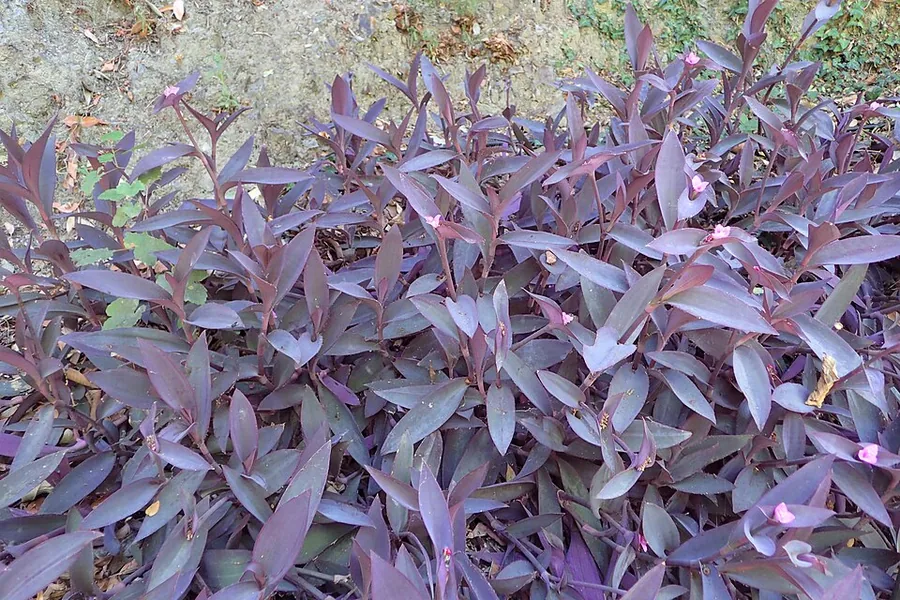
If you have ever doubted your green thumb, purple heart makes a kind place to begin. It earns its keep with color, the low, spreading stems holding narrow, pointed leaves in a deep violet-purple that few houseplants can match, with small pink flowers appearing through the warm season. Native to Mexico, it sits among the spiderworts and counts the inch plants as close relatives.
The best news for a nervous beginner is how little this plant asks of you. It grows fast and forgiving, content to go dry between drinks, and a snapped-off stem will root without fuss and become a whole new plant. The single thing to nail down is light: in strong sun the violet turns deep and true, while a shady corner coaxes the color back toward green and draws the stems out long and thin.
Set indoors, it settles into your sunniest window and spills over the pot rim, filling out quickly and looking full in no time. One gentle caution: the sap is a mild skin irritant, so slip on gloves when you pinch or prune, and give it a home where curious pets and little ones cannot reach the leaves.
Care
The short version: give it all the light you can for the richest color, plant it in well-drained soil and let that soil dry between waterings, keep it cozy above 50°F (10°C), and pinch it now and then to stay full and bushy. None of it is hard, and slip-ups are easy to undo.
Light
Light is the one thing worth fussing over. Aim for full sun or your brightest window, since good light is what holds that deep violet, while a dim corner turns the leaves green and stretches the stems. Indoors, a south-facing sill is about as good as it gets, and your plant will thank you for it.
Water
Here is where a beginner can relax, because purple heart is very drought-tolerant once it has found its feet. Wait until the upper inch or so of soil feels dry before you reach for the watering can, and remember it forgives a missed drink far more easily than a soggy one. Puddled water and constantly wet roots are the real danger, since they lead to root and stem rot.
Soil
Soil is nothing to stress over, as long as it drains freely. A rich, organic mix suits it best, yet it gets along fine in clay, loam, or sand, and across acid to alkaline ground alike. The single deal-breaker is a pot that stays wet and heavy, which it simply will not stand.
Temperature
Warmth keeps this plant happy, so hold it above 50°F (10°C) and it will cruise along. It carries no cold tolerance at all, and a frost turns the top growth black, so ordinary room warmth is perfect the year round. If your winters dip below that mark, simply grow it indoors or carry the pot inside before the cold arrives.
Humidity
Good news again: everyday room humidity is all it needs, with no target to fret over. Dry indoor air suits it just fine, so this is one box you can happily leave unchecked.
Feeding
A light monthly feed through spring and summer is all the boost it wants while it is putting on growth, using a balanced general-purpose fertilizer. When the cooler months roll in and growth eases, you can set the feeding aside.
Pruning
Feel free to pinch the stems back any time you please to hold the plant compact and bushy and to wake up new shoots, then trim away the spent flower stems once the blooms fade. Best of all, the tips you pinch off root with ease, so every trimming can become another plant.
Repotting
Plan on moving it into a bigger pot every 1 to 2 years, or sooner if it fills the one it has. Watch for roots creeping out the drainage holes, new growth that comes in thin, or soil that turns dry almost the moment you water, since any of these means it is craving more room.
Size & spacing
This is a low, tidy grower, topping out around 8 to 12 inches (20 to 30 cm) tall and spilling outward to 12 to 18 inches (30 to 45 cm) across. That easygoing sprawl makes it a lovely pick for a hanging basket or tumbling over the rim of a container.
Troubleshooting
Take heart: this is a forgiving plant, and nearly every problem it runs into comes down to light or water, nothing more sinister. Spot the early signs below, and most fixes are quick and gentle. Find the one that matches your plant and act while the trouble is still small.
Soft, dark stems caving in at the base
A base that turns soft, dark, and mushy is the sign of root and stem rot, brought on by soil that never dries out, and it is the one problem that can truly set this plant back. The stems go slimy and the roots darken to brown rather than staying pale and firm. Hold off watering, cut cleanly back to healthy tissue, and stand a few solid cuttings in fresh, quick-draining mix to begin again.
Fix:
- Stop watering and allow soil to dry out
- Cut away rotted tissue and re-root healthy firm stem cuttings in fresh well-drained mix
- Discard severely rotted plants and soil
Blackened, dying growth after a chill or frost
Purple heart carries no defense against cold below 50°F (10°C) or frost, and a cold spell wilts the top growth and turns it black. Snip away the damaged parts and keep the plant cozy. Where frost can strike, move the container inside, or root a few cuttings to carry through winter, rather than trusting the roots to pull through on their own.
Fix:
- Remove damaged top growth
- Bring containers indoors or take cuttings to overwinter where frost occurs
- Where roots survive in mild climates, allow the plant to resprout from the base
Speckled or curled leaves, sticky film, or fine webs
A handful of sap-feeding pests find their way onto indoor plants, and spider mites, mealybugs, aphids, and scale each leave a calling card. Look for fine webbing, little cottony puffs, huddles of tiny insects, or hard bumps tucked along the stems and under the leaves. Give the plant a good rinse and wipe-down, treat it with insecticidal soap or horticultural oil, and keep it away from its neighbors until it is in the clear.
Fix:
- Rinse plant and wipe off pests
- Treat with insecticidal soap or horticultural oil, repeating as needed
- Isolate affected plants to prevent spread
Color fading to green on long, leggy stems
When purple heart drifts from violet toward plain green and begins to sprawl, it is simply asking for more light. Starved of sun, the stems reach and lengthen while the leaves sit farther and farther apart. Shift it to the sunniest window you have, or set it outdoors in strong direct sun, then give the loose growth a quick pinch, and the rich color and neat shape return.
Fix:
- Move to a spot with full sun or as much bright direct light as possible
- Pinch back leggy stems to encourage compact, well-colored regrowth
Long, bare stems carrying leaves only at their ends
It is in this plant's nature to trail and wander, so left to its own devices the stems run long and bare with the leaves clustered out at the tips. Dim light only eggs the stretching on. A simple pinch of the stems pushes fresh side branches, and the tips you take off will root and fill the pot right back in.
Fix:
- Pinch or cut stems back to encourage branching and bushier growth
- Root the removed tips as cuttings to fill in the plant or start new ones
Skin turning red and itchy after handling the plant
The sap that weeps from a snapped leaf or stem is a skin irritant, and it can leave the skin on your hands red and prickly, a mild case of contact dermatitis. Should that happen, a quick wash with soap and water sets it right. The simple habit that spares you the trouble is to slip on gloves before you take cuttings, prune, or pinch it back.
Fix:
- Wash the affected skin with soap and water
- Avoid further bare-handed contact with cut stems
Toxicity
There is no need for alarm here, though a little care goes a long way. The sap counts as a mild irritant, and skin that meets it can flush red and start to itch, while a pet that decides to chew a leaf may drool and feel briefly queasy. Slip on gloves when you cut stems, and set the plant somewhere hungry animals and children cannot help themselves to it.
Toxic to
Cats · Dogs · Horses · Rabbits · Livestock · Birds · People
Cats Mild
A cat that nibbles a leaf might drool a little and feel briefly off in the tummy, while the sap may redden and irritate its skin. None of it is serious, though a cat set on chewing is best gently kept away.
Dogs Mild
Dogs go through much the same thing as cats. A nibble may bring on some drooling and a short-lived queasy stomach, along with a patch of irritated skin wherever the sap makes contact.
Horses Caution
That same stinging sap can irritate a horse around the mouth and on the skin, so grazing on it is a habit worth heading off rather than permitting.
Rabbits Caution
No solid feeding record exists for rabbits, and the irritating sap alone is plenty of reason to leave this plant off their plate. It should not be handed over as forage.
Livestock Caution
Grazing stock can end up with the same sore mouth and upset stomach from the sap, so a fence between them and the plant is the safe call wherever they might reach it.
Birds Caution
Pet birds are little and easily affected, so the irritating sap makes this a plant to keep well out of beak's reach. Give it a home away from cages and perches.
People Caution
Working with cut stems can bring on contact dermatitis, the skin flushing red and itchy right where the sap settles on it. Pull on gloves before you prune or gather cuttings, and steer curious children away from putting the leaves in their mouths.
Cell sap is a skin irritant (contact dermatitis); wear gloves when pruning, pinching, or taking cuttings
Helpline numbers

United States
ASPCA Animal Poison Control: (888) 426-4435 (fee applies)
Poison Control: (800) 222-1222



Canada
Poison Centres: 1-844-764-7669
Varieties
You will mostly meet purple heart as one named selection, the very form that brings out its deepest color.
'Purpurea'
This is the selection you will find on nearly every shelf labeled Purple Heart, its stems and leaves carrying a deeper, more uniform violet-purple than the wild species.
How to propagate
If you want more of it, you are in luck, because purple heart may be the simplest plant of all to multiply from a cutting.
Stem cuttingsEasy
Any time during active growth · Roots in 1-2 weeks
There may be no simpler plant to make more of, and a single cutting is all it takes. Those snap-prone stems will root from any node, so a shoot tip or a short length of stem, whether pressed into soil or stood in a glass of water, puts down roots within a week or two. Do it any time the plant is in active growth.
Myths
Purple heart has to be watered all the time or it will die in a dry stretch.
The truth runs the other way. Once it is settled in, purple heart takes dry soil in stride, and it is too much water, not too little, that does the harm, since waterlogged roots rot and the stems flop. Give the soil time to dry between drinks and worry less.
The purple stays the same wherever you happen to put the plant.
It is really the light that decides. Strong sun deepens the violet to its richest, while a plant left in shade slides back toward green and stretches out as it strains toward brighter conditions.