Houseplant · Araceae
Peace Lily
Spathiphyllum wallisii
A forgiving, beginner-friendly houseplant that signals its own thirst and pays back a bit of light with white blooms.
Bright indirect
68–85°F · 20–29°C
USDA 11–12
1–6 ft · 0.3–1.8 m
Overview
Few houseplants are as kind to a beginner as the peace lily, and that easygoing nature is why you find it gracing so many homes and offices. Its roots lie in the steamy tropical forests of Colombia and Venezuela, where it makes its home in the deep shade of the forest floor. Growing up in that dimness is precisely what lets it shrug off the modest light most rooms provide, so you can relax about finding it a perfect window.
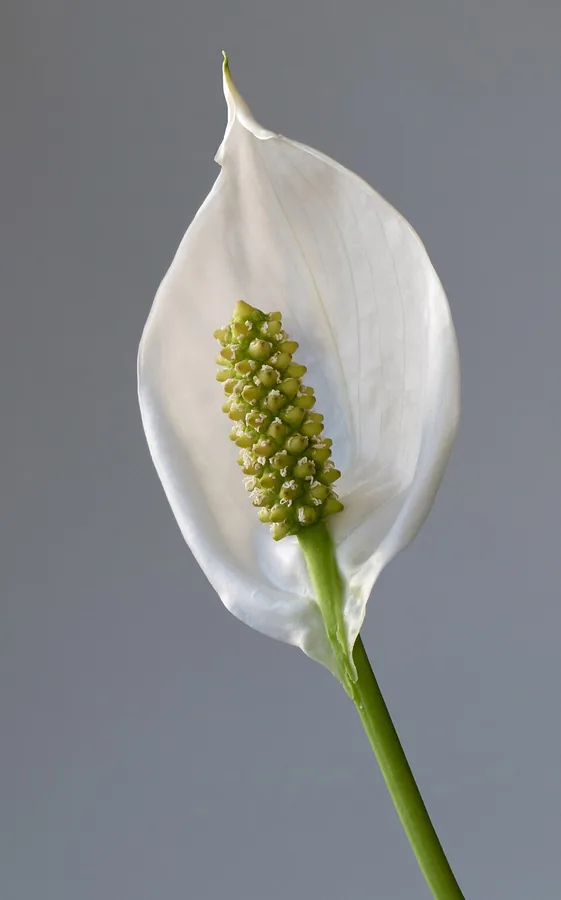
The reward most people are after is the bloom. That white flower is not truly one flower but a spathe, a softly curved hood, leaf-like in shape, that cups a slim spike of the real flowers. Against the glossy dark green leaves, those crisp white spathes are the heart of its charm, and a content plant offers them now and then right through spring and summer.
One of its most endearing traits is the way it asks for water out in the open. Let the soil go dry and the whole plant droops dramatically, only to rise back up within hours of a good drink. That honesty makes it wonderfully forgiving while you find your rhythm, though letting it wilt time after time will slowly cost it leaves, so a steady hand pays off.
Care
The short version: offer bright, indirect light with no direct sun, keep the soil evenly moist yet never soggy, hold the warmth above 60°F (16°C), and lean toward higher humidity. Set it out of reach of pets and children, since every part of it stings if chewed.
Light
Treat it to bright, indirect light and shield it from direct sun, which can scorch the leaves. It truly does cope with low light, which is part of why it forgives a tricky room, but a dim corner gives you leaves and barely a flower, so a brighter spot is the way to go if blooms are your goal.
Water
Aim to keep the soil evenly moist but never soggy, letting only the very top dry out before you water again. The plant sags hard when it runs dry and bounces back within hours of a drink, yet it is kinder not to wait for that signal each time. Reach for room-temperature, dechlorinated water, and never leave the pot sitting in a full saucer.
Soil
Settle it into a rich, well-drained potting mix loaded with organic matter. It favors things a touch acidic, near a pH of 6.0 or just under, and that free drainage is what keeps the roots happy and healthy.
Temperature
Ordinary room warmth is all it asks, ideally 68°F to 85°F (20°C to 29°C). It has no tolerance for frost and begins to suffer in the cold, so keep it comfortably above 40°F (4°C) and clear of chilly drafts and frosty winter windows.
Humidity
At heart this is a high-humidity plant, raised in a tropical forest. When indoor air turns dry, you will see it as brown, crispy leaf tips, so cluster it with other plants, perch it on a pebble tray, or set a humidifier going close by.
Feeding
It asks for very little at the table. Offer a balanced liquid fertilizer at about quarter strength through the spring and summer growing stretch, roughly every 6 to 8 weeks. Overdoing it scorches the leaf tips brown, so whenever you are unsure, simply feed less and you can hardly go wrong.
Pruning
There is next to nothing asked of you here. Just trim away yellowed or damaged leaves and spent flower stalks at the base whenever they show up, which keeps the plant looking fresh and channels its energy into fresh growth.
Repotting
Move it up every 1 to 2 years, or once roots begin peeking through the drainage holes, ideally in late winter to early spring. It actually blooms more freely when held slightly potbound, so there is no need to rush it into a much bigger pot.
Size & spacing
Indoors it tends to hold around 1 to 3 feet, though the largest cultivars can rise to 6 feet (183 cm) tall and reach close to 5 feet (152 cm) across. Give a sizable one a little breathing room so its arching leaves are not pressed up against a wall.
Troubleshooting
Nearly every peace lily hiccup comes back to water, light, or salts, and the lovely thing is that your plant shows you which one. A sudden droop is a call for water, crispy tips point to salt or dry air, and yellow leaves in wet soil mean the roots need help. Find the picture that matches yours below, and you will know just what to do.
Bottom leaves turning yellow while the soil stays wet
Yellowing low on a plant whose soil never dries usually signals root rot brought on by too much water, and catching it now gives you a real chance to turn things around. Set the watering can aside, tip out any saucer, and gently check the roots, which go dark and soft once rot sets in. Move the plant into fresh, free-draining mix, snip off the roots that have failed, and going forward let the top of the soil dry a little before you water again.
Fix:
- Stop overwatering and empty any saucer of standing water
- Improve drainage; repot into fresh, well-drained mix and trim away rotted roots
Your plant flops over, then stands tall again after a drink
Take a breath, because that alarming flop is only thirst and nothing has been harmed. Once the soil gets too dry, the leaves sag all at once, and a good soak brings them upright again in a few hours. Some growers treat it as a handy nudge to water, but try not to rely on it, since a plant that keeps collapsing will eventually drop leaves.
Fix:
- Water thoroughly until water drains from the bottom
- Allow excess water to drain away and do not leave the pot sitting in water
Lots of healthy foliage, yet no white blooms
When a peace lily lives in deep shade, it happily makes leaves and quietly forgoes flowers, and that is an easy fix. Shift it somewhere with brighter, indirect light and the spathes tend to come along soon after. If your plant is still young or simply resting in its quiet season, give it time, because a lot of cultivars bloom mostly from spring into summer.
Fix:
- Move to a brighter spot with bright, indirect light (no direct sun)
- Be patient through the natural spring-to-summer bloom period for season-dependent cultivars
Dry, browning tips and edges along the foliage
Crisp brown edges most often come down to a salt buildup, whether from feeding too heavily or from the chlorine and fluoride that ride along in tap water, and it is very recoverable. Run plenty of water through the pot to rinse those salts away, then ease your feeding to about quarter strength and pour with room-temperature, dechlorinated water. Dry air only deepens the problem, so lift the humidity around your plant and the new leaves should come in clean.
Fix:
- Leach the soil with plenty of water to flush excess salts
- Cut fertilizer back to about quarter strength and apply less often
- Water with room-temperature, dechlorinated or distilled water
- Raise humidity around the plant
Toxicity
For all its calming name, a peace lily is not safe to chew. Every part of it holds insoluble calcium oxalate crystals that sting the mouth and throat the moment they touch, bringing on burning, drooling, and swelling in pets and people alike. It is not a true lily, so it will not cause the deadly kidney failure that Easter lilies trigger in cats, yet it still hurts and no part is edible, so the simplest peace of mind is to keep it well out of reach of animals and small children.
Toxic to
Cats · Dogs · Horses · Rabbits · Livestock · Birds · People
Cats Toxic
Should a cat take a bite of a leaf, it gets a sharp dose of calcium oxalate crystals and the stinging starts quickly. Watch for plenty of drooling, pawing at the mouth, and a tongue or lips that swell enough to make swallowing uncomfortable.
Dogs Toxic
A dog runs into the very same trouble a cat does, with those crystals biting at the mouth and throat. Keep an eye out for drooling, vomiting, and a pet who turns away from food right after chewing a leaf.
Horses Toxic
Those same crystals trouble a horse the way they do any other animal, leaving a sore mouth, drooling, and little appetite. It is best to keep the plant well away from stables and paddocks.
Rabbits Toxic
Since every part carries the same irritating crystals, a curious rabbit risks a stinging mouth and goes off its food. Make sure it never gets the chance to nibble a leaf.
Livestock Toxic
Cattle, goats, and sheep meet the same mouth and gut irritation if they reach the leaves. Keep it well out of any area where grazing animals roam.
Birds Toxic
A pet bird nibbling the foliage can end up with the same burning in its mouth and throat. Place the plant somewhere a bird has no way to land on it.
People Caution
There is no edible part to a peace lily at all. One bite brings on quick burning of the mouth and lips, drooling, and swelling, so keep it clear of little ones who like to taste things.
Despite the name it is not a true lily (it is an aroid, Araceae) and is far less dangerous than true Lilium, but it still causes painful oral/GI irritation if chewed
Helpline numbers

United States
ASPCA Animal Poison Control: (888) 426-4435 (fee applies)
Poison Control: (800) 222-1222



Canada
Poison Centres: 1-844-764-7669
Varieties
Peace lilies arrive in a generous range of sizes, from tabletop dwarfs to giants that anchor a floor. A handful of cultivars show up often enough that it helps to know them by name.
'Mauna Loa' (and 'Mauna Loa Supreme')
If you spot a peace lily for sale, odds are it is this large-flowered favorite, holding big white spathes on a plant that settles in around 2 to 3 feet tall.
'Sensation'
The giant of the family, it stretches to 5 to 6 feet with broad, sweeping leaves that fill an empty corner by themselves.
'Domino'
White streaks and splashes run through its green leaves for a lively variegated look, all on a plant that holds at roughly 30 inches tall.
'Petite'
A small, tidy dwarf that stays neat enough for a desktop or a narrow windowsill.
How to propagate
There is a single dependable way to grow more peace lilies, and happily it falls right on the same day you repot.
DivisionEasy
Late winter to early spring, typically when repotting · Several weeks to a few months
Here is the reassuring part for a new grower: division is the only way to multiply a peace lily, because it simply will not grow from a leaf or a stem cutting. Aim for late winter to early spring, which lines up perfectly with the repotting you would be doing anyway. Lift the plant from its pot, ease or cut the clump into pieces that each carry their own roots and leaves, and settle each one into fresh soil. Give every division anywhere from a few weeks to a few months to root in and pick up growth again.
Myths
A peace lily is a true lily and just as deadly to cats as Easter lilies.
Good news for cat owners: the peace lily sits in the arum family rather than the true lily family, so it does not pose that same threat. The ASPCA does flag it as toxic to cats and dogs, but the trouble comes from calcium oxalate crystals that sting and inflame the mouth and gut. It does not cause the kidney failure that true lilies and daylilies bring on in cats, though it can still hurt, so it belongs out of a pet's reach.
Peace lilies clean the air and pull toxins out of your home.
This claim grew out of a sealed-chamber experiment that bears little resemblance to a lived-in room. Pulling together 196 results across 12 of those chamber studies, a peer-reviewed analysis found that potted plants make no meaningful dent in indoor air quality, and you would need somewhere between 10 and 1000 plants per square meter to rival the fresh air your ordinary ventilation already supplies.
Sources
- Plants of the World Online, Royal Botanic Gardens Kew
- NC State Extension Plant Toolbox
- ASPCA Animal Poison Control
- Missouri Botanical Garden Plant Finder
- Clemson Cooperative Extension HGIC
- University of Florida IFAS Extension (EDIS EP477)
- University of Florida IFAS Extension (EDIS EP320)
- Journal of Exposure Science & Environmental Epidemiology (Cummings & Waring, 2020; PubMed)