Ornamental · Primulaceae
Japanese Primrose
Primula japonica
Give it cool, wet, shaded ground and the Japanese primrose will reward you with tiered candles of bloom each spring.
Partial shade
Every 1–3 days
USDA 4–8
12–18 in · 30–46 cm
Overview
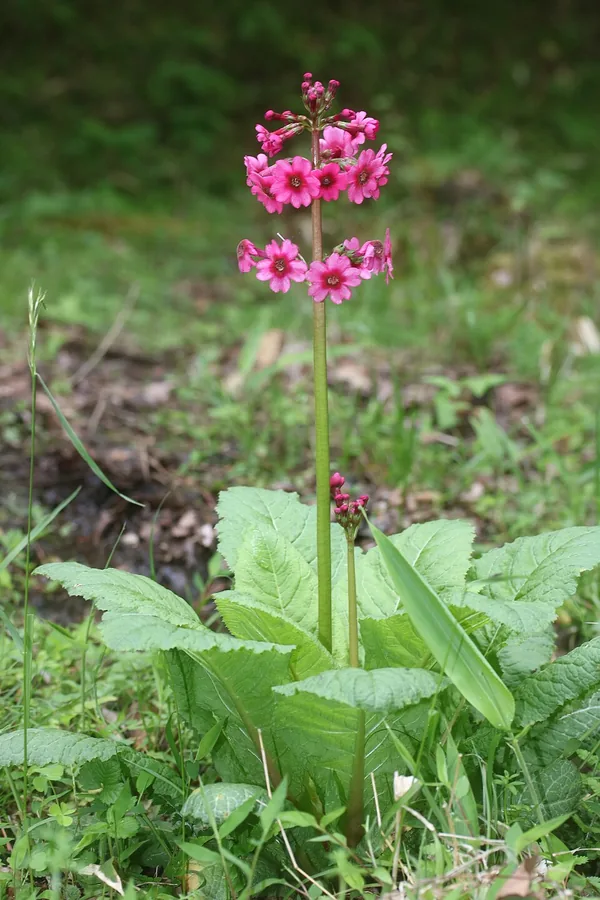
Japanese primrose is a damp-ground perennial that comes from the streamsides and wet meadows of Japan, and it's a wonderfully welcoming plant to grow. It's the most eye-catching of the candelabra primroses, lifting bare stems that hold flowers in tiered whorls, one gentle ring stacked above the next, in crimson, rose-pink, or white. In full bloom it stands like a little chandelier above a clump of crinkled green leaves.
The one thing to get right is where you plant it, and once you know it, the rest is easy. This is a plant for the wet edge of a pond or stream, for a bog garden, or for damp woodland where the soil never truly dries. Give it that happy spot and a single plant soon spreads into a drift, seeding itself freely into the moist ground all around.
It asks for steady care, not clever care, so a first-time grower has nothing to fear. Keep the roots cool and wet, shield it from harsh afternoon sun, and let a few seed heads ripen each year. The crowns are short-lived, which just means the colony carries on happily through its own seedlings rather than any single plant.
Care
The short version: settle it into rich, humusy soil that stays constantly moist to wet, give it part shade and cool roots, and simply never let it dry out.
Light
Aim for part shade, the sort of dappled light it would find at a woodland edge, and it will feel right at home. It can take more sun, even full sun, but only where the soil stays wet and cool, since strong light over dry roots will scorch the leaves quickly.
Water
This is the part worth caring about most, and it's really quite simple. The soil needs to stay constantly moist to wet and never dry out between waterings, because at heart this is a bog and streamside plant. Water every 1 to 3 days, and more often in the heat, or the plant will wilt and start to fade.
Soil
Give it rich, humusy, moisture-holding loam that stays damp, and it will even be glad of the heavy clay you find along pond and stream margins. A slightly acidic pH of 5.5 to 6.5 suits it best of all.
Temperature
It's a tough little thing in the cold, shrugging off winter lows down to about -29°F (-34°C), and it handles summer warmth up to 86°F (30°C) as long as the roots stay cool and wet. It's heat with dry soil that harms it, not the warmth on its own, so don't be nervous about a hot spell.
Humidity
It loves high humidity, which makes perfect sense for a plant of wet streamsides and bogs. Damp air and damp ground belong together here, so a moist, sheltered corner keeps the foliage looking fresh and happy.
Feeding
Feed it in spring as it wakes up, using a balanced fertilizer or simply digging compost and organic matter into the soil. One seasonal feed is plenty, since rich, humusy ground does most of the caring for you.
Pruning
There's very little to do here, so don't feel you have to fuss. Cut back the spent flower stems if you'd rather it didn't self-seed, and clear away any old or tired leaves. Do leave a few seed heads in place though, because self-sowing is how the colony keeps renewing itself.
Repotting
This is a garden plant, not a pot plant, so pots aren't the goal. Instead of repotting, divide the clumps every few years after flowering, especially once the crowns start crowding together, the flowering eases off, or the middle of the clump begins to thin out.
Size & spacing
Each plant reaches 12 to 18 inches (30 to 46 cm) tall in bloom and makes a clump 6 to 12 inches (15 to 30 cm) across. Set them at that spacing in a drift and they'll knit together and gently seed into the gaps for you.
When to plant
Japanese primrose keeps to the cool end of the season, so there's no rush. Sow seed in late winter, set the young plants out in spring once the frost has passed and the ground is reliably moist, and enjoy watching the tiered blooms open from late spring into early summer.
Northern hemisphere
Southern hemisphere
Typical months for a temperate climate: start earlier in warm zones, later where spring frosts linger.
- Sow: Late winter (sow on surface; cool, moist conditions and some chilling aid germination)
- Plant: Spring, after frost, into consistently moist ground
- Harvest: Late spring to early summer (May to June), in tiered candelabra whorls
Hardiness
USDA hardiness zones: 4–8
Temperature: down to -34°C
Troubleshooting
Nearly every trouble with this plant comes back to one simple thing: dry soil. Learn to read the first signs of stress on the leaves and crown, and step in early, well before a wilting plant becomes a lost one. Find what you're seeing below and treat the real cause, not just the symptom, and you'll be fine.
Wilting, scorched leaves that fade in the summer heat
If the plant flags and browns, don't worry, you have simply hit drought stress, which is the most common way a Japanese primrose is lost. Remember that it grows wild beside streams and bogs, so it truly wants soil that stays cool and wet right through the season. Keep the ground steadily moist, offer a little afternoon shade, and lay down mulch over the roots, and it will come back for you.
Fix:
- Keep soil constantly moist to wet at all times
- Move or site in part shade, or full sun only where soil stays reliably wet and cool
- Mulch with organic matter to retain moisture
- Grow along streams, pond margins, in bog gardens, or damp woodland
Chewed leaves and telltale silvery slime trails
When you spot ragged holes and shiny trails, take heart, it is almost always slugs and snails, and the damp soil your primrose loves is what draws them in. Pick them off in the evening or set out gentle traps and barriers around the crowns, and the plant will recover. Should you find fine webbing or speckled leaves instead, spider mites or aphids are the visitors, and a firm hose-down or a little insecticidal soap sees them off.
Fix:
- Hand-pick slugs and snails or use traps/barriers
- Hose off aphids or treat with insecticidal soap
- Manage spider mites by raising humidity and treating affected foliage
Older clumps growing weaker and thinning after a few years
This one is not a fault of yours and not a disease, it is simply how the plant lives. A Japanese primrose is a short-lived perennial that keeps its colony alive by seeding itself rather than by holding on to old crowns. So let a few seed heads ripen and scatter into the moist ground, and lift and divide the healthy clumps once they finish flowering, and you will always have fresh young plants coming along.
Fix:
- Allow plants to self-seed to renew colonies
- Divide healthy clumps after flowering to propagate
- Leave some seed heads each year
Spotted or rust-marked leaves and a soft, rotting crown
Marks and small orange pustules on the leaves point to fungal leaf spot and rust, while a soft, collapsing crown is a sign of root rot. The fix is gentle and simple: pick off and bin the affected leaves, give the plants a little more room to breathe, and try to keep water off the foliage. What the crown really wants is fresh, moving moisture, not the stagnant winter-wet soil that causes it to rot.
Fix:
- Remove and destroy affected foliage
- Improve air circulation and avoid overhead wetting of leaves
- Ensure moisture is fresh/flowing rather than stagnant; improve drainage to prevent crown rot
Toxicity
You can relax on this one, because Japanese primrose is low in toxicity if eaten, so a curious pet that chews a leaf faces only a mild, passing tummy upset. The bigger thing to note is for you, not for them. The foliage holds primin, a contact allergen that can raise an itchy rash on sensitive skin, so pop on gloves when you handle or divide the plants.
Toxic to
Cats · Dogs · Horses · Rabbits · Livestock · Birds · People
Cats Mild
If a cat takes a nibble of the leaves, you might see a little drool or a small bit brought back up, but the upset stays gentle and settles by itself. There's no cause for alarm, though it's still kind to keep curious cats away from the foliage.
Dogs Mild
A dog that chews the leaves may have a short spell of vomiting or a mildly loose tummy. Most dogs are back to normal within a day, so simply keep an eye on them and steer them off the plant.
Horses Mild
Horses seldom take an interest in primrose, and even if a little is eaten those same low-level compounds bring no more than a mild digestive upset.
Rabbits Caution
There isn't much firm data on rabbits, so the gentle, safe choice is to fence them out. A single nibble is unlikely to cause real harm, but it's best not to let the foliage become part of their diet.
Livestock Caution
Grazing animals usually walk right past it, and any reaction would be a passing stomach upset rather than anything serious. Even so, keeping it out of pasture is a sensible, easy precaution.
Birds Caution
Toxicity in birds isn't well recorded for this plant, so treat it as off the menu and gently keep pet birds clear of the leaves and stems.
People Caution
For people the thing to watch is the skin, not the stomach. The leaves and stems hold primin, a contact allergen that can raise an itchy rash on sensitive hands, so slip on gloves before you divide or handle the plants and you'll be fine.
The foliage and stems contain primin, a benzoquinone contact allergen that can cause an itchy skin rash / allergic contact dermatitis in sensitive people; wear gloves when handling or dividing plants if you are sensitive.
Helpline numbers

United States
ASPCA Animal Poison Control: (888) 426-4435 (fee applies)
Poison Control: (800) 222-1222



Canada
Poison Centres: 1-844-764-7669
Varieties
Most named Japanese primroses are sold by their flower color, which makes choosing easy, and a few close candelabra cousins round out the group nicely for a wet, shaded bed.
Miller's Crimson
It lifts deep crimson-red blooms in tiered candelabra whorls, and it's the one most gardeners happily start with.
Postford White
Its flowers open a clean white, warmed by a pink to red eye right at the heart of each bloom.
Apple Blossom
You get a soft pale pink here that feels right at home in a shaded, woodland-edge planting.
Primula bulleyana
A close candelabra cousin that's hardy in zones 5 to 8, easy to tell apart by its warm orange flowers held in tiered whorls.
Primula beesiana
Another friendly candelabra relative for zones 4 to 8, its rose-pink flowers centered on a cheerful orange-yellow eye.
Primula pulverulenta
A candelabra type that carries crimson-red flowers on stems lightly dusted with pale farina.
How to propagate
You can raise more of this plant from its free-flowing seed or by splitting a clump, and division is by far the quickest, most rewarding route to a flowering plant.
SeedModerate
Sow fresh seed in late winter to spring on the surface; cool, moist conditions aid germination. Plants also self-seed readily. · Blooms typically in the second year from seed
Scatter fresh seed on the soil surface from late winter into spring and leave it uncovered, since light along with cool, moist conditions is what wakes it up. Be gentle with your expectations, because seedlings usually wait until their second year to flower. Left alone, the plants self-sow happily in damp ground and form colonies, so you can simply let the seed fall or gather a little to start new patches wherever you like.
DivisionEasy
Divide clumps after flowering · Establishes the same season if kept moist
The quickest and most reassuring way to more plants is division. Once a healthy clump has finished flowering, lift it, ease the crowns apart, and get them straight back into moist, rich soil. Keep the divisions well watered and they'll settle in that very same season.
Myths
Primroses make easy dry-shade fillers or undemanding houseplants.
Take this one with a grain of salt, because a Japanese primrose is a bog and streamside plant, not a drought-tough gap-filler. It longs for cool, humusy soil that stays moist to wet all season in part shade, and it will sulk or fade in dry, hot ground. Think of it as an outdoor garden perennial for damp sites, not a dry-shade plant and not a houseplant.