Tree · Fabaceae
Honey Locust
Gleditsia triacanthos
Tough, quick, and wonderfully forgiving, the honey locust lays dappled shade over ground where little else will settle.
Full sun
Every 7–14 days
USDA 3–9
30–79 ft · 9–24 m
Overview
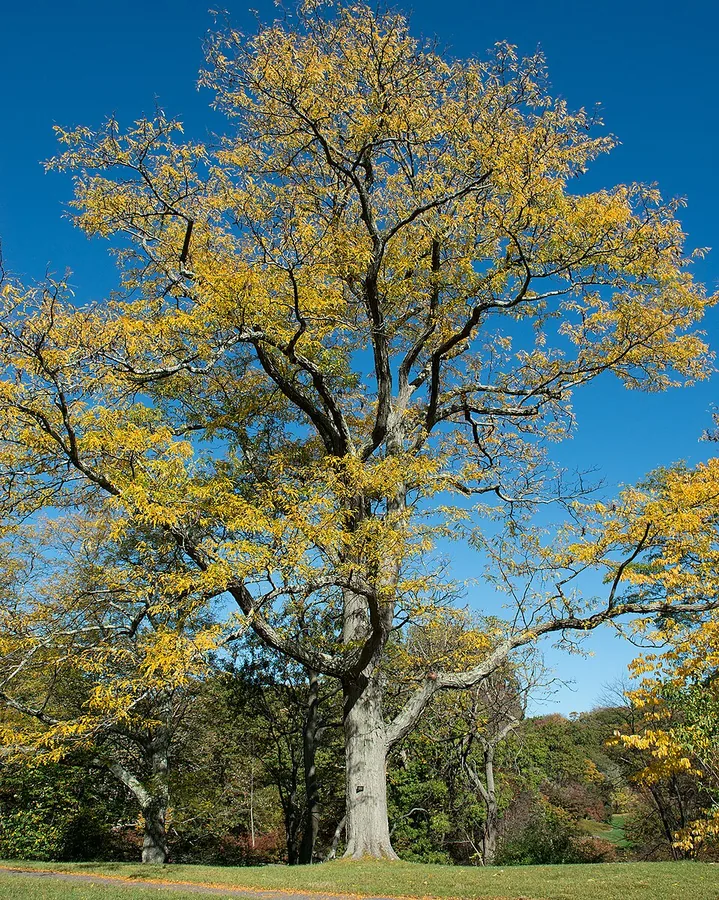
Take heart if you are new to trees, because the honey locust is one of the kindest to plant. It is a fast-growing legume from central North America, named for the sweet pulp tucked inside its long, twisting pods, and it throws a light, dappled shade soft enough for grass and flowers to keep growing right up to the trunk. Left to its own devices it can climb to 30 to 80 feet (9 to 24 m) with a wide, open crown, so it gives back generously for the little it asks.
Almost nothing rattles this tree, which is a comfort when you are still finding your feet. It takes clay, sand, drought, road salt, packed soil, and harsh alkaline city ground in stride, and it weathers winters down to -40°F (-40°C) and summers up to 100°F (38°C) without complaint. That sweep from zone 3 to zone 9 is exactly why you'll see it thriving where choosier trees simply give up, and why a first mistake here is rarely fatal.
The one thing to watch is the wild form, which guards its trunk and branches with long, branched thorns and lets go of heavy pods. Growers already solved that for you with thornless, seedless cultivars of var. inermis, and those are what the nursery will sell you. Choose one of them and you get every bit of the toughness with none of the mess or the spikes, so you really can't go far wrong.
Care
The short version: give it full sun and just about any soil, water it faithfully through the first couple of years, then ease off and let it be, because a settled honey locust is among the most drought-tolerant shade trees you could hope to plant.
Light
Set your honey locust in full sun and it will reward you with the fullest crown and the strongest growth. It will forgive some part shade if that is what you have, but it grows quickest and stays healthiest out in the open with at least six hours of direct light a day.
Water
Give a young tree a good, regular soak through its first one to two years while the roots stretch out and settle. After that it turns very drought tolerant and hardly ever asks for a drink, so you can simply let the top half of the soil dry out between waterings and trust it.
Soil
Few trees are this relaxed about their soil, which takes a lot of pressure off you. It loves moist, rich loam but happily puts up with clay, sand, poor ground, compaction, salt, and alkaline city dirt, across a comfortable pH span of 6.0 to 8.0.
Temperature
This is a genuinely cold-hardy tree made for extremes, at ease anywhere from -40°F to 100°F (-40°C to 38°C). That resilience carries it right across USDA zones 3 through 9 and lets it grow where many shade trees would falter.
Humidity
Outdoor humidity is simply never a worry for an established tree, so there is no level for you to fuss over. Good air movement through the crown does far more good, since it helps the foliage dry and keeps mite and disease pressure gently in check.
Feeding
As a legume, the honey locust largely feeds itself and rarely wants more from you. You can skip the fertilizer unless the soil is truly poor, and even then a single balanced slow-release feeding in spring is all it needs.
Pruning
Prune in late winter to early spring while the tree is dormant and resting. Guide it to one strong central leader while it is young, and clip away any crossing, dead, or damaged wood to keep the frame clean and open.
Repotting
A honey locust really wants to live in the ground rather than a pot, so repotting rarely comes up at all. If you are holding a young tree in a container for now, just move it up a size once the roots circle inside or peek out of the drainage holes.
Size & spacing
Give this tree plenty of elbow room, because it can rise 30 to 80 feet (9 to 24 m) tall and spread 25 to 50 feet (8 to 15 m) across. Set it well away from buildings, walls, and other trees so that broad crown has all the space it needs to fill out beautifully.
When to plant
The honey locust follows a gentle, easy-to-follow yearly rhythm, so there is nothing tricky to track. Plant it in spring or fall, enjoy the small fragrant flowers that open in late spring, and watch for the long brown pods to ripen and fall through the early part of autumn.
Northern hemisphere
Southern hemisphere
Typical months for a temperate climate: start earlier in warm zones, later where spring frosts linger.
- Plant: Spring or fall
- Harvest: Inconspicuous fragrant greenish-yellow flowers in late spring (May to June); flat twisted brown seed pods ripen September to October.
Hardiness
USDA hardiness zones: 3–9
Temperature: down to -40°C
Troubleshooting
A honey locust is a sturdy soul, but a handful of pests and one serious fungus show up often enough that it helps to know them by sight. Take comfort that most of the leaf damage looks far scarier than it is and clears up on its own. The cankers are the exception worth real attention, so match what you see below before you pick up the pruning saw, and you'll know just what to do.
Sunken patches on the bark with branches dying back
Sunken, off-color patches that wrap around a branch or the trunk are the sign of Thyronectria or Nectria canker, fungi that slip into a tree already worn down by drought, wounds, or crowding. No spray will cure it, so this is the one to face head on: prune well below each canker in dry weather and wipe your tools clean between cuts. If a tree is badly cankered, take it out before the trouble spreads, and keep the rest strong with steady water and unbroken bark, and they should hold.
Fix:
- Prune out infected branches well below the canker during dry weather and disinfect tools
- Remove and destroy severely cankered trees
- Improve vigor with proper watering and avoid bark wounds
Leaflets wrapped in silk and stripped bare by the middle of summer
If you spot little caterpillars tucked inside silky webbing, take heart: this is almost always the mimosa webworm, and it leans hardest on gold-leaved types like Sunburst. Snip off the little nests the moment you notice them and dab the young caterpillars with Bt, and your tree will be fine. Sweep up the litter underneath, where the pupae settle in for winter, and you have closed the loop.
Fix:
- Prune out and destroy small webbed nests early
- Apply Bt (Bacillus thuringiensis) while caterpillars are small
- Clean up debris beneath the tree where pupae overwinter
Puffy pod-shaped bumps on leaflet tips, with leaves dropping early
Those swollen little pods on the leaflet tips are simply the honeylocust pod gall midge, whose maggots grow up inside the twisted foliage, and there is no need to panic. A grown tree brushes off a mild round and comes to no lasting harm. Should the galls really take hold, mist horticultural oil over the fresh tips in March or April, trim away the worst shoots, and let the tree recover in its own time.
Fix:
- Tolerate light infestations on established trees, which are rarely killed
- Apply horticultural oil to terminals in March-April to kill eggs
- Prune and destroy heavily galled shoots
Crinkled, undersized new leaves in spring
Puckered or stunted spring leaves are usually just the honeylocust plant bug nibbling on the soft new foliage, and it looks a good deal worse than it truly is. The tree grows right past it, so you can safely leave that early feeding alone. If instead you see fine speckling and webbing later in the heat of summer, that points to spider mites, and a firm blast of water or a little insecticidal soap will set things right.
Fix:
- Tolerate minor early-season plant bug damage; trees usually recover
- Hose down foliage to dislodge spider mites
- Use insecticidal soap or horticultural oil for heavy mite outbreaks
Toxicity
Here is welcome news for a home with animals: the honey locust is safe. The ASPCA lists it as non-toxic to dogs, cats, and horses, and the sweet pods are eaten by livestock and wildlife every fall without any harm. The only genuine hazard is a physical one, the long sharp thorns on wild trees, which is precisely why landscape cultivars are bred thornless for peace of mind.
Safe for
People · Cats · Dogs · Horses · Rabbits · Livestock · Birds
Cats None
You can relax about the cat. Should one paw at a fallen leaflet or chew a stray twig, no poison will follow.
Dogs None
Your dog is safe here. A pup that chews a dropped pod might take in more roughage than sits well, yet the tree holds nothing toxic.
Horses None
Horses graze near it with nothing to fear, and the sweet pods come as a welcome treat.
Rabbits Safe
Rabbits have no poison to worry about. The bark and twigs are just coarse browse, harmless through and through.
Livestock None
The pods make good, wholesome feed and go down without any ill effect. Cattle, goats, and sheep have eaten them happily for generations.
Birds Safe
Birds do just fine around it, and wildlife happily clears the sweet pods each autumn with no bother at all.
People Safe
People have eaten the sweet pulp from ripe pods for ages, so there is no worry there. The one thing to mind is the wild form's long, sharp thorns, so give a thorny trunk a gentle, careful hand.
The wild species bears large, sharp, branched thorns on the trunk and branches that can cause puncture injuries; landscape cultivars are typically thornless.
Varieties
Nearly every honey locust you'll find for a yard or a street is a named thornless cultivar, which takes the guesswork off your plate. These are the ones you're most likely to come across.
Shademaster
You can lean on this thornless and nearly seedless form, a vigorous, vase-shaped tree with ascending branches that has earned a reputation as a tough, dependable street tree.
Skyline
This thornless, podless choice grows in a tidy pyramid on a strong central leader and rewards you with clean golden-yellow color come fall.
Sunburst
Gardeners love this thornless, seedless pick for its bright golden new foliage, though it is the one that most often draws mimosa webworm and pod gall midge, so keep a friendly eye on it.
Imperial
A thornless, seedless cultivar that stays helpfully compact and rounded with neat horizontal branching, easy to place in a smaller yard.
var. inermis
This is the naturally thornless botanical form, its name meaning unarmed, and most of the landscape cultivars you will meet were selected from it.
How to propagate
You are welcome to raise a honey locust from its own seed, which is a rewarding little project, but the named cultivars are a different story and have to be cloned to hold onto their best qualities.
SeedModerate
Spring after collecting ripe pods in fall · 1 to 2 growing seasons to a transplantable seedling
Collect ripe pods in fall and sow them in spring, but don't skip one key step: the hard, waterproof seed coat has to be scratched open with a file, hot water, or concentrated sulfuric acid, or the seed simply won't sprout. Allow the seedling one to two growing seasons to grow big enough to move. Just remember that a thornless parent doesn't pass its trait down cleanly, since only about 60 percent of the babies come up thornless.
GraftingDemanding
Late winter to spring (grafting) or summer (budding) · 1 to 2 growing seasons
Since the named thornless, seedless cultivars never breed true from seed, nurseries graft them in late winter to spring or bud them onto seedling rootstock in summer. That keeps the exact clone true to type, and the young tree eases in over one to two growing seasons.
Myths
Honey locust is poisonous to pets and livestock just like the other locust trees.
Honey locust often takes the blame meant for the black locust (Robinia pseudoacacia), a separate tree it gets muddled up with. You can trust that honey locust is non-toxic, and its sweet pods feed livestock and wildlife happily. It is black locust that holds the toxalbumins that poison dogs and horses, not this gentle tree.
A honey locust planted in the yard is bound to grow vicious thorns and drop messy pods.
The wild tree does grow fierce branched thorns and long pods, but rest easy, because that is not what the nursery hands you. Most landscape trees are thornless cultivars of var. inermis, and a good many are seedless and podless as well, so the mess simply never arrives.