Tree · Fabaceae
Black Locust
Robinia pseudoacacia
A tough, forgiving tree that asks little and grows fast for the new gardener.
Full sun
Every 14–30 days
2190–2920 days
USDA 3–8
Overview
If you are new to growing trees and worried about getting it right, Black Locust is a kind place to start. It is one of the most forgiving trees you can plant, shrugging off poor soil, drought, and cold down to -40°F to 104°F (-40°C to 40°C), and it grows fast enough that you will see real progress in just a few seasons. As a legume in the Fabaceae family, it even makes its own nitrogen, so it asks very little of you.
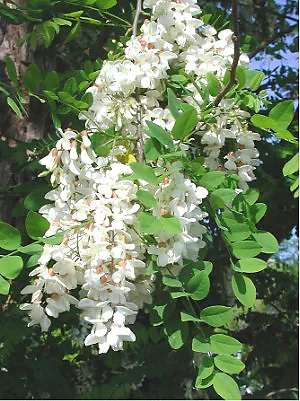
In late spring you are rewarded with fragrant white pea-like flowers hanging in soft clusters, from April to June, which the bees adore. The tree can reach a good size, so give it room and a sunny open spot, and you will have a sturdy, fast shade tree that handles tough conditions most plants cannot.
A few honest cautions, none of which should scare you off if you plan ahead. The wood is brittle and breaks in storms, the tree spreads eagerly by suckers and seed, and every part except the flowers is poisonous, with horses most at risk. Know these things, site it thoughtfully, and you will do just fine.
Care
The short version: Black Locust is genuinely easy, so plant it in full sun and forgiving soil and let it do its thing. Water young trees while they settle, then step back, because once established it is extremely drought-tolerant and rarely needs water at all. Skip the fertilizer since it feeds itself, prune lightly in the dormant season for safety, and keep an eye on suckers so it does not wander. Wear gloves for the thorns and keep all parts but the flowers away from pets, livestock, and children.
Light
Give your tree full sun and it will be happiest, soaking up all the light it can get. It will accept a little partial shade if that is what your space offers, so do not fret if the spot is not perfect, but the more sun you can provide, the stronger and more open the growth will be.
Water
Here is where you can truly relax, because this tree is extremely drought-tolerant once it has settled in. Young transplants do appreciate a drink while their roots take hold, roughly every 14 to 30 days in dry spells, but after that you can mostly leave it be. It even thrives on poor, dry, sandy ground and makes its own nitrogen, so overwatering is the main mistake to avoid.
Soil
Almost any well-drained soil will do, which makes this tree wonderfully easy to place. It happily handles dry, sandy, rocky, eroded, and even infertile sites because it fixes its own nitrogen, and it is comfortable across a wide pH range of 4.6 to 8.2. You really do not need to amend or fuss over the ground.
Temperature
Cold simply does not bother this tree, which is reassuring if you garden where winters bite. It takes a remarkable -40°F to 104°F (-40°C to 40°C), so it is at home in zones 3 through 8 and you can plant it without worrying about the thermometer.
Humidity
Humidity is one less thing to think about here, since average outdoor air suits it perfectly. There is no need to mist, monitor, or adjust anything, so let the natural climate do its work and turn your attention elsewhere.
Feeding
You can set the fertilizer aside, because as a nitrogen-fixing legume this tree feeds itself and needs little to no feeding. If you feel you must do something in spring, keep it minimal and avoid high-nitrogen products, which only encourage weak, breakable growth.
Pruning
A little dormant-season pruning in late winter or early spring keeps things safe and tidy, so reach for your gloves first because of the sharp paired spines. Take out dead, crossing, weak, or storm-damaged limbs, raise the crown if you like, and remove root suckers regularly to keep the tree from spreading where you do not want it.
Repotting
As a landscape tree this does not get repotted, so there is nothing to worry about once it is in the ground. Only young container or balled-and-burlapped stock gets moved, ideally while dormant, and signs that potted stock needs planting out include roots circling the pot, roots poking through the drainage holes, or water rushing straight through.
Size & spacing
Give this tree plenty of elbow room, because it grows fast and reaches a real size. Plan for 30 to 50 feet (9 to 15 m) tall and a spread of 20 to 35 feet (6 to 11 m), and set it well back from buildings, walkways, and parking since the brittle wood can drop limbs in storms.
When to plant
Timing here is gentle and hard to get wrong, so do not overthink it. Below you will find when to sow, when to plant out, and when those lovely blooms arrive.
Northern hemisphere
Southern hemisphere
Typical months for a temperate climate: start earlier in warm zones, later where spring frosts linger.
- Sow: Late winter; scarify seed (hot water or acid) before sowing to break hard seed coat.
- Plant: Spring after the last frost, or fall, while dormant.
- Harvest: Fragrant white pea-like flowers in drooping clusters in late spring (April to June).
Hardiness
USDA hardiness zones: 3–8
Temperature: down to -40°C
Troubleshooting
If something looks wrong, take heart, because most issues with this tree are manageable and rarely fatal once it is established. Here are the common ones and how to handle each with a calm, steady hand.
Borers tunneling through the wood
If you find holes and sawdust on the trunk, take a breath, because this is a common problem you can work with rather than a sign you have failed. The locust borer is at home in this tree, and keeping your tree healthy and pruning out the worst limbs goes a long way.
Fix:
- Maintain vigorous tree health to resist attack
- Prune out and destroy heavily infested, dead, or hazardous limbs
- Remove severely declining hazard trees near targets
Brittle limbs giving way in storms
Finding broken branches after a storm is disheartening, but it helps to know this tree simply has naturally weak wood, so you have not done anything wrong. A little dormant-season pruning to clear out weak and dead limbs makes a real difference for safety.
Fix:
- Prune out weak, dead, and hazardous limbs while dormant
- Reduce long, heavy limbs over walkways or structures
- Remove hazardous trees near high-use areas
Leafminers browning the canopy
Seeing the leaves go brown and lacy by late summer looks alarming, but you can relax here, because this damage is almost always cosmetic. The locust leafminer is feeding on the foliage, and your tree will very likely leaf out fine come spring.
Fix:
- Tolerate damage as it rarely kills established trees
- Rake and remove heavy leaf litter
- Maintain tree vigor with adequate moisture for young trees
Toxicity
This is the part to read carefully, though it is simple to manage with a little awareness. Every part except the flowers is poisonous, so here is who is at risk and what to watch for.
Toxic to
Cats · Dogs · Horses · Rabbits · Livestock · Birds · People
Cats Moderate
A curious cat that nibbles bark or seeds may show vomiting, low energy, loss of appetite, and weakness, so steer them clear and call your vet if anything seems off.
Dogs Moderate
Dogs that chew on bark, seeds, or prunings can get an upset stomach with vomiting, depression, no appetite, and weakness; keep trimmings picked up and reach out to your vet if symptoms appear.
Horses Severe
Horses are the most at risk by far, and chewing the bark can bring on weakness, colic, breathing trouble, bloody diarrhea, and in bad cases death, so fence them well away from this tree.
Rabbits Toxic
Rabbits should never have access to the bark, seeds, or sprouts, as the toxalbumins can cause serious gut upset and weakness; keep any prunings out of their reach.
Livestock Severe
Grazing livestock can be poisoned by bark, seeds, and young sprouts, with weakness, colic-like distress, bloody diarrhea, and the risk of death, so keep them off areas where this tree grows.
Birds Toxic
Birds can be harmed if they eat the seeds, which carry the same protein-blocking toxins, so it is wise to keep pet birds well away from the pods.
People Caution
People, especially children, can be poisoned by chewing bark or eating seeds and sprouts, with stomach upset and weakness; the flowers are the only part considered safe, so teach kids to leave the rest alone.
Wear gloves when pruning to avoid the sharp paired thorns, and keep bark, seed pods, prunings, and sprouts away from horses, livestock, pets, and children.
Helpline numbers

United States
ASPCA Animal Poison Control: (888) 426-4435 (fee applies)
Poison Control: (800) 222-1222



Canada
Poison Centres: 1-844-764-7669
Varieties
There are a few lovely cultivars to choose from if you want something special, each with its own charm. Just remember they mostly share the species' brittle wood, so plan placement the same way.
Purple Robe
You will love the rose-pink to purple blooms and the bronze-tinted new leaves, just keep in mind it still has the species' weak wood.
Frisia
This one keeps golden-yellow leaves through the whole season, though the wood is every bit as brittle and breakable as the wild form.
Twisty Baby (Lace Lady)
A small, playful tree with curling, contorted branches that seldom flowers and shares the same fragile wood.
Umbraculifera
Thornless and shaped like a rounded mop-head crown, which is friendly to work around, though it rarely blooms.
How to propagate
Making more of this tree is surprisingly approachable, with options for every comfort level. Here are three ways to go, from the easiest to the most hands-on.
SeedModerate
Spring · 1-2 seasons
Sowing in spring works well, but the seed has a hard coat that stays shut until you scarify it, either with near-boiling water for about a minute or a soak in acid. Once you have done that, it sprouts and settles in over a season or two, and the good news is stored seed still comes up after 10 or more years.
DivisionEasy
Dormant season · 1 growing season
Since the tree spreads on its own by root suckers, this is the easiest path for a beginner during the dormant season. Suckers and dormant root cuttings from a quarter inch to an inch thick take root with little fuss and fill in within one growing season, which is the very reason it can be tricky to keep in bounds.
GraftingDemanding
Dormant season or summer budding · 1-2 seasons
Named kinds such as Purple Robe and Frisia will not breed true from seed, so growers bud or graft them onto seedling rootstock. Try it in the dormant season, or bud in summer, and let the union knit for a season or two before expecting much.
Myths
Black locust must be safe since it is a native legume like edible beans and people eat its flowers.
It is true the flowers show up in some dishes and the tree does fix its own nitrogen, but the safety stops there. The bark, leaves, seeds, and sprouts all hold toxalbumins that can poison fatally, with horses in the most danger of all.
Black locust is a calm, well-mannered shade tree you can plant and forget.
In reality it sends up root suckers and self-seeds into crowded thickets, and it is invasive far beyond its native range. The wood is brittle and prone to breaking, and locust borers only make that worse.