Houseplant · Araceae
Heartleaf Philodendron
Philodendron hederaceum
Forgiving and quick to grow, the heartleaf philodendron settles happily into a shady corner and asks for little more than an occasional drink.
Bright indirect
50–84°F · 10–29°C
USDA 11–12
3–13 ft · 1–4 m
Overview
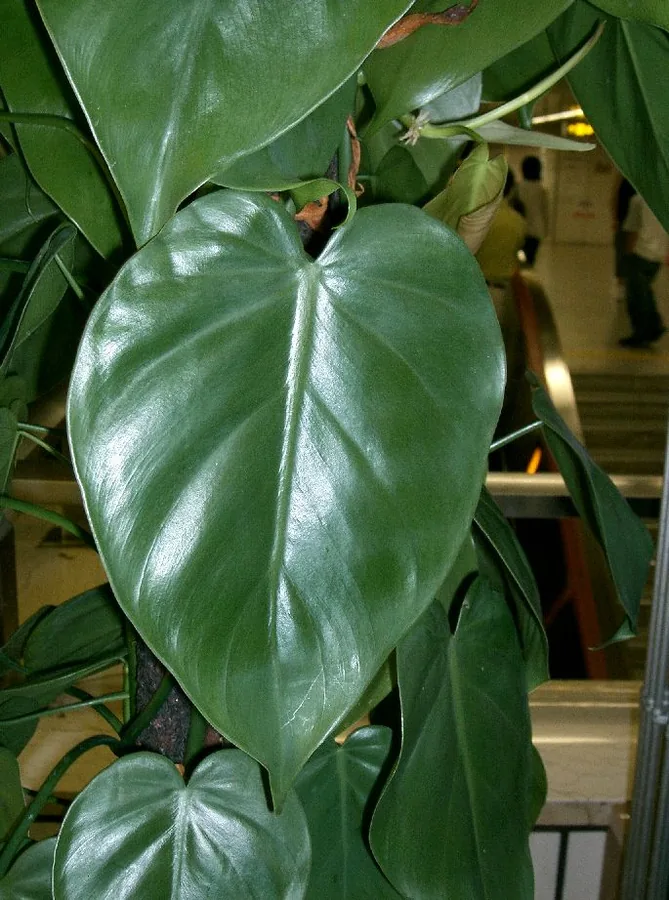
If you're new to houseplants and a touch nervous, the heartleaf philodendron is a lovely place to begin. Its glossy, heart-shaped leaves spill down from a shelf or climb a pole, and it grows quickly enough to fill a corner within a season. It hails from the forests of Mexico and tropical America, where it clambers up tree trunks reaching toward the light, so a little scrambling and trailing is simply what it loves to do.
The real comfort is how little it asks of you. It takes low light, dry air, and a forgotten watering or two in its stride, which is exactly why you find it thriving in offices and dim hallways where fussier plants would give up. Offer it medium to bright indirect light and it thanks you with fuller leaves and quicker growth, but a slower spot won't set you back, and any misstep is easy to recover from.
There's one thing to sort out before it moves in with you: every part carries insoluble calcium oxalate crystals, which makes it an irritant to pets, livestock, and people. Hang it up high or tuck it where curious mouths can't reach, and from there you have an easy, generous companion that will keep you company for years.
Care
The short version: give it bright indirect light while trusting it to manage with less, water only once the top inch of soil has dried, and feed it lightly through the growing season. Keep it warm and safely out of reach of pets and children, and you'll do just fine.
Light
It's happiest in bright indirect light, close to a window but shielded from the direct sun that would scorch its leaves. It'll manage in medium light or even a dim corner, though the growth slows and the stems reach, so lean toward brighter when you can.
Water
Wait until the top inch of soil dries out before watering again, then water until it flows from the drainage holes. Ease right off in winter, when the plant sips far less. Remember, soggy soil is the quickest way to lose it, so err on the dry side.
Soil
Settle it into a rich, well-drained potting mix. Its roots want air as much as moisture, so a loose mix that lets water pass through keeps them healthy and keeps rot from creeping in.
Temperature
Ordinary room warmth suits it beautifully, anywhere from 50°F to 84°F (10°C to 29°C). Just keep it above 50°F and clear of cold drafts and heating vents, since a sudden chill can set it back.
Humidity
Everyday household humidity is perfectly fine, so there's no number to fuss about. It appreciates a more humid spot and grows a touch faster there, but it won't sulk through dry winter air.
Feeding
Feed it monthly through spring and summer with a dilute water-soluble houseplant fertilizer. Ease off in autumn and winter while growth naturally slows, and go gentle rather than generous, since too much salt browns the leaf tips.
Pruning
Pinch the stems back now and then to keep it full instead of thin and leggy. Snip just above a leaf node, and any cutting you take can happily root into a whole new plant.
Repotting
Move it into a slightly bigger pot every 1 to 2 years in spring, or sooner if roots peek through the drainage holes and the soil dries quickly. Choosing a pot just one size up keeps the roots from sitting in wet, unused soil.
Size & spacing
As a trailing or climbing vine it can reach 3 to 13 feet (1 to 4 m) with a little support, spreading 3 to 6 feet (90 to 180 cm) wide. Give it room to drape from a shelf or a pole to train it gently upward.
Troubleshooting
Most hiccups with this plant come down to watering or light, and the good news is it lets you know early. Yellowing leaves, stretched stems, or the odd pest are the signs to watch for. Find what matches below and step in soon, and small troubles rarely turn into big ones.
Soft brown roots and a drooping plant
When soil stays wet for too long, root rot can set in, and it's the one problem worth catching early. Gently lift the plant free, trim away anything brown and squishy, and settle it into fresh mix that drains well. Water more sparingly afterward, and your plant has every chance to recover.
Fix:
- Unpot and trim rotted roots
- Repot in fresh well-drained mix
- Reduce watering
Lower leaves fading to yellow
If the leaves near the base are turning yellow, don't worry, it's usually just a sign of too much water, with dim light the next likely culprit. Feel the soil, and if it's staying wet, simply hold off on watering and confirm the pot can drain. A gentle move to a brighter spot away from harsh sun tends to bring it back around.
Fix:
- Reduce watering
- Ensure drainage
- Move to brighter indirect light
Fluffy white tufts nestled in the leaf joints
Those soft cottony spots tucked where the leaves meet the stem are mealybugs, and they're easy to see off. Touch each one with a cotton swab dipped in alcohol, then wipe over with insecticidal soap to gather any stragglers. Give the plant a little space from your others until it's back to clean.
Fix:
- Dab with alcohol-dipped swab
- Apply insecticidal soap
- Isolate plant
Faint webbing and a dull, speckled look
Spider mites tend to show up when the air runs dry, dotting the leaves with tiny pale flecks and leaving thin webbing behind. Rinse the foliage well, treat with insecticidal soap or a miticide, and don't forget the leaf undersides where they gather. Nudging the humidity up makes your plant a lot less welcoming to them.
Fix:
- Rinse foliage
- Apply insecticidal soap or miticide
- Raise humidity
Firm brown bumps with a sticky film
Hard little bumps that won't budge along the stems are scale insects, and the sticky residue nearby confirms it. Scrape them away, then follow with horticultural oil or insecticidal soap to reach any you missed. Keep the plant on its own for a while, and you'll get on top of them.
Fix:
- Scrape off scales
- Apply horticultural oil or insecticidal soap
- Isolate plant
Bare stretched stems with gaps between leaves
Stems that stretch out with leaves spaced far apart just mean your plant is searching for more light, nothing you've done wrong. Shift it into medium or bright indirect light and the fresh growth comes in tighter. A little pinch to those long stems coaxes bushier shoots to fill in lower down.
Fix:
- Move to medium or bright indirect light
- Pinch stems to encourage branching
Crisp, curling tips along the leaf edges
Dry brown tips are simply a hint that fertilizer salts have gathered in the soil from feeding a bit too much. Run plain water through the pot until it drains from below, and the built-up salts wash right out. From there, feed less often and more gently, and the new leaves come in clean.
Fix:
- Flush soil with water
- Reduce fertilizer rate
Little bugs bunched on tender new growth
Aphids like to gather on soft young shoots and leave a sticky film as they feed. A firm rinse under the tap washes most of them away with no fuss. If a stubborn few linger, a touch of insecticidal soap finishes the job.
Fix:
- Rinse off with water
- Apply insecticidal soap
Toxicity
This is one to keep well out of reach of anyone who might take a bite. Every part holds insoluble calcium oxalate crystals that sting the mouth and throat, bringing burning pain, heavy drooling, and swelling. It's an irritant to cats, dogs, horses, rabbits, livestock, birds, and people, with no part safe to eat, so give it a high, out-of-the-way home and wash your hands after you cut it.
Toxic to
Cats · Dogs · Horses · Rabbits · Livestock · Birds · People
Cats Moderate
A curious cat that bites into a leaf meets a mouthful of sharp calcium oxalate crystals. You may see drooling, pawing at the mouth, vomiting, and puffy, swollen lips and tongue.
Dogs Moderate
A dog that chews a leaf feels a strong burning in the mouth, along with heavy drooling and vomiting. Some dogs gag or find it hard to swallow as the tissue swells.
Horses Moderate
Those same crystals sting a horse's mouth and throat, so drooling and difficulty swallowing follow. It's safest to keep this plant well away from paddocks and feed.
Rabbits Toxic
Since the crystals sit in every part of the plant, one nibble leaves a rabbit drooling and turned off its food. Best not to keep it anywhere a rabbit can wander.
Livestock Toxic
Goats, sheep, and cattle meet the oxalates with mouth pain and a refusal to eat. This is not a plant to have anywhere near grazing animals.
Birds Toxic
A bird that pecks at the foliage feels the same burning sting and swelling. Set the plant up high or somewhere birds simply can't get to it.
People Caution
No part of it is meant to be eaten. A bite burns the mouth and can swell the lips and tongue, and the sap may leave skin feeling itchy, so wash up after pruning and keep it clear of small children.
Sap may irritate skin; wash hands after cutting stems
Helpline numbers

United States
ASPCA Animal Poison Control: (888) 426-4435 (fee applies)
Poison Control: (800) 222-1222



Canada
Poison Centres: 1-844-764-7669
Varieties
Alongside the plain green species, growers have brought out a handful of cultivars worth getting to know for their color and leaf texture.
'Brasil'
You'll spot it by the cheerful lime-yellow stripe that runs right down the middle of each green leaf.
'Micans'
Its leaves feel velvety and catch the light with a soft bronze-green sheen, warmed by reddish undersides.
'Lemon Lime'
The entire plant lights up in a bright chartreuse that leans toward neon yellow-green.
'Rio'
Gentle streaks of cream and silver run down the center of every leaf.
How to propagate
Few plants are this easy and this rewarding to multiply. Pop a single cutting in a glass of water and you'll have a new plant within a few weeks, or air layer a longer vine if you'd like a bigger head start.
Stem cuttingsEasy
Spring or growing season · Roots in 2-4 weeks
This is the beginner-friendly route, and it's the one nearly everyone reaches for. In spring or any time through the growing season, snip a stem just below a node that holds a leaf or two, then set it in water or tuck it into moist potting mix. Give it about 2 to 4 weeks and roots appear, and just like that you have a brand-new plant.
Air layeringModerate
Growing season · Several weeks
Air layering takes a little more patience, and it's a nice option to try on a longer vine during the growing season. You nick a stem and wrap the spot to encourage roots before you ever cut, and over several weeks a rooted section forms that you can pot up on its own.
Myths
Philodendrons clean the air in your home.
This one traces back to a sealed-chamber lab study, not an actual living room. A peer-reviewed review showed the VOCs a potted plant pulls out are so tiny that cracking a window helps far more. So grow it for the joy of it, not to freshen the air.
Heartleaf philodendron and pothos are one and the same.
They're look-alikes from different genera, though it's an easy mix-up. A philodendron's petioles are smooth while a pothos has grooved ones, and new philodendron leaves unfurl inside a papery sheath that pothos simply doesn't grow.
This plant is deadly poison to children.
The insoluble calcium oxalate crystals do cause genuine, painful mouth irritation, but they're rated low-severity, and serious harm is rare. Keep it beyond a small child's reach, and if a leaf gets chewed, rinse the mouth and keep an eye out rather than panic.
It thrives in a dark corner.
It'll get by in low light, but it truly does best in medium to bright indirect light. Tuck it too deep into the shadows and you'll watch the stems stretch thin and the leaves come in sparse.
It needs high humidity to survive.
A bit of extra moisture in the air pleases it, but it does just fine in ordinary household air. There's no need for a mister or a pebble tray to keep yours thriving.
Sources
- ASPCA Animal Poison Control
- North Carolina Extension Gardener Plant Toolbox (NC State)
- Missouri Botanical Garden Plant Finder
- Pet Poison Helpline
- University of Florida IFAS Gardening Solutions
- Clemson Cooperative Extension HGIC
- Plants of the World Online, Royal Botanic Gardens Kew
- Cummings & Waring 2020, J Exposure Science & Environmental Epidemiology (PubMed/NLM)
- Atlas of Florida Plants, Institute for Systematic Botany, University of South Florida