Ornamental · Scrophulariaceae
Diascia
Diascia barberae
An easygoing tumble of spurred blooms that welcomes the first-time gardener.
Full sun
Every 2–4 days
USDA 8–11
8–12 in · 20–30 cm
Overview
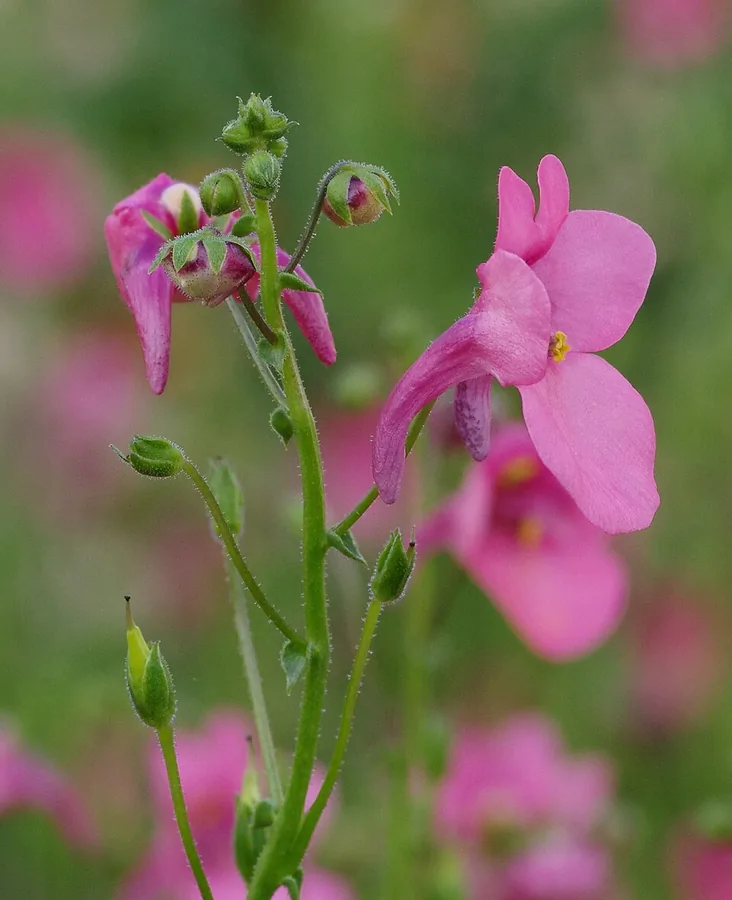
If you are new to gardening, diascia is a kind and forgiving plant to start with. Often called twinspur, this low, spreading charmer comes from South Africa and earns its nickname from the pair of backward-pointing spurs on every small flower. The blooms arrive in soft coral, pink, rose, and orange, gathered in loose sprays that feel cheerful without any fuss.
Picture it at the front of a border, tumbling over the edge of a container, or spilling from a hanging basket where its trailing habit shows off best. It stays modest in size at 8 to 12 inches (20 to 30 cm) tall and spreads to 12 to 18 inches (30 to 46 cm), growing at a comfortable, moderate pace that is easy to keep up with.
Diascia is a cool-season bloomer, flowering its heart out in mild spring and fall and taking a rest when summer turns hot. It is a tender perennial that most gardeners grow as an annual, since it only lives through winter outdoors in USDA zones 8 to 11. In colder places you simply replant each spring or root a cutting, and there is nothing here you cannot recover from with a little patience.
Care
The short version: Give diascia full sun, keep the soil evenly moist so it never dries out, and pinch young plants for a fuller shape. Feed monthly through the growing season, deadhead the spent flowers, and shear it back if blooming fades in the heat. It is a relaxed, beginner-friendly plant that bounces back happily from most slip-ups.
Light
Diascia is happiest in full sun, where it rewards you with the fullest, most generous bloom. It will also take partial shade, and a touch of afternoon shade is a real kindness where summers run hot. Just avoid too much shade, since deep shade thins the flowers and leaves the stems stretched and floppy.
Water
This is the one habit worth forming early: keep the soil evenly moist and never let it dry out, especially in pots and hanging baskets that drink quickly. Watering every 2 to 4 days suits most settings, with a little more during heat. Dry roots make the plant shut down its flowering, so steady moisture keeps it blooming and content.
Soil
Give diascia a moderately fertile, organically rich soil that stays consistently moist yet drains well, so the roots are damp but never waterlogged. It is easygoing about acidity, settling happily anywhere in the 6.0 to 8.0 pH range, from slightly acidic to alkaline.
Temperature
This plant is comfortable across a wide span, from 10°F to 90°F (-12°C to 32°C). Remember that it is not frost-tolerant, so wait until the chance of frost has passed before setting it outside, and it will reward your patience.
Humidity
There is no special humidity to chase here. Diascia is content with ordinary outdoor humidity and asks for no particular target. Good airflow is the helpful part, since it keeps the foliage dry and quietly discourages slugs and snails.
Feeding
Keep diascia fed with a balanced general-purpose fertilizer made for container and bedding plants. A simple monthly feeding through the growing season is all it needs to keep producing those loose sprays of color.
Pruning
A little tidying goes a long way. Pinch young plants to encourage a bushy, full shape, and deadhead the spent flowers to keep new ones coming. When blooming slows in the summer heat, shear the plant back and it will reward you with a fresh flush in fall.
Size & spacing
Diascia stays low and tidy at 8 to 12 inches (20 to 30 cm) tall, with a spreading habit reaching 12 to 18 inches (30 to 46 cm) across. Give it that room to tumble and trail, and its moderate growth rate makes it easy to keep within bounds.
When to plant
Getting the timing right is mostly about waiting for the cold to pass, and there is plenty of room for small adjustments. The calendar below walks you through when to sow, plant, and expect those cheerful blooms, so you can plan with confidence.
Northern hemisphere
Southern hemisphere
Typical months for a temperate climate: start earlier in warm zones, later where spring frosts linger.
- Sow: 6-8 weeks before the last spring frost; seed may also be sown outdoors 1-2 weeks before the last frost date
- Plant: After danger of frost has passed in spring
- Harvest: Spring through summer to fall (April to frost)
Hardiness
USDA hardiness zones: 8–11
Temperature: down to -12°C
Troubleshooting
Even the easiest plants have their off days, and diascia is no exception. The good news is that nearly everything that goes wrong here is cosmetic and easy to set right, so take a breath and work through these one at a time.
A summer pause, not a problem you caused
When the hottest weeks arrive, your diascia may simply rest and slow its flowering for a while. The foliage stays green and healthy, so this is the plant taking a breather rather than anything going wrong. A little shearing and steady water will coax a fresh wave of color once the air cools.
Fix:
- Shear the planting back to encourage a fresh flush of fall bloom
- Keep soil consistently moist during heat
Snails and slugs left their mark
Those torn holes and shiny silvery trails are the work of snails and slugs, which feed quietly at night and after rain. The damage looks alarming but the plant recovers well once the visitors are gone. A few easy evening rounds and a tidy, drier setting will turn things around quickly.
Fix:
- Hand-pick snails and slugs in the evening
- Use traps or appropriate slug baits
Stretched and thin, easily filled back in
When stems reach long with wide gaps between the leaves and only a handful of blooms, the plant is usually asking for more light and a little routine attention. This is one of the easiest things to fix, and your diascia will bush out again with a few simple steps. Brighter sun plus regular pinching brings back the full, flowery look.
Fix:
- Pinch young plants to promote branching
- Deadhead spent flowers regularly
- Move container plants to a sunnier location
Toxicity
Here is one less thing to worry about. Diascia is non-toxic to every common household and garden companion, so you can plant it freely without keeping a nervous eye on curious pets, children, or grazing animals.
Safe for
People · Cats · Dogs · Horses · Rabbits · Livestock · Birds
Cats None
You can relax around curious cats. Diascia is not on the ASPCA toxic list, and the worst a nibble might bring is the same mild, passing tummy upset any leafy greenery can cause, nothing from the plant itself.
Dogs None
Dogs are safe near diascia as well. It carries no documented poisoning cases, and at most a mouthful of foliage may give a brief stomach grumble from the roughage, which settles on its own.
Horses Safe
Horses can graze near a diascia planting without worry. There is nothing harmful in the plant, so you can place it freely where they roam.
Rabbits Safe
Rabbits are in no danger from this plant. It is considered safe, so a hungry bunny finding a flower comes to no harm.
Livestock Safe
Goats, sheep, and cattle are safe around diascia. The plant holds nothing toxic, so it poses no risk to grazing livestock.
Birds Safe
Birds have nothing to fear here. Diascia is safe for them, with no harmful compounds to cause concern.
People Safe
People are safe too. It is not grown to be eaten, yet a child who tastes a flower out of curiosity will come to no harm.
Varieties
Once you have grown one diascia, you may want to try a few of its many friendly faces. Each of these named selections brings its own color or growing strength, so you can pick the one that suits your pots, borders, or baskets best.
Coral Canyon
A tougher selection that holds up well in the garden, covering itself in sheets of coral-pink flowers for gardeners who want dependable performance.
Flirtation Orange
A favorite for beds and pots, this one swaps the usual pink for warm orange blooms that bring a sunnier glow to a planting.
Diamonte series
A compact, mounding group of hybrids prized for dense flowering, making it a happy choice for pots and hanging baskets.
Darla Rose
A vigorous grower chosen for heavy bloom, lighting up with bright rose-pink flowers across the season.
How to propagate
Making more diascia is genuinely simple, which makes it a lovely plant to practice on. Whether you start from seed or take a soft cutting, both paths are gentle and reliable, and either one lets you keep the plants you love going year after year.
SeedEasy
Start indoors 6-8 weeks before the last frost, or sow outdoors 1-2 weeks before the last frost date · Several weeks to germinate and establish before blooming the same season
Growing from seed is a friendly place to begin, and it rewards you the same season with flowers. Give the seedlings a few weeks to sprout and settle in, and you will have blooms by the time the garden warms up.
Stem cuttingsEasy
Take softwood cuttings during the active growing season in spring or summer · Roots in roughly 2-4 weeks under warm, moist conditions
Taking softwood cuttings while the plant is growing is wonderfully forgiving, with roots forming in about 2 to 4 weeks in warm, moist conditions. It is also the surest way to carry a favorite named hybrid through a cold winter and keep it true to type.
Myths
Diascia is poisonous to cats and dogs, so you should keep it away from your pets.
This one is simply not true. The plant is absent from the ASPCA toxic list, is considered pet-safe, and has no recorded poisoning cases, so you can grow it freely around your animals.
Diascia is a hardy perennial everywhere and will overwinter in any garden.
Not quite. It survives winter outdoors only in USDA zones 8 to 11. In colder spots, treat it as an annual by replanting each spring or rooting cuttings to carry a plant over.