Ornamental · Scrophulariaceae
Bacopa
Sutera cordata
Keep it steadily watered in sun or light shade, and bacopa will spill out white bloom from summer right up to frost.
Partial sun
Every 1–3 days
USDA 9–11
3–6 in · 8–15 cm
Overview
Bacopa is a low, trailing annual that tumbles over the lip of a basket or window box in a gentle curtain of small flowers. It belongs to the figwort family and hails from South Africa, where it settles along moist, shaded banks. In your garden it happily plays the role of filler and spiller, threading between taller plants and softening the edge of any container, so it forgives a little crowding while it finds its place.
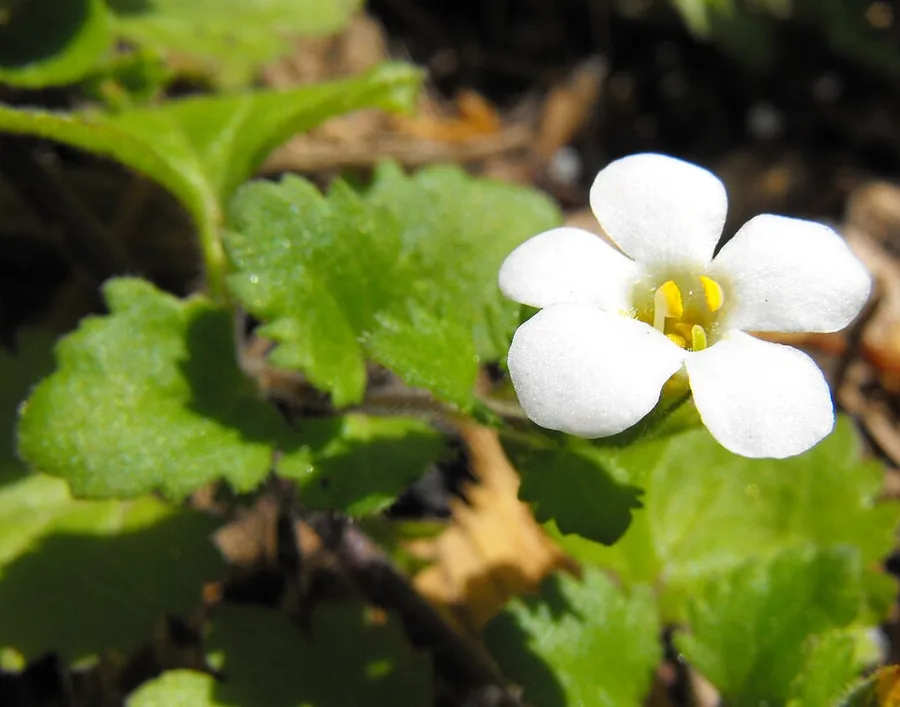
The flowers are what win people over. Small five-petaled blooms, most often white, unfold all along the trailing stems and keep arriving from early summer until frost. White is the usual color, yet you can also seek out lilac, pale blue, and scarlet red named cultivars whenever you fancy a change from the standard.
It asks very little of you, with one kind exception it stays firm on, and that is water. Offer bacopa even, steady moisture and a spot with morning sun or light shade, and it grows quickly and blooms without a break. Let it dry out, even for a moment, and it simply responds by dropping its buds and going quiet, then perks back up once you put things right.
Care
The short version: part sun to light shade, with steady, even moisture that never dries out, planted in rich, well-drained soil and fed a balanced liquid feed through the growing season.
Light
Bacopa is happiest in partial sun, content with morning light softened by a little afternoon shade. It will accept full sun where summers stay gentle, but in real heat that just means keeping a closer eye on the soil, since strong sun draws moisture from a container quickly.
Water
This is the one thing bacopa truly counts on from you. Keep the soil uniformly moist all the time and never let it dry right out, or the buds will drop and blooming will pause. During hot spells, and especially in a hanging basket, that usually means watering every day, which soon becomes a comfortable little routine.
Soil
Settle it into moist but well-drained ground, whether loam, clay, or sand, and stir some organic matter into a container mix to help it hold moisture. Bacopa is wonderfully relaxed about pH, content with anything from 6.0 to 8.0.
Humidity
Ordinary outdoor humidity suits it just fine, so there's no figure to fret about here. Steady soil moisture matters far more than the air, and a bit of airflow around the stems keeps powdery mildew from getting comfortable.
Feeding
Offer a balanced, all-purpose liquid fertilizer about once a month through the growing season to keep the flowers coming. A light hand is best, though, because too much feed grows leaves instead of blooms.
Pruning
If the stems grow leggy or wander out of shape, simply shear them back during the growing season, and don't worry, the plant takes it well. A trim invites fresh growth and a second wave of flowers, so feel free to cut it hard when it starts looking tired.
Size & spacing
Bacopa keeps a low profile, only 3 to 6 inches (8 to 15 cm) tall, yet it trails generously to a spread of 12 to 24 inches (30 to 61 cm). Give each plant a little room to cascade so it can drape a basket edge or weave between its neighbors with ease.
When to plant
Bacopa loves warmth and has no patience for frost, so timing is kind and simple to follow. Sow seed indoors in late winter, move the plants outside once the chill has lifted in spring, and you'll be rewarded with flowers from early summer clear through fall until the first frost gently closes the season.
Northern hemisphere
Southern hemisphere
Typical months for a temperate climate: start earlier in warm zones, later where spring frosts linger.
- Sow: Start seed indoors in late winter to early spring, about 8 to 10 weeks before the last frost.
- Plant: Set out after danger of frost has passed in spring, once soil and air have warmed.
- Harvest: Blooms summer through fall (roughly June to October).
Hardiness
USDA hardiness zones: 9–11
Temperature: down to -7°C
Troubleshooting
Nearly every hiccup with bacopa comes back to water, whether a touch too little or a bit too much, and that's reassuring because it means most fixes are within easy reach. Once you learn to read the early hints on the flowers and stems, you can step in before a small stumble grows into anything serious. Find what matches below, then act while it still does the most good.
Soft yellow stems and a plant that slumps
When water lingers with nowhere to escape, root and stem rot can set in, and a waterlogged bacopa struggles fast. Gently scrape down and you may find roots that feel brown and soft while the soil stays soggy. Open up the drainage and pull back on watering, and if you spot it early you can move the plant into fresh mix and save it. If it has already turned to mush, let that one go without guilt and start fresh.
Fix:
- Improve drainage and stop overwatering
- Remove and discard severely rotted plants
- Repot into fresh, well-drained mix if caught early
When the flowers pause and the buds let go
Take heart, because this is almost always thirst rather than anything you did with feeding. If the roots go dry even one time, bacopa will quietly drop its buds and stop flowering until the moisture returns, and the good news is that it usually comes right back. Settle back into even watering, give it a daily drink through the heat, and tuck in some mulch or a moisture-holding mix so the soil stays comfortable from here on.
Fix:
- Resume consistent, even watering to keep the soil uniformly moist
- Water daily during hot summer weather
- Mulch or use a moisture-retentive container mix to buffer drying
A soft white dusting across the leaves
That pale powder is powdery mildew, a fungus that drifts in when plants sit too close and the air around them goes quiet. It looks worse than it is. Loosen the planting so air can move through, pinch off the leaves that show the most, and keep water off the foliage late in the day so nothing stays damp overnight.
Fix:
- Improve air circulation around the plant
- Remove affected foliage
- Avoid overhead watering late in the day
Curled tips and a sticky shine on the leaves
Crinkled new growth, fine speckling, and a tacky film usually mean sap-feeding pests have moved in, such as aphids, thrips, or whiteflies. Flip a few leaves over and peek at the growing tips for tiny insects or sticky honeydew. A firm spray of water knocks most of them off, and you can follow with insecticidal soap if any cling on, snipping away whatever growth is badly hit. Plants bounce back from this readily.
Fix:
- Rinse plants with a strong spray of water
- Treat with insecticidal soap if infestations persist
- Monitor regularly and remove heavily infested growth
Toxicity
Lovely news if you share your home with pets or little ones: garden bacopa is not toxic. The ASPCA doesn't count it among the plants that harm cats or dogs, and there's no known danger to other animals or to people. An accidental nibble is truly nothing to worry over.
Safe for
People · Cats · Dogs · Horses · Rabbits · Livestock · Birds
Cats None
Garden bacopa doesn't appear on the ASPCA toxic list, so if a curious cat nibbles a trailing stem, there's nothing here that will hurt them.
Dogs None
Your dog can sniff around or chew a leaf with no cause for concern, because this plant holds no toxins known to affect them.
Horses Safe
There's nothing in this plant that troubles a horse. It's a low trailing ornamental, not something a grazing horse would typically reach in a pasture anyway.
Rabbits Safe
Rabbits can browse bacopa safely, though they might decide the soft foliage makes a tasty snack and leave you a few fewer flowers.
Livestock Safe
Cattle, goats, and sheep run no poisoning risk from this plant, which tends to live in baskets and beds far from where they graze in any case.
Birds Safe
Bacopa is no threat to birds. Backyard hens and wild visitors can peck around it as much as they like.
People Safe
This plant is gentle on people too. It isn't grown for the table, but a child who tastes a leaf will be perfectly fine.
Varieties
Most of the bacopa you'll find for sale is a named cultivar rather than the plain species, and they differ in flower size, color, and habit. Here are the ones worth getting to know by name.
Snowflake
The cultivar you'll meet most often, a trailer dressed in small toothed green leaves with airy sprays of white flowers.
Snowstorm
A tidier, more compact grower that opens flowers clearly bigger than those of the wild species.
Calypso Jumbo White
A trailing kind that climbs to 4 to 6 inches tall and stretches out to a 14 to 16 inch spread, set with large white blooms.
Blue Showers
Charms with flowers in lilac to pale blue instead of the everyday white.
African Sunset
Holds itself more upright than its relatives and brings small scarlet red flowers.
How to propagate
Bacopa is a friendly plant to multiply, whether you take cuttings from one you already grow or start the species from seed, and both routes are well within a beginner's reach.
Stem cuttingsEasy
Take cuttings from spring to early summer. · Roots typically form in a few weeks under warm, moist conditions.
Cuttings are how the named cultivars stay true to type, and they're wonderfully forgiving to try. Snip them from spring into early summer, keep them warm and moist, and within a few weeks they root into little plants that match the parent exactly.
SeedModerate
Sow in spring, indoors in late winter for transplants. · Several weeks to germinate and grow on before transplanting.
Seed is a fine path for the plain species if you don't mind waiting, since it takes several weeks to sprout and grow on before transplanting. Start it indoors in late winter for spring transplants, and keep in mind that the named cultivars come from cuttings rather than seed.
Myths
Garden bacopa is the same medicinal herb sold as a brain or memory supplement.
These are two different plants. The supplement comes from Bacopa monnieri, known as water hyssop, an aquatic species of another sort entirely. What spills from your basket is Sutera cordata, a purely ornamental annual that carries no medicinal use.
Bacopa is drought tolerant and fine to let dry out between waterings.
Not so, sadly. Allow bacopa to dry and you'll watch the buds fall and the flowers fade. What it truly craves is steady, even moisture, which through summer's heat can mean reaching for the watering can every single day.