Shrub · Hydrangeaceae
Slender Deutzia
Deutzia gracilis
A forgiving little shrub that pours out white spring flowers and forgives almost any beginner's slip.
Full sun
Every 5–10 days
USDA 5–8
2–5 ft · 0.6–1.5 m
Overview
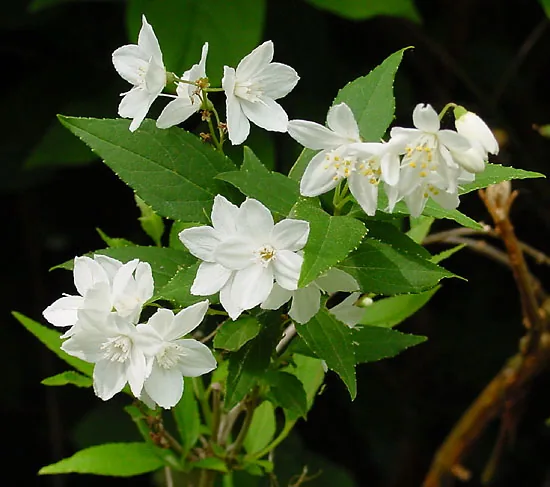
If a flowering shrub has ever felt out of reach, slender deutzia is a kind place to begin. This low, easygoing native of Japan covers its arching stems with soft white spring flowers, and it belongs to the same family as hydrangeas. It stays small and tidy at only 2 to 5 feet (61 to 152 cm) tall and roughly the same across, so it slips happily into the front of a bed or beside a walkway without crowding anything.
The best part is how patient it is with mistakes. It handles cold all the way down to -20°F (-29°C), settles into clay, loam, or sand, and copes with soil that runs acidic or alkaline. Hand it some sun and ground that drains, and it mostly takes care of itself, which is exactly why it carries such an easy name among first-time growers.
When it flowers it really gives, holding that white display for about 10 to 14 days in mid to late spring before easing into a calm green mound for the rest of the year. A few named types throw in burgundy fall color or bright lime leaves as a bonus. Think of it as a plant that shines for a short stretch and then asks nothing more of you.
Care
The short version: tuck it into full sun to part shade in any soil that drains, give it water when the weather turns dry, and save all your pruning for the days right after it blooms so you never lose next spring's flowers.
Light
Deutzia gives its fullest flush of flowers in full sun, yet it stays content in partial sun or partial shade too, so do not fret about a less than perfect spot. In places where summers run hot, a touch of afternoon shade keeps the leaves from paling, so lean toward a little shelter in the warmest gardens.
Water
Aim to keep the soil steadily moist but well drained, watering often while a young shrub is finding its feet and through any dry stretch. Let the surface dry a little between drinks rather than leaving it soggy, and you will keep the roots happy. Once it is settled, it manages on a drink every 5 to 10 days when the weather is dry.
Soil
You really cannot go far wrong with the soil here, since deutzia accepts clay, loam, or sand without complaint. What it asks for above all is moist, well-drained ground, and it happily adjusts across a broad pH of 6.0 to 8.0, whether your soil leans acidic or alkaline.
Temperature
This is a tough little shrub, comfortable through USDA zones 5 to 8 and unbothered by cold down to about -20°F (-29°C). It also weathers summer heat near 100°F (38°C), though the foliage stays prettier with a bit of afternoon shade where summers turn fierce.
Humidity
Ordinary outdoor air suits it just fine, so there is no humidity number to fuss over. What matters far more is steady air movement, since leaves left crowded and damp are the ones that pick up the occasional spot.
Feeding
Deutzia is a light eater and does not need much from you. A balanced slow-release shrub fertilizer or a layer of compost in early spring covers it for the whole year. Go easy on nitrogen, which pushes the soft new growth that aphids find so tempting.
Pruning
Timing is the one thing to get right, because deutzia flowers on old wood. Prune just after the blooms fade, thinning up to one-third of the oldest stems to keep the shape open and graceful. Steer clear of cutting in late summer or fall, or you would trade away next spring's flowers without meaning to.
Repotting
Deutzia seldom needs repotting and is truly happiest planted in the ground. Should you keep one in a pot, only move it up when roots begin to circle inside or slip out of the drainage holes, or when water rushes straight through without soaking in.
Size & spacing
Picture a gentle mound of 2 to 5 feet (61 to 152 cm) tall and about as wide. Leave each plant roughly that much elbow room so the arching stems can stretch out and fresh air can drift through the branches.
When to plant
Plant deutzia in spring or fall, while the weather stays mild and the roots can settle before summer heat or a hard freeze arrives. The flowers come in a brief stretch of mid to late spring, roughly March to May, so pick a spot where you can enjoy them up close. The one bit of timing to remember is pruning, and that simply waits until the blooms have faded.
Northern hemisphere
Southern hemisphere
Typical months for a temperate climate: start earlier in warm zones, later where spring frosts linger.
- Plant: Spring or fall
- Harvest: Mid-to-late spring (March to May), blooming for about 10 to 14 days
Hardiness
USDA hardiness zones: 5–8
Temperature: down to -29°C
Troubleshooting
There is little to worry about with deutzia, and nearly everything that turns up is a cosmetic blemish rather than a real threat. A few small pests may visit the new spring growth, and strong sun can pale the leaves in a heat wave. Find your symptom below and you will quickly see whether it calls for a small fix or simply for patience.
Soft little bugs bunching along tacky new shoots
Those little clustered bugs gathering on the freshest tips are aphids, drawn to the new spring growth where the sap tastes sweetest. They leave a sticky film behind and can crinkle the young leaves, but the cure is easy. Knock them off with a firm jet of water, then let lady beetles and lacewings finish the cleanup for you.
Fix:
- Spray colonies off with a strong jet of water
- Apply insecticidal soap or horticultural oil to affected growth if populations are heavy
- Encourage natural predators such as lady beetles and lacewings
Squiggly light trails wandering across the foliage
Those wandering pale trails come from leaf miner grubs tucked between the top and bottom skin of the leaf, where no spray can follow them. Simply pinch off the most marked leaves and bin them to thin the numbers. On a healthy deutzia this is barely skin deep, so there is rarely any need to do more.
Fix:
- Remove and destroy mined leaves to reduce the population
- Tolerate light damage, which is mostly cosmetic on an otherwise vigorous shrub
Leaves fading toward white in strong summer sun
When the most exposed leaves wash out to pale or almost white during a hot, bright spell, you are looking at foliage bleaching as the heat wears down the chlorophyll. It always looks worse than it is, and the shrub comes through fine. In hot-summer areas, offer it a place with afternoon shade and keep the soil evenly moist to soften the stress.
Fix:
- Provide afternoon shade in hot-summer climates
- Keep soil evenly moist to reduce heat stress
Little dark blotches dotting the foliage here and there
Small dark spots that appear in damp weather usually mean leaf spot disease, a fungal nuisance that rarely amounts to much on this shrub. Pick off the marked leaves and thin any crowded stems so air can flow through the canopy. Water down at the base instead of over the top, and the trouble tends to clear up by itself.
Fix:
- Remove and dispose of affected leaves
- Improve air circulation by thinning crowded stems
- Avoid overhead watering
Toxicity
Here is a reassuring note for anyone with pets or little ones underfoot: slender deutzia is non-toxic through and through. The ASPCA gives it a clean bill for dogs, cats, and horses, and NC State Extension finds no toxicity either. You can set it wherever a curious nose or small hand might wander.
Safe for
People · Cats · Dogs · Horses · Rabbits · Livestock · Birds
Cats None
The ASPCA lists slender deutzia as non-toxic, so a curious cat that tastes a leaf has nothing to fear.
Dogs None
It is just as safe for dogs. A mouthful of leaves will not poison them, though wolfing down a lot of any plant can still leave a dog with a mild, passing tummy upset.
Horses None
No toxicity is reported for horses, so a deutzia growing near a paddock gives you nothing to worry about.
Rabbits Safe
Rabbits can browse the shrub without any harm, since none of its parts carry a toxin.
Livestock Safe
Grazing cattle, goats, and sheep face no danger at all from this gentle plant.
Birds Safe
The shrub poses no poisoning risk to birds that perch in it or peck at its leaves and spent flowers.
People Safe
Slender deutzia is not toxic to people, so it is a sound pick for gardens where children play. It is grown for its flowers rather than the table, so there is no reason to put any part of it on a plate.
No special handling precautions are needed; the plant is non-toxic.
Varieties
A handful of named selections swap the plain species for livelier leaves or a neater shape. These are the ones you are most likely to find at a nursery.
Nikko
A snug dwarf mound only 1 to 2 feet tall that doubles nicely as a groundcover, with green leaves that mellow to burgundy come fall.
Chardonnay Pearls
A compact, cheerful choice loved for its lime-yellow foliage and pearl-like buds that open into soft white flowers.
Pink Minor
A compact form whose pink buds unfold into white flowers gently brushed with a blush of pink.
How to propagate
Growing a few more deutzia is an encouraging little project, whether you root a summer cutting or coax a low stem to take hold right in the soil.
Stem cuttingsEasy
Summer · Several weeks to root; transplantable the following season
The simplest way to raise more deutzia is from softwood cuttings taken in summer, which root with very little fuss. Allow them several weeks to grow roots, then leave them undisturbed until the following season, when they are ready to move to a permanent home.
LayeringEasy
Spring to summer · One growing season or more
Layering makes the most of the shrub's low, arching stems. Anytime from spring through summer, pin a stem down where it meets the soil and it will quietly root at that point. Expect a full growing season or more before the young plant has rooted firmly enough to cut free and lift.
Myths
Deutzia will poison your dog or cat, so pet owners should never risk planting it.
Take heart, because the ASPCA lists slender deutzia as non-toxic to dogs, cats, and horses, and NC State Extension says the same. You can plant it freely around pets and children without any fear of a poisonous nibble.
There's no wrong moment to trim deutzia; snip it back any time it looks untidy.
Deutzia carries its flowers on old wood, so a trim in late summer, fall, or just before bloom quietly removes next spring's buds. Prune only right after the flowers fade, and the lovely show keeps returning year after year.