Ornamental · Lythraceae
Cuphea
Cuphea ignea
Give it full sun and a few easy pinches, and cuphea will reward you with blooms from spring to frost.
Full sun
Every 3–7 days
USDA 9–12
2–3 ft · 0.5–0.9 m
Overview
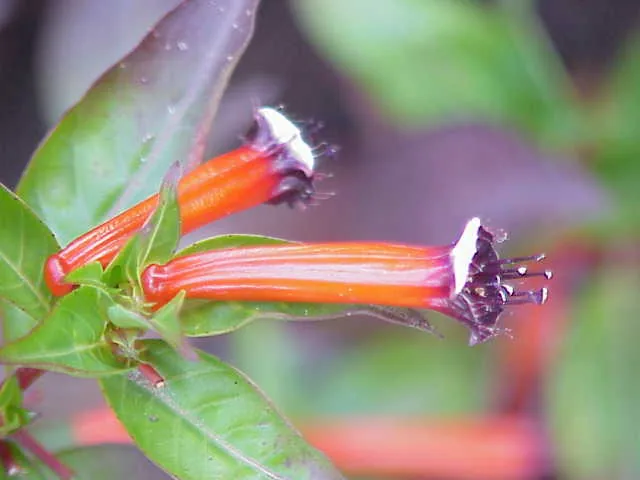
Cuphea is one of those heat-loving flowers that quietly earns its place from late spring until frost, and it is wonderfully forgiving while it does. The cigar flower form, Cuphea ignea, takes its name from inch-long tubular blooms in reddish-orange tipped with white and a dark ring, looking just like a tiny lit cigar. It sits in the Lythraceae family and grows as a tender perennial, hardy in zones 9 to 12 and happily grown as a warm-season annual everywhere colder.
What makes it such a comfort for a first-time grower is how long and freely it flowers. The blooms come almost without a pause through the warm months, and because the plant is self-cleaning it clears away its own faded flowers, so there is no deadheading to keep on top of. Hummingbirds visit the tubular flowers all summer, which is reason enough to set a plant near a patio or a path where you can watch.
Cuphea stays kindly compact, reaching about 1.5 to 3 feet (46 to 91 cm) tall and roughly as wide, so it slips easily into a border, a mixed pot, or the front of a bed. It asks for little more than sun, steady moisture, and the occasional pinch to stay full. If a pinch slips your mind and it grows leggy and open, that is easily put right, since pinching brings it back.
Care
The short version: give it full sun, soil that stays evenly moist yet drains well, and a balanced feed through the season, with a few gentle pinches to keep it bushy and full.
Light
Cuphea blooms its best in full sun, and that same bright spot keeps it dense and tidy. It will accept partial sun or light shade if that is what you have, though a shadier home means fewer flowers and a looser, floppier plant.
Water
Keep the soil evenly moist in ground that drains well, watering roughly every 3 to 7 days as the heat and your bed decide. Once established it grows somewhat drought tolerant, so the bigger care is simply to avoid waterlogging, which can rot the roots.
Soil
Settle it into organically rich, well-drained loam or sand that holds a little moisture without turning soggy. A pH from 5.5 to 7.5 suits it well, so most garden beds will welcome it with a bit of compost mixed in.
Temperature
This is a warm-season plant, content in heat up to around 95°F (35°C) and unhappy once the cold nears freezing. It can just hold on down to about 36°F (2°C), but frost ends the display, so treat it as an annual where winters turn sharp.
Humidity
Ordinary outdoor humidity is plenty, with no number to chase. Cuphea is easygoing here, asking only for decent airflow around it.
Feeding
Feed it every two weeks through the growing season with a balanced water-soluble fertilizer, or mix in a slow-release granular at planting and let it do the work. Steady, gentle feeding keeps that long run of bloom coming.
Pruning
Pinch the stem tips back several times while it is growing to keep legginess away and coax a fuller, bushier plant. There is no deadheading to worry over, since cuphea is self-cleaning and lets its spent flowers fall on their own.
Size & spacing
Expect a plant of about 1.5 to 3 feet (46 to 91 cm) tall, spreading to a similar width. Give each one room to reach that mature spread so air moves freely and it fills out nicely and evenly.
When to plant
Cuphea loves warmth and cannot take a frost, but the timing is easy to get right. Start seed indoors well before the last spring frost, set the plants out once the cold has gone and the soil has warmed, and you will enjoy blooms from late spring through fall until the first freeze.
Northern hemisphere
Southern hemisphere
Typical months for a temperate climate: start earlier in warm zones, later where spring frosts linger.
- Sow: 10 to 12 weeks before the last spring frost
- Plant: After all danger of frost has passed and soil has warmed in spring
- Harvest: Blooms almost nonstop from late spring through fall until first frost
Hardiness
USDA hardiness zones: 9–12
Temperature: down to -7°C
Troubleshooting
Cuphea is a kind, easy plant, and the few issues you might meet are simple to spot and simpler to fix. From open growth to a winter dieback, each one is recoverable. Find what matches below and act early, and you will be fine.
Sticky leaves, curled new shoots, or little bugs you can spot
If you find pests, take heart, because mealybugs, thrips, and whiteflies are the common visitors and they mostly trouble plants kept indoors or under glass. Turn the leaves over and peek at the growing tips for cottony fluff, tiny flyers, or a stippled look. A gentle rinse with water clears a small outbreak, and if any stragglers hang on, insecticidal soap or horticultural oil will see them off.
Fix:
- Rinse off light infestations with water
- Treat with insecticidal soap or horticultural oil as needed
Blackened stems and a winter collapse
Because cuphea is a tender perennial, a frost or a hard freeze will darken the stems and lay the plant low, and that is normal rather than a failure on your part. Where you garden in zones 8 to 9, tuck a good mulch over the crown and it tends to come back from the base come spring. In colder spots, simply enjoy it as a warm-season annual or root a few cuttings to keep safe indoors for next year.
Fix:
- Mulch well so the plant can resprout from the base in spring in zones 8 to 9
- Grow as a warm-season annual or overwinter cuttings indoors in colder regions
When the plant stretches tall and goes bare at the bottom
Don't worry if your cuphea starts to look leggy, with blooms gathered at the very tips and stripped wood underneath. It just means the plant has not been pinched, and too little light nudges it the same way. Pinch the semi-woody stems back a few times across the season and let it sit in full sun, and it will happily fill back in thick and bushy.
Fix:
- Pinch back the tips of the semi-woody stems a few times during the growing season
- Site in full sun for denser, more compact growth
Toxicity
Here is welcome news for homes with pets and little ones: cuphea is non-toxic all the way through. No part of the plant is known to harm cats, dogs, livestock, or people, so you can plant it beside a play area or a pet run and rest easy.
Safe for
People · Cats · Dogs · Horses · Rabbits · Livestock · Birds
Cats None
You can relax around cats, since cuphea holds no known toxins and a curious nibble of leaf or flower will not hurt them.
Dogs None
A dog can sniff, brush past, or chew on this plant in peace, because it is not counted among the poisonous ones.
Horses Safe
Horses that graze nearby are in good hands, as no part of the plant is known to do them harm.
Rabbits Safe
Rabbits can taste the foliage with nothing to fear, since cuphea carries no compounds that would upset them.
Livestock Safe
Cattle, goats, and sheep can share a pasture or border with this plant and stay perfectly well.
Birds Safe
The tubular flowers welcome hummingbirds, and garden birds face no danger from the plant at all.
People Safe
Cuphea counts as non-toxic, so there is nothing to fret about if little hands explore the leaves or blooms.
Varieties
Cuphea is a generous group, running from low purple-flowered shrubs to bright firecracker types. Here are the ones you are most likely to come across and grow.
Cuphea hyssopifolia (Mexican heather, false heather)
You will know this tidy sub-shrub of 1 to 2 feet by its dense branching and the cloud of tiny lavender-purple trumpets it carries, with gentle pink and white forms out there too.
Cuphea ignea (cigar flower)
Its inch-long tubular flowers shine reddish-orange, finished with a white tip and a dark ring just like a lit cigar, and hummingbirds adore them.
Vermillionaire (Cuphea hybrid 'Cupver')
If you want an easy winner, this lively firecracker-type hybrid pours out orange tubular flowers and takes real heat in stride.
How to propagate
Cuphea is happy to multiply for you, whether you sow seed in late winter or root a few tip cuttings to carry a favorite safely through the cold.
Stem cuttingsEasy
Take tip cuttings in fall and root indoors over winter for overwintering · A few weeks to root
To keep a favorite plant going through winter, snip tip cuttings in fall and root them indoors, and they settle in within a few weeks. Go easy on the watering through fall and winter while they take, since cool, damp conditions can invite rot, and a lighter hand keeps them healthy.
SeedEasy
Start indoors 10 to 12 weeks before the last spring frost · Germinate and grow on for transplanting after frost
Sowing is straightforward: start seed indoors 10 to 12 weeks before your last spring frost, then grow the seedlings on until the cold lifts and you can move them outside. If that head start feels like a lot, store-bought transplants take just as kindly.
Myths
Cuphea must be deadheaded to keep it blooming.
You can set the shears aside, because these plants are self-cleaning and let their spent flowers fall on their own. They keep going from spring right up to the first frost, asking nothing of you in the way of deadheading.
Cigar flower can only survive as a houseplant in cold climates.
There is no need to crowd a windowsill on its account. This tender perennial is hardy in the ground through zones 9 to 12, and where winters are colder you can simply grow it as a warm-season annual or save a few cuttings.