Ornamental · Papaveraceae
Bleeding Heart
Lamprocapnos spectabilis
Give it shade, steady moisture, and rich soil, and bleeding heart will reward you with its dangling pink hearts each spring.
Partial shade
Every 3–7 days
USDA 3–9
2–3 ft · 0.6–0.9 m
Overview
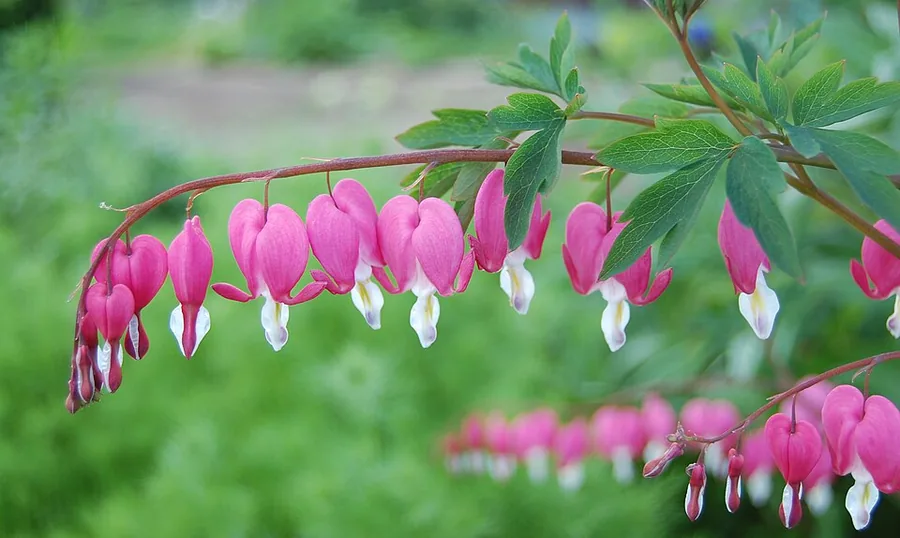
Bleeding heart is one of the kindest plants you can add to a shady corner, and it earns its name from the row of plump heart-shaped flowers that hang along each gently arching stem, each one tipped with a little white drop. It is part of the poppy family and comes from the cool woodlands of eastern Asia, where it settles into the dappled light beneath taller trees. Bring it home and it lends that same soft, woodland calm to the shadier parts of your garden.
You are looking at a hardy perennial that returns on its own year after year, shrugging off winters all the way down to USDA zone 3. The flowers open in spring, often before the leaves have finished unfurling, and the show carries on through April and May. Then around midsummer it does one thing that surprises a lot of first-time gardeners, so it helps to know it is coming.
As the heat settles in, the leaves yellow and fade and the plant eases into summer dormancy until the next spring arrives. The roots stay alive and well underground the entire time, so there is nothing to fret over. Plan for that quiet gap by tucking in some later-rising neighbors, and you will have a plant that asks very little of you once it feels at home.
Care
The short version: settle it into partial to full shade in rich, humus-filled soil, keep that soil evenly moist right through spring and summer, and just make sure it never sits in soggy ground over winter.
Light
Bleeding heart is happiest in partial to full shade, the same cool, dappled light it would find beneath trees in the wild. A little gentle morning sun does no harm, but hot afternoon sun scorches the leaves and nudges the plant into dormancy ahead of schedule.
Water
Keep the soil evenly moist through spring and summer, since this plant simply cannot handle summer drought. That steady moisture also holds the leaves a good while longer before they fade. Just take care not to let it sit in soggy, waterlogged ground, especially over winter, or the roots can rot.
Soil
Plant it in moist, well-drained soil rich in humus, the loose, leafy sort of ground you would find on a woodland floor. It is not at all picky about acidity and grows happily anywhere from pH 6.0 to 8.0, so dig in plenty of compost and you are well on your way.
Humidity
Ordinary garden air suits it just fine, so there is no humidity level you need to chase. What truly matters to this plant is moisture in the soil, not moisture in the air around it.
Feeding
It is a light feeder and does beautifully with compost or organic matter worked in each spring, or a balanced fertilizer through the growing season. Rich, humus-filled soil often takes care of its needs all on its own, with no extra help from you.
Pruning
There is no real shaping to worry about here. Just snip off the spent flower stems to keep things tidy, then cut back the yellowing leaves as they die down in midsummer. Leave the roots right where they are and growth comes back next spring.
Size & spacing
A settled clump grows to about 2 to 3 feet (61 to 91 cm) tall and spreads 18 to 30 inches (46 to 76 cm) across. Give each plant that much room, and keep in mind the gap it will leave behind once it slips into dormancy in summer.
When to plant
Bleeding heart keeps a gentle spring rhythm, and it is easy to follow. Set out dormant roots or divisions in spring or fall, enjoy the flowers as they arrive in April and May, and expect the leaves to soften and fade by midsummer as the plant settles in for its rest.
Northern hemisphere
Southern hemisphere
Typical months for a temperate climate: start earlier in warm zones, later where spring frosts linger.
- Sow: Seed is slow and difficult; division is preferred over indoor sowing.
- Plant: Plant dormant roots or divisions in spring or fall in a shaded, woodland-type site.
- Harvest: Blooms in spring, typically April to May, often before leaves fully emerge.
Hardiness
USDA hardiness zones: 3–9
Temperature: down to -40°C
Troubleshooting
Bleeding heart is a forgiving plant with only a couple of quirks, and most of them are not really problems to begin with. The big one, that midsummer dieback, is perfectly normal and nothing you need to fix. Look through the notes below and match what you see before you ever reach for the trowel.
Plant rotting, slumping, or just not coming back
If the roots feel soft and mushy, the trouble is nearly always wet feet, the result of soggy ground that drains too slowly, and a wet winter is the hardest test of all. The good news is the fix is easy: blend in plenty of organic matter to loosen the soil, and move the plant to a spot where water never pools around it. Remember that bleeding heart loves steady moisture while it grows but needs that water to drain away once the season winds down.
Fix:
- Improve drainage by amending with organic matter
- Relocate to a well-drained site
Leaves turning yellow and fading away in midsummer
Take a breath, because this is summer dormancy and not the loss of your plant. Once the blooms are spent and the days warm up, dry soil tells the roots to rest below ground, and it happens on the same gentle schedule every year. You can keep the soil moist to stretch the leaves out a while longer, slip a hosta or fern alongside to soften the bare spot, and simply trust the roots to wake everything back up come spring.
Fix:
- Keep soil moist to prolong foliage
- Interplant with hostas or ferns to fill the gap
- Leave roots undisturbed; growth resumes the following spring
Twisted, tacky new shoots with little bugs along the stems
Those tiny soft bugs gathered on the fresh spring shoots are only aphids, and the shiny film they leave is the honeydew they give off, so there is no need to worry. A firm spray of water knocks most of them loose, and a little insecticidal soap takes care of any that keep returning. Easing off on the nitrogen helps too, since it keeps the soft new growth they love from coming on too fast.
Fix:
- Spray off with a strong stream of water
- Apply insecticidal soap if needed
Toxicity
This is a plant to keep gently out of reach of curious mouths. Every part holds isoquinoline alkaloids, with the most in the roots and leaves, and it is listed as toxic to cats, dogs, and horses as well as a known poison for grazing livestock. People should not eat it either, and even handling the leaves can bother sensitive skin, so wear gloves and keep children and animals from chewing on it.
Toxic to
Cats · Dogs · Horses · Rabbits · Livestock · Birds · People
Cats Mild
A curious cat that tastes a leaf will likely drool and bring its meal back up, with some loose stool to follow. A larger mouthful can carry it further into trembling and even convulsions, so it helps to keep the plant out of reach.
Dogs Mild
After a dog chews the foliage you may see drooling, vomiting, and runny stool. Eat enough and the alkaloids can bring on shaking and seizures, so a big helping is worth a quick call to your vet.
Horses Moderate
Horses feel this one more than the smaller pets do. A graze brings drooling, an unsettled stomach, and diarrhea, while a heavier mouthful can lead to trembling and convulsions.
Rabbits Toxic
Rabbits usually pass bleeding heart by, but the leaves and roots hold the very same alkaloids, so it is safest to treat it as off-limits and tuck it well away from them.
Livestock Toxic
This plant is a known poison for grazing animals like cattle, sheep, and goats. Any that work through a fair amount can begin staggering and convulsing, so keep it far from the pasture.
Birds Toxic
The same alkaloids that trouble mammals make the leaves and roots a poor choice for birds. Keep poultry and pet birds from pecking at any part of it, just to be safe.
People Caution
No part of bleeding heart belongs on a plate, and eating much of it can make a person ill from the isoquinoline alkaloids. Even handling the leaves may bother sensitive skin, so slip on gloves and gently steer little ones away from putting it in their mouths.
Contact with the foliage can cause skin irritation in sensitive people; wear gloves when handling.
Helpline numbers

United States
ASPCA Animal Poison Control: (888) 426-4435 (fee applies)
Poison Control: (800) 222-1222



Canada
Poison Centres: 1-844-764-7669
Varieties
The plain species is the one most gardeners reach for, and it is a lovely choice, but a handful of named selections offer a different color or a little more heat tolerance. These are the ones worth getting to know.
Alba
A clean white form that shrugs off summer heat a touch better than the plain species does.
Gold Heart
Loved for its bright golden-yellow leaves, which make the rose-pink blooms stand out beautifully.
Valentine
Wears red-and-white flowers on dark red stems for a richer, more dramatic feel in the bed.
How to propagate
Bleeding heart is grown by division rather than from seed, which tends to be slow and a bit fussy. Splitting an established clump hands you ready-made plants that flower far sooner, so it is the easier path for almost everyone.
DivisionModerate
Divide the clump in spring or fall while dormant or just emerging. · Reaches mature size within about 2 to 3 seasons.
Dividing an established clump is the dependable way to grow more, and it goes best in spring or fall while the plant is dormant or just nudging up. The roots are fleshy and snap easily, so lift and split them gently, then settle them back into moist, shaded, humus-rich soil right away. Be patient and give each new division 2 to 3 seasons to root in and grow to full size.
Myths
Bleeding heart is safe around pets since it is just a pretty ornamental flower.
Sadly that is not the case, because every part of the plant carries isoquinoline alkaloids and the ASPCA lists it as toxic to cats, dogs, and horses. A chewed leaf brings drooling, vomiting, and diarrhea, and a large dose can lead to tremors and convulsions. A lovely flower can still be harmful, so keep pets and livestock from grazing it.
The plant has died once its leaves yellow and disappear in summer.
Rest easy, because that fading is the plant's natural rhythm and not its end. The roots carry on living underground all through the quiet dormant stretch, and the whole plant rises again the following spring as cheerful as ever.