Ornamental · Campanulaceae
Bellflower
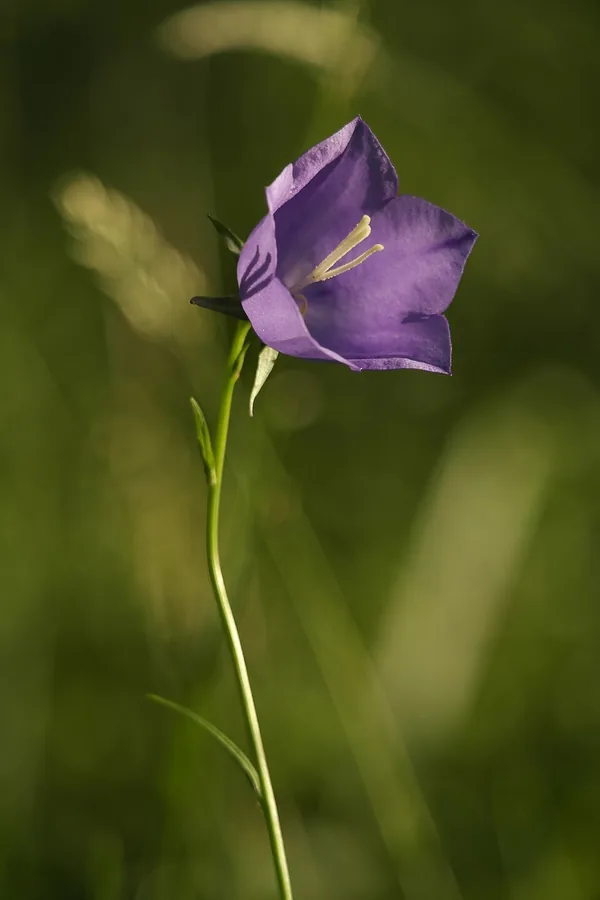
Campanula persicifolia
Offer it cool weather, sun, and well-drained soil, and your bellflower will happily ring out blue bells every summer.
Full sun
Every 5–7 days
USDA 3–7
2–3 ft · 0.5–0.9 m
Overview
Bellflowers are a gentle way to bring blue and white into the early-summer border, and they make a forgiving choice if you are just finding your feet. The peachleaf bellflower lifts up slim stems strung with large, outward-facing bells from June into July. It is part of a wide family of Campanula that runs from tall border stars to low, tidy edging mounds.
Think of this as a cool-climate perennial that wants very little fuss. It is hardy from zone 3 to 7 and feels most at home where summers stay mild, returning faithfully year after year and forming a clump you can divide for free plants. Heat is its one soft spot, so if you garden somewhere warm, a touch of afternoon shade and a steady drink keep it content.
Most bellflowers ask hardly anything of you. Give them sun, good drainage, and a little breathing room, and they will pay you back with weeks of bloom. Snip away the faded flowers and they will often send up a second round later on, which feels like a small reward for getting it right.
Care
The short version: give it full sun, or afternoon shade where summers run hot, in average well-drained soil kept evenly moist, and you are most of the way there. Deadhead the faded blooms, divide the clump every few years, and resist the urge to feed heavily.
Light
Bellflowers are happiest in full sun, though they take partial shade with good grace and will not sulk over it. Where summers turn hot, gift them some afternoon shade, which keeps the plants cooler and stretches out the bloom.
Water
Aim to keep the soil at average, even moisture, watering every 5 to 7 days when things turn dry. What they really want is drainage, so steer them away from ground that stays soggy or dries to a crust, and add a little extra water in hot regions from zone 7 up.
Soil
Almost any well-drained soil will make them feel at home, be it loam, sand, or ground rich in organic matter. They are easygoing about pH, content anywhere from 6.0 to 8.0, so most garden beds you already have will suit them just fine.
Temperature
This is a tough, cold-hardy plant that shrugs off winters down to -29°F (-34°C), so harsh cold need not worry you. It does start to struggle once summer heat pushes past 86°F (30°C), which is why a little shade helps in warm-climate gardens.
Humidity
Ordinary outdoor humidity is all they need, so there is no level to fuss over. Good air movement matters more, since muggy, still air paired with warm nights is what slowly tires these cool-weather plants.
Feeding
Bellflowers want very little at the table. A light, balanced feed roughly four weeks before bloom is plenty, and like most perennials they get along happily on lean soil rather than rich, so there is no need to overdo it.
Pruning
Deadhead the spent blooms to coax a second flush and keep self-seeding in check. Once the stem leaves begin to fade, cut the flowering stalks back to the basal rosette, and a gentle pinch here and there keeps the plant nicely bushy.
Repotting
Over the years bellflowers grow into clumps that gradually lose steam. Divide them every 3 to 4 years to keep the flowering generous, and let crowded growth or fewer blooms be your friendly nudge to lift and split.
Size & spacing
Plants reach 1.5 to 3 feet (46 to 91 cm) tall and spread 12 to 18 inches (30 to 46 cm) across. Give each one that much elbow room so air flows freely and the clump can fill in at its own pace.
When to plant
Bellflowers keep to a cool-season rhythm, and it is an easy one to follow. Start seed indoors in late winter, move your young plants outside in spring once frost has passed, and the bells will open from June into July.
Northern hemisphere
Southern hemisphere
Typical months for a temperate climate: start earlier in warm zones, later where spring frosts linger.
- Sow: Late winter to early spring (8-10 weeks before last frost)
- Plant: Spring after last frost
- Harvest: June to July
Hardiness
USDA hardiness zones: 3–7
Temperature: down to -40°C
Troubleshooting
Bellflowers rarely give you much trouble, and what does come up is simple to read. Most of it traces back to a few chewing pests on the leaves or the strain of summer heat. Match what you are seeing below, step in early, and you will have it sorted in no time.
Plants weakening or giving out where the summers turn hot
Bellflowers truly love cool weather, so when the heat and humidity linger and nights hover around 70°F (21°C), they begin to flag, and that is no fault of yours. Below zone 7 they have a harder time, but a spot with afternoon shade and reliable moisture goes a long way toward keeping them happy. If your summers are fierce, simply tuck them into the coolest corner of the garden and they will thank you for it.
Fix:
- Site plants where they receive afternoon shade in hot regions
- Ensure good drainage and adequate moisture
- Choose cooler microclimates for planting
Torn holes in the foliage and blooms, with a faint shine left behind
If the leaf edges look nibbled and you spot a glistening track nearby, you are almost certainly dealing with slugs and snails, and the good news is they are easy to manage. Step outside after dark with a flashlight and lift them off by hand, which works better than you might expect. Tidy away the damp mulch and old leaves they hide under, and a little iron-phosphate bait will settle things if they wander back.
Fix:
- Hand-pick slugs and snails in the evening
- Remove plant debris and mulch that provides hiding spots
- Use traps or iron-phosphate baits if pressure is high
Crinkled young shoots dotted with little bugs and a sticky coating
When the soft new tips curl and you find tiny green or black specks gathered there with a tacky film, aphids have moved in, and they are nothing to lose sleep over. A firm spray of water knocks most of them loose, and a follow-up with insecticidal soap finishes any that cling on. Ease off the nitrogen feeding too, because that lush, tender growth is just what tempts them in the first place.
Fix:
- Spray plants with a strong jet of water to dislodge aphids
- Apply insecticidal soap if infestation is heavy
- Encourage natural predators such as lady beetles
Toxicity
Here is reassuring news if you share your home with animals: bellflower is not known to be toxic to pets, livestock, or people. It stays off the standard poison lists, and some Campanula are even eaten by foragers. A pet that chews a good deal of foliage might get a brief stomach upset, but nothing worse than that.
Safe for
People · Cats · Dogs · Horses · Rabbits · Livestock · Birds
Cats None
You can relax about cats, because bellflower carries no toxin on record. The worst that might happen if a curious cat samples a leaf is a passing bit of stomach upset, just like any plant it ought to leave alone.
Dogs None
Dogs are welcome around bellflower with no worry on your part, since it never turns up on the usual toxic-plant lists. Should a dog gulp down a mouthful of leaves, you might see a little drool or a soft stool for a day, and that is all.
Horses Safe
There is nothing in bellflower known to trouble horses, so you can rest easy. A horse that grazes on it has no reported ill effect to fear.
Rabbits Safe
Rabbits get along just fine with bellflower, and you will be glad to know the foliage holds no toxin that would bother them.
Livestock Safe
Cattle, goats, and sheep can graze near bellflower in safety, because it carries no compound known to poison stock. That is one less thing to keep watch over.
Birds Safe
Bellflower brings no danger to birds at all. Both backyard poultry and wild visitors can wander through a planting without coming to harm.
People Safe
People are safe around bellflower, and some Campanula are actually eaten by foragers. You need not fret if a child finds a stray leaf or flower out in the garden.
Generally considered safe around pets and people; as with any plant, ingesting large amounts of foliage may cause mild, temporary stomach upset.
Varieties
The Campanula clan is large, yet a handful of bellflowers show up in gardens again and again. These are the friendly few worth getting to know by name.
Campanula persicifolia (Peachleaf bellflower)
Its slim upright stems climb to 1.5 to 3 feet and open large outward-facing bells in shades from white to violet-blue all through June and July.
Campanula carpatica (Carpathian bellflower)
This one forms a low, neat mound of upward-facing blue, purple, or white bells that makes a lovely, easy edging.
Campanula glomerata (Clustered bellflower)
Reaching 6 to 24 inches tall, it bunches its violet to lavender-blue flowers into tight clusters right at the stem tips.
Campanula medium (Canterbury bells)
A biennial kind grown for the charm of its big cup-and-saucer flowers.
How to propagate
Making more bellflowers is genuinely easy, whether you split a clump, sow a few seeds, or root a basal cutting, so feel free to try whichever feels most comfortable.
DivisionEasy
Spring or early fall · One growing season
Division is the kindest, simplest way to grow more bellflowers while keeping tired old clumps fresh. Gently lift and split an established plant in spring or early fall, and each piece will settle in over a single growing season.
SeedModerate
Sow indoors late winter to early spring or allow self-seeding outdoors · Often blooms the second year from seed
Starting bellflower from seed is well within reach, whether you sow indoors in late winter to early spring or let the plants scatter their own. Seedlings usually hold off flowering until their second year, so a bit of deadhead through the season keeps the self-sowing gentle and easy to manage.
Stem cuttingsModerate
Spring to early summer from basal growth · Several weeks to root
If you have a plant you adore, cuttings hand you a faithful copy of it. Take basal shoots in spring or early summer, and over several weeks they root into healthy new plants.
Myths
All bellflowers are dangerously poisonous to cats and dogs.
You can set this worry aside, because Campanula has no reported toxin for pets. It is absent from Cornell's list of plants toxic to dogs, NC State's profile gives no poison warning, and some species are even eaten by foragers. Bellflower is perfectly safe to grow around cats and dogs.
Every bellflower is a harmless garden ornamental.
There is one to watch for, though: creeping bellflower, Campanula rapunculoides, behaves very differently. It spreads hard by both seed and underground rhizomes and grows stubborn to remove once it takes hold. Pass on that species and choose a well-mannered bellflower instead.