Houseplant · Araceae
Velvet Cardboard Anthurium
Anthurium clarinervium
Those velvety, white-veined leaves are worth the space, and with a little warmth, humidity, and a steady hand on the watering can, you can absolutely keep this anthurium happy.
Bright indirect
65–85°F · 18–29°C
USDA 11–12
1–4 ft · 0.3–1.1 m
Overview
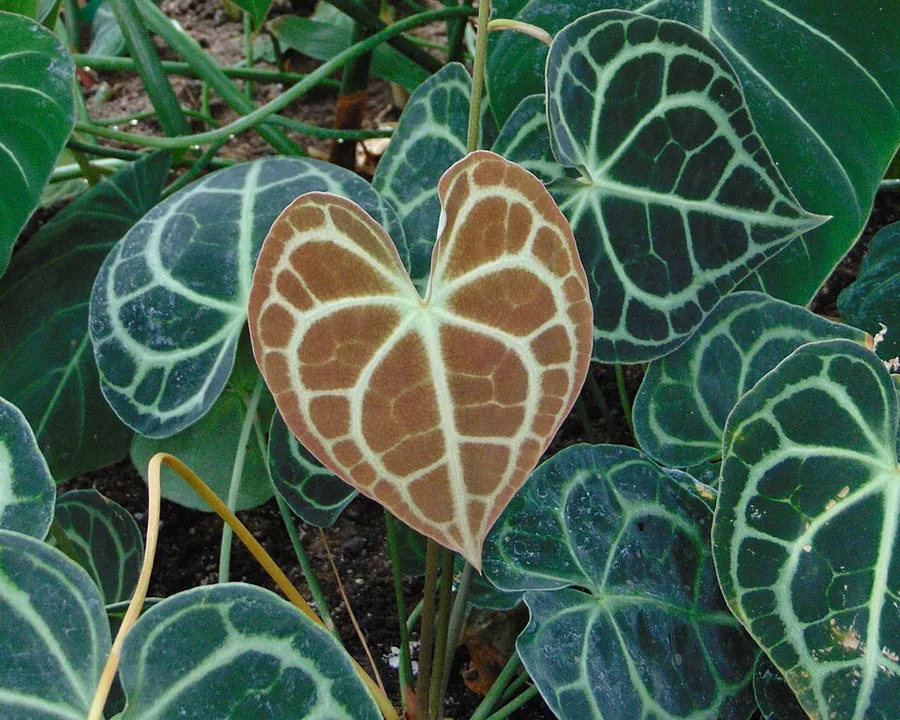
People grow the velvet cardboard anthurium for its leaves rather than its flowers, and once you see them you'll understand why. Each heart-shaped blade is thick and firm like a sheet of cardboard, dressed in a deep, velvety green and traced with pale, nearly white veins that catch the eye. It hails from the limestone hills of Chiapas in southern Mexico, where it lives as an epiphyte, holding on to rock and bark instead of rooting down into deep soil.
It does grow slowly and it does ask for attention, but don't let that put you off. Mature plants stay neat and compact, reaching 1 to 3.5 feet (30 to 107 cm) tall with a tidy spread, so a bright shelf or table suits it far better than a floor corner. In exchange for those lovely leaves it has little patience for dry air, soggy roots, or harsh sun, and the comforting part is that it tells you quickly when something is off, giving you time to put it right.
Get the basics in place and it thanks you with one new leaf after another, each a touch bigger than the last. Picture it as an epiphyte that happens to live in a pot, offer it bright indirect light and humid air, and it settles in as a long-lived companion you'll be glad you tried.
Care
The short version: bright indirect light, a coarse and fast-draining mix, humidity above 50%, and steady warmth will keep it content. Water it well, then let the top half of the pot dry before you water again, and you're doing right by it.
Light
Give it bright, indirect light for most of the day and it will be happy. It manages in medium indirect light too, just at a slower pace, but keep it out of direct sun, which scorches the leaves and leaves pale, bleached patches that won't recover.
Water
Water it well, then let the top half of the pot dry before the next drink. The roots need air just as much as moisture, so the kindest thing you can do is resist keeping the mix wet all the time. Soggy soil is the quickest path to root rot, and that's the one mistake worth guarding against.
Soil
Pot it in a coarse, fast-draining mix made for epiphytes, with peat moss, pine bark, and perlite keeping plenty of air around the roots. It prefers things slightly acidic, around pH 6.0 or a touch below, and a heavy, dense potting soil tends to smother the roots, so steer clear of that.
Temperature
Keep it cozy and steady, somewhere between 65°F and 85°F (18°C to 29°C). It has no patience for frost or cold drafts, so settle it away from chilly windows and doorways once winter sets in.
Humidity
This is the part many growers underestimate, so you're ahead of the game just by knowing it. The plant likes humidity above 50%, and dry indoor air shows up as brown, crispy leaf tips. Stand the pot on a tray of damp gravel, group it with other plants, or run a humidifier nearby.
Feeding
Anthuriums ask for very little feeding, which makes this an easy one. A dilute, balanced houseplant fertilizer through the spring and summer growth is all it needs, and a heavier hand tends to do more harm than good.
Pruning
There's hardly anything to prune here, so you can breathe easy. Simply trim off any leaf that yellows, browns, or gets damaged, cutting it back at the base to keep the plant tidy and the energy flowing to healthy growth.
Repotting
Only repot when the roots have filled the pot, which for a slow grower like this happens rarely. When the time comes, move up just one pot size into fresh, coarse mix so the roots aren't sitting in a big, slow-draining volume of wet soil.
Size & spacing
Indoors it reaches 1 to 3.5 feet (30 to 107 cm) tall with a compact spread of 9 to 12 inches (23 to 30 cm). That tidy footprint makes it a lovely fit for a bright tabletop or shelf rather than the floor.
Troubleshooting
Most hiccups with this anthurium come down to water, air, or light, so there's no need to feel overwhelmed. The plant shows its feelings on its leaves first, which makes it easy to keep an eye on. Find what matches below and make a small change before a little problem grows into a big one.
Drooping while the soil stays wet
When a plant sags in soggy soil, the usual culprit is root rot from too much water or a mix that holds on to it. The good news is that you can often save it: ease back on watering, gently slide the plant out, and trim away any roots that feel brown, soft, or mushy. Settle it into a coarse, fast-draining epiphytic mix and let the medium dry a little between drinks from here on.
Fix:
- Reduce watering frequency
- Repot into a coarse, very well-drained epiphytic/soilless mix
- Remove rotted roots
Faded, washed-out patches where the sun hits
Direct sun scorches the velvety leaves and leaves pale, bleached marks where it landed. Move the plant somewhere bright but out of the direct beam, and shade it from the strong midday sun. Those marked leaves won't mend, but take heart, because the fresh growth comes in clean and healthy once the light suits it.
Fix:
- Move to bright, indirect light
- Shield from direct midday sun
Sticky film, fine webbing, or speckled new leaves
Anthuriums can draw mealybugs, spider mites, scale, whiteflies, aphids, and thrips, which leave sticky honeydew, fine webbing, or stippled, distorted new growth. Don't be discouraged, since these are manageable: set the plant apart from your others, wash the pests off, and treat with insecticidal soap or horticultural oil, repeating as the label says. A gentle habit of checking new plants and leaves keeps any trouble from getting ahead of you.
Fix:
- Isolate the plant
- Wash off pests and treat with insecticidal soap or horticultural oil
- Repeat treatments per product label
Tips and edges turning brown and crisp
Try not to worry, because dry air is nearly always behind this, and your plant simply wants humidity above 50%. You can lift the moisture around it with a tray of damp gravel, a few plants clustered together, or a small humidifier, and it helps to settle it away from heating and cooling vents that pull the air dry.
Fix:
- Raise humidity (humidity tray of moist gravel, grouping plants, or a humid enclosure)
- Avoid placement near heating/cooling vents
Toxicity
It helps to know up front that every part of this plant is poisonous if chewed or swallowed. Like its relatives in the arum family, it carries insoluble calcium oxalate crystals that sting the mouth and throat on contact. Keep it out of reach of pets and children, and wash your hands after handling it, since the sap can irritate skin.
Toxic to
Cats · Dogs · Horses · Rabbits · Livestock · Birds · People
Cats Moderate
If a cat bites into a leaf, it feels a quick burning in the mouth, and you may notice swollen lips, tongue, and throat, lots of drooling, vomiting, and difficulty swallowing.
Dogs Moderate
One chew is enough for the crystals to sting a dog's mouth, which tends to bring drooling, pawing at the face, vomiting, and a tender, swollen tongue and lips.
Horses Moderate
Horses feel the same sore mouth and throat, with swelling and drooling that makes swallowing hard, though they don't vomit.
Rabbits Toxic
Those same calcium oxalate crystals make this plant unsafe for rabbits, so it's best kept well out of reach of any bunny that hops around the house.
Livestock Toxic
Grazing animals like goats and sheep are harmed by the crystals too, which inflame the mouth and gut, so this isn't a plant they should be able to reach.
Birds Toxic
Pet birds are at risk as well, since one curious nibble brings the same harsh sting to a small, sensitive mouth.
People Caution
No part of this plant is for eating, and a chew burns the mouth and throat, while the sap can leave skin red and itchy, so wash your hands after handling it and keep it away from little ones.
Sap may cause contact dermatitis; wash hands after handling and keep out of reach of pets and children
Helpline numbers

United States
ASPCA Animal Poison Control: (888) 426-4435 (fee applies)
Poison Control: (800) 222-1222



Canada
Poison Centres: 1-844-764-7669
How to propagate
If you'd like more of this anthurium, you can grow it from seed or divide an established clump, and while neither route is quick, both are within reach since approved sources offer little species-specific detail.
SeedModerate
Not specified in approved sources · Unknown
Growing this anthurium from seed is doable if you bring a little patience and a gentle touch. Approved sources name seed as a method for the genus but don't give species-specific timing, so feel free to learn the rhythm as you go.
DivisionModerate
Unknown · Unknown
Dividing the clump is the friendly way to make more foliage anthuriums like this one. Lift a mature plant, ease apart a section that has its own roots, and pot it up, treating this as a provisional approach since the approved sources document no detailed protocol.
Myths
Anthuriums need to be kept constantly wet because they are tropical.
Tropical isn't the same as swampy, so you can relax about keeping the soil drenched. These are epiphytes that live on rock and bark in the wild, and their roots want air and a coarse, fast-draining mix. Water it well, then let the medium dry a little before the next round, because staying wet rots the roots faster than almost anything else.