Houseplant · Begoniaceae
Angel Wing Begonia
Begonia coccinea
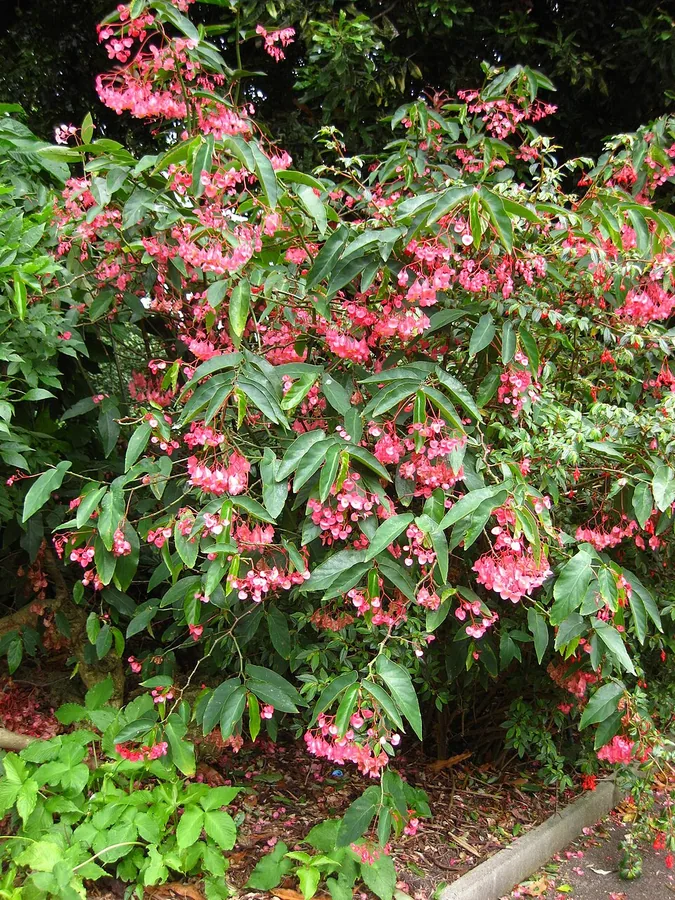
Offer it bright light and a friendly pinch now and then, and the angel wing begonia thanks you with silver-flecked leaves and dangling red flowers.
Bright indirect
50–86°F · 10–30°C
USDA 10–11
1–3 ft · 0.3–0.9 m
Overview
The angel wing begonia takes its name from the slightly lopsided, wing-shaped leaves that run up its tall canes, and many of them are dusted with silver. It is one of the cane-type begonias, a friendly group of upright, bamboo-stemmed plants from the Brazilian forests, and people have loved growing it indoors for well over a century.
Treat it kindly and it gives back in two ways. The handsome foliage keeps it looking good all year, and through the warm months it dangles pendulous clusters of red or pink flowers from where the leaves meet the stem. Since it grows fast and reaches 1 to 3 feet indoors, a bright, empty corner fills out before you know it.
Do not let the word easy fool you into worry, because this plant is forgiving and quick to bounce back from a slip. Bright light, steady moisture that never turns soggy, and a gentle pinch are all it asks to stay full and in bloom. Forget the pinching for a while and it simply grows tall and bare at the base, which is easy to correct whenever you are ready.
Care
The short version: bright indirect light with a touch of morning sun, soil kept evenly moist but never wet, warmth above 50°F (10°C), high humidity, and an occasional pinch to keep it nice and bushy.
Light
Set it where it gets bright indirect light with a gentle bit of direct morning sun, such as an east-facing window. A little partial shade is fine, though harsh afternoon sun can scorch the leaves, and too little light leaves the plant thin and reaching.
Water
Aim to keep the soil evenly moist, letting just the top dry between drinks, and water only enough to keep the leaves crisp. Go easy through winter, and try not to let the pot stand in water, since soggy soil is the one thing that quickly rots the roots and stems.
Soil
A loose, humus-rich potting mix that drains well will make it happy. Any pH from 5.5 to 7.5 suits it, leaning acidic to neutral, and good drainage counts for far more than hitting an exact number.
Temperature
It feels best between 50°F and 86°F (10°C to 30°C) and has no tolerance for frost. A chilly draft below 50°F can yellow the leaves and make them drop, so tuck it away from cold windows once winter sets in.
Humidity
Like many forest plants, it enjoys high humidity, more than most homes hold in winter. Grouping it with other plants or resting it on a pebble tray helps a lot, and keeping the air gently moving stops damp, still corners from inviting mildew.
Feeding
While it is in full growth from spring through summer, offer a balanced liquid fertilizer at half strength every other watering, which works out to roughly every couple of weeks. As the light fades and growth slows, you can set the feeding aside.
Pruning
Pinch the branch tips early and often to coax out side shoots and keep the plant bushy instead of leggy. There is no rush, and once it looks as full as you like, simply stop pinching and let it settle into flowering.
Repotting
Plan to repot every 1 to 2 years, or a little sooner if roots peek through the drainage holes, growth slows, or water rushes straight through. Just move it up a single pot size into fresh, well-drained mix and it will carry on happily.
Size & spacing
Indoors it grows fast to around 1 to 3 feet (30 to 91 cm) tall and spreads 1 to 2 feet (30 to 61 cm) across. Give it a little elbow room and gentle airflow so the leaves dry off and mildew stays away.
Troubleshooting
Almost every begonia hiccup comes down to water, light, or air, and each one is gentle to fix. Too much water softens the base, too little light stretches the canes, and stale air invites mildew. Find your plant in the list below, then ease the cause and it will recover.
Mushy dark stem bases as the plant folds
This one is root and stem rot, nearly always from soil that stays too wet, and cool damp air can add botrytis on top. Once the base goes soft and the roots turn dark and slimy, stop watering and let it all dry out. Cut away the rotted parts, take a few healthy tip cuttings to carry the plant forward, and repot into fresh, fast-draining mix.
Fix:
- Withhold water and allow the soil to dry
- Cut away rotted tissue and take healthy tip cuttings to start a fresh plant if rot is advanced
- Repot into fresh, well-drained mix with adequate drainage
Dusty white film on the leaves
That chalky white film is powdery mildew, a fungus that settles in when the air is still and humid. Open up the space around the plant, gently remove the worst leaves, and keep water off the foliage. Easing the humidity down a touch slows it before it can travel.
Fix:
- Improve air circulation around the plant
- Remove and discard affected foliage
- Avoid wetting the foliage and reduce ambient humidity around the plant
Yellowing leaves that wilt and fall
Soggy soil is the common culprit here, and overwatering is behind most cases, though a cold draft below 50°F (10°C) can bring on the same sad droop. Let the surface dry between waterings, never leave the pot sitting in water, and move it away from chilly spots. Keep it in the 50°F to 86°F (10°C to 30°C) range and ease off the water through winter.
Fix:
- Let the soil surface dry between waterings and never let the pot sit in standing water
- Move the plant away from cold drafts and keep it above 50°F (10°C)
- Ensure the pot has drainage and a loose, well-drained mix
Sticky spots, cottony bits, and little flying pests
A few familiar pests enjoy begonias: mealybugs leave cottony tufts tucked in the leaf joints, spider mites stipple the leaves and spin fine webbing, whiteflies rise in a little cloud when you brush past, and thrips leave silvery scars. Move the plant away from the others first, then wipe off the mealybugs and rinse the leaves to knock back mites and whiteflies. A follow-up of insecticidal soap or horticultural oil, repeated until they clear, finishes the job.
Fix:
- Isolate the affected plant
- Wipe off mealybugs and rinse foliage to dislodge mites and whiteflies
- Treat with an appropriate insecticidal soap or horticultural oil, repeating as needed
Leggy canes going bare down low
When a cane begonia gets too little light and misses out on pinching, it stretches and turns leggy, but this is easy to put right. Shift it to a brighter window with a little morning sun, and start pinching the growing tips to wake up side branches. Trim the tallest canes well back and root those pieces as cuttings, and soon the plant fills out again.
Fix:
- Move to a brighter spot with bright indirect light and some direct morning sun (e.g. an east window)
- Pinch the tips of branches to promote lateral growth and a fuller habit
- Cut back overly tall canes and use the removed shoots as cuttings
Toxicity
Do give pets and children a wide berth around this one, just to be safe. Every part carries soluble calcium oxalates, and the roots hold the most, so the very same compound that upsets a curious dog or cat can harm the kidneys of a grazing horse or goat. The sap may leave human skin red and itchy too, so a quick hand wash after pruning takes care of it.
Toxic to
Cats · Dogs · Horses · Rabbits · Livestock · Birds · People
Cats Moderate
A cat that nibbles the leaves or stems will most likely drool and then vomit. The soluble calcium oxalates are to blame, and since the roots hold the most, it helps to keep the pot well out of paw's reach.
Dogs Moderate
Look out for heavy drooling and vomiting soon after a dog has a chew. The same oxalates are at work, and a dog that digs up and gnaws the roots takes in the strongest dose.
Horses Toxic
Grazing on begonia is risky for horses, since the soluble oxalates can harm the kidneys. The buried parts carry the most toxin, so it is best not to let a horse pull at a planting.
Rabbits Toxic
It is kindest never to offer rabbits any part of this plant. The oxalate crystals irritate the mouth and gut, and the roots are the worst of all.
Livestock Toxic
Cattle, goats, and sheep face the same kidney risk as horses if they graze the foliage or roots. Fencing the plant off from any animal that might browse keeps everyone safe.
Birds Caution
Pet birds can react to the oxalates with mouth irritation and a queasy stomach. Keeping curious beaks away from the leaves and stems is all it takes.
People Caution
This plant is not for eating, and the sap can leave skin red and itchy after contact. Wash your hands after pruning and keep small children from chewing the leaves.
Sap can cause skin irritation (contact dermatitis); the underground parts (roots) are the most toxic part. Keep the plant out of reach of pets and children, and avoid letting animals graze on it
Helpline numbers

United States
ASPCA Animal Poison Control: (888) 426-4435 (fee applies)
Poison Control: (800) 222-1222



Canada
Poison Centres: 1-844-764-7669
Varieties
Angel wing is really a warm family of cane begonias, and a handful of named picks come up time and again. Here are the friendly faces worth getting to know.
'Argenteo-guttata'
This is where it all began: bred in 1888 by crossing B. aconitifolia with B. coccinea, its silver-flecked, wing-like leaves lent the entire group its friendly name.
'Canary Wings'
Loved for its bright chartreuse-yellow foliage, this cane type dangles heavy clusters of red flowers that glow against the leaves.
'Corallina de Lucerna'
A cheerful old favorite and a strong grower, it bears large silver-spotted leaves and trailing sprays of red flowers on tall canes.
'Gryphon'
This one breaks the mold and is grown for its big palmate leaves, streaked silver above and deep orange-red below, rather than for any flower display.
How to propagate
Few houseplants are as rewarding to share as the angel wing begonia, and one happy plant hands you all the pieces you could want to start more.
Stem cuttingsEasy
Spring to summer · Roots in a few weeks
This is the usual and most welcoming way to multiply cane begonias, about as simple as propagation gets. Take a tip or stem cutting in spring or summer, stand it in water or a pot of moist mix, and within a few weeks it roots into a plant just like its parent.
Leaf cuttingsModerate
Spring to summer · Several weeks
Leaf cuttings make a gentler second choice, taken in spring or summer just like stem cuttings. They need several weeks to root and a bit more patience, so most growers happily start with stem cuttings first.
DivisionEasy
At repotting · Several weeks
Next time you repot a mature, crowded clump, you can ease it apart into separate plants. Each division settles in over several weeks and grows on contentedly as its own begonia.
Myths
For pets, the foliage and stems of a begonia pose the greatest danger.
It is natural to guess the foliage is the worst of it, yet the ASPCA points the other way. The roots underground hold the most toxin, which is one more good reason to keep curious pets from digging in the pot.
A begonia's oxalates are just the insoluble crystals that aroids contain.
They are not the same thing at all. Begonias carry soluble calcium oxalates, which act differently from the insoluble crystals in many aroids and can reach the kidneys of a grazing animal that eats enough.