
Boxwood, Japanese holly and yew are the beginner topiary plants almost every gardener starts with, and the reason sits in the growth habit. All three carry tiny leaves on dense, twiggy stems, so a clipped face reads as one solid green surface rather than a row of sliced leaf halves. Yew and holly also take a hard cut in early or mid-spring and push fresh shoots straight out of bare wood. That last trait matters more than anything else while you are still learning the shears.
Your mistakes will show up as gaps. You take too much off one shoulder of a cone, or you clip a hollow into a ball and only spot it when the light moves in the afternoon. So the forgiving plant is the one that can fill a gap back in, and that single trait separates the easy topiary shrubs from the ones that make you wait a year. Speed of growth barely matters here. What matters is whether new shoots can break out of old, bare wood.
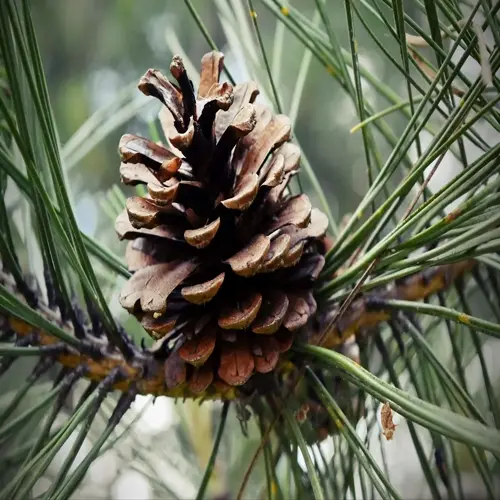
Yew, box and holly all answer a hard spring cut, which is why the same three names keep coming up. Boxwood sits at the soft end of that group, though. UGA Extension warns that boxwoods recover slowly and may even die when pruned severely, so a heavy correction on box is a gamble instead of a reset. Junipers, pines, cypress, cedar and arborvitae fall outside the group completely. They make no new growth from old wood, and taking off more than half their foliage can kill the plant.
The standard list of topiary subjects runs to boxwood, Japanese holly, yaupon holly, ligustrum, arborvitae, juniper, yew and podocarpus. British practice adds privet and Lonicera nitida to it. Look at what the good beginner topiary plants share and your buying rule falls out on its own. Pick small-leaved evergreens with short gaps between the buds. Leaf size decides how the cut edge reads. A small leaf clipped through the middle disappears from a step back, while a broad glossy one shows a torn brown edge for weeks.
Boxwood still gives the finest clipped surface of anything on that list, and it also carries the most risk. No boxwood is immune to boxwood blight, though resistant and tolerant cultivars exist. Put that next to the slow recovery from a bad cut and you get a plant that wants a light hand and frequent visits. If that makes you uneasy, plant Japanese holly instead. The leaf sits close enough in size that the finished shape reads much the same from a few feet away.
Start with a cone or a ball, and leave the peacocks and spirals for later. Clip a little and often across spring and summer instead of saving one big fix for the end of the season. Boxwood tolerates several trims a year to hold a hedge or topiary form, and that repeat clipping is what builds the density you want.
Save any cut into old wood for the start of the growing season, so the plant has months to answer you. Then give a new shape a few seasons before you judge it. Beginner topiary plants spend those early years filling in behind the surface you keep cutting, and the outline only turns crisp once they do.
Read the full article: Topiary: How to Shape Plants Without Killing Them