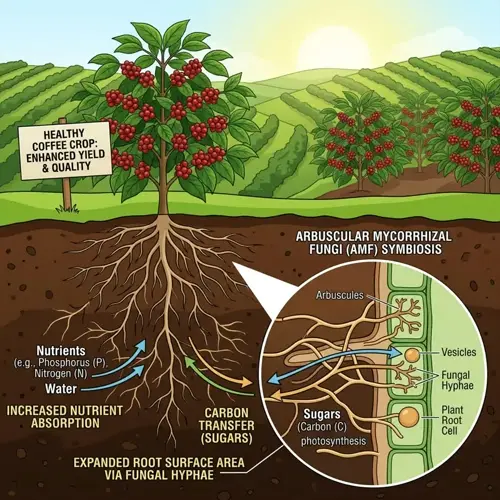
Neither one wins, because they are not doing the same job in your soil. Compost brings nutrients and living biology. Biochar brings a stable, porous structure that holds onto what the compost delivers, and it stays put long after the compost itself has been eaten. That is why biochar vs compost is the wrong frame for the decision, and why the field practice on record mixes the two instead of ranking them.
Dig into a bed you amended two seasons back and the compost is already gone. You get darker soil and better crumb out of it, but the pile itself has been consumed by the life in the ground. Put a fork into a bed that got char years ago and you still hit the black grit, sitting there unchanged. The char you can still see is doing structural work, not feeding work.
Colorado State University Extension is direct about the limit here. Biochar is low in direct nutrient input, but it helps hold the nutrients your soil already has. The material is alkaline and porous, and it carries a high cation exchange capacity. In plain terms, the fertilizer you do apply goes further. And it lasts. Mean residence time for biochar in soil runs to hundreds or thousands of years, so one application is still in the ground long after any compost you spread has broken down.
- Supplies nutrients and living biology to the soil.
- Gets consumed. A couple of seasons in a bed and the pile is gone.
- Charges raw char. Several weeks of contact counteracts nitrogen tie-up.
- Alkaline and porous, with negligible direct nutrient content.
- Mean residence time in soil runs to hundreds or thousands of years.
- High cation exchange capacity, so applied fertilizer works harder.
Char on its own will not feed anything, and that is where biochar vs compost stops being a fair contest. Its direct nutrient content is negligible, so turning it into thin ground and stopping there gives you structure in soil that still has nothing worth holding. Compost is what puts the nutrients in, and the char is what keeps them from washing straight through.
The USDA Northeast Climate Hub documents a compost biochar blend of 70% to 90% compost with 10% to 30% biochar, usually from hardwood feedstock. On working ground, wood-chip biochar mixed with compost or manure goes down at 4 to 10 cubic yards per acre (7.5 to 19 cu m per hectare), and that rate can improve crop yield in most soils. Compost is the bulk of that mix, and biochar is the minority partner by design.
Treat that ratio as a safety rail. Push the char much past 30% and you are past what the Northeast work backs, and you have traded feeding for structure in a bed that needs both. Hardwood is the feedstock behind those numbers. It is the one I buy when the bag gives me the choice.
Charge the biochar before it goes anywhere near a plant. Fresh char ties up nitrogen, and the documented fix is to bury it in compost or aged manure and let it sit for several weeks first. I would not put uncharged char into a bed at all. Waiting out those weeks costs you nothing but time.
NRCS wrote both materials into Conservation Practice Standard 336 back in 2022. The standard is called Soil Carbon Amendment, and it covers compost, biochar, or both. That last word carries the answer. Your soil amendment choice comes down to ratio and timing. Start with compost if your ground is thin. Add char at the low end of that 10% band once you have a charged batch ready, then let it build up over the years while the compost keeps feeding.
Read the full article: Biochar: What It Does and When It Fails