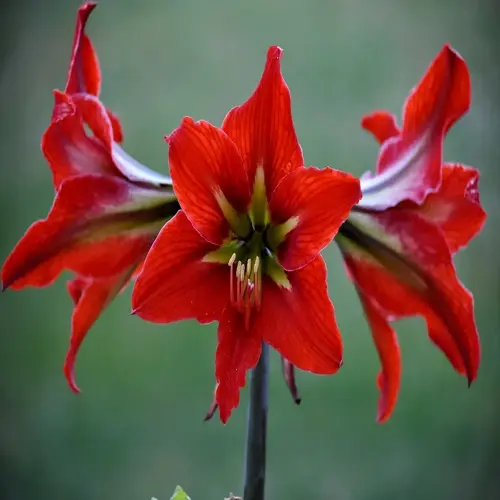

Your amaryllis after it blooms needs two things right away. Cut the spent flower stalk and keep every green leaf alive. Those leaves power next year's flowers, and removing them too soon is the top reason your bulb won't rebloom.
I've saved the same bulbs for over six seasons now. The biggest lesson I learned is that amaryllis after blooming care is a spring and summer commitment. Most people toss their bulbs once the petals drop. They don't realize the leaf-growth phase matters just as much as the bloom itself. My first year, I cut the leaves back too early and got zero flowers the following winter.
You should think of your post-bloom amaryllis like a rechargeable battery. The blooming phase drains the bulb's stored energy, and now you need to refill it. Every week you keep those leaves healthy gives your bulb more fuel for next year's show.
Here's why those leaves are so critical. Each leaf acts like a solar panel, absorbing light and converting it into starches and sugars that flow down into the bulb. The bulb stores all that energy and uses it to form brand new flower buds deep inside its scales. Without enough stored fuel, the bulb won't have the resources to push out a single stalk next season.
Start your post-bloom routine by trimming the flower stalk down to 1 to 2 inches above the top of the bulb. Use clean, sharp scissors to avoid crushing the tissue. Move the pot to a bright window where it gets at least six hours of indirect sunlight each day. Water when the top inch of soil feels dry and feed with a half-strength 10-20-15 NPK fertilizer every two to four weeks. This feeding schedule gives the bulb the phosphorus boost it needs to build strong internal flower buds.
Once the weather warms up in May, you can move your amaryllis outdoors to a spot with bright filtered light. Keep watering and feeding on the same schedule through the summer months. The leaves should stay thick, green, and upright during this time. If you see four to six healthy leaves by midsummer, your bulb is on track for a strong rebloom. You can also set the pot on a patio or balcony where it gets morning sun and afternoon shade for the best results.
The dormancy switch happens in late August or early September. Stop watering and stop fertilizing. Let the leaves yellow and wither on their own over two to three weeks. Once they dry out, trim them off and move the pot to a cool, dark spot between 50 and 55 degrees Fahrenheit (10 to 13 degrees Celsius). A basement, unheated garage, or closet works well. Leave the bulb there for 8 to 12 weeks without any water at all.
When you're ready to know what to do with amaryllis after flowering in terms of restarting, the process is simple. Pull the pot out of storage around mid-November, move it back to a warm bright window, and give it one good soak of water. You should see a green shoot poking out of the bulb within two to three weeks. From there, resume your normal watering routine and watch the magic happen all over again.
The whole cycle runs like clockwork once you get the timing down. Bloom in winter, grow leaves through spring and summer, force dormancy in fall, and restart before the holidays. Each year the bulb gets a little bigger, and bigger bulbs produce more stalks and more flowers than the year before. That's the real reward of saving your amaryllis instead of throwing it away.
Read the full article: Amaryllis Flower: Care, Varieties and More