
The names of garden tools split into five groups: hand tools, digging tools, cutting tools, watering tools, and transport tools. Knowing each tool's correct name saves you time at the store. Here is a full garden tool names list sorted by what each group does.
I spent my first year calling tools by the wrong names. A shop worker handed me a dibber when I asked for a "hole poker thing." I had no clue what a broadfork was until a friend showed me one. Once I learned the proper names, my online searches and store visits got ten times more productive.
Hand Tools
- Hand trowel: A small scoop-shaped blade for digging planting holes, transplanting seedlings, and mixing soil in containers.
- Hori hori knife: A Japanese multi-tool whose name comes from the word for digging. It cuts, digs, measures depth, and pries out weeds.
- Hand fork: A miniature fork that loosens soil in tight spots around plant roots without damaging nearby stems.
- Dibber: A pointed stick used to poke consistent planting holes for seeds and bulbs at the correct depth.
Digging and Soil Tools
- Spade: A flat-edged blade for digging straight-sided holes, edging beds, and slicing through turf or roots.
- Shovel: A curved scooping blade designed to move loose soil, compost, gravel, and mulch from one place to another.
- Garden fork: A four-pronged tool for breaking up compacted soil, turning compost piles, and lifting root vegetables.
- Broadfork: A wide two-handled fork that aerates soil deeply without flipping it, popular in no-till gardening.
- Stirrup hoe: A loop-shaped blade that cuts weeds just below the soil surface on both the push and pull stroke.
Cutting Tools
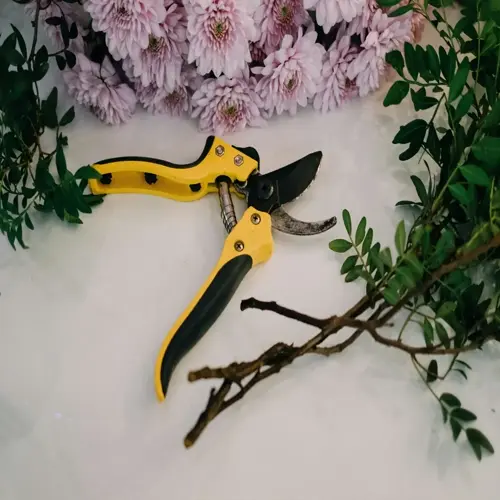
- Bypass pruners: Scissor-action blades that make clean cuts on live stems up to three-quarters of an inch thick.
- Secateurs: The French-origin term for pruning shears, used widely in Europe and by professional growers worldwide.
- Loppers: Long-handled pruners with extra leverage for cutting branches up to two inches in diameter.
- Hedge shears: Large scissor-like blades for shaping hedges and trimming ornamental grasses in broad strokes.
Watering and Transport
- Watering can: A spouted container that delivers a gentle shower through its rose attachment for seedlings and potted plants.
- Garden hose with nozzle: An adjustable spray head on a flexible hose that covers large areas and switches between patterns.
- Wheelbarrow: A single or dual-wheeled cart for hauling soil, mulch, plants, and debris across your garden.
- Garden cart: A flat-bed four-wheeled alternative to a wheelbarrow that stays stable on uneven ground.
Sorting the different types of garden tools by category keeps you from buying duplicates. A shovel and a spade look alike but serve different jobs. A shovel scoops loose material while a spade cuts into firm ground. This one fact alone prevents a common buying mistake.
Some names vary by region too. Americans say pruning shears while the British say secateurs for the same tool. A flat shovel in one catalog shows up as a spade in the next one. Don't let that trip you up. Focus on blade shape and handle length to get the right tool no matter what the tag says.
Use these exact names when you search online or visit a store. Typing "hori hori knife" into a search bar pulls up the exact product you want. Typing "garden digging knife" gives you dozens of random results instead. Specific names get specific results and save you time at checkout. The same rule applies when you ask staff at a garden center for help.
Read the full article: 10 Best Garden Tools for Every Gardener