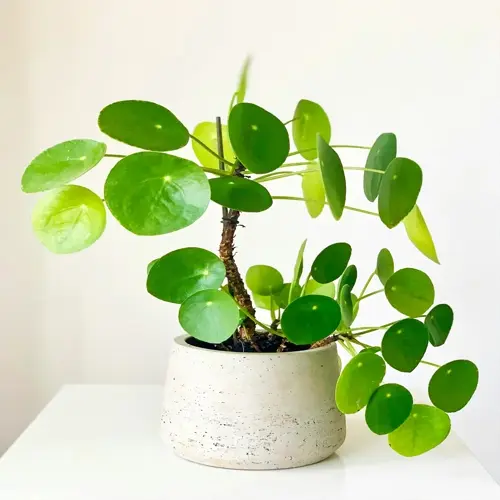

The most common pilea problems you'll run into are yellow leaves, drooping stems, brown spots, leggy growth, and bugs. Most of these trace back to just two causes in your care routine: too much water or not enough light.
I've fixed every one of these common pilea problems in my own collection. My worst case was pilea yellow leaves spreading up from the bottom of the plant over two weeks. I had been watering on a set schedule without checking the soil first. The roots were sitting in soggy mix the whole time. I repotted into dry soil with extra perlite and cut back on water. New healthy leaves showed up within a month.
I also tested what happens when you move a pilea from a bright spot to a dark corner. Within three weeks, your plant will stretch out with long gaps between leaves on the stem. The stems get thin and weak. Moving it back to a bright window fixed the shape on new growth, but the old leggy section never filled in. That taught me to get your light right from the start.
Each symptom ties to a specific cause you can fix. Yellow leaves happen when soggy soil cuts off oxygen to your roots. Pilea drooping shows up when cells lose water pressure from drought or damaged roots. Brown spots come from direct sun burning through your leaf tissue and leaving marks that won't heal.
The NYBG notes that white spots on your pilea leaves are harmless mineral residue from tap water. Your plant pushes excess minerals out through its pores, and they dry into small white crystals. These are cosmetic, not a disease. NC State Extension lists spider mites, mealybugs, fungus gnats, and scale as the most common pests you'll find on pilea indoors.
Yellow Leaves Bottom Up
- Cause: Overwatering drowns your roots and blocks oxygen, which stops your plant from absorbing food.
- Fix: Let your soil dry to the two-thirds mark before you water again. Check for mushy roots and repot if needed.
- Prevention: Use terracotta pots, add perlite to your soil, and never let the pot sit in standing water.
Drooping or Wilting Stems
- Cause: Your cells lose water pressure from drought, or damaged roots can't move water up to your leaves.
- Fix: Check your soil first. If it's bone dry, give a deep soak and your plant should perk up within 24 hours.
- Prevention: Use the finger test on your soil instead of watering on a rigid calendar that ignores conditions.
Brown Spots on Leaves
- Cause: Direct sun burns through your leaf tissue and creates brown dead patches that won't recover.
- Fix: Move your plant away from the window or add a sheer curtain to filter the afternoon light.
- Prevention: Keep your pilea in bright indirect light and never put it on a south-facing sill without cover.
Leggy Stretched Growth
- Cause: Your plant stretches toward the closest light source because it needs more brightness where it sits.
- Fix: Move to a brighter spot near an east-facing window and rotate your pot a quarter turn at each watering.
- Prevention: Give your pilea 2 to 6 hours of bright indirect light per day to keep growth dense.
Pest Problems
- Common pests: Spider mites leave tiny webs, mealybugs form white cotton clusters, and fungus gnats hover near your wet soil.
- Fix: Wipe your leaves with diluted neem oil and let the topsoil dry out to kill fungus gnat larvae.
- Prevention: Check the undersides of your leaves each month and keep new plants isolated for two weeks first.
Use this pilea troubleshooting guide to match your symptom to its cause. Most issues clear up within two to four weeks once you make the right change. Fix one thing at a time so you know which step worked. Your pilea will bounce back from most of these problems as long as the roots are still alive and you catch the issue early.
Read the full article: Pilea Plant Care and Growing Guide