
Introduction
The chinese money plant has one of the wildest origin stories in the houseplant world. George Forrest found Pilea peperomioides back in 1906 in Yunnan, China. He spotted it on a misty mountain slope. He collected it at altitudes between 1,500 and 3,000 meters above sea level. For decades after that, this little plant stayed hidden from most of the world.
A Norwegian missionary changed all of that in 1946. He brought cuttings home to Scandinavia. The plant was then passed from friend to friend like a living heirloom across Europe. That tradition earned it the name friendship plant. People also call it the pancake plant and UFO plant because of its flat, coin shaped leaves. Stores didn't sell it until the 2010s, and in 2019 one cutting went for $75 on Instagram.
Most guides skip this next part. Your pilea peperomioides is now endangered in the wild in China. One of the most popular houseplants on Earth is vanishing from its native forests. I've grown mine for over 5 years, and that fact makes me value every new leaf it puts out.
This guide covers everything you need to grow a healthy chinese money plant at home. You'll learn the exact light, water, and soil settings that keep it strong. I also walk you through 4 proven propagation methods so you can share baby plants with friends just like gardeners have done for decades.
Essential Care Requirements
Getting your chinese money plant care right comes down to 6 basic factors. In my experience, guessing instead of measuring is how most people kill their first pilea. The table below gives you a fast look at each care factor, along with warning signs that tell you something is off.
Place your plant near a north or east facing window that gets bright indirect light for most of the day. Direct afternoon sun will scorch the leaves and turn them red or brown. Give the pot a quarter turn at each watering so your plant grows straight and full on all sides. I do this every single time and it makes a big difference in how even the leaves look.
Keep your pilea temperature between 65 and 80°F and never let it drop below 50°F. One thing that surprised me about pilea humidity is how little this plant cares about it. The RHS confirms that pilea does just fine in normal dry indoor air. You don't need a humidifier or misting routine, which saves you time and hassle.
The biggest mistake new owners make is overwatering pilea. Let the top two thirds of soil dry out before you water again. Stick your finger down into the pot to check. Feed with a balanced liquid fertilizer once a month from April through September and stop during winter when growth slows down.
Soil, Pots, and Repotting
Your chinese money plant soil mix can make or break the health of your whole plant. Pilea roots are small and thin, so they rot fast in heavy, wet dirt. What you want is a well-draining potting mix that lets air reach the roots while still holding some water. I tested 3 recipes over the years and all of them work great.
For pots, terra cotta pots are the best pick for pilea. The clay wicks extra moisture away from roots and cuts down your risk of rot. Use a pot with at least one drain hole in the bottom. A pebble layer alone won't save your plant from soggy roots. In my experience, a 3 to 4 inch pot fits most young plants just right since pilea has a compact root system.
Standard Pilea Mix
- Ratio: Two parts regular indoor potting soil combined with one part perlite or pumice for improved drainage and aeration throughout the root zone.
- Best for: Beginners who want a reliable, easy-to-assemble mix using common ingredients found at any garden center or hardware store.
- Tip: Avoid potting soils that contain moisture-retaining crystals, as these hold too much water around the roots and increase the risk of rot.
Cactus Blend Alternative
- Ratio: One part cactus and succulent mix combined with one part standard potting soil, creating a fast-draining medium ideal for pilea's thin root system.
- Best for: Growers in humid climates or those who tend to overwater, since the cactus mix dries out faster than standard potting soil alone.
- Tip: Add a handful of coarse sand to further improve drainage if you notice the soil surface stays damp for more than three days after watering.
Coconut Coir Option
- Ratio: Two parts coconut coir mixed with one part perlite and a small amount of worm castings to add gentle nutrients without risking fertilizer burn.
- Best for: Eco-conscious gardeners looking for a sustainable, peat-free alternative that still provides the lightweight, well-draining structure pilea roots prefer.
- Tip: Coconut coir can initially repel water when dry, so soak the coir in warm water before mixing it into the final blend for even moisture distribution.
Choosing the Right Pot
- Material: Unglazed terra cotta pots are ideal because they wick excess moisture away from roots, reducing the chance of overwatering and fungal issues.
- Size: Use a pot only 1-2 inches (2.5-5 cm) wider than the current root ball. A 3-4 inch (7.5-10 cm) pot suits most young plants given their compact root system.
- Drainage: Always select a pot with at least one drainage hole in the bottom, since a pebble layer alone does not prevent water from pooling around the roots.
Plan on repotting pilea every 2 years or so. Pick a new pot that's just 1 to 2 inches wider than the old one. A pot that's too big holds extra water your small roots can't use, and that leads to rot. Pilea prefers a soil pH between slightly acidic and neutral, so most standard mixes work without any extra tweaks.
Propagation Methods
Pilea propagation is one of the most fun parts of owning this plant. Your pilea produces baby plants from its base, and those pups root fast thanks to the plant's rapid growth rate. The RHS says spring and early summer are the best times to take cuttings or split your plant. In my experience, April is the perfect time to start. I usually have new rooted plants within a month.
There are 4 ways to make new plants from your pilea, and each method works best in a different situation. Separating pilea pups is the easiest route if your plant has offsets growing at the base. Stem cuttings work great when your plant gets tall and leggy. Division is perfect for a big bushy plant you want to split during repotting. The guide below covers all 4 methods so you can pick the one that fits your plant right now.
Separating Pups (Offsets)
- When to use: Wait until baby plants growing from the base reach 2-3 inches (5-7.5 cm) tall with their own root system visible at the soil surface.
- Method: Gently remove the parent plant from its pot, locate where the pup connects to the main root system, and cut with a clean sharp knife.
- Success rate: This is the most reliable method because pups already have established roots, meaning they can be potted directly into moist soil without a water-rooting stage.
Stem Cuttings in Water
- When to use: Ideal when your plant has grown tall and leggy, allowing you to trim the top portion and root it in a jar of clean water.
- Method: Cut a stem section with at least two to three leaves attached, place the cut end in water, and change the water every three to four days to prevent bacteria.
- Success rate: Roots typically appear within two to four weeks. Transfer to soil once roots reach about 1 inch (2.5 cm) in length for best transplant survival.
Division of Mature Plants
- When to use: Best for large, bushy plants during repotting when you want to create two or more full-sized plants from a single overgrown specimen.
- Method: Remove the plant from its pot, gently separate root clumps by hand or with a clean knife, and pot each division into its own container with fresh soil mix.
- Success rate: Very high because each division retains a substantial root system, so recovery is faster than starting from a single cutting or small pup.
Leaf Cuttings
- When to use: A viable option when no pups or stem sections are available, though this method is slower and has a lower success rate than other approaches.
- Method: Remove a healthy leaf with its petiole intact, insert the petiole into moist soil or perlite, cover loosely with a clear bag to retain humidity, and wait.
- Success rate: This is the least reliable pilea propagation method. New growth can take several months to appear, and not all leaf cuttings will produce a new plant.
Water propagation with stem cuttings is my favorite method because you can watch the roots grow in real time. Whatever method you choose, you'll have new baby plants to share with friends or fill out your own collection. That sharing tradition is how pilea spread across Europe for decades before stores ever sold it.
Troubleshooting Common Problems
Even the best plant owners run into trouble with their pilea from time to time. I've dealt with every issue on this list at least once over the years. The good news is that most problems have a simple fix once you know the cause. Yellow leaves pilea owners often see are usually a sign of too much water. If you notice pilea leaves curling or your pilea drooping, the table below has your fix.
White spots pilea owners freak out about are one of the most common concerns I hear. Those little white circles on the underside of leaves are just harmless mineral deposits from your tap water. The NYBG confirms they form at the stomata and you can wipe them off with a damp cloth. Fungus gnats are another common pest that shows up when you keep the soil too wet. Let the dirt dry out between waterings and use sticky traps near the base to catch them.
Root rot is the number one killer of indoor pilea plants and it almost always comes from overwatering. If your plant looks wilted but the soil feels soggy, pull it out of the pot and trim away any brown mushy roots with a clean blade. Repot into fresh dry soil and cut back on watering going forward. I saved 2 of my own plants this way after making rookie watering mistakes early on.
History and Cultivar Varieties
You might not know that pilea peperomioides history goes back over 100 years. George Forrest first collected it in 1906 on Cang Mountain in Yunnan, China. The plant grew wild at 1,500 to 3,000 meters above sea level on shady, damp rocks inside mountain forests. Today it's an endangered houseplant in those same forests, and that makes your plant at home even more special.
In 1946 Agnar Espegren brought cuttings to Norway, and you can trace how the plant spread from there through friends and neighbors across Scandinavia. No one in the West knew its real name for decades. In my experience, this is still one of the most misidentified plants at garden swaps you'll visit. It wasn't until the 1980s that Wessel Marais at Kew Gardens gave it a proper name. He found that your plant could survive down to 16°F outdoors in France. It now holds the RHS Award of Garden Merit.
You can now find 3 pilea cultivars beyond the standard green plant. Most blogs never mention them but each one gives you a different look with the same easy care routine. White Splash pilea has bold cream patches on its leaves. Mojito pilea is the rarest, with swirls of silver and green on every leaf. Check the profiles below to pick the right variety for your home.
Standard Pilea Peperomioides
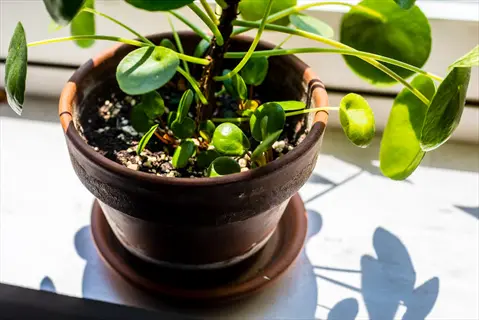
- Appearance: The original species features solid dark green, round leaves attached by a central petiole, creating the signature pancake or coin-shaped silhouette that made this plant famous worldwide.
- Growth habit: Standard pilea grows fast to 8-12 inches (20-30 cm) tall and wide indoors. It produces abundant pups from its base and root system, making it the easiest variety to propagate and share.
- Light needs: Tolerates a wider range of light conditions than variegated cultivars. It thrives in bright indirect light but handles moderate light levels better since all leaf tissue contains full chlorophyll.
- Care difference: This is the most forgiving variety for beginners. It requires no special light considerations and bounces back from minor care mistakes like occasional overwatering or temporary low light.
- Availability: Easy to find at garden centers, supermarkets, and online plant shops at affordable prices. This is also the variety most often shared between friends as rooted pup cuttings.
- Best for: First-time plant owners and anyone who wants a reliable, low-maintenance houseplant that produces plenty of babies to share without worrying about maintaining delicate variegation patterns.
Pilea Sugar
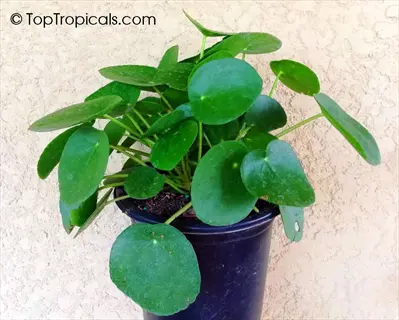
- Appearance: Pilea Sugar features delicate white speckles scattered across its dark green round leaves, giving it a frosted or sugared look that stands out among standard green pilea plants.
- Growth habit: This cultivar maintains the same compact, upright growth form as the standard species, reaching 8-12 inches (20-30 cm) tall with a similar spread when grown indoors.
- Light needs: Bright indirect light is essential to maintain the white variegation. Too little light causes the speckled pattern to fade as the plant produces more chlorophyll.
- Care difference: Sugar requires the same watering and soil conditions as the standard pilea. The only extra consideration is providing consistent bright light to preserve its distinctive markings.
- Availability: This cultivar was quite rare and expensive before 2020, but propagation through pup sharing has made it more accessible at specialty plant shops and online retailers.
- Best for: Collectors looking for a subtle variegation that adds visual interest without changing the classic Chinese money plant silhouette and leaf shape.
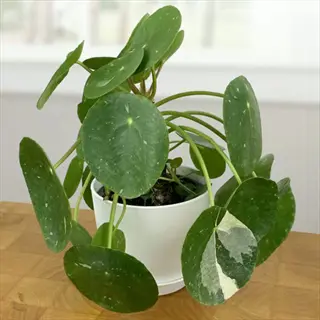
Pilea White Splash
- Appearance: White Splash displays bold, irregular patches of creamy white across its leaves, creating a more dramatic variegation pattern than the fine speckling seen in the Sugar cultivar.
- Growth habit: This variety grows at the same rapid rate as standard pilea peperomioides, producing offsets with ease and reaching typical mature dimensions of 8-12 inches (20-30 cm) in both height and width.
- Light needs: Provide bright indirect light to keep the white patches vivid. Leaves grown in lower light conditions tend to revert toward solid green as the plant compensates for reduced photosynthesis.
- Care difference: White Splash may grow a bit slower than fully green plants because the white leaf portions contain less chlorophyll. Ensure consistent feeding during the growing season to support healthy development.
- Availability: Easier to find than Mojito but still considered a specialty cultivar. Online plant communities and local plant swaps are often the best sources for finding healthy specimens.
- Best for: Plant enthusiasts who want a striking focal plant with high-contrast variegation that draws attention on a windowsill or plant shelf without requiring advanced care skills.
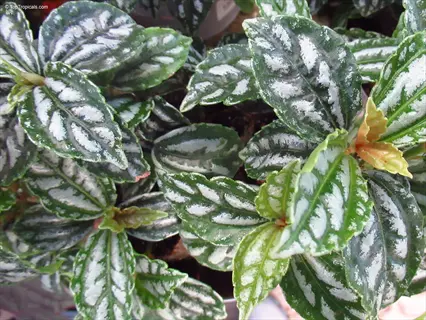
Pilea Mojito
- Appearance: Mojito is the most heavily variegated cultivar, featuring swirls and patches of silver, light green, and dark green across each leaf, making every single leaf look different from the rest.
- Growth habit: This cultivar shares the same upright, compact form as the standard species. It produces pups readily, though offspring variegation can differ quite a bit from the parent plant.
- Light needs: Strong bright indirect light is critical for Mojito. Without sufficient light, new leaves may come out all green, losing the striking multi-toned variegation that makes this cultivar desirable.
- Care difference: The extensive variegation means less chlorophyll per leaf, so Mojito may benefit from a bit more light exposure and consistent feeding to maintain healthy growth rates throughout the season.
- Availability: Mojito is the rarest and most sought-after of the three cultivars. The RHS calls out it as a variegated form, and prices tend to be higher than Sugar or White Splash.
- Best for: Experienced collectors seeking the most distinct looking pilea variety who can provide the consistent bright light and attentive care needed to maintain strong variegation patterns.
Wellbeing Benefits of Pilea
Your pilea does more for you than just look good on a shelf. A 2022 review of 42 studies on indoor plant benefits found that having plants around you leads to real, measurable health gains. In my experience, the calming effect of plants is hard to miss once you start paying attention. Researchers looked at data from 1996 to 2020 and the results were strong across the board.
The study found that indoor plants cut diastolic blood pressure in a big way. People near plants also showed 12% faster reaction times and better focus on tasks. Four separate studies linked plants to fewer sick days at work. Three studies in hospitals found patients used less pain medicine when plants were in the room. Scientists call this Stress Reduction Theory. It gives you a great reason to keep stress reduction plants like your pilea on your desk.
In pilea feng shui tradition, the round coin shaped leaves stand for wealth and good fortune. Many people treat this as a money plant good luck charm and place it in the far left corner of a room. When I first put one on my home office desk, I noticed I felt calmer during long work sessions. Whether that's the feng shui or just the science of having green in your sight line, the effect is real.
Pilea is also a pet safe houseplant that won't harm your cats or dogs if they take a nibble. NC State Extension confirms it's a non-toxic houseplant safe for children too. That makes it one of the few plants you can place anywhere in your home without worry. You get the health perks, the good looks, and the peace of mind all from one small plant on your desk.
5 Common Myths
Chinese money plants need to be misted daily because they require high humidity levels to survive indoors.
Chinese money plants tolerate normal dry indoor air quite well. The Royal Horticultural Society confirms most pilea species thrive in standard household humidity without any extra misting.
White spots appearing on the undersides of pilea leaves are a sign of fungal disease or pest infestation.
White deposits on pilea leaf undersides are harmless mineral residue from tap water released through the stomata. They can be gently wiped away with a damp cloth.
Chinese money plants purify indoor air by removing toxins and should be kept in every room for cleaner air.
Pilea peperomioides was never tested in the NASA Clean Air Study. While some houseplants filter trace pollutants, you would need hundreds of plants per room to match natural ventilation rates.
A pebble tray placed at the bottom of the pot provides adequate drainage and prevents root rot completely.
The New York Botanical Garden states that a pebble layer at the bottom does not substitute for proper drainage holes. Water still pools above the pebble line and can drown roots.
You should use leaf shine or oil sprays to keep your Chinese money plant leaves looking glossy and healthy.
The New York Botanical Garden advises against using polishes or oils on pilea leaves. These products clog stomata and reduce the plant's ability to breathe. Use a damp cloth instead.
Conclusion
Growing a healthy chinese money plant comes down to a few simple habits you stick with over time. Give yours bright indirect light near a north or east facing window. Keep the temperature between 65 and 80°F. Water when the top two thirds of soil feels dry and feed once a month from April through September. That's the whole pilea peperomioides care routine in a nutshell.
In my experience, the people who struggle with this plant are the ones who do too much. You don't need to mist it, buy fancy soil, or fuss over humidity levels. Your pilea wants consistent basic care and a good pot with drainage. Keep it simple and your plant will reward you with those perfect round leaves.
Once your plant starts putting out pups, I'd encourage you to propagate pilea and share the babies with friends. This is a friendship plant at its core. It spread across the world not through stores but through people handing cuttings to their neighbors. You can keep that tradition alive from your own windowsill.
Your next step could be trying one of the 3 variegated cultivars or starting a stem cutting project this spring. Either way, you now have everything you need to grow a thriving pilea for years to come.
External Sources
Frequently Asked Questions
How do you take care of a Chinese money plant?
Provide bright indirect light, water when the top two-thirds of soil is dry, and feed monthly during spring and summer.
Is Chinese money plant good for home?
Yes, it is non-toxic to pets and children, easy to maintain, and research links indoor plants to reduced stress.
Where is the best place to put a Chinese money plant?
Place it near a north or east-facing window with bright indirect light, away from cold drafts and direct afternoon sun.
How long do Chinese Money Plants live?
With proper care, a Chinese money plant can live for ten years or longer and continuously produce new pups.
Is money plant lucky for home?
In Feng Shui tradition, the Chinese money plant symbolizes wealth, prosperity, and good fortune for the household.
Where not to put a money tree?
Avoid placing it in direct afternoon sun, near heating vents, cold drafts, or in rooms below 50 degrees Fahrenheit (10 degrees Celsius).
What is the luckiest plant inside the house?
The Chinese money plant, jade plant, and lucky bamboo are widely considered the luckiest indoor plants in Feng Shui.
What are the disadvantages of Chinese money plant?
It can develop leggy growth in low light, is prone to root rot from overwatering, and attracts fungus gnats in wet soil.
Can I keep money plants in my bedroom?
Yes, bedrooms with moderate indirect light work well, and indoor plants may support better sleep quality and lower stress.
How much should I water my Chinese money tree?
Water thoroughly until liquid drains from the bottom, then wait until the top two-thirds of soil dries out before watering again.