
Introduction
The rubber plant grows over 100 feet tall in the wild rainforests of Southeast Asia. Its trunk can stretch up to 6 feet 7 inches wide out there. Yet this same giant works as a calm indoor houseplant that stays under 10 feet in your home. That contrast makes rubber plant care such a fun project for anyone who wants bold foliage without the fuss.
Ficus elastica sits in the Moraceae family and grows in USDA Zones 9a through 12b outdoors. I brought my first one home about 8 years ago after seeing its thick leaves at a local nursery. Some types grow leaves up to 17 inches long, which brings a strong tropical vibe to even small rooms. People once tapped the rubber tree for its milky sap to make rubber. But growers switched to Hevea brasiliensis in the late 1800s when they found better latex.
This plant stands out because it asks so little from you in return for dramatic foliage. New plant owners often pick a rubber plant first. It forgives missed waterings and handles average indoor light just fine. You get a plant that looks like it belongs in a design magazine but grows tough.
This guide covers everything from choosing the right variety to long term health. You will learn the exact light, water, and soil needs that help these plants thrive indoors. I also share tips on propagation and pest control that most guides leave out.
8 Best Rubber Plant Varieties
NC State lists 12 named Ficus elastica cultivars, and each one looks and acts a bit different in your home. Most guides list a few rubber plant varieties but never tell you how care changes between them. The biggest split comes down to leaf color. A variegated rubber plant needs far more light than a solid green one since it carries less chlorophyll.
I've grown 6 of these rubber plant types and learned which ones forgive mistakes. The list below covers the 8 best Ficus elastica cultivars you can find at garden centers and online shops. Each entry tells you what the leaves look like so you can spot them without a label.
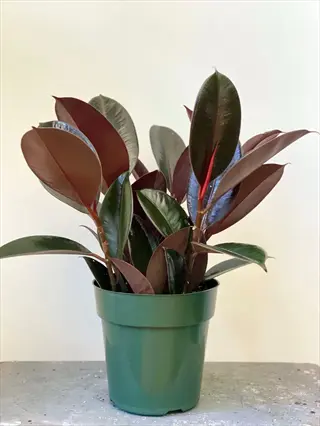
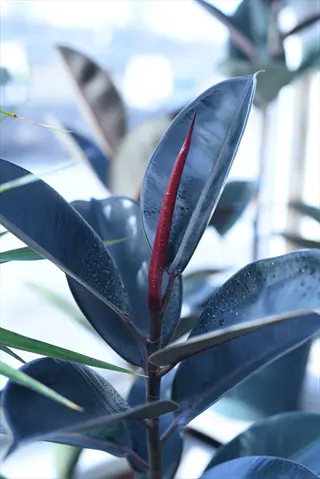
Burgundy Rubber Plant
- Leaf Color: Deep burgundy to near-black leaves that develop their darkest tones when exposed to bright indirect light for several hours each day.
- Growth Habit: Strong upright grower that reaches 6 to 10 feet (1.8 to 3 meters) indoors with a single dominant trunk and large oval leaves.
- Light Needs: Thrives in medium to bright indirect light and tolerates lower light better than variegated types, making it versatile for different rooms.
- Care Level: One of the easiest cultivars for beginners because it handles inconsistent watering and lower humidity without dropping leaves quickly.
- Best Placement: Works well in corners or next to furniture where its dark foliage creates a dramatic contrast against light-colored walls.
- Unique Feature: New leaves emerge wrapped in a bright red sheath that slowly unfurls, adding a temporary pop of color as the plant grows.
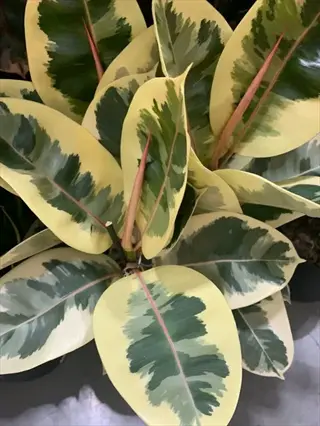
Tineke Rubber Plant
- Leaf Color: Cream, green, and pink variegation patterns on each leaf create a watercolor effect that makes every leaf look slightly different.
- Growth Habit: Moderate grower that reaches 4 to 8 feet (1.2 to 2.4 meters) indoors and may develop a leaner form than solid green types.
- Light Needs: Requires bright indirect light to maintain vivid variegation patterns, as low light causes new leaves to revert to mostly green.
- Care Level: Moderate difficulty because it needs consistent light conditions and is more sensitive to overwatering than non-variegated cultivars.
- Best Placement: Position near an east or west-facing window where it receives several hours of filtered sunlight without harsh direct afternoon rays.
- Unique Feature: The pink tones along leaf edges and new growth sheaths intensify during the growing season when light exposure is strongest.
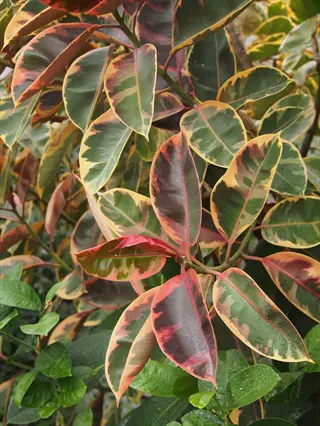
Ruby Rubber Plant
- Leaf Color: Striking red, pink, cream, and green variegation with more intense red tones than Tineke, creating a bolder appearance overall.
- Growth Habit: Compact to moderate grower reaching 4 to 6 feet (1.2 to 1.8 meters) indoors, sometimes branching on its own without pruning.
- Light Needs: Demands bright indirect light to keep the vibrant red and pink coloring, as insufficient light dulls the variegation fast.
- Care Level: Moderate to higher difficulty due to its light sensitivity and tendency to drop lower leaves if conditions shift fast.
- Best Placement: Ideal for bright living rooms or offices near large windows where it becomes a natural focal point and conversation starter.
- Unique Feature: The undersides of Ruby leaves often display even more intense red pigmentation than the top surface of the foliage.
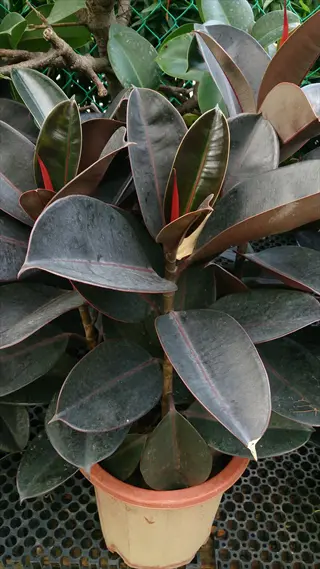
Robusta Rubber Plant
- Leaf Color: Rich, solid dark green leaves with a high-gloss finish that reflects light in any indoor setting throughout the year.
- Growth Habit: Vigorous grower with oversized leaves reaching up to 18 inches (46 centimeters) long, making it one of the largest-leaved cultivars available.
- Light Needs: Tolerates a wide range of light conditions from low to bright indirect light, though growth slows down in dimmer spots.
- Care Level: Very easy to maintain, making it the top choice for beginners or anyone who tends to forget about plant care for days at a time.
- Best Placement: Excellent for large rooms, entryways, or office lobbies where its bold oversized leaves make an architectural statement.
- Unique Feature: Robusta produces the largest individual leaves of any common rubber plant cultivar, documented by NC State University at up to 18 inches.
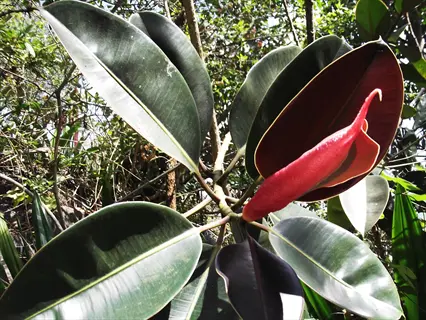
Decora Rubber Plant
- Leaf Color: Classic dark green leaves with a prominent cream-colored central vein and red-tinted undersides on younger foliage.
- Growth Habit: Upright single-stem grower that can reach 8 to 10 feet (2.4 to 3 meters) indoors when given space and consistent conditions.
- Light Needs: Performs best in bright indirect light but adapts well to medium light conditions without significant changes in leaf color or growth rate.
- Care Level: Easy to care for and available at most garden centers, making it one of the most purchased rubber plant cultivars out there.
- Best Placement: Works in living rooms, bedrooms, or hallways where its classic look blends with both modern and traditional interior design styles.
- Unique Feature: Decora was one of the first cultivars sold as a houseplant and remains a benchmark variety referenced by Clemson University extension guides.
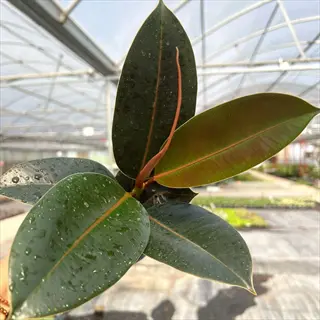
Melany Rubber Plant
- Leaf Color: Deep glossy green leaves that are a bit smaller and more compact than Decora, with a subtle reddish tint on new growth.
- Growth Habit: Compact and bushy growth pattern reaching 3 to 5 feet (0.9 to 1.5 meters), making it ideal for tighter spaces.
- Light Needs: Adapts to medium and bright indirect light conditions and maintains its dark coloring even in lower light than many other cultivars.
- Care Level: Easy care requirements similar to Burgundy, with good tolerance for occasional missed watering and average household humidity levels.
- Best Placement: Perfect for desktops, shelves, or small apartments where a full-sized rubber plant would overwhelm the available space.
- Unique Feature: Melany's compact habit means it seldom needs pruning to control height, unlike taller cultivars that outgrow indoor spaces in a hurry.
Belize Rubber Plant
- Leaf Color: Tricolor variegation of dark green, cream, and soft pink that creates an eye-catching tropical appearance on each large oval leaf.
- Growth Habit: Moderate grower reaching 5 to 8 feet (1.5 to 2.4 meters) indoors with a more open branching habit than solid green types.
- Light Needs: Needs bright indirect light for at least 6 hours daily to maintain the pink and cream variegation patterns on new and existing leaves.
- Care Level: Moderate difficulty because it requires more attention to light positioning and watering consistency than solid-colored rubber plants.
- Best Placement: Position in a well-lit room where its colorful foliage can serve as a decorative accent near seating areas or reading nooks.
- Unique Feature: Belize produces some of the most vibrant pink tones of any rubber plant cultivar, most of all on leaves that get consistent bright light.
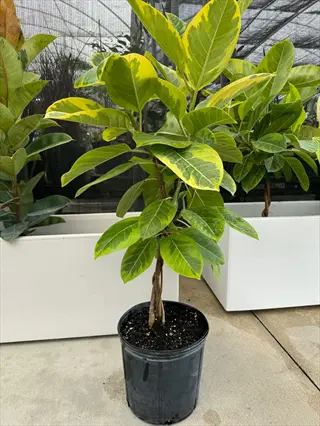
Yellow Gem Rubber Plant
- Leaf Color: Bright lime-green to yellow-green leaves that stand out from the typically dark-leaved rubber plant family with a fresh, vibrant appearance.
- Growth Habit: Moderate grower reaching 4 to 7 feet (1.2 to 2.1 meters) indoors, developing a full canopy of lighter-toned foliage over time.
- Light Needs: Requires bright indirect light to maintain the signature yellow-green coloring, as lower light causes leaves to darken toward standard green.
- Care Level: Moderate care needed, with attention to light levels being the most important factor for preserving the unique leaf color year-round.
- Best Placement: Ideal for bright rooms where you want to add a lighter, more cheerful tone compared to the deep greens and burgundies of other cultivars.
- Unique Feature: Yellow Gem is one of the rarest rubber plant cultivars commercially available, and collectors seek it out as an unusual Ficus elastica form.
Light, Temperature and Humidity
Getting the rubber plant light requirements right matters more than any other care step you take. Most rubber plants die from bad light placement, not from wrong watering or poor soil. Clemson University says these plants need 200 to 500 foot candles of bright indirect light to grow their best. The minimum sits around 75 to 100 foot candles before growth stalls out.
You don't need a light meter to guess your foot candle levels at home. A north facing window gives you about 100 foot candles, which is bare minimum territory. An east or west facing window puts you around 200 to 300 foot candles. A south facing window can push past 400, which is the sweet spot for most rubber plants. Variegated types need the higher end of that range to keep their color.
For rubber plant temperature, aim for 75 to 80°F during the day and 60 to 65°F at night. I keep mine in a room that stays around 72°F year round and they do great. Never let your plant sit below 55°F or you risk cold damage and leaf drop. Keep it away from drafts near doors and windows in the winter months.
Rubber plant humidity doesn't need to be tropical levels for success. Aim for 40% to 60% relative humidity in the room. Most homes fall in this range without extra work. If your leaf edges turn brown and crispy, your air is too dry. A pebble tray under the pot or a small humidifier near the plant fixes this fast.
Watering and Soil Essentials
Rubber plant watering kills more of these plants than any other mistake. The secret is balance, not a fixed schedule. Your best tool is the finger test. Stick your finger 2 to 3 inches deep into the rubber plant soil. If it feels dry at that depth, give it a drink. If it still feels damp, wait a few days. When I see drooping leaves I always check the soil first since it can mean too much or too little water.
You need well-draining soil to keep roots healthy and stop water from pooling at the bottom. I mix equal parts peat moss, perlite, and standard potting soil for all my rubber plants. This blend holds enough moisture for the roots but lets extra water flow right through. Make sure your pot has drainage holes at the bottom or root rot will show up fast.
Clemson data says to feed rubber plant fertilizer every 2 weeks in spring and summer. A balanced water soluble mix at label dose works best. Cut back to once a month in early fall and stop all feeding in winter. When repotting rubber plant specimens, move up just one pot size at a time. Spring works best for this job since the roots grow strong during warm months.
Spring Growing Season
- Watering: Increase watering frequency as growth accelerates, checking soil every 5 to 7 days and watering when the top 2 inches (5 centimeters) feel dry.
- Feeding: Begin fertilizing with a balanced water-soluble fertilizer every two weeks to support the flush of new leaf growth during this active period.
- Repotting: Spring is the best time to repot if roots are circling the bottom or growing through drainage holes, moving up one pot size at a time.
- Pruning: Trim leggy or damaged stems in early spring before new growth begins to encourage a bushier, more compact shape throughout the season.
Summer Peak Growth
- Watering: Water more often as heat and longer days speed up soil drying, checking every 4 to 6 days based on indoor temperature and moisture levels.
- Feeding: Continue biweekly fertilizing through summer and consider a diluted dose if you notice salt buildup on the soil surface.
- Light: Move plants back from south-facing windows if leaves show brown scorch marks from intense afternoon sun during the hottest months.
- Humidity: Mist leaves or use a pebble tray during dry summer months, most of all if air conditioning reduces indoor moisture below 40%.
Fall Transition Period
- Watering: Cut watering frequency as growth slows, checking soil every 7 to 10 days and allowing more drying between each session.
- Feeding: Drop fertilizing to once a month in early fall and stop by late fall as the plant begins entering its rest period.
- Light: Move plants closer to windows as daylight hours decrease to maintain good light levels for health through shorter days.
- Cleaning: Wipe leaves with a damp cloth to remove dust buildup that reduces the plant's ability to absorb fading autumn light.
Winter Dormancy
- Watering: Water just every 2 to 3 weeks, allowing soil to dry out more between sessions since the plant is not pushing new growth.
- Feeding: Stop all fertilizing during winter months to avoid salt buildup in the soil that can damage roots during the rest period.
- Temperature: Keep the plant away from cold drafts, heating vents, and windows where temps can drop below 55°F (13°C).
- Growth: Expect little or no new leaf production during winter, which is normal and not a sign of trouble or bad care.
Propagation Methods
Rubber plant propagation lets you grow new plants from one you own for free. Clemson and NC State both say that stem cutting and air layering work best for propagating Ficus elastica at home. I've tried both ways and had the best luck with stem cuttings in water for small plants. Air layering works better for larger ones.
Spring and early summer give you the highest success rates since the plant pushes new growth during those months. You should expect to see roots in 3 to 8 weeks based on the method you pick. Here's what each step looks like from start to finish so you know your progress is on track.
Stem Cutting in Water
- Timing: Take stem cuttings in late spring or early summer when the plant is pushing new growth and has energy to support root formation.
- Cutting: Pick a healthy stem with 2 to 3 leaves, cut at a 45 degree angle just below a leaf node, and let the milky sap drain for 30 minutes.
- Rooting: Place the cutting in a jar of clean water with the bottom node under the surface, changing the water every 3 to 4 days to stop bacteria.
- Timeline: Roots show up within 3 to 6 weeks, and the cutting is ready to pot once roots reach 2 to 3 inches (5 to 8 centimeters) long.
Stem Cutting in Soil
- Preparation: Dip the fresh cut end in rooting hormone powder after the sap has drained, which speeds up root growth by several weeks in most cases.
- Planting: Push the cutting about 2 inches (5 centimeters) deep into a pot of moist perlite and peat moss blend with a drainage hole at the bottom.
- Environment: Cover with a clear plastic bag to make a humidity dome, keeping the soil moist but not soaked during the rooting stage.
- Success Signs: New leaf growth at the top after 4 to 8 weeks means roots have formed, and you can take off the humidity cover at that point.
Air Layering Technique
- Setup: Make a small upward angled cut about one third through the stem, slide a toothpick in to keep it open, and dab rooting hormone on the wound.
- Wrapping: Pack damp sphagnum moss around the cut area and wrap it tight with clear plastic wrap, then seal both ends with tape or ties.
- Monitoring: Check the moss each week through the clear plastic to make sure it stays moist, and mist with water through a small gap if it dries out.
- Separating: Roots show through the plastic within 4 to 8 weeks, and you can cut the stem below the new root ball to pot it as its own plant.
Post-Propagation Care
- Potting: Use a well draining mix of peat moss, perlite, and standard potting soil in equal parts for your new rubber plant cuttings.
- Light: Place new plants in bright indirect light but keep them out of direct sun for the first 2 to 3 weeks while young roots settle in.
- Watering: Keep soil moist but not soggy for the first month, then shift to the standard watering routine you use for mature plants.
- Patience: New plants may not push visible growth for 2 to 3 months as they spend energy on root work below the soil surface.
Pests and Troubleshooting
Rubber plant problems show up as visual clues on the leaves and stems before things get too bad. The key is knowing what each sign means so you can act fast. I lost my first rubber plant to mealybugs because I didn't catch the white fuzzy spots in time. Now I check my plants every week during winter when rubber plant pests get more active from dry indoor air.
NC State lists mealybugs, thrips, scale insects, and spider mites as the main rubber plant pests to watch for. The table below helps you match what you see on your plant to the cause and fix. Start with the symptom you notice, like yellowing leaves or rubber plant drooping, and work from there.
One thing most guides miss is the toxin warning. Rubber plants are toxic to cats, dogs, and horses per NC State data. The milky sap also causes skin rashes on some people. Wear gloves when you prune or take cuttings and keep the plant out of reach of pets.
Wipe your rubber plant's leaves with a damp cloth once a month to remove dust and spot pests early. This one habit prevents most of the problems listed above. Clean leaves also absorb more light, which keeps your plant growing strong through every season.
Air Purification Science
You may have heard people call the rubber plant air purifier a must have for clean indoor air quality. There's real science behind this claim, but the full picture matters more than the headline. Most plant blogs skip the fine print, and that leads to false hopes about what one plant can do in your living room.
The 1989 NASA clean air study put Ficus elastica in sealed chambers. The plant removed 47.4% of formaldehyde from the air in those tests. Full plants cleared about 80% within 4 hours, which sounds great. But a sealed lab chamber doesn't match a real home with open windows and HVAC running.
A 2017 study by Hong et al. at Yonsei University gave us better real world data. They put rubber plants in new buildings under 3 years old. Toluene dropped by 85% and formaldehyde fell by 50%. The plants also pulled out 75% of ethylbenzene and 72% of xylene. VOC removal and formaldehyde removal from new furniture was real. But the plants did nothing for outdoor dust and particles.
Here's the honest take on these results. You would need 10 to 1,000 plants per square meter to match the natural air exchange rate in a normal building. That's not realistic for any home. Your rubber plant does clean some VOCs from the air around it, but it won't replace good air flow or an air filter. Think of it as a small bonus on top of the beauty it brings to your space.
I keep 4 rubber plants in my home office and I notice fresher air in that room compared to other spaces. Is it the plants or just my bias? Hard to say for sure. But the science shows they do pull toxins from the air, even if the amount is modest in a normal room with open doors.
5 Common Myths
Rubber plants can purify all the air in your home with just one or two plants placed in a room.
Research shows you would need 10 to 1,000 plants per square meter to match natural air exchange rates in a typical building.
Rubber plants need to be watered on a strict weekly schedule regardless of the season or indoor conditions.
Watering needs change with seasons and humidity levels, so always check the top 2 to 3 inches (5 to 8 centimeters) of soil before watering.
All rubber plant varieties have the same care requirements and can thrive in identical light conditions.
Variegated cultivars like Tineke and Ruby need brighter light than solid green varieties because they have less chlorophyll in their leaves.
Rubber plants produce the same natural rubber used to make tires, gloves, and other commercial rubber products.
Commercial rubber comes from Hevea brasiliensis, not Ficus elastica, which produces an inferior latex that was replaced in the late 1800s.
A drooping rubber plant always means it needs more water, so you should water it immediately when leaves start drooping.
Drooping can signal overwatering just as often as underwatering, so check the soil moisture before adding water to avoid root rot.
Conclusion
Your rubber plant isn't just another indoor plant on the shelf. It's an indoor tree that fills your room with bold, glossy leaves and grows with you for years. I've seen mine add 12 to 24 inches of height each growing season with basic rubber plant care. That kind of steady growth makes Ficus elastica one of the most rewarding plants I've owned.
This rubber plant guide covered the key steps that matter most. You have 12 cultivars to pick from, and your choice shapes everything. Solid green types like Burgundy handle low light just fine. Variegated types like Tineke and Ruby need bright spots near windows to keep their color. Match the cultivar to your light and you've solved half the puzzle.
Keep your temps between 60 and 80°F and use the finger test before you water. Those 2 habits prevent most rubber plant deaths. Patient owners get rewarded with a plant that can live for decades in the right spot. Stick with the basics from this rubber plant guide and your Ficus elastica will thrive.
Once you feel confident in your routine, try propagation as your next step. A single stem cutting or air layer in spring gives you a new indoor plant to grow or share. Your rubber plant care skills transfer right over to the new baby plant. Start with what you've learned here and watch your collection grow.
External Sources
Frequently Asked Questions
Do rubber plants need sunlight?
Rubber plants prefer bright indirect sunlight for 6 to 8 hours daily, though solid green varieties can tolerate lower light levels.
How do you take care of a rubber plant indoors?
Indoor rubber plant care involves providing bright indirect light, watering when the top few inches of soil dry out, and keeping temperatures above 55 degrees Fahrenheit (13 degrees Celsius).
Is a rubber plant good for home?
Rubber plants make excellent home plants because of their low-maintenance care, attractive glossy foliage, and ability to remove some indoor air pollutants.
How often should you water a rubber plant?
Water a rubber plant every 1 to 2 weeks during the growing season and every 2 to 3 weeks in winter, always checking that the top soil has dried first.
How do you make a rubber plant happy?
Keep a rubber plant happy by providing bright indirect light, consistent watering, regular feeding during spring and summer, and occasional leaf cleaning.
What are the disadvantages of rubber plant?
Rubber plant disadvantages include toxicity to cats, dogs, and horses, sticky sap that irritates skin, and the potential to outgrow small spaces.
How long does a rubber plant last?
A well-cared-for rubber plant can live for decades indoors, with some specimens thriving for over 25 years when given proper conditions.
What to feed a rubber plant?
Feed a rubber plant with a balanced water-soluble fertilizer every two weeks during spring and summer, and stop fertilizing in fall and winter.
Does a rubber plant attract money?
In Feng Shui tradition, rubber plants are believed to attract wealth and prosperity when placed in the southeast corner of a home or office.
Do rubber plants like bathrooms?
Rubber plants can do well in bathrooms that receive adequate natural light, as the higher humidity mimics their native tropical environment.