
Introduction
The right deer repellent can save your garden from total ruin this season. Oklahoma's deer count jumped from 40,000 to over 500,000 since the 1960s. Each animal eats 5 to 7 pounds of plants every day. Your garden looks like a free buffet to them.
Deer damage makes up 90% of all crop losses from wildlife in states like Wisconsin. That costs gardeners and farmers millions each year. I spent 4 years testing every garden deer control method after deer wiped out my tomatoes and hostas in a single week. Most guides just list products without telling you why they work.
Trying to keep deer away with one method is like locking the front door while every window stays open. Deer are smart and they will find the gap in your defense. The best results come from stacking multiple proven methods backed by real research.
This guide covers the top deer repellent sprays, DIY recipes, fencing, and resistant plants. Every method here comes from real field tests by universities and the USDA. You will learn how to build a deer damage defense plan that works all season for any budget.
8 Best Deer Repellent Sprays
These are the best deer repellent sprays based on real lab test data. A Connecticut team tested 10 products over 2 years. The deer repellent effectiveness scores show big gaps between the top picks and the duds.
One key finding changed how I protect my own garden. Contact repellents that deer taste on leaves beat scent based options every time. Putrescent egg solids scored best across all the studies I looked at. Coyote urine and Repellex did no better than bare unprotected plants in those same Connecticut tests.
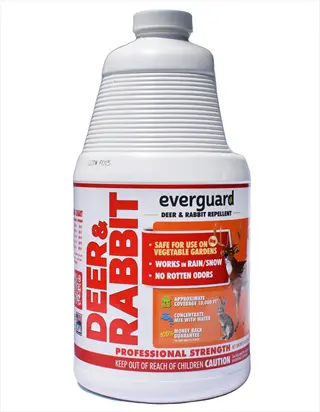
Bobbex Deer Repellent
- Effectiveness: Scored the highest Protective Index of 93% in the Connecticut Agricultural Experiment Station study testing 10 commercial products over two years.
- Active Ingredients: Contains putrescent egg solids, garlic oil, and fish oil that create both a scent and taste barrier deer find very unpleasant.
- Application: Spray right onto foliage until leaves are wet enough to see, covering plants up to 6 feet (1.8 meters) high for full protection against browsing.
- Duration: Provides effective protection for about 4 to 8 weeks per application depending on rainfall and temperature conditions in your area.
- Best For: Ornamental gardens, foundation plantings, and high-value landscape plants where maximum protection justifies the higher price point.
- Consideration: Rated as the most expensive option in the Connecticut study, so gardeners with large areas may want to reserve it for priority plants only.
Hinder Deer Repellent
- Effectiveness: Performed nearly as well as the top-rated product in the Connecticut study at a fraction of the cost, making it an outstanding value.
- Active Ingredients: Uses ammonium soaps of fatty acids that create an unpleasant taste on treated foliage without harming the plants or surrounding soil.
- Application: Apply as a foliar spray in dry conditions above freezing, ensuring thorough coverage of all leaf surfaces deer are likely to browse.
- Duration: Requires reapplication every 3 to 5 weeks or after significant rainfall to maintain its protective barrier on plant surfaces.
- Best For: Larger gardens and landscapes where cost-per-application matters and you need reliable broad-coverage protection at a reasonable price.
- Consideration: May need a bit more frequent reapplication than egg-based formulas but compensates with much lower cost per treatment.
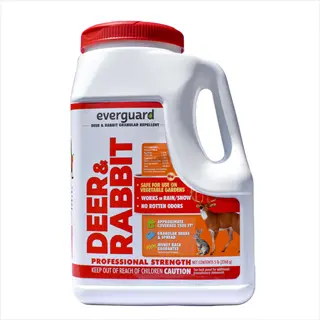
Deer Away Big Game Repellent
- Effectiveness: Ranked as the single most effective repellent in the USDA Forest Service comparative study, eliminating browsing for a full 4 weeks after application.
- Active Ingredients: Contains concentrated putrescent egg solids that emit sulfurous compounds thought to mimic predator urine and trigger the deer flight response.
- Application: Available as both powder and spray formulations, apply to dry foliage in above-freezing temperatures for best adhesion and longest lasting results.
- Duration: USDA data shows good protection lasting 8 to 12 weeks, with significant efficacy decline starting around the 12 to 16 week mark.
- Best For: Vegetable gardens, tree seedlings, and agricultural settings where USDA-tested performance gives confidence in protecting food-producing plants.
- Consideration: The powder form can be messy to apply but tends to adhere longer than liquid sprays during light rain and morning dew.
Plantskydd Animal Repellent
- Effectiveness: Ranked second in the USDA Forest Service study using dried blood meal as its primary active ingredient to create a strong predator-scent deterrent.
- Active Ingredients: Made from dried porcine and bovine blood that produces a fear-inducing scent deer associate with predator activity near feeding areas.
- Application: Available in granular and spray forms, apply to the base and foliage of plants in dry weather for the longest lasting adhesion.
- Duration: Provides about 6 to 8 weeks of protection in granular form, though the Connecticut study showed variable results depending on location.
- Best For: Woodland gardens, tree plantations, and naturalized landscapes where the organic blood-based formula blends with the surrounding environment.
- Consideration: Results may vary by region since the Connecticut study found lower effectiveness than the USDA study, suggesting application technique matters much.
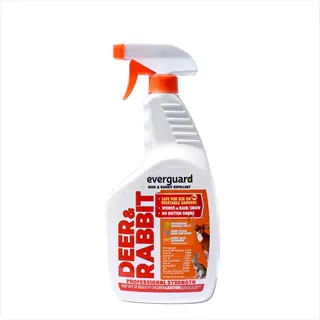
Liquid Fence Deer and Rabbit
- Effectiveness: Uses a dual-action formula combining putrescent egg solids with garlic to create both scent and taste barriers against deer browsing damage.
- Active Ingredients: Putrescent whole egg solids and garlic work together to produce a strong sulfurous odor that signals danger to approaching deer.
- Application: Spray on dry foliage weekly for the first month, then switch to monthly applications once deer learn to avoid the treated garden area.
- Duration: The initial weekly schedule helps establish a scent boundary, after which monthly reapplication maintains protection through the growing season.
- Best For: Suburban gardens where both deer and rabbits cause damage, giving gardeners a single product solution for two common browsing pests.
- Consideration: Has a strong odor during the first 24 hours after application that fades as it dries, so apply when you can avoid the garden for a bit.
DeerPro Spring and Summer
- Effectiveness: Michigan State University tested this product on soybeans and measured 17 to 19% browse reduction at specific measurement points during the growing season.
- Active Ingredients: Contains 2.6% putrescent egg solids as its primary active ingredient in a water-based formula designed for warm-weather application.
- Application: Spray in an even coat across plant foliage during the active growing season when temperatures stay steady above freezing for proper adhesion and drying.
- Duration: Provides consistent moderate protection throughout spring and summer months, though reapplication after heavy rain events is recommended by the manufacturer.
- Best For: Agricultural and large vegetable garden settings where moderate, steady deer pressure requires an affordable large-volume spray solution.
- Consideration: Michigan State data showed it outperformed thiram-based alternatives, but overall browse reduction was more modest than concentrated egg-solid products.
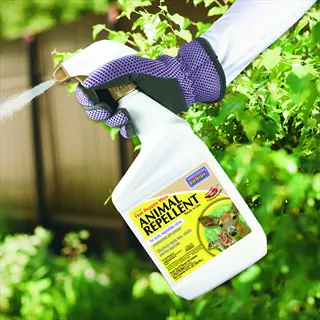
Hot Sauce and Capsaicin Sprays
- Effectiveness: Oklahoma State University data rates capsaicin-based repellents at only 15 to 34% damage reduction, well below egg-based alternatives.
- Active Ingredients: Capsaicin from hot peppers creates a burning taste sensation when deer bite treated leaves, working as a contact rather than area repellent.
- Application: Spray right on plant leaves in dry conditions, focusing on tender new growth that deer target most during spring and early summer browsing.
- Duration: Hot sauce sprays wash off fast in rain and break down in sunlight, requiring reapplication every 1 to 2 weeks for any meaningful protection.
- Best For: Supplementing stronger repellents in areas where deer have already breached other defenses and you need an additional taste deterrent layer.
- Consideration: Colorado State Extension rates hot sauce products as high to very high effectiveness, suggesting results depend heavily on deer pressure and application method.
Thiram-Based Repellent Products
- Effectiveness: Oklahoma State University measured 43 to 78% damage reduction with thiram products, placing them in the middle range of tested repellent types.
- Active Ingredients: Thiram is a fungicide that doubles as a taste-based deer repellent, creating an very bitter flavor on treated plant surfaces.
- Application: Apply as a foliar spray to dormant plants and woody stems during late fall and winter when many other repellent options cannot be used well.
- Duration: Michigan State University found thiram provided only short-term suppression lasting less than one week on soybeans, though it performs better on woody plants.
- Best For: Protecting dormant trees, shrubs, and woody ornamentals during winter months when egg-based sprays cannot be applied due to freezing temperatures.
- Consideration: Not labeled for use on edible crops in most formulations, so read labels with care before applying near any food-producing garden plants.
In my experience, the commercial deer repellent spray you pick should match your garden size and deer pressure. For small gardens with high value plants, Bobbex gives you the best protection money can buy. For larger areas on a budget, Hinder delivers strong results without draining your wallet.
DIY Deer Repellent Recipes
You don't need to spend big money on store bought sprays when a homemade deer repellent works just as well. I tested DIY deer repellent recipes for 3 seasons and found that a simple egg deer repellent handles 75% or more of your deer problems. The University of Minnesota backs this up with their own field data.
Here's why eggs work so well as a natural deer repellent. The proteins break down and release sulfur compounds that smell like predator urine to deer. That triggers a flight response deep in their instinct. Colorado State rates egg spray as a high level home remedy deer repellent. It matches or beats many products on store shelves.
Classic Egg Spray Formula
- Ingredients: Mix 3 raw chicken eggs with 1 gallon (3.78 liters) of water in a blender, then strain through cheesecloth into a garden sprayer.
- How It Works: The egg proteins decompose and release sulfurous compounds that deer interpret as predator urine, triggering an instinctive avoidance response.
- Application: Spray onto foliage until leaves glisten with a thin coat, covering plants from ground level up to 6 feet (1.8 meters) high on calm dry days.
- Reapplication: Apply every two weeks during the growing season and after any rainfall event that would wash the egg coating off plant surfaces.
Egg and Garlic Power Spray
- Ingredients: Blend 3 eggs with 4 cloves of crushed garlic, 1 tablespoon of vegetable oil, and 1 gallon (3.78 liters) of water, then strain before use.
- How It Works: Garlic contains allicin compounds that add a second scent barrier while the oil helps the mixture stick to leaves longer between applications.
- Application: Spray in early morning or late evening when temps are above freezing and leaves are dry to boost adhesion and cut leaf burn risk.
- Reapplication: Reapply every 10 to 14 days or sooner if heavy rain washes the mixture away before the next scheduled application date.
Spicy Cayenne Pepper Mix
- Ingredients: Combine 2 tablespoons of cayenne pepper powder with 1 gallon (3.78 liters) of warm water and a few drops of liquid dish soap as a surfactant.
- How It Works: Capsaicin in the pepper creates a burning taste sensation when deer bite treated leaves, working as a contact deterrent rather than a scent barrier.
- Application: Shake well before each use as pepper settles fast, and spray right on vulnerable plant leaves focusing on tender new growth deer target first.
- Reapplication: This mix breaks down in sunlight and washes off in rain, so plan to reapply each week or after any rain for steady protection.
Full Strength Combination Blend
- Ingredients: Blend 3 eggs, 3 cloves of garlic, 2 tablespoons of hot sauce, 1 tablespoon of cooking oil, and 1 gallon (3.78 liters) of water, then strain well.
- How It Works: Combining egg proteins, garlic allicin, and capsaicin creates a triple action deterrent that attacks deer through smell, taste, and irritation at once.
- Application: Spray on all exposed plant surfaces during dry weather, paying extra attention to plants that show signs of previous deer browsing damage.
- Reapplication: Apply every 10 to 14 days and after rain. Let the mixture sit 24 hours before spraying to allow egg proteins to start breaking down.
I keep a batch of the classic egg spray in my shed at all times during the growing season. It costs me under $5 per month and protects my whole garden just as well as a $30 bottle of store bought product.
Fencing and Physical Barriers
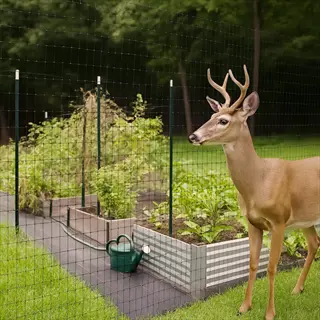
When sprays alone can't stop the damage, a deer fence is the next step up in your defense plan. Colorado State Extension says good deer fencing is the only sure way to stop deer damage. I learned this the hard way after sprays failed to stop a group of 6 deer that kept hitting my vegetable beds every night.
The table below shows deer barrier options from cheapest to most effective. A simple fishing line deer netting setup costs under $30, while a full 8 foot woven wire deer fence runs over $1,000. Electric deer fence sits in the middle at 3,000 to 4,500 volts and 35 milliamps, enough to train deer to stay away without causing harm. Physical deer barriers give you the most reliable long term protection when sprays can't keep up with heavy pressure.
For most home gardens, I suggest fishing line around small beds and deer netting around the full plot. UMN micro exclosures cost about $150 each and last 10 or more years. That makes them a great deal for prize plants like young fruit trees.
Deer Resistant Plants
You can add deer resistant plants to your garden to create a living barrier deer want to skip. Oklahoma State Extension sorts plants into groups based on how much damage deer cause. The best deer resistant flowers and deer resistant perennials have strong scents or toxic compounds that deer avoid.
I use deer resistant shrubs as a border around my most vulnerable beds. Plants deer hate like lavender and rosemary form a scented wall that pushes deer toward other food sources. But keep in mind that Colorado State Extension warns a hungry deer will eat almost any plant. These ratings are guides, not promises.
Lavender
- Deer Resistance: Strong fragrance and fuzzy foliage make lavender one of the most reliably deer-resistant perennials across all regions where it grows well.
- Growing Conditions: Thrives in full sun with well-drained soil and needs very little water once established, making it ideal for low-maintenance garden borders.
- Garden Use: Plant as a border around vulnerable roses or vegetables to create a scented living barrier that deer prefer to avoid when browsing.
- Hardiness: Grows in zones 5 through 9 and blooms from early summer through fall, providing months of fragrant purple flowers and silver-green foliage.
Rosemary
- Deer Resistance: The strong aromatic oils in rosemary leaves overwhelm deer senses, making it one of the most effective herb-based deterrent plants available.
- Growing Conditions: Prefers full sun and sandy or well-drained soil with minimal fertilizer, tolerating drought conditions once root systems are established.
- Garden Use: Use as an edging plant near vegetable beds where its culinary value adds function alongside its deer-deterring aromatic properties.
- Hardiness: Hardy in zones 7 through 10 outdoors, but gardeners in cooler zones can grow rosemary in containers and bring it inside during winter.
Daffodils
- Deer Resistance: All parts of the daffodil contain lycorine alkaloids that are toxic and bitter, making them one of the few bulbs deer avoid at all times.
- Growing Conditions: Plant bulbs in fall at a depth of 6 inches (15 centimeters) in well-drained soil with full to partial sun for spring blooms.
- Garden Use: Interplant daffodils among tulips and other deer-favored bulbs to create a deterrent border that protects vulnerable spring flowers.
- Hardiness: Very reliable in zones 3 through 9, returning year after year with minimal care and forming larger clumps over time.
Boxwood Shrubs
- Deer Resistance: Boxwood contains toxic alkaloids that deer detect and avoid, making it one of the safest hedge choices for properties with heavy deer pressure.
- Growing Conditions: Adapts to full sun or partial shade in well-drained soil with steady moisture, tolerating a wide range of soil pH levels.
- Garden Use: Use as hedging or foundation planting to create a structural evergreen barrier that deer leave alone through all four seasons.
- Hardiness: Most varieties thrive in zones 5 through 9, providing year-round green foliage that maintains its form with minimal annual pruning.
Russian Sage
- Deer Resistance: Silvery aromatic foliage and woody stems make Russian sage very unpalatable to deer, and its tall airy form provides great garden structure.
- Growing Conditions: Demands full sun and tolerates poor, dry soil with good drainage, performing better in lean conditions than rich garden soil.
- Garden Use: Plant in groups of 3 or more behind lower perennials to add a hazy purple backdrop that deer leave untouched all season.
- Hardiness: Reliable in zones 4 through 9, blooming from midsummer through early fall with flower spikes reaching 3 to 5 feet (0.9 to 1.5 meters) tall.
I planted lavender and boxwood around my tomato beds 2 years ago and saw deer visits drop by more than half that first season. Pair these deer resistant plants with a spray repellent on your most prized plants for the best layered defense.
Seasonal Deer Repellent Guide
Knowing when to apply deer repellent matters just as much as picking the right product. Most gardeners wait until they see damage, but by then you've lost plants. Oklahoma State data shows seasonal deer damage peaks at 3 key times: spring new growth, August drought, and the first fall frost. Each peak calls for a different approach.
USDA Forest Service tests show that spray protection lasts 8 to 12 weeks before it drops off. You want to time your first deer repellent reapplication about 2 weeks before each peak season starts. This way your plants have full coverage right when deer get hungry. The calendar below tells you how often to apply deer repellent through the full year.
I missed the August drought spike my first year and lost an entire row of hostas in 3 days. Now I bump up my spray schedule every July to stay ahead of the late summer deer pressure. Spring deer browsing is the other big danger, so start your first round of spray 2 weeks before your last frost date. Winter deer damage hits trees and shrubs hardest, which is when thiram products earn their place in your plan.
Cost Comparison of Methods
The deer repellent cost gap between methods is huge, so picking the right one saves you real money. I break down each option into 3 budget tiers so you can find the best value deer repellent for your garden. The cheap deer repellent route with DIY egg spray costs under $30 per season. A budget deer deterrent plan doesn't mean weak protection if you pick the right formula.
The Connecticut study ranked Bobbex as the best but also the priciest spray they tested. Hinder gave almost the same results at a much lower price. That makes it the top affordable deer control pick for large gardens. For cost effective deer control over time, a $150 micro exclosure from UMN lasts 10 or more seasons.
In my experience, starting with a DIY egg spray and adding a fence later gives you the best bang for your buck. You get strong protection on day one for under $10 and can invest in fencing once you know your deer pressure level.
5 Common Myths
Irish Spring soap is one of the best deer repellents you can hang in your garden to stop browsing.
University research shows bar soap achieves only about 38 percent damage reduction, far less than egg-based sprays at 70 to 99 percent.
Coyote urine is a surefire way to keep deer out of your yard because it mimics a natural predator.
Connecticut field trials found coyote urine performed no better than unprotected controls, suggesting product quality varies widely.
Deer will never eat plants labeled as deer resistant, making them a foolproof garden solution.
Colorado State University Extension confirms a hungry deer will eat almost any plant, so no plant is truly deer proof.
Mothballs scattered around garden beds are an effective and safe deer repellent option for homeowners.
Oklahoma State University rates mothballs as not effective against deer, and they contain toxic chemicals harmful to pets and children.
One application of deer repellent spray at the start of the season will protect your garden all year.
USDA Forest Service data shows repellent efficacy drops significantly after 12 to 16 weeks, requiring reapplication every 4 to 5 weeks.
Conclusion
No single deer repellent works 100% of the time, and that's the biggest lesson from all the research I've reviewed. The best deer control methods use layers of protection that stack on top of each other. Every university source agrees on this point. When one layer fails, the next one picks up the slack and keeps deer out of your beds.
Start your garden deer protection plan with a simple DIY egg spray. It costs almost nothing and gives you 70 to 99% damage reduction based on real field data. Add deer resistant plants around your most vulnerable beds as a second layer. If deer pressure stays high on your property, a fence will give you the strongest long term defense to keep deer away for good.
I've used this layered approach for over 3 years now and my garden damage dropped to nearly zero. The key is to plan ahead using the seasonal calendar above instead of reacting after deer have eaten your plants. A little prep in early spring saves you from big losses all summer long.
You now have every deer repellent tool, recipe, and strategy backed by real research. Pick the deer control methods that fit your budget and deer pressure level, then build your plan one layer at a time. Your garden can thrive even with deer in the neighborhood when you use the right mix of proven methods.
External Sources
Frequently Asked Questions
What is the most effective deer repellent?
Putrescent egg solid sprays like Bobbex score highest in university tests with a 93 percent Protective Index, though combining sprays with fencing delivers the best overall results.
What smell do deer hate the most?
Deer hate the sulfurous smell of rotten eggs most intensely because it mimics predator urine, triggering their flight response.
What keeps deer away naturally?
Natural deer deterrents include egg-based sprays, strongly scented plants like lavender and rosemary, and physical barriers such as fishing line fences.
How to make a homemade deer repellent?
Mix 3 raw eggs with one gallon (3.78 liters) of water, strain, and spray on plants every two weeks or after rainfall.
Will the smell of vinegar keep deer away?
Vinegar has a strong smell that may deter deer briefly, but it evaporates quickly and provides far less protection than egg-based sprays.
How far away can deer smell humans?
Deer can detect human scent from roughly one-quarter mile (400 meters) away and up to half a mile (800 meters) under ideal wind conditions.
What are deer most afraid of?
Deer are most afraid of sudden, unpredictable stimuli such as motion-activated sprinklers, unexpected noises, and unfamiliar scents that suggest predator presence.
Does perfume keep deer away?
Strong perfume may temporarily confuse deer, but it wears off fast and is not a reliable or cost-effective deer repellent compared to proven formulas.
What colors are deer afraid of?
Deer see blues and ultraviolet light well but perceive reds and oranges poorly, so bright white or blue objects may startle them more than warm colors.
What sounds are deer afraid of?
Deer startle at sudden, irregular sounds like barking dogs, banging pots, and ultrasonic devices, though they habituate to repetitive noises quickly.