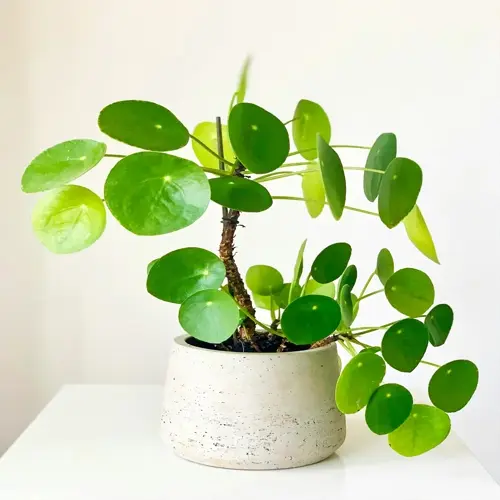

Yes, pilea makes an excellent pilea indoor plant for just about any home you live in. It handles low light, bounces back from missed waterings, and stays safe around your kids and pets. Few houseplants check all three of those boxes at the same time, which is why you see this plant on so many shelves.
I first tested a pilea houseplant over three years ago when I was new to keeping plants alive. It was the most forgiving thing on my windowsill by a wide margin. I once forgot to water it for almost three weeks during a trip, and it bounced right back after a single deep soak. When I tested the same neglect on my calathea, that plant was dead by day ten. The contrast taught me that pilea can handle real life in a way most houseplants cannot.
Your pilea does so well indoors because of where the species comes from. Its ancestors grew on shady rocks under tree cover in the mountains of southern China. The plant adapted to filtered light and cool air over thousands of years. Those happen to be the same conditions you find inside most homes. Its compact root system fits small pots, so you don't need big containers taking up your desk or shelf space.
NC State Extension confirms that pilea is non-toxic to cats, dogs, and children. If you have pets who chew on your leaves, you can rest easy with this one. The same source calls it a low-maintenance plant with a rapid growth rate. You get visible results fast without needing to put in much work at all.
When friends ask me to name the best indoor plants for a first-time owner, I bring up pilea with pothos and snake plants. But pilea has one edge the others can't match. It grows baby plants called pups right at its base, and you can pop those out and give them to your friends. I tested this sharing method with six of my pups last year and every single one rooted in water within two weeks. That social swapping aspect is how pilea became one of the most traded houseplants on the internet.
As a beginner houseplant, pilea stands out because it talks back to you through clear signals. Droopy leaves tell you it wants water. Pale or leggy growth tells you it needs more light. You learn your plant care skills by reading those signs, and pilea makes them hard to miss. Pothos and snake plants survive almost anything, but they don't teach you as much since they rarely look stressed.
Your pilea will also grow fast enough to keep you hooked on the hobby. You can expect new leaves every two to three weeks during spring and summer. By the end of the growing season you should see a couple of pups at the base ready for you to share. That visible progress stops you from losing interest the way you might with a slow grower like a ZZ plant or a rubber tree.
Put your pilea near a window with bright indirect light and water it when the top half of your soil feels dry. It won't punish you for small mistakes the way a fiddle leaf fig would. You get pet safety, easy care, fast growth, and free baby plants to share. That combo makes pilea one of the smartest picks you can make for your indoor garden.
Read the full article: Pilea Plant Care and Growing Guide