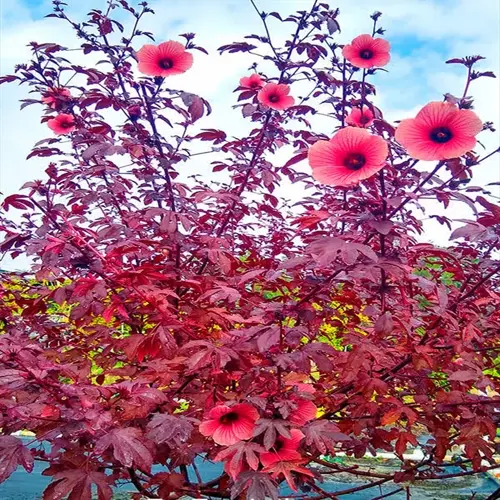

Yes, hardy hibiscus low maintenance care is one of the biggest reasons gardeners love this plant. After the first year, it needs just basic watering, one pruning session, and a few rounds of fertilizer. That's all it takes for a perennial that gives you dinner-plate-sized blooms all summer long.
In my experience, no perennial gives you more impact for less work. I grow both hardy hibiscus and roses in my garden. My roses need weekly spraying, constant deadheading, and fussy winter care. The hibiscus gets maybe 10 minutes per week during summer and two quick seasonal tasks. For the huge blooms you get, nothing else in my garden comes close to that payoff.
Several traits earn this plant its easy care hibiscus reputation. NC State Extension lists it as deer resistant, which means you won't spend your summer battling hungry wildlife. The plant has few serious disease or pest issues beyond the occasional Japanese beetle or aphid visit. It also tolerates a wide range of soils, from dry sandy ground to boggy spots near ponds where most perennials would rot. MSU Extension's Dr. Eddie Smith called hardy hibiscus 'easy to grow, incredibly rewarding', and that sums it up well.
This is a perfect hardy hibiscus beginner plant for anyone just starting their first perennial garden. You don't need years of experience or special equipment. If you can water a plant and cut stems with a pair of hand pruners, you have all the skills you need. The plant forgives mistakes that would kill fussier perennials, and it bounces back from neglect faster than you'd expect.
Spring Tasks March to May
- Remove mulch: Pull winter mulch away from the crown in stages over two weeks once overnight temperatures stay above freezing.
- Fertilize early: Apply a low-phosphorus fertilizer like 10-4-12 when new shoots appear and repeat every 2 to 3 weeks through August.
- Check for life: Scrape the base of old stems to confirm green tissue if new growth seems late, since these plants emerge last.
Summer Tasks June to September
- Water deeply: Give 1 to 2 inches of water per week during hot spells, soaking the root zone rather than spraying foliage.
- Deadhead optional: Removing spent blooms keeps the plant tidy but isn't required since new buds open on their own schedule.
- Watch for pests: Pick off Japanese beetles by hand in the morning when they are sluggish and spray aphids with a strong hose blast.
Fall and Winter Tasks October to February
- Cut back after frost: Trim dead stems to 4 to 6 inches above soil level once they brown and dry out after the first hard freeze.
- Mulch the root zone: Spread 4 to 6 inches of shredded bark or straw over the crown after the ground starts to freeze.
- Mark the spot: Place a labeled stake near each plant so you know the location and avoid digging into the crown by accident.
The whole annual care routine adds up to maybe 3 to 4 hours of total work spread across the year. You get months of giant tropical-looking flowers in return. That makes hardy hibiscus one of the best value perennials in any garden. It works great for seasoned growers and total beginners alike.
Read the full article: Hardy Hibiscus Care and Growing Guide