
No, composting hard for beginners is a myth that scares too many people away from a simple process. The basics come down to tossing food scraps and dry leaves into a pile and letting nature handle the rest. You don't need special training, expensive equipment, or a science degree to make it work.
My first month of composting was full of overthinking. I read guides that made it sound like you needed exact ratios, pH meters, and thermometers just to begin. I stressed over every banana peel and handful of leaves. Then something clicked around week three when I lifted the bin lid and saw the bottom layer had already turned dark and crumbly. My pile was decomposing just fine despite all my rookie mistakes. The learning curve flattened out fast after that moment of relief.
The core concept is this: add roughly 2 to 3 parts brown material for every 1 part green material and keep the pile about as damp as a wrung-out sponge. Browns are dry things like dead leaves, shredded cardboard, and newspaper. Greens are wet things like fruit peels, vegetable scraps, and coffee grounds. If your pile smells bad, add more browns. If nothing seems to break down, add more greens or water. That's the entire system. Microbes, fungi, and insects show up on their own and do all the heavy lifting without any help from you.
Here are three beginner composting tips that cover everything you need to know for your first bin.
Balance Browns and Greens
- The ratio: Aim for 2 to 3 handfuls of dry brown material for every handful of wet green scraps you add to the bin.
- Why it matters: Too many greens create a slimy, smelly mess while too many browns just slow things down without causing real harm.
- Easy trick: Keep a bag of dry leaves next to your bin and grab a scoop every time you dump kitchen scraps inside.
Keep Things Damp Not Wet
- Moisture target: Your pile should feel like a wrung-out sponge when you squeeze a handful of the material in your fist.
- Too dry signs: Material sits unchanged for weeks and looks the same as when you added it to the bin.
- Too wet signs: Puddles form at the bottom, a sour smell develops, and the pile compacts into a dense soggy mass.
Cover Every Addition
- The habit: Every time you add food scraps, toss a layer of brown material on top to bury them from sight.
- Pest prevention: This single habit stops 90% of fly and rodent problems that frustrate new composters most often.
- Odor control: Covered scraps break down through aerobic decomposition, which produces an earthy smell instead of a rotten one.
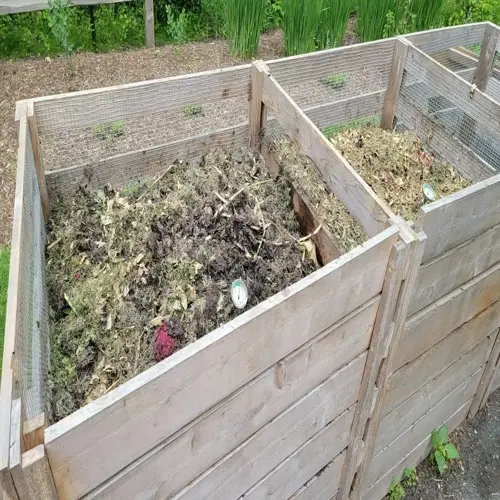
The easy composting methods for first-timers require almost zero skill. Cold composting in a static bin means you just pile things up and wait. A neglected heap still gives you usable compost in about a year. It won't be perfect, but it works. Trench composting is even simpler since you just dig a hole, dump scraps in, cover with soil, and walk away.
For your first week, grab a basic static bin and set it on bare soil. Throw in a few inches of dry leaves as a base layer. Add your kitchen scraps on top and cover them with more leaves. Sprinkle some water if everything looks dry. Walk away and come back in seven days. You'll find the bottom already warming up and starting to change color. That first peek proves how simple this whole process is and builds the confidence you need to keep going.
Read the full article: 8 Best Compost Bins for Every Garden