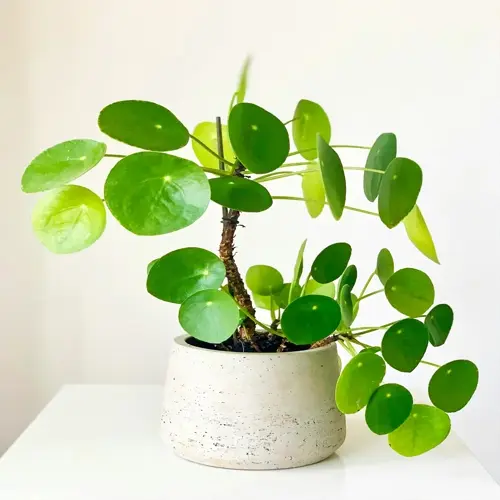

You should water a pilea every 7 to 14 days depending on the season, your pot type, and how much light the plant gets. The soil needs time to dry out between sessions because pilea roots rot fast in wet conditions.
I tested both top watering and bottom watering on my pilea plants for a full year. Bottom watering gave me the best results. You set the pot in a tray of water for 20 to 30 minutes and let the soil wick moisture up from below. The roots grew denser and the top layer stayed drier, which kept fungus gnats away. I also found that terracotta pots dry out 3 to 4 days faster than plastic ones. Your pot material changes your watering timing more than you might think.
Pilea grows wild on rocky mountain slopes in southern China where rainwater drains fast and roots dry between storms. The species evolved for cycles of moisture followed by periods of dryness, not constant wetness. Keeping the soil soggy suffocates the roots by cutting off oxygen, which leads to rot. This is why more pilea plants die from overwatering than from any other cause.
The NYBG recommends letting the top two-thirds of the potting mix dry out before you water again. That's much drier than what many online guides suggest. Some say to water when just the top inch feels dry, while others say the top 2 to 3 inches. In my experience, the NYBG guideline is closer to what pilea wants. Waiting for deeper dryness produces healthier roots and fewer yellow leaves.
This pilea watering schedule gives you a solid starting range. But your actual pilea watering frequency depends on your home. A plant in a warm bright room dries faster than one in a cool dim corner. Instead of following a rigid calendar, use the finger test. Push your finger 2 inches into the soil. If it feels dry at that depth, go ahead and water. If there's any moisture, wait another two or three days and test again.
Watch for warning signs on the leaves to fine-tune your routine. Crispy brown leaf edges and downward curling mean you're underwatering. Yellow leaves starting at the bottom of the plant with soft mushy stems mean overwatering and possible root rot. Catching these signals early lets you adjust before the damage gets serious.
The golden rule is simple: when in doubt, wait. Pilea recovers from a few days of drought far easier than it recovers from waterlogged roots. Give the soil time to breathe between waterings and your plant will stay green, upright, and healthy through every season.
Read the full article: Pilea Plant Care and Growing Guide