
Introduction
Dracaena marginata care seems hard until you bring one home and watch it thrive on neglect. I got my first madagascar dragon tree about 8 years ago for a dim apartment. The windows barely let in any sun at all. That plant grew over 4 feet tall in just 3 years with almost no effort from me.
Think of dracaena marginata as the camel of houseplants. It stores water in its trunk for dry spells. The stems hold moisture through a tissue structure called hydraulic capacitance. This means the plant draws on its own reserves when you skip a watering. In good light this low maintenance houseplant can grow up to 18 inches per year and reach 15 feet tall.
You might see this plant sold under different names at your local shop. Its scientific name changed to Dracaena reflexa var. angustifolia a while back. Most stores still use the old name though. The Dracaena genus has around 40 species in it. No matter what the tag says, you're getting the same tough indoor tree.
This guide shares what I learned from years of growing these plants in my own home. I've killed a few along the way and found out what works through real trial and error. You'll get the exact steps for watering, light, soil, pruning, and pest control to keep your dracaena marginata care on track.
6 Dracaena Marginata Varieties
Most guides just list dracaena marginata varieties by name and move on. I've grown 4 of these types of dragon tree in my own collection over the years. Each one has a different look and slightly different care needs that matter when you pick the right plant for your space.
The standard form has leaves about 2 feet long and 0.5 inches wide with thin red edges. From there the varieties branch into wild colors and shapes. The dracaena tricolor adds white and pink stripes while the dracaena colorama goes full fuchsia. Then you have the dracaena tarzan with its wider, stiffer leaves that look almost alien. Your light level at home will decide which variety keeps its best color over time.
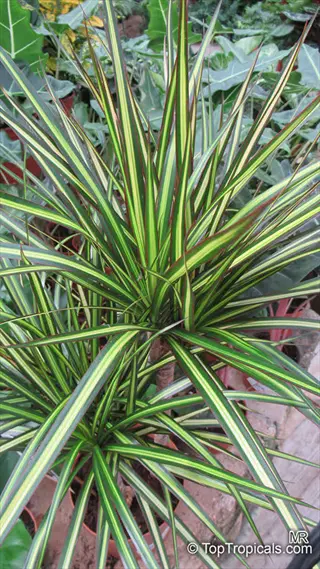
Dracaena Marginata (Standard)
- Appearance: The standard species features slender, arching dark green leaves with thin red or purple margins along the edges, growing on upright cane-like stems
- Size: Grows 3 to 8 feet (0.9 to 2.4 meters) tall indoors and up to 20 feet (6 meters) in its native Madagascar habitat outdoors
- Light needs: Thrives in bright indirect light but tolerates lower light conditions better than most of the colored varieties listed below
- Growth rate: Produces up to 18 inches (46 centimeters) of new growth per year in optimal light, slowing down a lot in shaded spots
- Best for: First-time plant owners who want a forgiving, low-maintenance indoor tree that tolerates irregular watering and dim corners
- Care tip: This variety handles neglect well because its stems store water through hydraulic capacitance, a natural drought survival mechanism
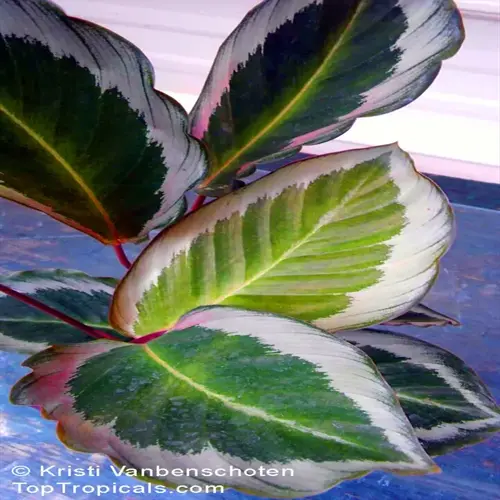
Dracaena Marginata Tricolor
- Appearance: Displays three distinct colors on each leaf with a green center stripe, white inner margin, and pink to red outer edge creating a pastel rainbow effect
- Size: Typically reaches 4 to 6 feet (1.2 to 1.8 meters) indoors, growing a bit slower than the standard variety due to less chlorophyll
- Light needs: Requires brighter light than the standard species to maintain vivid tricolor striping because the white portions lack chlorophyll for photosynthesis
- Growth rate: Grows a bit slower than the standard form, averaging 10 to 14 inches (25 to 36 centimeters) per year in bright indirect light
- Best for: Plant owners who want a more decorative specimen with striking color variation and can provide consistent bright indirect light
- Care tip: Avoid low-light placement because insufficient light causes the white and pink coloring to fade back toward solid green over time
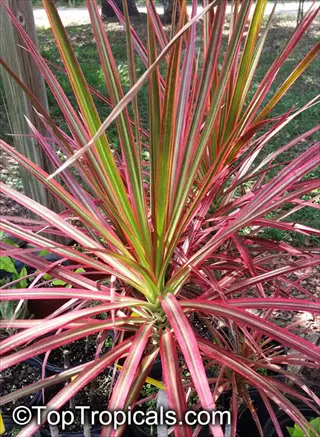
Dracaena Marginata Colorama
- Appearance: Features the most intense pink and red coloring of all varieties, with leaves that appear almost entirely fuchsia or deep rose with thin green centers
- Size: Reaches 3 to 5 feet (0.9 to 1.5 meters) indoors, making it one of the more compact varieties suitable for smaller living spaces
- Light needs: Demands the brightest indirect light of any variety because color intensity is tied straight to light exposure according to plant specialists
- Growth rate: Slowest growing of the common varieties at 8 to 12 inches (20 to 30 centimeters) per year because the heavy pigmentation reduces photosynthetic efficiency
- Best for: Experienced plant owners looking for a bold, colorful statement plant who can provide a bright east or south-facing window position
- Care tip: Place near the brightest window available because inadequate light will cause Colorama to lose its signature pink intensity and revert toward green tones
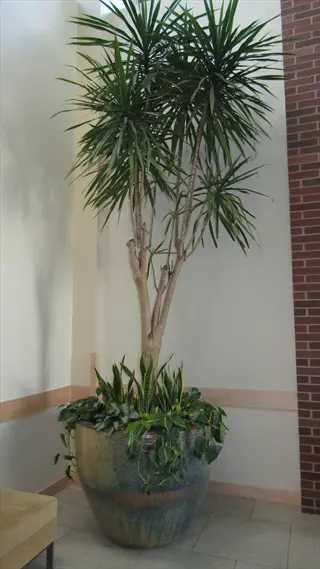
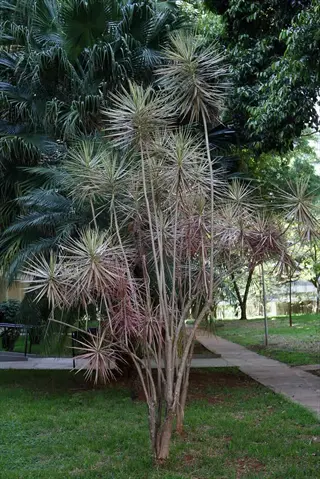
Dracaena Marginata Tarzan
- Appearance: Features wider, stiffer, and darker green leaves compared to the standard, arranged in a dense rosette that gives a spiky, almost palm-like silhouette
- Size: Grows 4 to 6 feet (1.2 to 1.8 meters) indoors with a more compact, upright growth habit and thicker trunk than other varieties
- Light needs: Tolerates a similar light range as the standard variety but produces the densest rosette shape in bright indirect light conditions
- Growth rate: Comparable to the standard species at 12 to 16 inches (30 to 41 centimeters) per year, with thicker trunk development over time
- Best for: Owners wanting a more dramatic, architectural plant with a modern appearance that works well in contemporary and minimalist interior design
- Care tip: Tarzan is a patented cultivar, so propagation from cuttings for commercial sale is restricted, but home growers can propagate for personal use
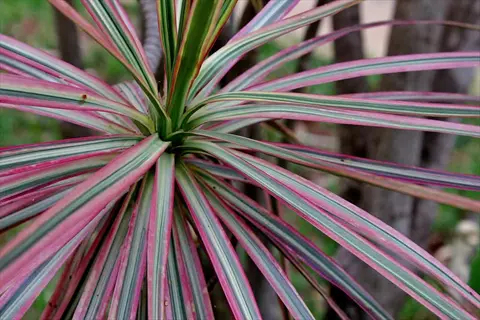
Dracaena Marginata Magenta
- Appearance: Similar to the standard but with deeper, more pronounced magenta-purple leaf margins that create a richer contrast against the dark green center stripe
- Size: Reaches 4 to 7 feet (1.2 to 2.1 meters) indoors, maintaining an elegant upright form with arching leaves on slender canes
- Light needs: Performs well in moderate to bright indirect light and maintains its magenta coloring better than Colorama in slightly lower light conditions
- Growth rate: Grows at a moderate pace of 12 to 15 inches (30 to 38 centimeters) per year, similar to the standard species in comparable light
- Best for: Anyone who wants slightly more color than the standard species without the demanding light requirements of the Tricolor or Colorama varieties
- Care tip: Often sold braided or woven in decorative formations at garden centers, making it an attractive ready-made centerpiece for living rooms and offices
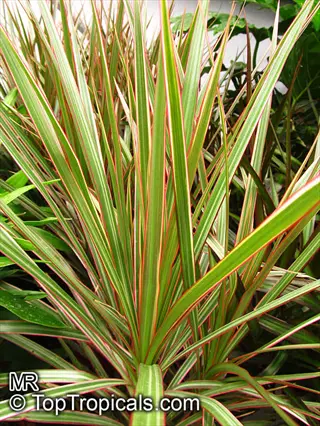
Dracaena Marginata Bicolor
- Appearance: Displays two-toned leaves with a green center and cream to white outer margin, creating a clean, elegant contrast without the pink tones of Tricolor
- Size: Grows 4 to 6 feet (1.2 to 1.8 meters) indoors with a form similar to the standard species, producing a graceful canopy of arching bicolor leaves
- Light needs: Requires bright indirect light to maintain the cream-white variegation, though it is a bit less light-demanding than the Colorama variety
- Growth rate: Moderate pace at 10 to 14 inches (25 to 36 centimeters) per year, with the white portions contributing less to photosynthetic energy production
- Best for: Plant owners who prefer a subtle, refined variegation pattern without the bold pink tones found in the Tricolor and Colorama varieties
- Care tip: Monitor for any branches reverting to solid green leaves and prune those stems back to encourage continued bicolor leaf production
I've found that the standard and Magenta varieties do best for most people. They don't need perfect light to look great. If your home gets strong natural light from big windows, try the Colorama or Tricolor instead. You'll get stunning colors that the basic form can't match.
Watering and Moisture Guide
Getting dracaena marginata watering right matters more than any other part of care. I've watched more of these trees die from too much water than too little. The stem works like a water tower for the plant. It releases stored moisture during dry spells while the leaves close their pores to cut water loss. This makes it one of the best drought tolerant houseplant options you can find.
Research from Jupa et al. in Tree Physiology showed that dense stem tissue gives the plant strong hydraulic capacitance. The leaves also close tiny pores called stomata as their top defense against dry conditions. So when you wonder how often to water dracaena, the answer is less than you think. Let the top inch of soil dry out before you grab the watering can.
Overwatering dracaena is the fastest way to kill it. Soggy soil leads to root rot, which turns the roots brown and mushy. You'll notice the stems go soft and the plant starts to lean. Always check the soil with your finger before you add water. If it still feels damp, wait a few more days.
Water quality matters a lot for this species. Fluoride in tap water causes brown tips on the leaves that won't heal. Switch to filtered water for plants or use rainwater to avoid this problem. You can also let tap water sit in an open container for 24 hours before using it. Keep humidity above 30% to 40% to prevent dry leaf edges, and mist the leaves once a week during winter.
I keep a simple rule: when in doubt, don't water. Your dracaena will bounce back from a dry spell much faster than from sitting in wet soil for too long.
Light and Temperature Needs
Dracaena light requirements confuse a lot of new plant owners. The advice online seems to change with every site you read. Some sources say dracaena direct sunlight is fine indoors. Others warn it will scorch the leaves. I've tested both and found the truth sits between the two extremes.
The reason for this conflict comes down to how your plant grew up. A plant raised in a greenhouse with lots of sun has different leaf tissue than one grown in a dim shop. Indoor plants haven't built up the protection to handle strong direct rays without burning. If you want to move yours into more sun, do it over 2 to 3 weeks so the leaves can adjust.
Bright indirect light gives your dracaena the best shot at fast, healthy growth of up to 18 inches per year. This plant also ranks among the best low light houseplants you can buy, so it still does fine in darker rooms. The colors on varieties like Tricolor and Colorama will fade in low light though.
For indoor temperature for dracaena, aim for 60°F to 70°F (15°C to 21°C) during the day. Drop it about 10°F (5.6°C) cooler at night and your plant will be happy. Keep it away from cold drafts near doors and heating vents that blast dry air on the leaves. If you live in USDA Zones 10a through 12b, you can grow this tree outside year round.
Bright Indirect Light (Ideal)
- Location: Place 3 to 5 feet (0.9 to 1.5 meters) from a south or west-facing window where sunlight fills the room but does not land directly on the leaves
- Growth result: Expect the fastest growth rate of up to 18 inches (46 centimeters) per year with the most vibrant leaf color contrast on red and green margins
- How to test: Hold your hand between the plant and the window. A soft shadow with blurred edges means bright indirect light, perfect for this species
Medium Light (Acceptable)
- Location: Position near a north-facing window or 6 to 8 feet (1.8 to 2.4 meters) from a bright window where ambient light reaches the plant throughout the day
- Growth result: Growth slows to about 8 to 12 inches (20 to 30 centimeters) per year, and colored varieties like Tricolor may lose some of their vivid striping
- How to test: You can read a book without turning on a lamp. Your hand casts a visible but faint shadow against a white surface
Low Light (Tolerated)
- Location: Interior rooms, hallways, or corners more than 10 feet (3 meters) from the nearest window with limited natural light during the day
- Growth result: Growth slows down a lot, new leaves appear thinner and smaller, and the plant may become leggy with long gaps between leaf clusters
- How to test: You would need to turn on a lamp to read during the day. Shadows are not visible or are very faint in this spot
Direct Sunlight (Risky)
- Location: Right on a windowsill where unfiltered sun rays hit the leaves for more than 2 hours per day, with intense afternoon western sun being the worst
- Growth result: Leaves may bleach, scorch, or develop brown crispy patches. Indoor plants are not adjusted to intense direct sun unlike outdoor specimens
- How to test: Direct sun beams land on the leaves creating sharp, defined shadows. A sheer curtain can filter this into safe bright indirect light
Soil, Repotting, and Feeding
The best soil for dracaena marginata needs to drain fast but still hold some moisture. Most care guides just tell you to use a well-draining potting mix and leave it at that. I'll give you the exact recipe I use and explain why each part matters for your plant's health.
Soil pH plays a bigger role than most people realize. Clemson Extension says to keep your dracaena potting mix between 6.0 and 6.5 pH. When the soil drops below that range, fluoride becomes more available to the roots. That fluoride then travels to the leaf tips and causes the brown edges that drive so many dracaena owners crazy. A simple pH test kit from any garden store tells you where your soil stands.
Skip any potting soil with lots of perlite in it. Clemson Extension warns that perlite can raise fluoride levels in your soil. Also stay away from fertilizers with superphosphate for the same reason. Feed your plant with a balanced liquid fertilizer once a month during spring and summer at half strength and stop feeding in winter.
When to repot dracaena depends on what you see at the bottom of the pot. Roots poking out of drainage holes mean it's time for dracaena repotting. Go up just one pot size and do this in spring when the plant is growing strong. I water my plant the day before repotting so the roots slide out of the old pot with less stress.
Pests and Troubleshooting
Dracaena marginata pests don't show up often, but when they do you need to act fast. I once lost an entire branch to spider mites on dracaena because I didn't catch the tiny webs until it was too late. Mealybugs on dragon tree stems are just as sneaky since they hide in leaf joints where you won't look. Clemson Extension lists scale insects and mites as the top threats to this species.
Dracaena brown tips and dracaena yellow leaves are the two problems I hear about the most from other plant owners. The tricky part is that both symptoms can come from several different causes. Your best approach is to check the symptom first, then work backward to find the cause. The guide below walks you through the most common issues and how to fix them fast.
NC State Extension also flags banded greenhouse thrips and fern scale as threats. Most care guides skip these pests. If you see dracaena drooping or leaning to one side, that often points to root trouble rather than pests. Check the roots for brown mushy spots before you blame bugs for the problem.
Brown Leaf Tips
- Cause: Fluoride in tap water reacts with leaf tissue, or humidity drops below 30% to 40%, causing cell damage at the leaf edges and tips
- Solution: Switch to filtered water, rainwater, or distilled water. Increase humidity with a pebble tray or mist leaves weekly during dry winter months
- Prevention: Maintain soil pH between 6.0 and 6.5 as recommended by Clemson Extension, because acidic soil locks up fluoride and prevents root absorption
Yellow Leaves on Lower Stems
- Cause: Natural aging causes the oldest lower leaves to yellow and drop as the plant redirects energy to new growth at the crown of the stem
- Solution: Pull off leaves that have turned all the way yellow. If many leaves yellow at once, check for overwatering by pressing the soil one inch deep for moisture
- Prevention: Allow soil to dry between waterings and ensure the pot has drainage holes. A few yellow lower leaves per month is normal and not a sign of disease
Spider Mites and Mealybugs
- Cause: Dry indoor air attracts spider mites, which spin fine webs between leaves. Mealybugs appear as white cottony clusters at leaf bases and stem joints
- Solution: Spray affected areas with insecticidal soap or neem oil every 7 to 10 days for 2 to 4 weeks. Wipe visible mealybugs off with rubbing alcohol on cotton swabs
- Prevention: Inspect new plants before placing them near your collection. Increase humidity and wipe leaves with a damp cloth each month to remove dust and eggs
Scale Insects and Thrips
- Cause: Scale insects attach to stems as brown bumps, sucking plant sap. Banded greenhouse thrips feed on leaf undersides causing silvery streaks and tiny black dots
- Solution: Scrape scale off with a fingernail or soft brush, then treat with horticultural oil. For thrips, apply systemic insecticide or release predatory mites as biocontrol
- Prevention: Quarantine new plants for two weeks before adding them to your collection. NC State Extension identifies fern scale as a specific threat to this species
Drooping or Leaning Stems
- Cause: Overwatering causes root rot that weakens stem support, or the plant is reaching toward its light source and becoming unbalanced over time
- Solution: Check roots for brown mushy sections and trim them with sterile scissors. Repot in fresh dry soil and rotate the pot every few months for even light exposure
- Prevention: Water when the soil surface is dry and ensure pots drain all the way. Stake tall specimens with a bamboo rod for support if stems become top heavy
Pruning and Propagation
Learning how to propagate dracaena marginata is one of the most rewarding parts of owning this plant. I turned a single tall stem into 3 new plants last spring using nothing more than sharp shears and some patience. Dracaena pruning does double duty here because every cut you make gives you fresh material to root.
If you want to know how to make dragon tree bushy, the secret is simple. Cut the main stem at the height you want and wait. The plant will push out 2 to 3 new growth points just below the cut within a few weeks. This dracaena branching trick turns a tall, bare stem into a full, bushy tree with multiple crowns. Spring is the best time for both pruning and dracaena stem cuttings.
You can also shape your tree by braiding young stems together or bending them with gentle ties over time. I've seen growers create spiral trunks by wrapping the stem around a stake as it grows. Dracaena air layering is another option if you want roots to form before you make the cut. Clemson Extension lists 4 distinct methods for creating new plants from your existing tree.
Stem Tip Cuttings
- Step 1: Cut a 4 to 6 inch (10 to 15 centimeter) section from the top of a healthy stem using sterile pruning shears, making the cut just below a leaf node
- Step 2: Remove the lowest 2 to 3 leaves to expose the bare stem, then let the cutting dry for 24 hours so the cut end forms a protective callus
- Step 3: Place the cutting in water or moist soil mix, keeping it in bright indirect light. Roots appear within 3 to 5 weeks in water or 4 to 6 weeks in soil
Stem Section Cuttings
- Step 1: Cut a leafless section of stem 4 to 8 inches (10 to 20 centimeters) long, marking the top end with a notch so you know which direction faces up
- Step 2: Lay the stem flat on moist soil or stand it upright with the correct end facing up in a pot of damp perlite and peat moss mixture
- Step 3: Cover with a clear plastic bag to maintain humidity and wait 4 to 8 weeks for new shoots and roots to emerge from the stem nodes
Air Layering
- Step 1: Choose a spot on the stem where you want roots to form and make a thin cut around one third of the stem width with a sterile blade
- Step 2: Wrap the wounded area with damp sphagnum moss and cover tight with plastic wrap, securing both ends with twist ties to maintain moisture
- Step 3: Check every 2 weeks for root development through the plastic. Once roots are 2 to 3 inches (5 to 8 centimeters) long, cut below and pot it up
Basal Shoot Division
- Step 1: Look for small shoots growing from the base of the mother plant near the soil line, which develop their own root systems over time
- Step 2: Remove the plant from its pot and separate the basal shoot with its attached roots using a clean knife or by pulling apart with care
- Step 3: Pot the separated shoot in fresh soil mix, water it a little, and place in bright indirect light. New growth confirms successful establishment
Don't throw away any stem pieces after you prune. Every section of stem has the potential to root and grow into a brand new plant with the right care.
5 Common Myths
Dracaena marginata needs to be watered frequently because it is a tropical plant from Madagascar
Dracaena marginata stores water in its stems through hydraulic capacitance and actually prefers soil that dries out between waterings, according to research in Tree Physiology
Placing a Dracaena marginata in direct sunlight gives it the best growth and most vibrant leaf color
Direct sunlight can scorch the leaves and cause them to bleach. Bright indirect light or filtered light produces the healthiest growth and richest color contrast on the leaf margins
Brown tips on Dracaena leaves mean the plant is not getting enough water and needs more frequent watering
Brown leaf tips are most commonly caused by fluoride in tap water or low humidity below 30 to 40 percent, not underwatering. Switching to filtered water often resolves the problem
Dracaena marginata purifies indoor air so effectively that a single plant can clean an entire room
While the 1989 NASA study included Dracaena marginata for removing volatile organic compounds, practical air purification would require 10 to 1,000 plants per square meter to match normal air exchange rates
All Dracaena marginata varieties look the same with identical green leaves edged in red or purple
There are several distinct varieties including Tricolor with white and pink striped leaves, Colorama with intense pink and red coloring, and Tarzan with wider, stiffer, darker leaves on a compact form
Conclusion
This dragon tree guide covers the key steps to keep your plant thriving for years. Good dracaena marginata care comes down to a few core habits. Give it bright indirect light, let the soil dry between waterings, and keep the pH between 6.0 and 6.5. Those 3 basics handle most of the work for you.
The single best indoor plant care tip I can share is to switch away from tap water. Fluoride in tap water causes those ugly brown leaf tips that frustrate so many owners. Use filtered or rain water instead and you'll see a huge difference within a few weeks. This one change solves the most common problem people face with this species.
What makes this plant so great for beginners is the science behind its survival. Research from Jupa et al. showed that the stems store water through special tissue. This built in drought defense means the plant forgives missed waterings that would kill most other houseplants. When I first learned about this, it changed how I care for all my plants.
Once you feel confident with basic care, try pruning a stem in spring to force 2 to 3 new branches. Take those cuttings and root them to grow your collection. With a lifespan of 10 to 15 years indoors, your dracaena marginata care journey is just getting started. This tree rewards patience and turns into a real showpiece over time.
External Sources
Frequently Asked Questions
How do you care for a Dracaena Marginata?
Provide bright indirect light, water when the top inch of soil is dry, keep temperatures between 60 and 70 degrees Fahrenheit (15 to 21 degrees Celsius), and use well-draining soil with a pH of 6.0 to 6.5.
Is Dracaena Marginata a good indoor plant?
Yes, it is one of the best indoor plants because it tolerates low light, requires infrequent watering, and grows well in typical household conditions.
How often do you water a Dracaena Marginata?
Water every 7 to 14 days depending on the season, allowing the top inch of soil to dry out completely between waterings.
Where is the best place to put Dracaena Marginata?
Place it near an east or north-facing window where it receives bright indirect light, away from cold drafts and heating vents.
What are the disadvantages of Dracaena?
The main disadvantages include toxicity to pets, sensitivity to fluoride in tap water, slow growth rate, and susceptibility to brown leaf tips in dry environments.
What is the luckiest plant inside the house?
In feng shui traditions, the Dracaena is considered a lucky plant that brings positive energy, alongside money trees and lucky bamboo.
Do Dracaena like bathrooms?
Yes, Dracaena plants can thrive in bathrooms because the higher humidity helps prevent dry leaf tips, as long as there is some natural light.
Can I use tap water for my Dracaena?
Tap water containing fluoride can cause brown leaf tips. Use filtered water, rainwater, or let tap water sit out for 24 hours before use.
What is the lifespan of a Dracaena Marginata?
With proper care, a Dracaena Marginata can live 10 to 15 years indoors and significantly longer when planted outdoors in tropical climates.
How to get a Dracaena to bloom?
Dracaena rarely blooms indoors. Outdoor plants in tropical climates may produce small fragrant white tubular flowers when mature.