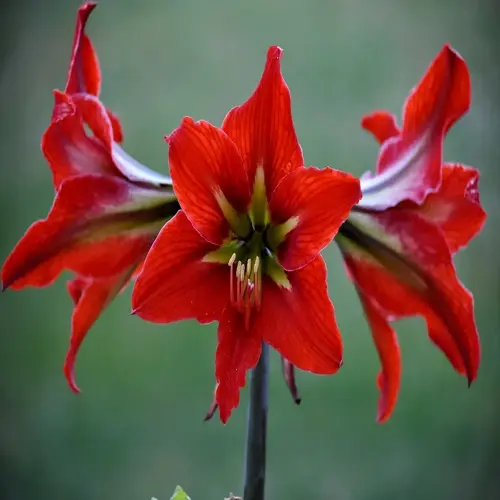

Yes, your amaryllis come back every year when you give them the right seasonal care. These hardy bulbs rebloom on an annual cycle with a proper dormancy period. You can expect flowers from the same bulb for decades without any trouble at all.
I have a bulb on my kitchen windowsill right now that has rebloomed for seven straight years. The first winter it gave me one stalk with three flowers. Last year it pushed out three stalks with twelve flowers total. They grow stronger every season as your bulb stores more energy inside.
So do amaryllis rebloom after that first show? Every single time, as long as you follow the seasonal cycle. Your bulb is built to repeat this pattern over and over for your entire life. Most people just don't know the simple steps to make it happen.
You need to follow the annual cycle for your bulb to keep flowering. Your plant needs a warm growing phase followed by a cool rest period each year. Skip either one and you'll get weak results or no flowers at all. I've seen friends throw away healthy bulbs because nobody told them about this simple rhythm.
Here's how the energy cycle works inside your bulb. During spring and summer, the long green leaves absorb sunlight and turn it into carbohydrates. Those sugars pack into the bulb's fleshy scales like fuel stored in a tank. Then you move the bulb to a cool dark spot for 8 to 12 weeks. That cold rest acts as a hormonal switch that tells your bulb to stop making leaves and start forming flower buds.
UMN Extension research shows that your amaryllis can bloom for up to 75 years with proper care. That makes it one of the longest-lived houseplant bulbs you can buy and own. Some growers pass their bulbs down through two or three generations of family. You're not buying a one-season decoration here. You're starting a real tradition.
Your bulb needs three things to come back strong each year. First, give it at least four full months of leaf growth in bright light after the flowers fade. Second, enforce a dormancy period of 8 to 12 weeks in a cool dark spot around 50 to 55°F (10 to 13°C) with no water. Third, feed your plant with a half-strength fertilizer every two to four weeks during the growing months.
I learned what happens when you skip a step the hard way. One summer I forgot to fertilize and my bulb managed only a single short stalk the next winter. The flowers looked washed out and small. Once I got back on a feeding schedule, the next bloom came back to full strength. Your bulb forgives mistakes, but it rewards good habits even more. You can see the difference in flower size and color within just one corrected season.
Your amaryllis perennial bulb is a long-term investment that pays off bigger every year. Mature bulbs produce offsets at the base. These are small baby bulbs you can separate and pot up on their own. Give those offsets two to three years to reach blooming size and you'll grow your collection without spending another dollar.
I started with one bulb seven years ago and now have five blooming plants from offsets alone. You just need patience and a steady routine. Watching one purchase turn into a whole winter garden makes every bit of effort worth it. Your future self will thank you for sticking with the care cycle instead of tossing the bulb after one show. The flowers keep getting bigger and better with each passing year.
Read the full article: Amaryllis Flower: Care, Varieties and More