
Rarely. Mature plants are not significantly injured by them, and that wording comes from UC IPM. Springtails in houseplants feed on fungi and the rotting bits of organic matter in the mix, so they leave your live roots and healthy leaves alone. What alarms people is the sheer count. Springtails in potting soil turn up when the mix stays wet, so the swarm you are looking at is a reading on your watering habits more than a threat to the plant.
The soil under my peace lily looked like it had gone to static. I keep the plant in a glazed pot beside the basement stairs window, and one morning I noticed the whole surface twitch when the water hit it. I scraped back the top inch (2.5 cm) with a spoon. I found round eggs down in the damp peat in small clustered groups, pale and no bigger than grains of sugar. Springtails overcrowd in soil that stays moist and holds plenty of organic matter.
Two conditions have to line up before springtails in houseplants build up to a count like that. The soil has to stay damp. It also has to hold enough organic matter to feed on, and you get both at once with a peat heavy mix inside a decorative pot that has no drainage hole. Take the moisture away and the food is still sitting there, but the springtails cannot use it.
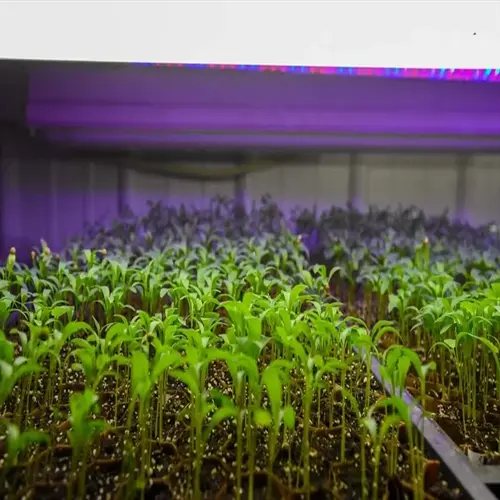
Seedlings are the one real exception. Some species chew the roots or leaves of young plants and leave minute rounded pits on the leaves and roots, or irregular holes in thin leaves. You see it in your seed trays, where the mix never dries out. Past the seedling stage it stops mattering, and springtails plant damage on a grown monstera or pothos does not amount to a real injury. Check the roots and your watering can before you blame the bugs.
The one in your sink and your fern could be Willowsia nigromaculata. This common household springtail lives in drains, damp basements and houseplants, which is why you spot it in three rooms during the same wet week. Find them in the shower and you will find them in the pot by the window. They turn up wherever water sits still indoors.
The fix is a watering change, not a product. Penn State Extension says to let houseplant soil dry between waterings, and that one habit does more than anything you could pour into the pot. Overwatering houseplants keeps the top layer damp all week, and damp organic matter is the only reason the count got so high. Wait until the top inch is dry to your finger, then empty the saucer so the base of the mix is not parked in a puddle.
- Dry it out: Let the top of the mix dry to your touch before you water again.
- Drain it: Tip out the saucer after every watering so no water sits under the pot.
- Give the population time to fall on its own instead of treating the soil.
Numbers drop off as the mix dries, and you can watch that happen without reaching for a spray. Soaking the pot with soap or alcohol adds water to soil that already holds too much. Repot only if the mix has broken down into wet sludge that never dries out. My peace lily kept every leaf through the whole thing.
Read the full article: Springtails: Harmless Bugs, Real Moisture Clue