
Introduction
Low light houseplants live in a measured band, not a mood. Maryland Extension puts that band at 25 to 100 footcandles, which is the reading you get at a north-facing window or in a room lit only by ceiling bulbs. Direct sun outdoors peaks near 10,000 footcandles, so a north window hands a plant about 1% of what it would soak up outside on a clear day, or less.
Plants rated for that range survive it. They do not grow much in it. New leaves come slow, the plant stays close to the size you bought, and most of these species will not flower indoors. The signs of too little light are no flowers and long, lanky stems that lean toward the glass. Many good picks among indoor plants for dark rooms start life on a forest floor, where shade is normal and slow is normal.
Most plant guides open with the line that low light is still light and never attach a number to it. The sources that do measure disagree. Penn State calls 100 footcandles a common baseline. It also admits the figures vary between extension offices and lighting engineers. Colorado State runs the low band from 50 up to 500 footcandles, and it warns that few plants tolerate anything under 50. The bands genuinely conflict, so name the source behind whichever number you use.
So measure your own room first. A cheap light meter, or a phone app with a footcandle readout, tells you in seconds whether your corner sits at 30 or at 300. That one measurement decides your whole plant list. Then watch the water, because dim light slows growth and wet soil stays wet longer, and overwatering does more damage in dark rooms than the dark ever does.
10 Low Light Houseplants That Last
Every list of dim room plants runs through the same six species, so the names are not the useful part. What matters is the light floor each one holds at, and the way each one fails once the room drops under it. Maryland Extension puts ZZ plant, snake plant, cast iron plant and peace lily inside a band of 25 to 100 footcandles, which is roughly what a north-facing window gives you through the day.
Two of them give you a real measurement instead of a reputation. The snake plant low light claim rests on Penn State, where a Master Gardener read her own plant's spot at 25 footcandles mid-morning and the plant still did well. Your pothos low light answer is newer. In a 2024 growth chamber trial, pothos kept growing for 191 days under about 500 lux of white LED for 9 hours a day, a setup meant to stand in for an office with no daylight.
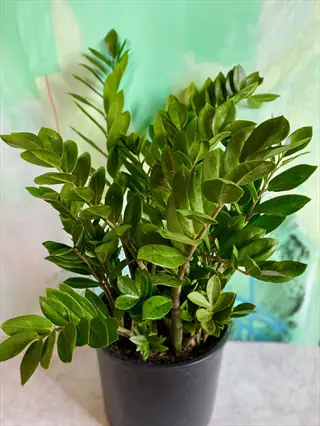
ZZ Plant
- Light floor: Maryland Extension lists it inside the 25 to 100 footcandle low light band, the level of a north-facing window.
- Look: Thick, glossy dark green leaflets on upright stalks that keep their shine in rooms with no direct sun at all.
- Water: Fleshy rhizomes store water, so let the mix dry well down before watering again in a dim room.
- Failure mode: Constant moisture in low light rots the rhizome long before the plant ever complains about the dark.
- Where it fits: Put it in a floor pot in your hallway, or on a desk lit by ceiling fixtures for part of the day.
- Note: Growth in the low band is slow, so expect a plant that holds its shape rather than one that fills its pot.
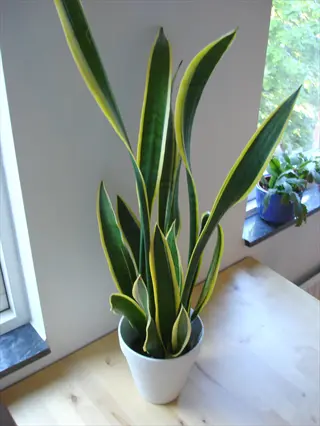
Snake Plant
- Light floor: Penn State measured a snake plant location at only 25 footcandles mid-morning, and the plant still did well.
- Look: Stiff upright blades, often edged in pale yellow, that read as architectural in a corner with little light.
- Water: Dim rooms slow water uptake, so soak the pot well and then wait until the mix is dry through.
- Failure mode: Crinkling tips on older leaves can signal that the spot has dropped below what the plant tolerates.
- Where it fits: Near a north-facing window, where Penn State notes it does well without any direct sun on the leaves.
- Note: Variegated forms hold their edge color better in more light, so plain green types suit the dimmest spots.
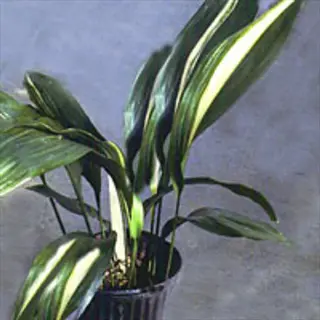
Cast Iron Plant
- Light floor: Maryland Extension, PlantTalk Colorado and UF/IFAS all list it for low light, which makes it the most widely endorsed pick here.
- Look: Broad, deep green blades rising straight out of the soil, with no visible stem and no fuss about placement.
- Water: It handles your neglect far better than wet roots, so water only once the top of the mix has dried out.
- Failure mode: Bleached, scorched patches appear when it is moved into direct sun rather than left in the shade.
- Where it fits: The dimmest corner of a room that still has a window, where most other foliage plants decline.
- Note: UF/IFAS groups it with pothos and spider plant as a low-maintenance choice for spots that do not get sunlight.
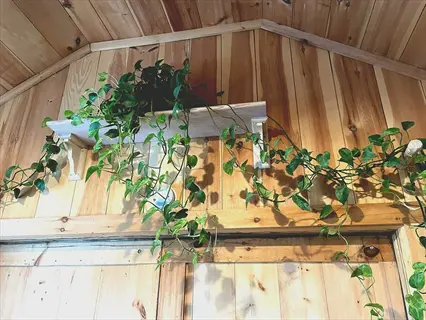
Pothos
- Light floor: In a 2024 trial, pothos sustained growth for 191 days at about 500 lux of white LED light for 9 hours a day.
- Look: Trailing stems of heart-shaped leaves that drape from a shelf or climb a support with equal willingness.
- Water: Growth slows in a dim room, so the schedule that suited a bright window now leaves the mix wet far too long.
- Failure mode: Long bare stretches of stem between leaves are the classic sign it is reaching for a light source.
- Where it fits: A bookshelf or high cabinet where the trailing growth shows and the light stays indirect.
- Note: Under brighter, longer light the same species put more weight into stems, which changed its shape in that study.
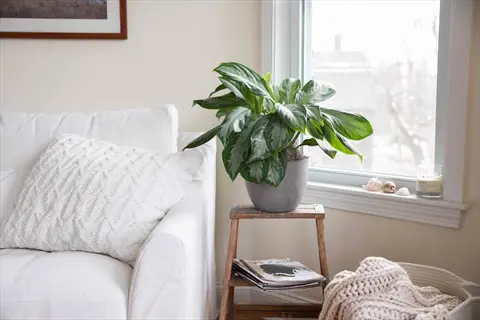
Chinese Evergreen
- Light floor: Illinois Extension rates Chinese evergreen, Aglaonema, as one of the six species it classifies for low light.
- Look: Wide patterned leaves in silver, cream and deep green, carried on short stems in a low, spreading mound.
- Water: Let the surface dry between waterings, because a dim room stretches out how long the mix stays damp.
- Failure mode: Penn State notes the Red Emerald type can fade within a couple of weeks after an abrupt move into dim light.
- Where it fits: Use a side table set back from your window, where it gets steady indirect light rather than sun.
- Note: Move it in stages rather than all at once, since abrupt transitions stress even plants rated for low light.
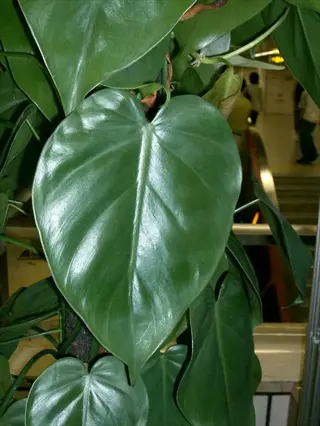
Heartleaf Philodendron
- Light floor: Illinois Extension lists heartleaf philodendron among the houseplants it rates for low light indoors.
- Look: Fast trailing vines of soft heart-shaped leaves that fill a hanging pot without asking much of the room.
- Water: Water when the top of the mix dries; in a dark room that point arrives far later than most people expect.
- Failure mode: Leaves grow smaller and further apart along the vine as the available light drops below its comfortable range.
- Where it fits: Hang it high, or set it on a shelf in a room your north-facing window lights all day.
- Note: Trimming long bare vines pushes fuller growth closer to the pot, which reads better in a dim corner.
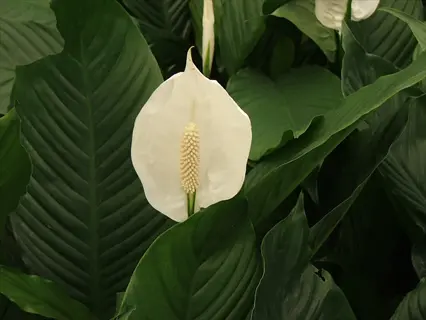
Peace Lily
- Light floor: Maryland Extension places peace lily in the 25 to 100 footcandle band alongside ZZ plant and snake plant.
- Look: Glossy dark green leaves in a tight clump, with white spathes appearing only when light is generous enough.
- Water: It signals thirst by drooping, but that signal comes slowly in a dim room, so check the mix rather than the clock.
- Failure mode: Few or no flowers is the standard low light outcome in this band, as Maryland Extension describes it.
- Where it fits: A floor pot near a north window, where the foliage is the point and any bloom is a bonus.
- Note: If flowering matters to you, this plant needs a brighter indirect spot than the low band gives it.
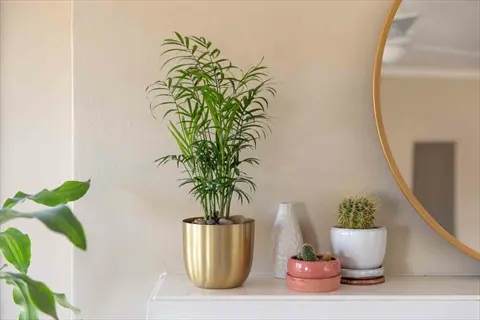
Parlor Palm
- Light floor: Illinois Extension lists the parlor palm, Chamaedorea elegans, among its low light houseplants.
- Look: Fine arching green fronds on slim stems that give a dim room some height without any visual weight.
- Water: Water once the surface dries, and stretch the gap through winter, since a dim room keeps the mix damp.
- Failure mode: Thin, widely spaced fronds and stretched stems follow when the spot is darker than it looks.
- Where it fits: Give it a quiet corner in a room facing north or east, well out of any direct sun.
- Note: It has been a standard interior palm for generations because it copes with indoor light levels.
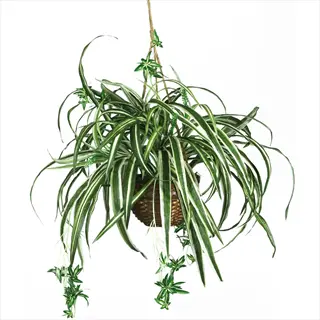
Spider Plant
- Light floor: UF/IFAS names spider plant, with pothos and cast iron plant, for spots that do not get sunlight.
- Look: Arching striped leaves that throw out plantlets on long stems once the parent plant has settled in.
- Water: Water well, then let the top of the mix dry, since low light slows uptake more than most people expect.
- Failure mode: Pale, floppy growth and very few plantlets suggest the spot sits at the bottom of its tolerance.
- Where it fits: A hanging pot or shelf edge where the plantlets can dangle without brushing against cold glass.
- Note: PlantTalk Colorado also lists spider plant among the plants suited to low light placements indoors.
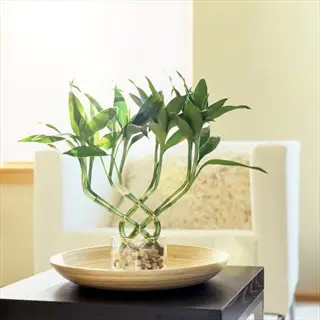
Lucky Bamboo
- Light floor: Penn State notes it keeps its color in deep shade, which puts it below most of the rest of this list.
- Look: Upright green canes, often trained into spirals, sold either standing in water or potted in a shallow mix.
- Water: Grown in water it needs regular changes; grown in mix it wants steady moisture without any standing water.
- Failure mode: Penn State has it holding color in deep shade, so a fading cane points somewhere other than the dark.
- Where it fits: A desk or shelf in an interior room lit by overhead fixtures through the working day.
- Note: It is not a bamboo: Penn State identifies it as Dracaena sanderiana, from West African forest understory.
Read every entry above as tolerance, not as a promise of growth. A peace lily in that low band stays green and healthy and hands you almost no white spathes. Chinese evergreen and parlor palm hold their shape and add very little through a dark winter, and that is the plant working as designed, not a plant in trouble.
One pick missing from most lists is worth your attention. Penn State names dumb cane as its example of high plasticity, the ability to settle into sharp changes in conditions. It takes 2 to 3 hours of direct sun and it also grows at much lower light, so it suits your awkward room, the one that is bright at the glass and dim 6 feet (1.8 m) back.
What Low Light Really Means
How dim is dim? Walk outside at midday and the light hits about 10,000 footcandles. Sit in a chair beside a north facing window and a meter can read 25 footcandles mid-morning, which is what a Penn State master gardener measured at her own snake plant. Same house, same hour, and the plant gets a sliver of what the open sky hands out.
Footcandles for plants measure how much light lands on a leaf. University of Maryland Extension puts low at 25 to 100 footcandles, which covers a north window or a room lit by bulbs alone. Sources disagree past that point. PlantTalk Colorado draws the low band much wider at 50 to 500 footcandles and warns that few plants take anything under 50, while Penn State calls 100 a common baseline and admits the advice varies from one office to the next. Aim inside the range and stop hunting for one true number.
Low light keeps a shade plant alive. It does not push much new growth. The same bands tie the low range to few or no flowers and to spindly, lanky stems as a plant stretches toward the glass. That gap is what separates low light vs bright indirect light, because the brighter spot pays you back in new leaves and short gaps between them, and the dim one holds your plant right where it is.
Outdoor, direct sunlight has a peak intensity of about 10,000 FC.
One reading never settles the question. Three aspects of a spot matter, and the light intensity duration quality trio explains why two north windows can match on a meter and still grow plants apart. Intensity is the footcandle number. Duration is the hours it lasts. Quality is which wavelengths reach the leaf, and red, far-red and blue carry the most weight for growth.
Watering Changes in Dim Light
Dim light stretches out how long your mix takes to dry, so a schedule that worked on a bright sill will drown the same plant in a hallway. Photosynthesis slows in low light and growth slows with it, so the roots pull water out of the pot far more slowly. Overwatering low light plants kills more of them than the dark ever does. The whole job of watering low light houseplants is a finger in the soil and the patience to wait until it feels dry.
I pulled my pothos out of its pot and the roots came away black and soft, with a smell like pond water. It sat in a hallway corner about 8 feet (2.4 m) from the apartment's only north-facing window. I kept watering it every Sunday, the way it liked on the sill. A 2024 Scientific Reports trial makes the same point with numbers. Three species ran 191 days under weak office LED. The one death in the study was a money tree lost to root rot in the dimmest treatment, not to light starvation.
Push a finger into the mix instead of following a weekly routine, because a dim room stretches every interval.
Water until it runs from the drainage holes, then empty the saucer so the roots never stand in leftover water.
Slow growth means slow uptake, so the gap between waterings in a dark room runs far longer than it does by a window.
A pot that still feels heavy days later is telling you the plant has not used the last watering yet.
If the plant is declining, move it closer to a light source before changing the routine, since no watering schedule replaces light.
Drainage decides how much room for error you get. A pot with open drainage holes and a saucer you empty forgives a heavy hand. A pretty cachepot with no way out turns every watering into a small pool under the root ball. Lift the pot before you reach for the can. A pot that still feels heavy does not need water.
Watering on a fixed weekly schedule in a dim room is what fills the pot with water the plant cannot use. Check the mix instead.
Signs the Light Is Too Low
The cream pattern drained out of the Chinese evergreen I bought at a bright garden center, two weeks into life in a corner that suited the species on paper. Penn State reports a Red Emerald can fade within a couple of weeks of an abrupt move from bright light to dim. The move did the damage, and the corner may still be bright enough. So a plant declining in dark room conditions soon after you carry it home is often reacting to the drop, though the new spot still deserves a check against the low band.
Most signs of too little light show up in the shape of new growth, not in its color. A leggy houseplant stretches, so the stem between one leaf and the next runs long and bare, and the newest leaf leans hard at the window. Flowering stops too. A peace lily can hold decent foliage for years in a dim corner and never push a single bloom.
Loss of variegation is the sign people misread most. Darker green leaves carry more chlorophyll, which is what makes a plant suited to the low band in the first place, so a dumb cane trading cream for deep green margins is not sick. It is rebuilding its leaves for the light it has. Patterned cultivars generally ask for more light than their plain green versions for that same reason.
Stretched, Spindly Growth
- What you see: Long bare stem between the leaves, with new growth leaning hard toward the nearest window or lamp.
- Why it happens: Maryland Extension describes indoor plants becoming spindly and lanky as they stretch toward the light.
- What to do: Move the pot closer to the light source first, before you change the watering, the feed or the pot size.
Few or No Flowers
- What you see: A healthy-looking plant that simply never blooms, year after year, in the same spot.
- Why it happens: Maryland Extension lists few or no flowers as a standard consequence of insufficient light indoors.
- What to do: Treat foliage as the point in the low band, or move the plant up into the 100 to 500 footcandle range.
Fading Variegation
- What you see: New leaves arrive greener and plainer than the patterned ones the plant carried when you bought it.
- Why it happens: Penn State reports dumb cane developing deeper green margins with less cream variegation as light decreases.
- What to do: Read it as a light gauge, since darker green means more chlorophyll, which the plant is building to cope.
Sudden Decline After a Move
- What you see: A plant that looked perfect at the shop fades within a couple of weeks of arriving at home.
- Why it happens: Penn State notes abrupt bright-to-dim transitions stress even species that are rated for low light.
- What to do: Step the plant down through an intermediate brighter spot instead of moving it in one jump.
Crinkled Tips on Older Leaves
- What you see: Older snake plant blades crinkle at the tip while the newest growth still looks normal.
- Why it happens: Penn State flags crinkling on older leaves as a possible signal of insufficient light.
- What to do: Check the spot against the low band before you assume a watering or feeding problem.
Sold as Low Light, But Not
"That one's happy anywhere," the clerk told me, wrapping an aloe in newspaper. I set it on my own north-facing bookshelf in November. By March the leaves had gone pale and rubbery, and the whole plant leaned hard at the room's one window. Penn State Extension puts sun-loving cacti and succulents at 4 hours of direct or bright indirect light a day, minimum. That shelf gave it maybe one hour.
Are succulents low light plants? No. They head the list of plants mis-sold as low light. The mistake sticks because a succulent can coast for weeks on stored water before it shows any damage. A month in a dark corner only proves the plant had reserves, and it is spending reserves it cannot rebuild there. UF/IFAS puts aloe, ponytail palm and Christmas cactus in sunnier rooms, and leaves pothos, cast iron plant and spider plant for the spots with no sun.
Do variegated plants need more light? Usually, yes. Darker green leaves carry more chlorophyll, and that single fact drives the rule. The plainest forms cope best with a dim room. A variegated cultivar of the same species wants brighter conditions to hold its variegation. Push one deep into the shade and the cream fades out as the new leaves come in plain green. Give those cultivars bright indirect light, and buy the solid green version for your corner.
Buy for the light quantity you have, and follow that number rather than the tag on the pot. If your corner reads near 25 footcandles, a cactus there is a slow loss whatever the label promised. Move it to a sunny window where it gets its 4 hours instead. Then drop a cast iron plant into the gap it leaves.
Windowless Rooms and Lights
Can plants survive in a room with no windows? Yes, on a timer. In a 2024 Scientific Reports trial, pothos, money tree and Rhaphidophora tetrasperma kept growing for 191 days under white LED light at about 500 lux for 9 hours a day, with no daylight at all. That was a growth chamber and three shade-tolerant species, not your building. It still answers the basic question about plants for windowless office corners, which is that a lamp on a schedule is enough to hold a plant.
Brighter mattered more than longer. Raising the light to about 1,500 lux for 18 hours a day significantly increased the growth rate of the two climbers, while stretching the day at the same dim intensity did not. Illinois Extension puts supplemental light at 14 to 16 hours and says never to run past 16, because plants need a dark rest period. That ceiling is standard advice, and spectrum counts too. Red, far-red and blue wavelengths do the most work, so a daylight LED panel beats the desk lamp you already own.
- Hours: Run the light 14 to 16 hours a day and never past 16, because plants need a dark rest period.
- Lamp: LED units draw up to 50% less power than HID lamps and give off virtually no heat by comparison.
- Spectrum: Red, far-red and blue wavelengths matter most, so look for a lamp with full daylight-style output.
- Existing light: Count the room's own fixtures first: office fluorescents run 10 to 14 hours a day already reach a medium light situation.
- Watch the shape of new growth rather than survival alone, since brighter and longer light pushes climbing plants to put weight into stems.
Count the light you already have before you shop for grow lights for low light plants. Colorado State rates office fluorescents running 10 to 14 hours a day as a medium light situation, so a cubicle can be brighter than a north window at home. If you do add a fixture, LED units draw up to 50% less power than HID lamps and give off virtually no heat by comparison.
The results showed that plants sustained growth with 6.8 µmol m⁻² s⁻¹ white LED light for 9 h/day, suggesting that extra lighting might not be necessary for shade-tolerant species in offices.
Watch the shape of new growth, not just whether the plant is alive. In the dimmest treatment the leaves came in thinner and broader, an increase in specific leaf area that kept photosynthesis efficient. Under the brighter, longer schedule the two climbers pushed weight into their stems and looked different for it. So artificial light houseplants report back through leaf shape. Line up a new leaf against an old one every few weeks and you will see which way your setup is pushing.
Common Myths
Low light plants can live in a dark room with no windows and no lamps on during the day.
They still need light of some kind: three species held on for 191 days at about 500 lux for 9 hours daily.
Keeping a few houseplants in a bedroom or an office will noticeably clean the air you breathe.
A 2020 review of 12 chamber studies found you would need 10 to 1,000 plants per square meter to match normal ventilation.
Low light plants prefer shade, so moving them to a brighter indirect spot will scorch or stress them.
A low light rating describes tolerance, not preference, and brighter indirect light usually means faster growth; make any big move gradual, since Penn State documents abrupt bright-to-dim moves stressing even low light species.
Extra fertilizer or more frequent watering can make up for a room that never gets much light.
Nothing substitutes for light. Extension guidance is to move the plant closer to a light source or add artificial light instead.
Leaving a lamp on around the clock helps a plant catch up on the light it has missed.
Illinois Extension caps supplemental light at 14 to 16 hours and says never exceed 16, because plants need a rest period too.
Conclusion
Take a light reading this week before you buy another plant. A footcandle app on your phone gives you a rough number, and a rough number beats a guess about how bright the corner looks to your eyes. Match the plant to that band next. Then move the pot and let the mix decide the watering, since a dimmer spot stays wet far longer. A lamp comes last, after you have tried every shelf and sill in the room.
Seasonal plant placement takes ten minutes twice a year. Colorado State keeps low light houseplants within 2 feet (60 cm) of a north facing window from October through March. From April through September, pull them 2 to 6 feet (60 cm to 1.8 m) back from south-facing glass, or set them 1 foot (30 cm) to the side of it. Keep the leaves off the pane either way. Winter cold and summer heat both travel through glass, and the foliage resting against it takes the damage.
Where to put low light plants is a distance question more than a room question. Two rooms with the same paint and the same lamp can sit a full band apart once you measure them, so trust the meter over the mood of the space. The honest caveat: an interior room with no window, and the switch off for most of the day, is not a place for a living plant. Plants need light to stay alive, and a dark room hands them none. Put a lamp on a timer there, or keep the plant somewhere else.
Low light is a survival band. The plants that hold up there keep their shape and their color for years, and they grow slowly the whole time, which is the deal you are making when you fill a dim corner. In that corner the thing to watch is the watering can. Roots sitting in cool damp soil rot long before a shade tolerant plant starves.
Glossary
- Bright indirect light
- Light strong enough to read by all day but with no direct sun landing on the leaves.
- Clean air delivery rate
- A measure of how much air a device or plant actually clears of pollutants each hour.
- Footcandle
- A measure of how much light falls on a surface, used by US extension services to rate indoor light levels.
- Lux
- The metric measure of light falling on a surface, used in most research papers instead of footcandles.
- Photoperiod
- The number of hours of light a plant receives each day, including any supplemental lamp time.
- Plasticity
- A plant's ability to adjust and settle in after a dramatic change in its growing conditions.
- Specific leaf area
- How much leaf surface a plant produces per unit of leaf weight; dim-light plants grow thinner, broader leaves.
- Variegation
- The cream, white or silver patterning on a leaf where the tissue contains less green chlorophyll.
External Sources
Frequently Asked Questions
Which houseplants need the least light?
The toughest picks are the ones extension services place in their lowest light category:
- Cast iron plant, listed for low light by Maryland Extension, PlantTalk Colorado and UF/IFAS
- ZZ plant, snake plant and peace lily, all named in the 25 to 100 footcandle band by Maryland Extension
- Pothos, which sustained growth for 191 days at about 500 lux in a 2024 trial
- Chinese evergreen, heartleaf philodendron and parlor palm, rated low light by Illinois Extension
- Lucky bamboo, a dracaena from West African forest understory that stays vibrant in deep shade
Can houseplants survive in a room with no windows?
Yes for shade-tolerant species, if the room has electric light on for part of the day. Pothos, money tree and Rhaphidophora tetrasperma sustained growth for 191 days at about 500 lux of white LED light for 9 hours daily, and the only death in that trial was root rot rather than starvation.
What is the best plant for a dark corner?
Cast iron plant is the most widely recommended pick, with one caution: a true corner is often dimmer than the low light band, and Colorado State reports that below 50 footcandles few plants tolerate the spot at all.
What are the best low light plants for a bedroom?
Judge the spot rather than the room. If it reads like a north-facing window or an artificially lit room, it sits in Maryland Extension's 25 to 100 footcandle band, which suits snake plant, ZZ plant, pothos and Chinese evergreen. Keep foliage from touching the glass, since cold transmitted through a window damages leaves that rest against it.
Is a north-facing window enough light for houseplants?
A north window is Maryland Extension's textbook low light spot at roughly 25 to 100 footcandles, though distance from the glass and the season move the real reading. Colorado State advises keeping plants within 2 feet (60 cm) of north-facing glass from October through March.
Do low light houseplants really clean the air?
No. Cummings and Waring reviewed 12 chamber studies and found that matching the removal ordinary building air exchange already provides would take 10 to 1,000 plants per square meter of floor space.
Do low light plants need a grow light?
Only when the spot falls below what the plant tolerates, or when you want growth instead of survival. If you do add one:
- Run supplemental light 14 to 16 hours a day and never past 16, because plants need a dark rest period
- LED units use up to 50% less power than HID lamps and give off virtually no heat by comparison
- Red, far-red and blue wavelengths matter most for indoor plants
- Longer hours alone are a partial fix, since a 2024 trial found intensity mattered more than day length
Why is my low light plant getting leggy?
Legginess is stretching. Maryland Extension describes plants in dim rooms growing spindly and lanky as they reach toward the light, usually alongside few or no flowers.
Are succulents good low light plants?
No. Penn State Extension puts sun-loving cacti and succulents at a minimum of 4 hours of direct or bright indirect light daily, and UF/IFAS places aloe, ponytail palm and Christmas cactus in sunnier spaces.
Why did my plant decline after I moved it to a darker spot?
Usually the abruptness of the move. Penn State Extension notes that abrupt transitions stress even rated low light species, and that a Chinese evergreen Red Emerald can fade within a couple of weeks after one; also check that the new spot is bright enough for the species.