
Introduction
The anthurium plant catches your eye the moment you walk into a room. Those glossy, heart shaped spathes glow in shades of red, pink, white, and coral. This tropical beauty ranks as the second most traded tropical flower on earth, right behind orchids.
In my experience growing anthuriums over the past 8 years, nothing beats seeing a new spathe unfurl. I got my first flamingo flower from a friend as a small 4 inch pot. That single plant taught me more about indoor tropical plants than any book ever did. The genus holds over 1,300 species and forms the largest group in the entire aroid family. Growers have bred more than 2,000 varieties in less than a century, so there's a perfect match for every home.
Most people don't know that anthuriums also work as an air purifying houseplant backed by real science. NASA's Clean Air Study found these plants remove formaldehyde, ammonia, toluene, and xylene from indoor air. Think of the anthurium as a low maintenance friend who looks great and blooms 4 to 6 times per year while cleaning your air too.
This guide covers everything you need to grow a thriving anthurium at home. You'll learn about the best varieties, the right light and water routine, and how to spot problems before they get serious.
7 Popular Anthurium Varieties
You have over 2,000 anthurium varieties to choose from, but you don't need to know them all. I tested dozens of anthurium types over the years and found that most growers do best when they match a species to their skill level.
Below you'll find 7 of the best picks for your home. You can start with the classic Anthurium andraeanum flamingo flower if you're new. Or go for a velvet leaf anthurium or rare anthurium species if you want a challenge.
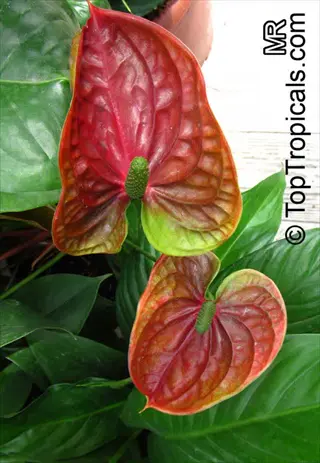
Anthurium Andraeanum
- Origin: Native to Colombia and Ecuador rainforests, this is the most common species and the one most people picture when they hear the word anthurium.
- Size: Grows 12 to 18 inches (30 to 46 centimeters) tall with glossy, heart shaped leaves that span 8 to 12 inches (20 to 30 centimeters) long.
- Blooms: Produces vibrant red, pink, white, or coral spathes that last up to 6 weeks each, with 4 to 6 bloom cycles per year under good conditions.
- Care Level: Great for beginners and forgiving of missed waterings, making it the ideal first anthurium for new plant owners.
- Best For: Bright windowsills and tabletop displays where its compact form and nonstop blooms add lasting color to any room.
- Tip: Feed with a phosphorus rich fertilizer every 4 to 6 weeks during spring and summer to push more frequent and larger blooms.
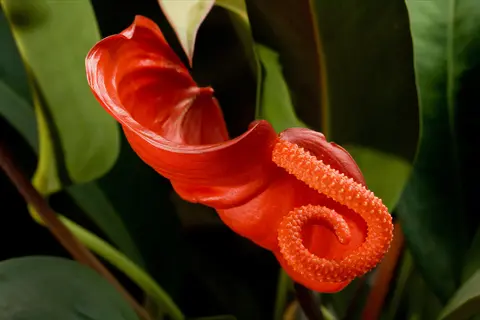
Anthurium Scherzerianum
- Origin: Found in the cloud forests of Costa Rica, it grows as an epiphyte on tree branches at elevations between 3,900 and 7,800 feet (1,200 to 2,400 meters).
- Size: Compact grower reaching 12 to 18 inches (30 to 46 centimeters) tall, with narrow, lance shaped leaves rather than the typical heart shape.
- Blooms: Features a curled spadix that spirals like a pigtail, giving this species its common name of pigtail anthurium.
- Care Level: Handles lower temperatures better than A. andraeanum, making it a solid choice for cooler rooms in your home.
- Best For: Small spaces like desks, shelves, and bathrooms where its compact size and unique curled flower spike grab attention.
- Tip: This species likes a bit more moisture than other anthuriums, so check your soil every 4 to 5 days during warmer months.
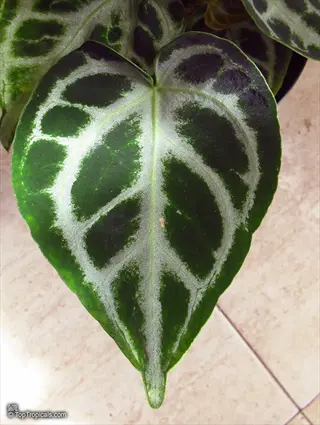
Anthurium Crystallinum
- Origin: Native to Central and South American rainforests, prized for its stunning foliage rather than its flowers.
- Size: Can grow up to 36 inches (91 centimeters) tall with large, velvety dark green leaves that show striking white crystalline veins.
- Blooms: Produces small green or purple spathes that are less showy than flowering types, but the dramatic foliage more than makes up for it.
- Care Level: Needs intermediate care with humidity demands of 70% to 80%, making it best for growers with some experience under their belt.
- Best For: Plant collectors who value dramatic foliage texture and the contrast of silvery veins on dark leaves.
- Tip: Place on a humidity tray or near a humidifier because this species will develop brown leaf edges fast if humidity drops below 60%.
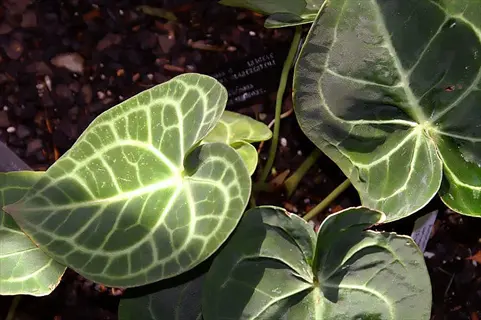
Anthurium Clarinervium
- Origin: Endemic to the karst limestone regions of southern Mexico, growing in rocky, well draining substrates under forest canopy shade.
- Size: Grows 15 to 25 inches (38 to 64 centimeters) tall with thick, leathery, heart shaped leaves that display bold white veining patterns.
- Blooms: Produces small yellowish green spathes followed by orange berries, but the ornamental value sits in its textured foliage.
- Care Level: Moderate difficulty that requires chunky, aroid specific soil mimicking its rocky habitat to prevent water from pooling at the roots.
- Best For: Indoor gardeners looking for a statement foliage plant that pairs well with other aroids in a tropical collection.
- Tip: Use a soil mix of orchid bark, perlite, and sphagnum moss in equal parts to copy the loose, rocky substrate this species grows in.
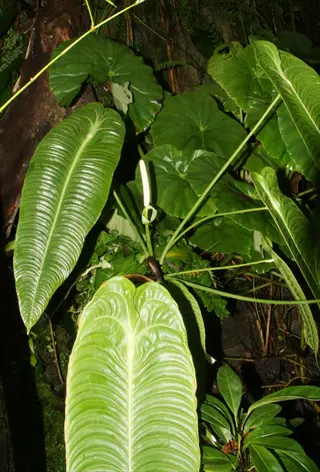
Anthurium Veitchii
- Origin: Native to Colombian rainforests where it grows as an epiphyte high in the tree canopy, earning the nickname king anthurium.
- Size: Produces long, corrugated leaves that can reach 3 to 6 feet (0.9 to 1.8 meters) in length under ideal growing conditions.
- Blooms: Flowers are small and hard to spot, as the entire appeal of this species comes from its rippled, pendant shaped foliage.
- Care Level: Advanced care with strict needs for humidity above 70%, consistent warmth, and excellent air circulation around the leaves.
- Best For: Experienced collectors with greenhouse setups or dedicated plant rooms that can maintain the high humidity this species demands.
- Tip: Mount on a board or place in a hanging basket to let the long leaves cascade down, mimicking how this species grows in the wild.
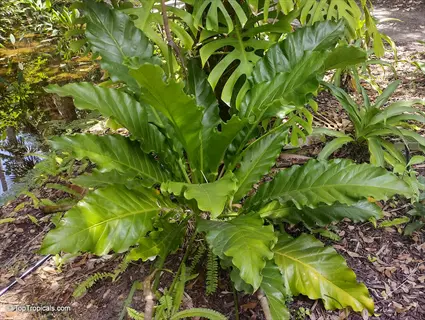
Anthurium Hookeri
- Origin: Found across tropical regions of the Caribbean and South America, this species forms large rosettes and goes by the name bird's nest anthurium.
- Size: Reaches 24 to 36 inches (61 to 91 centimeters) tall with a broad spread, producing large leaves arranged in a dense rosette pattern.
- Blooms: Develops purple to violet spathes followed by clusters of small white berries that add seasonal interest to the foliage display.
- Care Level: Easy to grow once established, tolerating lower humidity than other species and adapting well to indoor conditions.
- Best For: Floor standing displays where its spreading rosette form and larger size can serve as a focal point in living rooms or offices.
- Tip: Give this species more room than compact varieties because its wide rosette needs at least 24 inches (61 centimeters) of clear space.
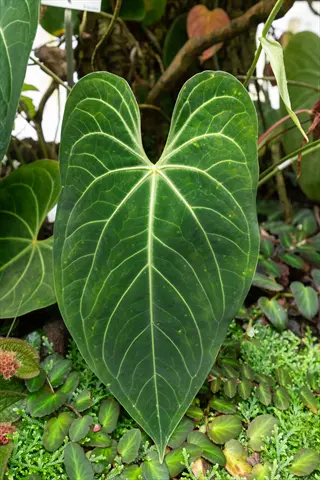
Anthurium Magnificum
- Origin: Native to Colombia and close kin to A. crystallinum, but you can tell it apart by its square shaped petioles and larger, more rounded leaves.
- Size: Grows 18 to 30 inches (46 to 76 centimeters) tall with broad, dark olive green leaves that develop prominent white venation as they mature.
- Blooms: Produces small green spathes with purple spadices, grown for its magnificent velvety foliage rather than flowers.
- Care Level: Intermediate to advanced, requiring stable temperatures between 65°F and 80°F (18°C to 27°C) and humidity above 65%.
- Best For: Collectors who want a rare foliage plant with a different look from the more common A. crystallinum.
- Tip: Young leaves emerge with a bronze or coppery tint before maturing to deep green, so don't worry if new growth appears a different color.
Your best bet as a new grower is to start with the classic A. andraeanum and work your way up. I killed my first crystallinum by keeping it too dry. Learn the basics first before you spend big on the rare anthurium varieties.
Ideal Light and Temperature
Your anthurium light requirements come down to one rule. Give it bright indirect light and keep it out of harsh direct sun. These plants come from tropical rainforests where they grow under the tree canopy, so filtered light is what they crave.
I think of anthurium care like a traffic light system. Your green zone is 65°F to 80°F with filtered light from an east-facing window anthurium setup or a west window. Your yellow zone is 55°F to 65°F or low light spots where growth slows down fast. The red zone is anything below 55°F or direct sun, where real damage starts.
The ideal anthurium temperature range falls in USDA Hardiness Zones 11a through 12b. Most homes stay warm enough year round, but watch out for cold drafts near windows in winter. In my experience, cold drafts are the silent killer. I lost leaves on 2 plants just from setting them too close to a single pane window during a cold snap.
Rotate your pot 90 degrees every 3 months so all sides get equal light. This one trick keeps your anthurium growing in a balanced shape instead of leaning toward the nearest window.
Watering and Humidity Tips
Your anthurium watering schedule changes with the seasons, and getting it wrong is the fastest way to kill your plant. In my experience, more anthuriums die from too much water than too little. Think of your anthurium's roots like a sponge that works best when damp but never dripping.
Water quality for anthurium matters more than most people think. Chlorine and minerals in tap water build up in the soil over time and cause brown crispy leaf tips. I switched to filtered water 3 years ago and the difference was clear within weeks. Rainwater or distilled water also works great if you can get it.
The anthurium humidity requirements sit between 60% and 80% for the best results. UF/IFAS research shows that humidity below 50% causes leaves to lose their shine and may kill them off. A pebble tray for humidity or a small humidifier near your plants solves this fast. Overwatering anthurium is the top mistake I see new growers make, so check the soil before you add more water.
Spring Watering (March to May)
- Frequency: Water every 5 to 7 days as the plant exits its slower winter growth phase and begins producing new leaves and flower buds.
- Method: Water from the top until liquid drains freely from the bottom holes, then empty the saucer after 15 minutes to prevent standing water.
- Soil Check: Insert your finger one inch (2.5 centimeters) into the soil before watering, and only add water if the top layer feels dry to the touch.
Summer Watering (June to August)
- Frequency: Water every 3 to 5 days during the peak growing season, as warmer temperatures and active growth increase the plant's water needs.
- Method: Try the bottom-up soaking method by placing the pot in a tray of water for 15 to 20 minutes, then letting it drain completely.
- Humidity Boost: Mist leaves in the morning or place on a pebble tray filled with water to maintain humidity above 60% during hot, dry months.
Fall Watering (September to November)
- Frequency: Reduce watering to every 7 to 9 days as temperatures cool and the plant slows its growth rate heading into the dormant season.
- Method: Continue top watering but reduce the volume a bit, ensuring the soil stays moist without becoming soggy or waterlogged.
- Watch For: Yellow lower leaves during fall often signal overwatering rather than seasonal leaf drop, so extend the time between waterings if you see them.
Winter Watering (December to February)
- Frequency: Water only every 10 to 14 days during winter when the plant is semi dormant and absorbs moisture much slower than in summer.
- Method: Use room temperature water to avoid shocking the roots, and water in the morning so excess moisture can evaporate during the day.
- Humidity Alert: Indoor heating systems dry the air a lot, so run a humidifier nearby or group tropical plants together to create a humid pocket.
Soil, Potting, and Repotting
The best soil for anthurium isn't soil at all in the traditional sense. These plants grow on tree branches in the wild as epiphytes, so their roots need air and fast drainage. I tested several anthurium soil mix recipes over the years. The recipe below gave me the healthiest root systems across all my plants.
Your target pH for this mix sits between 5.5 and 6.5 on the acid side. Standard potting soil holds too much water and will rot your roots within weeks. Orchid bark for anthurium is the key ingredient because it creates the chunky, well-draining soil structure these plants crave.
When repotting anthurium, pick a pot that's only 1 to 2 inches wider than the current one. Anthuriums prefer a snug anthurium pot size because too much extra soil holds water the roots can't use. In my experience, you'll need to repot every 2 to 3 years or when you see roots poking out of the drainage holes.
Propagation Methods
Learning how to propagate anthurium lets you turn one plant into several without spending a dime. I've used all 4 methods below and can tell you that anthurium division is the easiest place to start. Anthurium propagation works best in spring and early summer when the plant is growing fast.
NC State Extension confirms that anthurium stem cuttings and anthurium root division are the 2 main methods. Roots take 4 to 8 weeks to develop because anthuriums are slow growers, so patience is key. Pick the method below that matches your comfort level.
Root Division (Beginner Friendly)
- When to Divide: Wait until your anthurium has at least two distinct growth points (visible crowns with their own leaf clusters) and the plant looks crowded in its current pot.
- Process: Remove the plant from its pot, gently shake off excess soil, and use clean hands or a sterilized knife to separate the root ball into sections, each with roots and leaves.
- Aftercare: Pot each division into fresh aroid mix in a container with drainage holes, water lightly, and place in bright indirect light for 3 to 4 weeks while roots establish.
- Success Rate: This is the most reliable propagation method with a high success rate because each division already has an established root system attached.
Stem Cuttings (Intermediate)
- Selecting a Cutting: Choose a healthy stem with at least two nodes (the bumpy rings where leaves attach) and one or two aerial roots already forming.
- Process: Cut below the lowest node with a sterilized blade, apply rooting hormone to the cut end, and plant in moist sphagnum moss or perlite mix.
- Timeline: Expect new roots to appear within 4 to 8 weeks, keeping the cutting warm at 70°F to 80°F (21°C to 27°C) and humidity high.
- Success Rate: Moderate success rate that improves a lot when aerial roots are already present on the cutting before you separate it from the parent plant.
Water Propagation (Visual Method)
- Setup: Place a stem cutting with at least one node and aerial root into a clear glass jar filled with room temperature filtered water, submerging only the node.
- Maintenance: Change the water every 3 to 4 days to prevent bacterial growth, and keep the jar in bright indirect light away from direct sun that promotes algae.
- Transfer: Once roots reach 2 to 3 inches (5 to 8 centimeters) in length, transplant into a well draining aroid soil mix and water gently to help the roots adjust.
- Advantage: This method lets you watch root development in real time, making it popular with new gardeners who want to monitor progress before committing to soil.
Seed Propagation (Advanced)
- Seed Source: Obtain seeds from mature anthurium berries that have turned bright red or orange on the spadix, indicating they are ripe and ready for harvest.
- Process: Clean the seeds by removing the fleshy berry coating, sow them on the surface of moist sphagnum moss, and cover the container with clear plastic to maintain high humidity.
- Timeline: Germination takes 2 to 4 weeks at temperatures between 75°F and 85°F (24°C to 29°C), with seedlings reaching transplant size after 6 to 12 months.
- Important Note: Seed grown anthuriums may not look identical to the parent plant because many popular varieties are hybrids, so expect natural variation in leaf shape and spathe color.
In my experience, root division gives you the best odds as a beginner. I've divided over 20 anthuriums this way and lost only 2. Both times I forgot to water them in the first week.
Pests and Troubleshooting
Most anthurium problems come from care mistakes, not diseases. UF/IFAS notes no major disease concerns for these plants. The most common anthurium pests are aphids and scale insects. Spider mites anthurium growers dread are a big problem. Mealybugs anthurium stems attract are the worst offenders I've dealt with.
I check my plants every week during watering and catch problems early before they spread. The table below lists each symptom you might spot and tells you what's going wrong. If you see anthurium yellow leaves, anthurium brown leaves, or tiny webs, you'll find your answer here.
Anthurium root rot is the most common killer I've seen in my collection. It starts when you water too often and the roots sit in soggy soil. By the time you notice wilting or yellow leaves, the damage is already serious. Prevention is your best tool here.
5 Common Myths
Anthuriums need direct sunlight to produce their colorful blooms and will not flower without it.
Anthuriums actually prefer bright indirect light and can suffer leaf scorch and faded spathes when placed in direct sunlight.
The colorful heart-shaped part of an anthurium is the actual flower of the plant.
The colorful part is a modified leaf called a spathe, while the true flowers are the tiny bumps on the central spike called the spadix.
Anthuriums only come in red and are limited to a single species sold in stores.
The genus contains over 1,300 species and 2,000 documented varieties, with spathes ranging from red, pink, white, purple, orange, to green.
You should water your anthurium on a strict daily schedule to keep the soil constantly moist.
Anthuriums prefer their soil to dry slightly between waterings, and keeping soil constantly wet leads to root rot and fungal problems.
Anthuriums are completely safe for homes with pets and small children because they are tropical flowers.
All parts of the anthurium contain calcium oxalate crystals that cause oral pain, swelling, and irritation if ingested by pets or children.
Conclusion
This anthurium growing guide boils down to 5 key pillars for success. Give your plant bright indirect light and water when the top inch of soil dries out. Keep humidity above 50%, use a chunky well draining soil mix, and feed monthly during the growing season. Anthurium plant care gets simple once you nail these basics.
Anthuriums stand out from other indoor tropical plants as a proven air purifying houseplant. NASA's Clean Air Study showed they pull formaldehyde and ammonia from your air. You also get blooms 4 to 6 times per year with flowers lasting up to 6 weeks each on the plant.
With over 1,300 species to choose from, there's an anthurium for every skill level. Beginners can start with the A. andraeanum and enjoy blooms within weeks. Experienced growers can chase collector grade picks like the A. veitchii for a real challenge.
Once your first anthurium is thriving, try propagation as your next step. In my experience, dividing a healthy plant is one of the most rewarding parts of this hobby. It costs you nothing and gives you new plants to share with friends.
External Sources
Frequently Asked Questions
How do I take care of an anthurium plant?
Provide bright indirect light, water when the top inch of soil dries, maintain humidity above 50 percent, and feed monthly with a balanced fertilizer during the growing season.
Is anthurium a good indoor plant?
Anthuriums are excellent indoor plants because they tolerate low light, purify air, and bloom year-round with minimal care.
How often should I water my anthurium?
Water your anthurium every 5 to 7 days in summer and every 10 to 12 days in winter, allowing the top inch of soil to dry between waterings.
Does anthurium need a lot of sun?
Anthuriums prefer bright indirect sunlight and can burn in direct sun, so place them near an east or west-facing window with filtered light.
How long do potted anthuriums last?
Potted anthuriums can live for five years or longer with proper care, and individual blooms last up to six weeks on the plant.
What is the luckiest plant inside the house?
Anthuriums are considered lucky indoor plants in many cultures, symbolizing hospitality, happiness, and abundance.
Do anthuriums like tap water?
Anthuriums can tolerate tap water but prefer filtered, distilled, or rainwater because chlorine and minerals in tap water may cause brown leaf tips.
Do anthuriums like deep pots?
Anthuriums prefer shallow, well-draining pots because their root system is compact and epiphytic, making deep pots prone to waterlogging.
How to make an Anthurium bloom?
Give your anthurium bright indirect light, feed with a phosphorus-rich fertilizer, maintain humidity above 60 percent, and allow a six-week winter rest period.
How to keep an anthurium happy?
Keep your anthurium happy by providing consistent warmth, high humidity, well-draining soil, and monthly feeding during the growing season.