
Introduction
Your angel wing begonia belongs to a plant line that started back in 1926. Eva Kenworthy Gray crossed two wild species in California and created the first angel wing hybrid. That single cross gave us one of the most striking indoor plants you can grow today. Their spotted leaves and dangling flower clusters bring a piece of Brazil right to your windowsill.
I've grown this cane begonia type for over 8 years and it still surprises me. The genus Begonia holds about 2,151 species across 70 sections. That makes it one of the ten largest plant groups on Earth. Angel wings stand out from that crowd with their tall upright stems that look like bamboo stalks.
You might mix up angel wings with polka dot, rex, or wax begonias. Each type has its own growth habit and care needs. Angel wings grow on tall canes and produce famous drooping flower clusters. No other begonia type can match that look. Picture the dappled light under a big shade tree. That filtered glow is what your angel wing craves as a houseplant.
Good begonia care starts with the basics. Keep your plant at 70 to 75°F during the day and no lower than 60°F (15.5°C) at night. Clay pots work best because angel wings prefer being slightly pot bound. This guide walks you through picking the right variety, nailing your care routine, and getting those gorgeous blooms.
Angel Wing Begonia Varieties
Angel wing begonia varieties all share that classic wing shape but each cultivar brings its own flair. Think of them like paint swatches in the same color family. You get subtle shifts in leaf pattern, plant height, and flower tone. The parent species Begonia coccinea came from the Rio de Janeiro area of Brazil. Hooker first described it back in 1843.
I see new growers mix up types of angel wing begonia with the Begonia maculata all the time. Maculata is its own species within the cane begonia types group. True angel wings are hybrids of two species while maculata stands alone. Knowing this distinction helps you pick the right plant and give it proper care.
I've grown 4 of these 5 cultivars over the years. The famous Lucerna begonia is still my top pick for most people. You can match each variety to your space and skill level below.
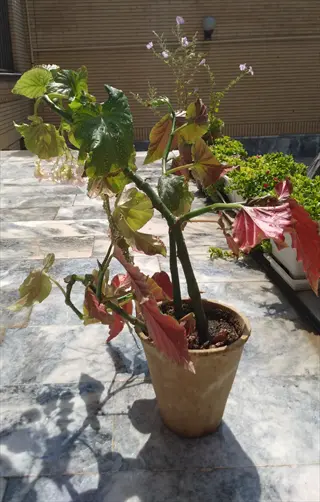
Lucerna (Corallina de Lucerna)
- Leaf Pattern: Large olive-green leaves with distinctive silver spots and deep red undersides that make this one of the most recognized angel wing cultivars you can find.
- Growth Habit: Upright cane growth reaching 4 to 6 feet (1.2 to 1.8 meters) tall with proper staking. The thick stems look like bamboo and branch well with regular pruning.
- Flowers: Produces large drooping clusters of coral pink to salmon flowers from spring through fall when you give it adequate bright indirect light and consistent feeding.
- Care Level: A beginner choice due to its tolerance for a range of indoor conditions and its forgiving nature when you miss a watering session or two.
- History: One of the original angel wing hybrids from the early crosses between Begonia aconitifolia and Begonia coccinea in the early twentieth century.
- Best For: Both experienced and beginner growers who want a statement plant with dramatic height and reliable flowering through the growing season.
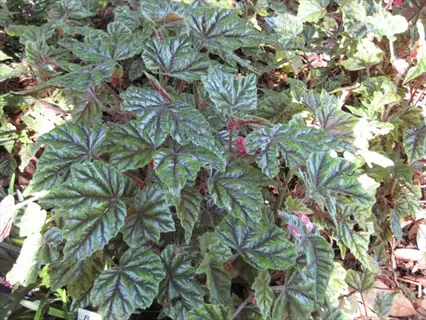
Silver Wings
- Leaf Pattern: Elongated leaves covered in a silvery sheen with scattered white spots. The metallic look makes it stand out among other angel wing varieties.
- Growth Habit: Moderate grower reaching 2 to 4 feet (0.6 to 1.2 meters) tall with a more compact form than Lucerna. Great for smaller indoor spaces.
- Flowers: Produces delicate white to pale pink flower clusters in spring and summer that complement the silver foliage with a soft pastel display.
- Care Level: Moderate care needs with a preference for consistent humidity above 50% and well draining soil to prevent the root rot these plants are prone to.
- Standout Feature: The silvery leaf color comes from specialized cells that reflect light. This is an adaptation from its forest understory origins.
- Best For: Collectors who want a unique foliage color that differs from the typical green and silver spotted pattern most people picture when they think of angel wings.
Splish Splash
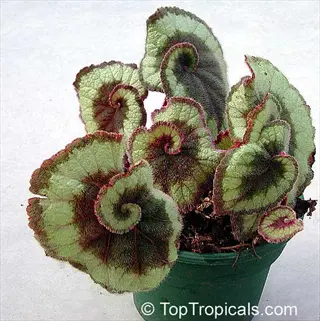
- Leaf Pattern: Dark green leaves splashed with irregular white and silver patterns that make each leaf look like a small watercolor painting.
- Growth Habit: Compact grower that tops out at 1 to 3 feet (0.3 to 0.9 meters) tall. An excellent choice for tabletop displays or smaller window spaces.
- Flowers: Bears clusters of pink flowers during the growing season that create a pleasing contrast against the heavy variegation when you feed with phosphorus rich fertilizer.
- Care Level: A bit more demanding than solid colored varieties because the variegated leaf portions contain less chlorophyll and need brighter indirect light.
- Availability: Harder to find at big box garden centers but available through specialty nurseries, online shops, and begonia society plant sales.
- Best For: Plant lovers who want a conversation starter with one of a kind leaf markings that draw attention from across the room.
Looking Glass
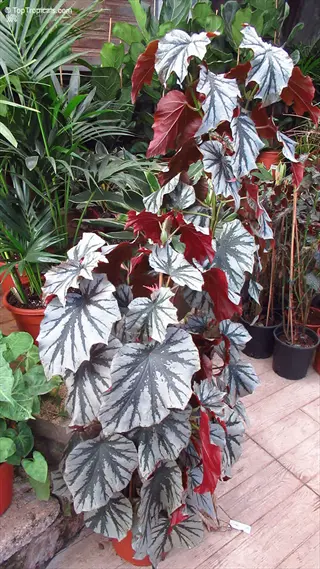
- Leaf Pattern: Full silver surfaces with olive green veining and deep burgundy red undersides create a mirror like reflective quality that earned this cultivar its name.
- Growth Habit: Vigorous upright grower reaching 3 to 5 feet (0.9 to 1.5 meters) tall with strong canes that benefit from staking as the plant matures.
- Flowers: Abundant clusters of light pink to rose colored blooms appear from spring through fall. One of the more reliable bloomers in the angel wing group.
- Care Level: Moderate maintenance with standard angel wing needs: bright indirect light, consistent moisture without soggy soil, and monthly fertilization during active growth.
- Standout Feature: The full silver leaf surface gives this variety an elegant look that photographs well and catches light in a way spotted varieties cannot.
- Best For: Growers who want maximum visual impact from metallic foliage combined with reliable flowering near bright windows.
Charles Jaros
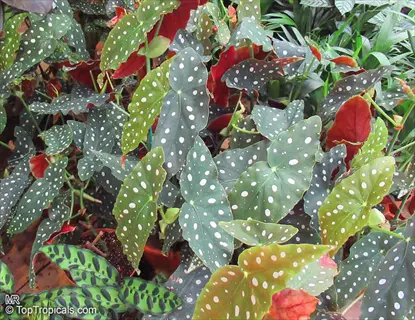
- Leaf Pattern: Dark green leaves with prominent silver polka dots and deep red to maroon undersides. The classic angel wing spotted pattern in its most vivid color form.
- Growth Habit: Medium grower reaching 2 to 4 feet (0.6 to 1.2 meters) with canes that respond well to tip pruning for a fuller bushier shape.
- Flowers: Produces bright coral to orange red flower clusters that are among the most vivid in the angel wing group. Adds warm color to indoor and patio displays.
- Care Level: Great for beginners with good tolerance for typical indoor humidity and a more forgiving watering schedule than some of the rarer cultivars.
- Standout Feature: The vivid coral red flowers pop against the spotted green foliage, giving you one of the best dual interest displays of both leaves and blooms.
- Best For: New angel wing growers who want dependable performance with showy flowers and classic spotted leaves.
Essential Care Requirements
Angel wing begonia care comes down to one simple idea. You're recreating a small pocket of Brazilian rainforest on your windowsill. That means bright indirect light, warm air, gentle moisture, and well-draining soil. Get these 4 factors right and your plant will reward you with stunning leaves and flowers for years.
I learned the hard way that begonia watering mistakes cause more plant deaths than anything else. Root rot is hard to reverse once it starts as the University of Minnesota Extension warns. Water at the base of your plant to keep leaves dry and stop fungal diseases. Begonia expert Tovah Martin puts it best: withholding water is the key to plant health. Your begonia soil should have a pH between 5.5 and 6.5 for the best nutrient uptake.
Begonia humidity needs sit around 50% or higher. A pebble tray or small humidifier works great for this. Clay pots beat plastic because they let extra moisture escape. The Chicago Botanic Garden backs this up. Feed with a balanced begonia fertilizer once a month from April through October. The chart below gives you every care factor at a glance so you can check your setup fast.
Seasonal Care Calendar
Your angel wing begonia seasonal care should change with the calendar just like your own wardrobe does. Think of your plant like a marathon runner. It sprints in summer, jogs through spring and fall, and rests in winter to build strength for the next begonia growing season. I adjust my care routine 4 times a year and my plants have never looked better.
The biggest mistake I see is treating your begonia the same way in January as you do in July. Spring begonia care means ramping up water and food. Begonia winter care means pulling back on both. Skipping this shift leads to root rot in winter or starved plants in summer. Begonia dormancy is real and your plant needs that rest period to bloom strong the next year.
Spring (March to May)
- Watering: Gradually increase watering frequency as daylight hours lengthen and the plant exits winter dormancy, checking the top inch of soil every three to four days.
- Fertilizing: Begin monthly fertilization in April with a dilute 20-20-20 balanced fertilizer or one with slightly higher phosphorus content to encourage early bloom production.
- Pruning: Early spring is the ideal time to prune back leggy canes, pinch growing tips for bushier growth, and remove any dead or damaged stems from winter months.
- Propagation: Take stem cuttings in spring when the plant is actively growing, as cuttings root in approximately 3 to 4 weeks according to University of Minnesota Extension.
Summer (June to August)
- Watering: Water more frequently as heat and longer days increase evaporation, but always check soil moisture first because overwatering remains the leading cause of angel wing death.
- Fertilizing: Continue monthly fertilization through the peak growing season, and consider switching to a higher-phosphorus formula if the plant is producing canes but not flowers.
- Light Adjustment: If growing near a south-facing window, filter direct afternoon sun with a sheer curtain to prevent leaf scorch while maintaining the bright indirect light begonias prefer.
- Outdoor Option: Move plants to a shaded patio when nighttime temperatures stay consistently above 60°F (15.5°C), gradually hardening them off over one to two weeks to prevent shock.
Fall (September to November)
- Watering: Slowly reduce watering frequency as growth slows and daylight decreases, allowing the soil to dry slightly more between waterings than during the active summer months.
- Fertilizing: Apply the final fertilizer dose in October and then stop feeding entirely until the following April to allow the plant to enter its natural rest period.
- Transition Indoors: Bring outdoor plants back inside before nighttime temperatures drop below 60°F (15.5°C), inspecting carefully for pests that may have hitched a ride on leaves.
- Preparation: Reduce pruning in fall to avoid stimulating new growth that will struggle in lower winter light conditions and cooler indoor temperatures ahead.
Winter (December to February)
- Watering: Water sparingly, allowing the top 1 to 2 inches (2.5 to 5 centimeters) of soil to dry between waterings, as the plant's reduced metabolic rate means roots absorb less moisture.
- Light: Supplement with grow lights if natural daylight drops below 10 hours per day, positioning lights 12 to 18 inches (30 to 45 centimeters) above the plant canopy.
- Temperature: Keep plants away from cold window glass, heating vents, and exterior doors where temperature fluctuations can cause stress, leaf drop, and dormancy shock.
- Maintenance: Avoid fertilizing, repotting, or taking cuttings during winter months, as the plant lacks the energy reserves needed to recover from these activities until spring.
How to Encourage Blooming
Angel wing begonia blooming is the main reason most people grow these plants. Those cascading clusters of begonia flowers are worth the effort. If your plant is growing well but not producing blooms, don't panic. The fix is almost always about light, food, or rest and sometimes all 3.
I think of how to make begonia bloom like coaxing a musician onto stage. You need the right stage with bright light, the right fuel from higher phosphorus fertilizer, and a proper rest period in winter. Skip any one of those and your begonia not flowering makes total sense. The Chicago Botanic Garden warns that too much fertilizer pushes cane growth at the expense of flowers. More food is not the answer here.
Optimize Light Exposure
- Placement: Position your angel wing begonia near an east-facing or bright north-facing window where it receives several hours of bright indirect light without harsh direct afternoon sun.
- Duration: Aim for 12 to 14 hours of combined natural and supplemental light during the growing season, as insufficient light is the single most common reason angel wings fail to bloom.
- Seasonal Shift: Rotate plants a quarter turn every two weeks so all sides receive equal light exposure, preventing one-sided growth and encouraging even flower bud distribution.
Switch Fertilizer Formula
- Phosphorus Priority: Use a fertilizer where the middle number (phosphorus) is higher than the first number (nitrogen), such as a 10-30-20 or bloom-booster formula during the growing season.
- Application Rate: Dilute to half the recommended strength and apply monthly from April through October, following the Chicago Botanic Garden guideline to avoid excessive cane-heavy growth.
- Timing: Begin bloom-formula feeding in early spring before flower buds form, giving the plant time to absorb nutrients and direct energy toward flower production rather than leaf growth.
Allow Winter Rest Period
- Dormancy Matters: Angel wing begonias that receive a cool winter rest period between 60 and 65 degrees Fahrenheit (15.5 to 18 degrees Celsius) often produce more abundant blooms the following spring.
- Reduce Inputs: Stop fertilizing from November through March and reduce watering to signal the plant that it is time to rest and conserve energy for the next flowering cycle.
- Patience: After resuming spring care, allow 4 to 6 weeks for the plant to ramp up growth before expecting new flower buds, as blooming follows vegetative recovery.
Maintain Slight Root Pressure
- Pot-Bound Advantage: Angel wing begonias that are slightly root-bound often flower more freely, as the mild root stress redirects the plant's energy from root expansion toward reproduction.
- Pot Size Rule: Only repot when roots visibly circle the bottom or emerge from drainage holes, and then move up only one pot size at a time to maintain gentle root pressure.
- Timing: Repot in early spring just as new growth begins, avoiding fall or winter repotting that disrupts the dormancy period needed for next season's bloom cycle.
My stubborn angel wing went 6 months with no flowers last year. I moved it closer to a bright window and switched to a bloom booster. Within 8 weeks it pushed out new buds. Sometimes the simplest change is all your plant needs.
Propagation Methods
Angel wing begonia propagation is a skill you need to learn as a grower. Your plants lose their vigor after 5 to 6 years so taking begonia cuttings keeps your collection going strong. I propagate new plants every spring and it takes me about 10 minutes per cutting.
The good news for you is that stem cuttings and water propagation begonia methods both work well. You can also try leaf cutting propagation or division if you want more options. A dab of rooting hormone on your cut end speeds things up. The UMN Extension says your cuttings should root in about 3 to 4 weeks at 70 to 75°F (21 to 24°C). In my experience, water rooting gives you the best view of progress.
Stem Cutting in Soil
- Preparation: Select a healthy stem with at least 2 to 3 leaf nodes, cut just below a node with clean sterilized scissors, and remove the lowest leaves to expose bare stem for rooting.
- Rooting Medium: Dip the cut end in rooting hormone powder and insert 1 to 2 inches (2.5 to 5 centimeters) deep into moist vermiculite, perlite, or a peat-perlite mix for best drainage.
- Environment: Cover the pot with a clear plastic bag or humidity dome to maintain high moisture around the cutting, keeping it in bright indirect light at 70 to 75°F (21 to 24°C).
- Timeline: Expect initial root development within 2 to 3 weeks and a well-established root system by 4 weeks, at which point new leaf growth confirms successful rooting.
Stem Cutting in Water
- Setup: Place the prepared stem cutting in a clean glass jar filled with room-temperature water, ensuring at least one leaf node sits below the waterline where roots will develop.
- Maintenance: Change the water every 3 to 4 days to prevent bacterial growth and algae buildup that can rot the cutting before roots have a chance to form.
- Root Development: White root nubs appear within 1 to 2 weeks, followed by longer branching roots reaching 1 to 2 inches (2.5 to 5 centimeters) by the third to fourth week.
- Transition: Pot the rooted cutting into well-draining soil once roots reach 2 inches (5 centimeters) long, watering gently for the first two weeks as roots adapt from water to soil.
Leaf Cutting Method
- Selection: Choose a mature, healthy leaf with its petiole attached, cutting the petiole about 1 to 2 inches (2.5 to 5 centimeters) below where it meets the leaf blade.
- Planting: Insert the petiole into moist vermiculite or perlite at a slight angle, pressing the medium around the base to hold the cutting upright and in contact with moisture.
- Patience Required: Leaf cuttings root more slowly than stem cuttings, often taking 4 to 6 weeks before tiny plantlets emerge at the base of the petiole.
- Success Rate: This method has a lower success rate than stem cuttings but works when healthy stems with multiple nodes are not available for cutting.
Division Method
- When to Divide: Division works best in spring when the plant has multiple canes growing from the root mass, so you can separate sections that each have their own root system.
- Technique: Remove the plant from its pot, shake off excess soil, and use your fingers or a clean knife to separate root clumps. Each division needs at least two healthy canes.
- Potting Up: Plant each division in a pot just a bit larger than its root mass, using fresh well-draining soil mix and watering well to settle the medium around the roots.
- Recovery: New divisions may wilt for a week or two as they recover from root disturbance. Keep them in lower light and give consistent moisture during this period.
Troubleshooting Common Issues
Angel wing begonia problems are frustrating but most of them have simple fixes. In my experience, I've dealt with every issue on this list at least once. The key is catching symptoms early before they get out of hand.
If you notice begonia leaves turning yellow, that's your plant telling you something is off with moisture. Overwatering begonia plants is the number one killer I see. Begonia root rot sets in fast. The UMN Extension says it's tough to treat once symptoms appear. Water at the base of your plant to keep leaves dry and stop fungal problems before they start.
A begonia leggy in shape means it needs more light. Begonia not blooming points to the same cause or a wrong fertilizer mix. Begonia brown edges signal low humidity in your room. Check the chart below to match your symptom to the fix and get your plant back on track. One safety note: all parts of angel wing begonias contain calcium oxalates and are toxic to cats and dogs.
5 Common Myths
Angel wing begonias need direct sunlight to produce their colorful spotted leaves and flowers.
Direct sun actually scorches their leaves. Bright indirect light mimics their native Brazilian rainforest understory and promotes both healthy foliage and blooming.
You should mist angel wing begonias daily to keep humidity high around the plant.
Misting wets leaves and increases the risk of powdery mildew and leaf spot. A pebble tray or humidifier raises humidity without wetting the foliage.
Angel wing begonias should be repotted into a much larger container every year for best growth.
These plants actually prefer being slightly pot-bound, and overpotting leads to excess moisture that causes root rot. Move up only one pot size when roots fill the container.
All begonias with spotted leaves are angel wing begonias, including polka dot begonias.
Polka dot begonia (Begonia maculata) is a separate species within the cane begonia group. Angel wings are specifically hybrids of Begonia aconitifolia and Begonia coccinea.
Once an angel wing begonia stops blooming, the plant is dying and should be discarded.
Lack of blooms usually means insufficient light or wrong fertilizer ratio. Switching to a higher phosphorus fertilizer and providing brighter indirect light often restarts flowering.
Conclusion
Your angel wing begonia will thrive when you stick to the basics. Give it bright indirect light, plant it in well draining soil inside a clay pot, water at the base, and feed once a month from April through October. These simple steps cover about 90% of what your cane begonia needs from you.
This guide gave you tools that most other begonia care resources skip over. The seasonal care calendar shows you what to adjust and when. The bloom section helps you get those gorgeous flowers. The troubleshooting chart lets you fix problems fast. Use these resources as your go to reference when something looks off with your indoor begonia.
Keep in mind that your plant will start to lose steam after 5 to 6 years of growth. That's normal for this type of cane begonia. Begonia propagation from stem cuttings lets you grow fresh new plants from your original. I've kept the same angel wing line going for over a decade this way through 3 generations of cuttings.
Eva Kenworthy Gray created the first angel wing begonia back in 1926. Almost a century later, these plants still capture the hearts of growers around the world. Give yours the care it deserves and it will fill your home with spotted leaves and cascading blooms season after season.
External Sources
Frequently Asked Questions
Do angel-wing begonias like sun or shade?
Angel wing begonias prefer bright indirect light, similar to filtered sunlight on a forest floor. Direct sun can scorch their leaves, while too little light reduces blooming.
How do you take care of an Angel Wing Begonia?
Provide bright indirect light, water when the top inch of soil is dry, maintain humidity above 50 percent, and fertilize monthly during the growing season.
What are the common problems with angel-wing begonias?
The most frequent issues include yellowing leaves from overwatering, leggy growth from insufficient light, failure to bloom, and root rot from poor drainage.
Are angel-wing begonias hard to grow?
Angel wing begonias are moderately easy to grow once you understand their basic needs for indirect light, well-draining soil, and careful watering habits.
What do you do with angel wings in the winter?
Reduce watering, stop fertilizing, move plants away from cold drafts, and provide supplemental light if needed during the shorter winter days.
Is Angel Wing Begonia rare?
Standard angel wing begonias are widely available, though certain cultivars like Splish Splash or Looking Glass can be harder to find at typical garden centers.
What time of year do Angel Wing Begonias bloom?
Angel wing begonias primarily bloom from late spring through fall, though indoor plants with adequate light and fertilizer can produce flowers nearly year-round.
Do coffee grounds help begonias?
Used coffee grounds can slightly acidify soil, which suits begonias preferring a pH of 5.5 to 6.5, but they should be composted first and used sparingly.
What is the lifespan of a begonia?
Angel wing begonias typically maintain full vigor for 5 to 6 years, after which propagating new plants from cuttings is recommended to continue the line.
Can angel wing begonias grow outdoors?
Angel wing begonias grow outdoors in USDA zones 10 and 11 or as seasonal patio plants in cooler regions when nighttime temperatures stay above 60 degrees Fahrenheit (15.5 degrees Celsius).