
Direct sun outdoors peaks at about 10,000 foot-candles. A dim corner of your living room gives 25 to 100, and a high light window sits at 500 to 1,000. That gap is enormous, and no amount of leaf wiping or fresh potting mix will close it. So yes, grow lights for houseplants work. A fixture earns its place when it lifts the total light your plant takes in over a full day.
Houseplant light needs work like a running total, not an on off switch. Your plant gathers light through the whole day, and that daily sum is the daily light integral, or DLI for short. Iowa State University Extension puts low light foliage plants at 3 to 6 mol/m²/day, with medium light plants at 6 to 10. UNH Extension sets a tighter 4 to 6 for houseplants as a group. Read those as a range rather than a number you have to hit, since the two sets overlap without lining up.
You can spot the shortfall before you measure a thing. Leaf color fades and new growth comes in leggy and spindly, with long bare stem between one leaf and the next. Flowering drops off too, and the whole plant leans hard toward the glass. Those four signs ease once the daily total climbs, which is the clearest proof you will get that a fixture is doing real work. Feeding a plant that is short on light does nothing for any of them.
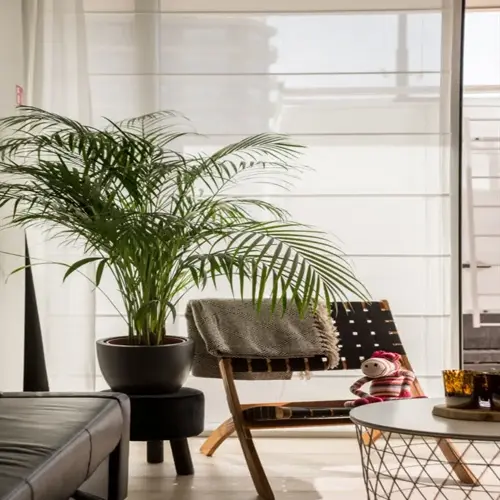
Your own eyes are why this catches people out. Pupils open wide indoors, so a dim corner still reads as a bright spot to you while the plant sits on a thin slice of window light. Carry a pot a few steps back from the glass and what reaches the leaves drops off fast, even though the room looks the same. A plant that thrived on the sill can sulk on the coffee table six feet (1.8 m) away, and nothing about your care changed.
Start with one fixture over the plants that already show those signs, not over the whole collection at once. A single light above a shelf covers several pots, and you get to watch what changes over a few weeks before you spend more. If new growth still comes in stretched, give it more hours or bring the light closer to the leaves. Winter is the season nearly every indoor plant would gain from extra light, so that is when a test tells you the most.
Put the fixture on a plug in timer the day you hang it. A light you keep forgetting to switch on raises nobody's daily total, and the plant reads that as another dim week.
Skip the pink strips sold as room decor and buy supplemental lighting houseplants can use, which means a fixture that states real output over the area it covers. You do not have to run the full math to get value out of it. More hours on the timer and a shorter distance to the leaves both push the daily number up, and either one moves a plant off the floor of the low light band.
The honest answer comes with one condition attached. A fixture does nothing for a plant already sitting in a window that meets its range, and it changes everything for the pothos on a bookshelf across the room. That plant may be getting under 1% of full outdoor sun. Check where yours actually sits before you spend a cent on hardware.
Read the full article: Grow Lights for Indoor Plants: What Really Works